French-Style Ladder Poles
Senegal (SN), Réunion (RE)
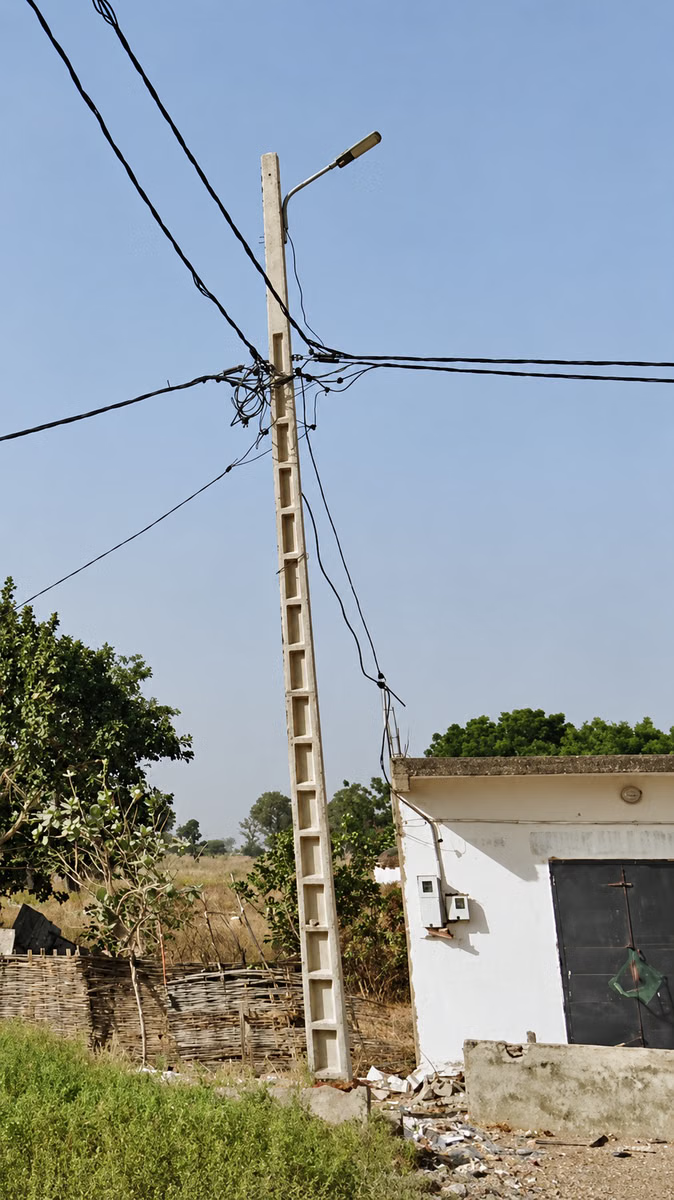
Senegal and Réunion feature French-style infrastructure. One useful clue is the ladder-style concrete pole with frequent rectangular openings.
71 metas (location clues) in Africa - How to Identify: tag names, country, example imagery, and a short explanation for each.
%20--%3e%3csvg%20version='1.1'%20id='Layer_1'%20xmlns='http://www.w3.org/2000/svg'%20xmlns:xlink='http://www.w3.org/1999/xlink'%20x='0px'%20y='0px'%20width='24px'%20height='24px'%20viewBox='0%200%2024%2024'%20style='enable-background:new%200%200%2024%2024;'%20xml:space='preserve'%3e%3cstyle%20type='text/css'%3e%20.st0{fill:%2357AEFF;}%20.st1{fill:%237A6BFF;}%20.st2{fill:%23AB5CFF;}%20.st3{fill:%23FF7DC0;}%20.st4{fill:%23FFBE57;}%20.st5{fill:%2373E61C;}%20.st6{fill:%23FF6242;}%20.st7{fill:%23F2F2F2;}%20.st8{fill:%23696969;}%20.st9{fill:%23FF3029;}%20.st10{fill:%23131F24;}%20.st11{fill:%23F1F7FB;}%20.st12{fill:%23EE5555;}%20.st13{fill:%2349C0F8;}%20.st14{fill:%233F85A7;}%20.st15{fill:%231CB0F6;}%20.st16{fill:%2393D333;}%20.st17{fill:%2379B933;}%20.st18{fill:%23FFAB33;}%20.st19{fill:%23FFC700;}%20.st20{fill:%23D84848;}%20.st21{fill:%23FB7185;}%20.st22{fill:%23DCE6EC;}%20.st23{fill:%2352656D;}%20.st24{fill:%2337464F;}%20.st25{opacity:0.5216;fill:%23FF3029;}%20.st26{opacity:0.5216;fill:%23F2F2F2;}%20.st27{clip-path:url(%23SVGID_2_);fill:%23F2F2F2;}%20.st28{clip-path:url(%23SVGID_4_);fill:%23F2F2F2;}%20.st29{clip-path:url(%23SVGID_6_);fill:%23F2F2F2;}%20.st30{clip-path:url(%23SVGID_8_);fill:%23F2F2F2;}%20.st31{clip-path:url(%23SVGID_10_);fill:%23F1F7FB;}%20.st32{clip-path:url(%23SVGID_12_);fill:%23F1F7FB;}%20.st33{clip-path:url(%23SVGID_14_);fill:%23F1F7FB;}%20.st34{clip-path:url(%23SVGID_16_);fill:%23F1F7FB;}%20.st35{clip-path:url(%23SVGID_18_);fill:%23F1F7FB;}%20.st36{clip-path:url(%23SVGID_20_);fill:%23F1F7FB;}%20.st37{clip-path:url(%23SVGID_22_);fill:%23F1F7FB;}%20.st38{clip-path:url(%23SVGID_24_);fill:%23F1F7FB;}%20.st39{clip-path:url(%23SVGID_26_);fill:%23F1F7FB;}%20.st40{clip-path:url(%23SVGID_28_);fill:%23F1F7FB;}%20.st41{clip-path:url(%23SVGID_30_);fill:%23F1F7FB;}%20.st42{clip-path:url(%23SVGID_32_);fill:%23F1F7FB;}%20.st43{clip-path:url(%23SVGID_34_);fill:%23F1F7FB;}%20.st44{clip-path:url(%23SVGID_36_);fill:%23F1F7FB;}%20.st45{clip-path:url(%23SVGID_38_);fill:%23F1F7FB;}%20.st46{clip-path:url(%23SVGID_40_);fill:%23F1F7FB;}%20.st47{fill:none;stroke:%2393D333;stroke-width:0.3;stroke-miterlimit:10;}%20.st48{fill:%23486E20;}%20%3c/style%3e%3cg%3e%3cpath%20class='st7'%20d='M14.97,22.63V6.07c0-0.69,0.56-1.25,1.25-1.25h0.88c0.69,0,1.25,0.56,1.25,1.25v16.57%20c0,0.69-0.56,1.25-1.25,1.25h-0.88C15.53,23.88,14.97,23.33,14.97,22.63z'/%3e%3cpath%20class='st7'%20d='M16.41,0.26l-3.77,6.54c-0.11,0.19,0.03,0.42,0.24,0.42h7.55c0.22,0,0.35-0.24,0.24-0.42L16.9,0.26%20C16.79,0.07,16.52,0.07,16.41,0.26z'/%3e%3c/g%3e%3cg%3e%3cpath%20class='st7'%20d='M9.27,1.43V17.9c0,0.69-0.56,1.25-1.25,1.25H7.16c-0.69,0-1.25-0.56-1.25-1.25V1.43%20c0-0.69,0.56-1.25,1.25-1.25h0.86C8.71,0.18,9.27,0.74,9.27,1.43z'/%3e%3cpath%20class='st7'%20d='M7.83,23.68l3.75-6.5c0.11-0.19-0.03-0.42-0.24-0.42h-7.5c-0.22,0-0.35,0.24-0.24,0.42l3.75,6.5%20C7.45,23.87,7.72,23.87,7.83,23.68z'/%3e%3c/g%3e%3c/svg%3e)
@Mrs. Plongeur16 plays71 metas
Exam Score

 French-Style Ladder PolesSlingshot-Style Utility Poles
 Ghana and Kenya Wooden Utility Poles
 South African Bird Poles
 São Tomé and Príncipe - Blue CST Poles
 Ladder-Style Concrete Poles
 Kenyan Pole Warning SignsFrench-Style Cylindrical Bollards
 Namibian Stone Bollards
 Rwandan BollardsNigerian Houses
 Tunisian Blue
 Eswatini’s Unique Bus StopsRwandan ArchitectureTunisian Chevron Signs+3Southern African Chevron Signs
 +1Red-and-White Hazard MarkersSouth African Green Direction SignsBotswana Striped SignpostsGhana’s Black-and-White SignpostsTunisian Stop SignsTunisian Road SignsMR Road Numbers in Eswatini+1A and B Road Numbers in Southern AfricaNamibian Road NumbersFrench-Style Road SignsBotswana Blue Background SignsSenegalese Kilometer MarkersTunisian Kilometer MarkersTunisian Roadside MilestonesSenegalese Blue License PlatesNigerian License Plates
 +3Unique Triple Center Lines+3Yellow Edge LinesFrench-Style White Dashed Edge LinesSafaricom in KenyaGhanaian National Flag ColoursSenegalese Solar StreetlightsAgave Plants in LesothoGreen and White Trash BinsSenegalese Town Entry Signs
 Black-and-Yellow CurbsRed-and-White CurbsBlack-and-White Curbs in Rwanda and BotswanaTunisian Follow CarsKenyan Follow CarNigerian Police Follow CarsKenyan Taxi VansGhanaian TaxisRwandan Motorcycle RidersYellow Taxis and BusesSenegalese Yellow-Orange TaxisUgandan Minibus TaxisTunisian Gen 3 CarSouth African Gen 4 Blue Car+2White Pickup with a Spiral AntennaGhana Gen 3 CarKenyan Gen 4 Pickup TrucksNigerian Gen 4 Pickup TrucksRwandan Gen 4 PickupSão Tomé and Príncipe Side AntennaSouth African Gen 2 CoverageSouth African Gen 4 SmallCamUgandan National Park CarNigerian Shitcam Car Metas+2White Gen 3 Car in Southern AfricaUganda's Car Meta
 Madagascar’s Boat TrekkersMadagascar’s Unusual VehiclesMadagascar Trekker 3 Coverage
How it looks
Where to find it
Senegal · RéunionExplanation
Senegal and Réunion feature French-style infrastructure. One useful clue is the ladder-style concrete pole with frequent rectangular openings.
Senegal (SN), Réunion (RE)
Senegal and Réunion feature French-style infrastructure. One useful clue is the ladder-style concrete pole with frequent rectangular openings.
Senegal (SN), Réunion (RE)

Slingshot-shaped pole tops are another example of French-style infrastructure found in Senegal and Réunion. Among African countries, this feature is unique to these two locations.
Ghana (GH)
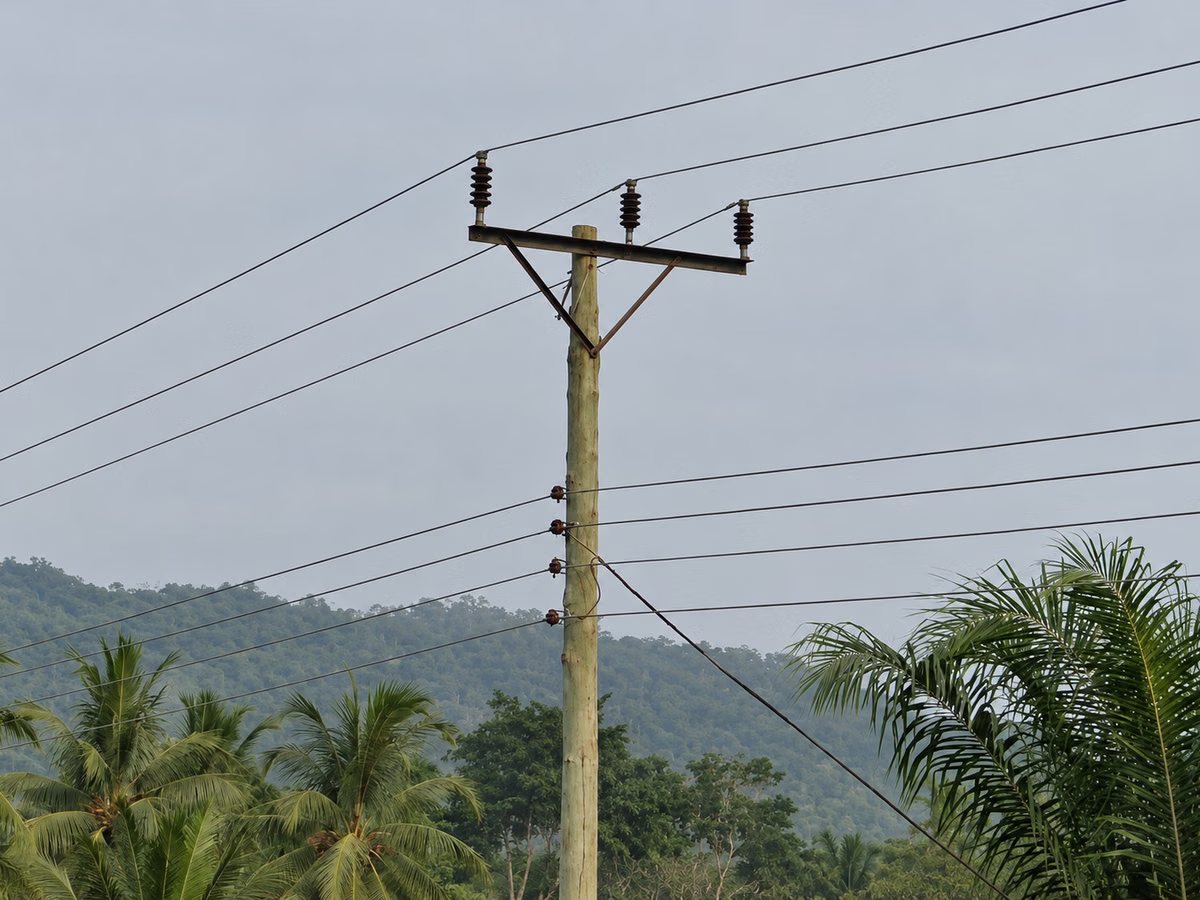
Wooden utility poles with a metal crossbar and three insulators are most commonly seen in Ghana and Kenya among African countries.Note: Both Ghana and Kenya also have other types of utility poles, so this clue should be used together with other country-specific metas.
South Africa (ZA)
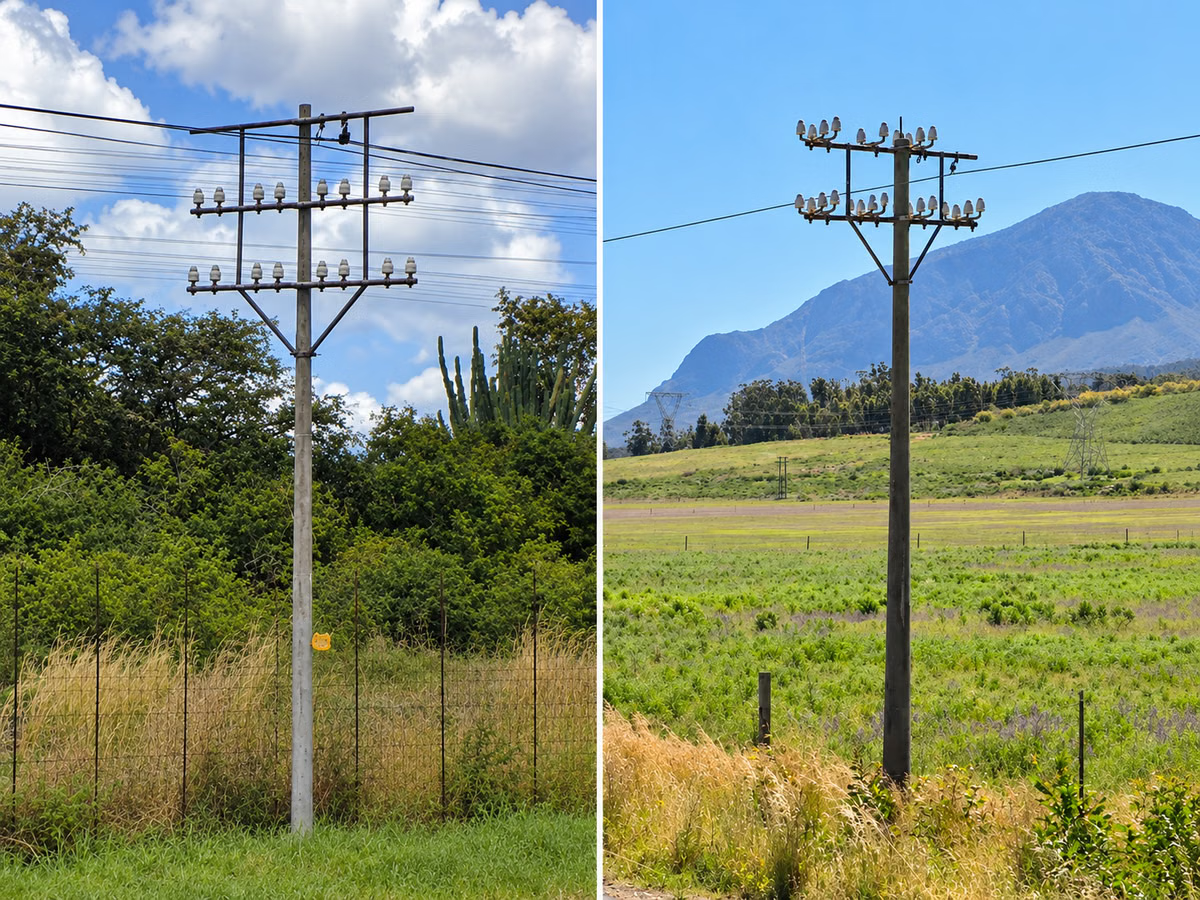
South Africa has a wide variety of utility pole designs. The most common type is the “bird pole”, featuring 1 to 5 horizontal crossbars with thin white insulators that resemble rows of birds
Sao Tome and Principe (ST)

Some wooden utility poles in São Tomé and Príncipe have their lower sections painted blue. They may also be marked with the letters CST.
Nigeria (NG), Sao Tome and Principe (ST)
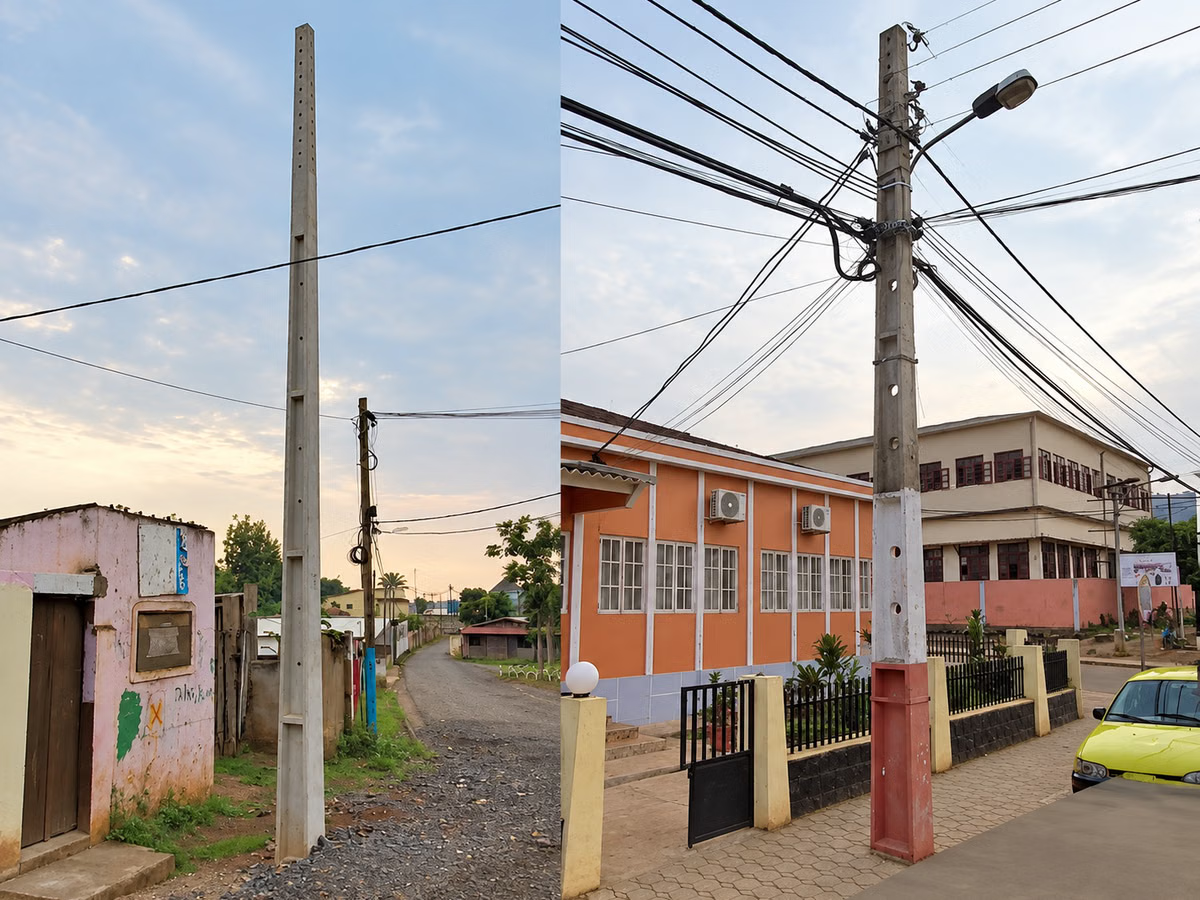
Concrete utility poles are common in Nigeria and São Tomé and Príncipe. They feature large rectangular recesses along the pole, giving them a ladder-like appearance, and are similar to poles found in Brazil or Portugal.
Note: Similar ladder-style poles can also be found in Senegal, but their recesses are much smaller in size.
Kenya (KE)

In Kenya, utility poles often feature skull symbols accompanied by warning messages.
Senegal (SN), Réunion (RE)
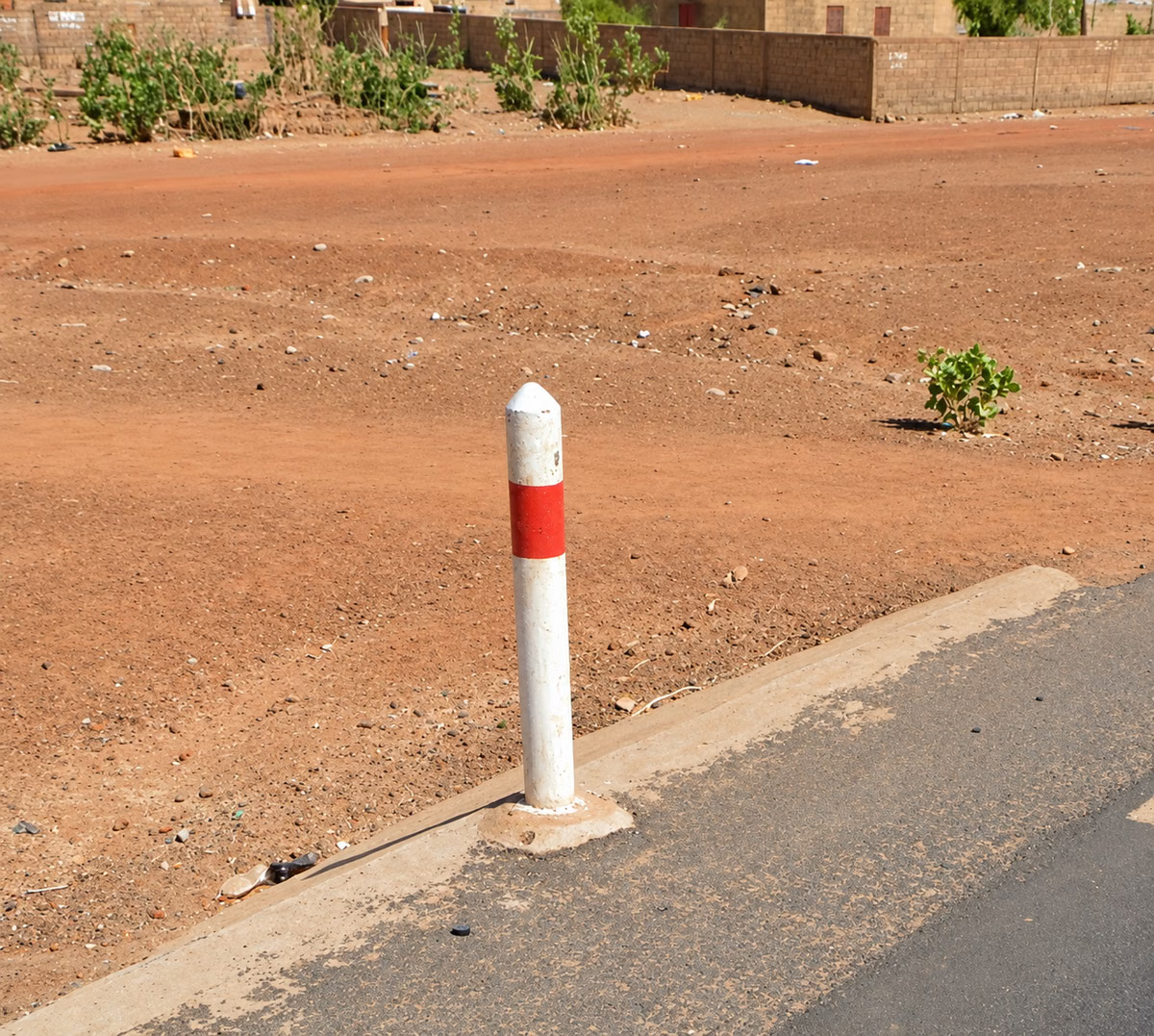
These cylindrical bollards are identical to those commonly found in France. In Africa, they are a useful meta for Senegal and Réunion, reflecting the country’s French road infrastructure.
Note: Similar bollards can also be found in Rwanda, but they typically have a rounded rather than pointed top.
Namibia (NA)
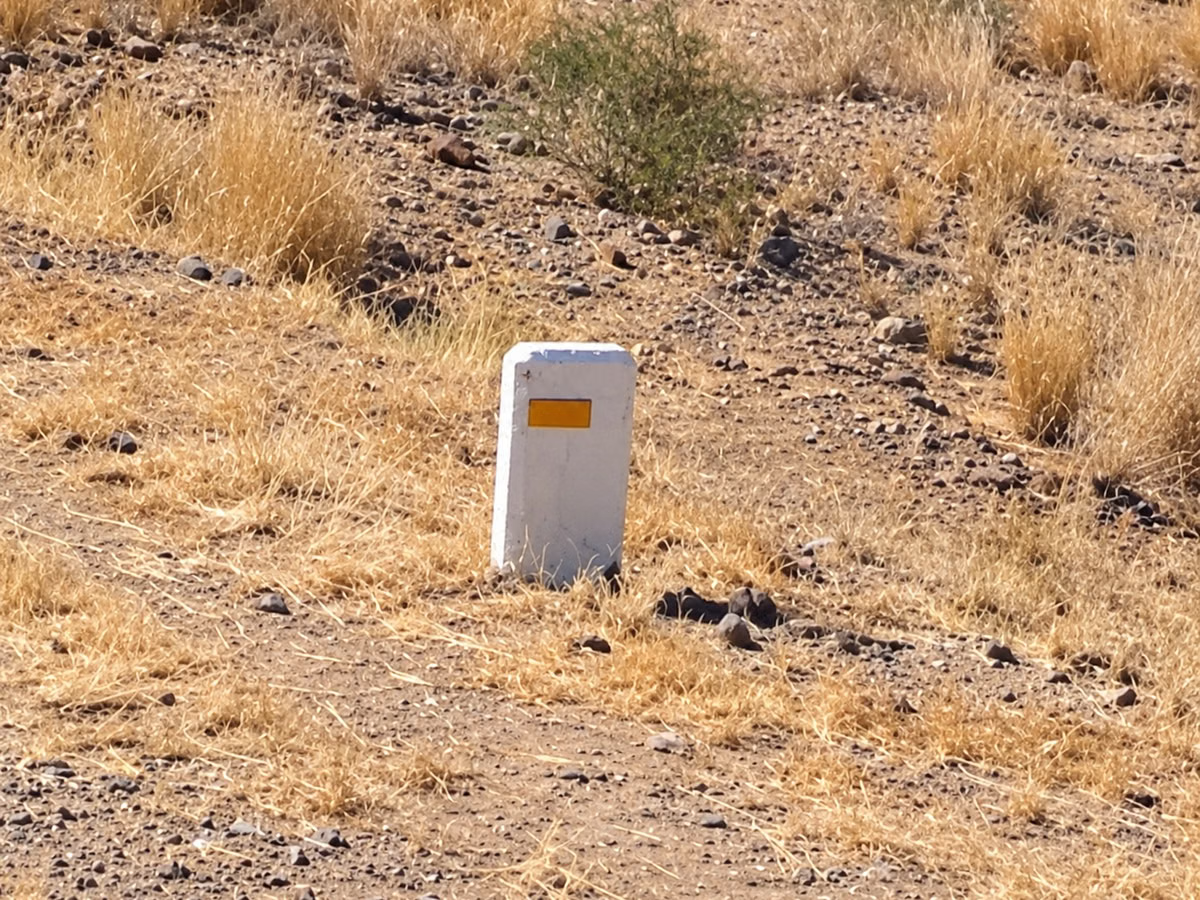
These small stone bollards can be found at intersections and along roadsides in Namibia.
Rwanda (RW)
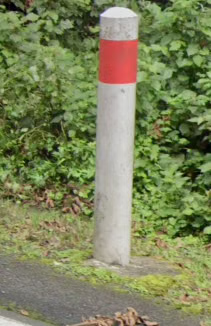
Rwanda has various types of bollards, but most are white with one or two red bands and are either cylindrical or square-shaped.
Note: Similar bollards can also be found in Senegal, but they are visually different.
Nigeria (NG)
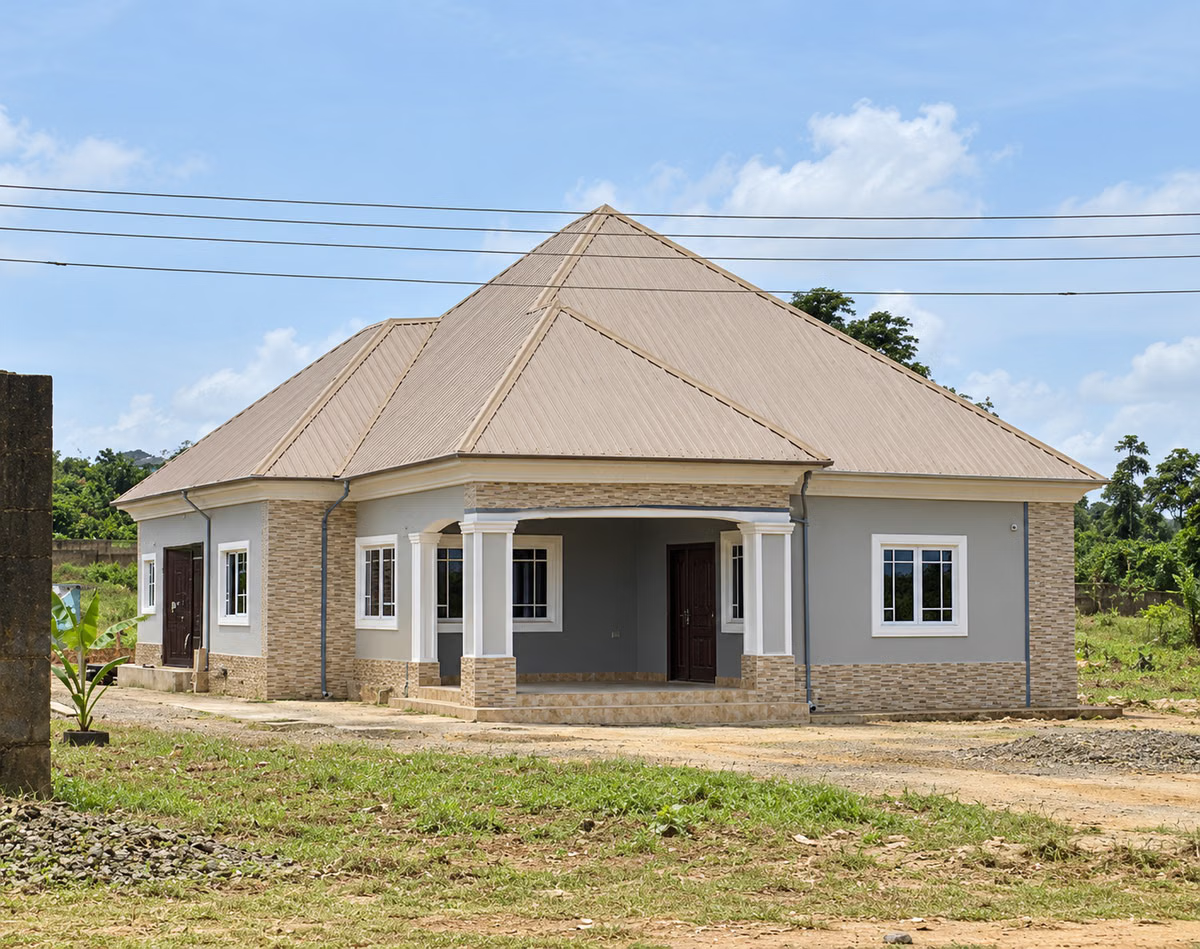
Many houses in Nigeria are single-story buildings with steep, pyramid-like pitched roofs, typically made from metal sheets.
Note: Similar roof shapes can also be found in other African countries, such as Rwanda. Use this meta in combination with other clues.
Tunisia (TN)
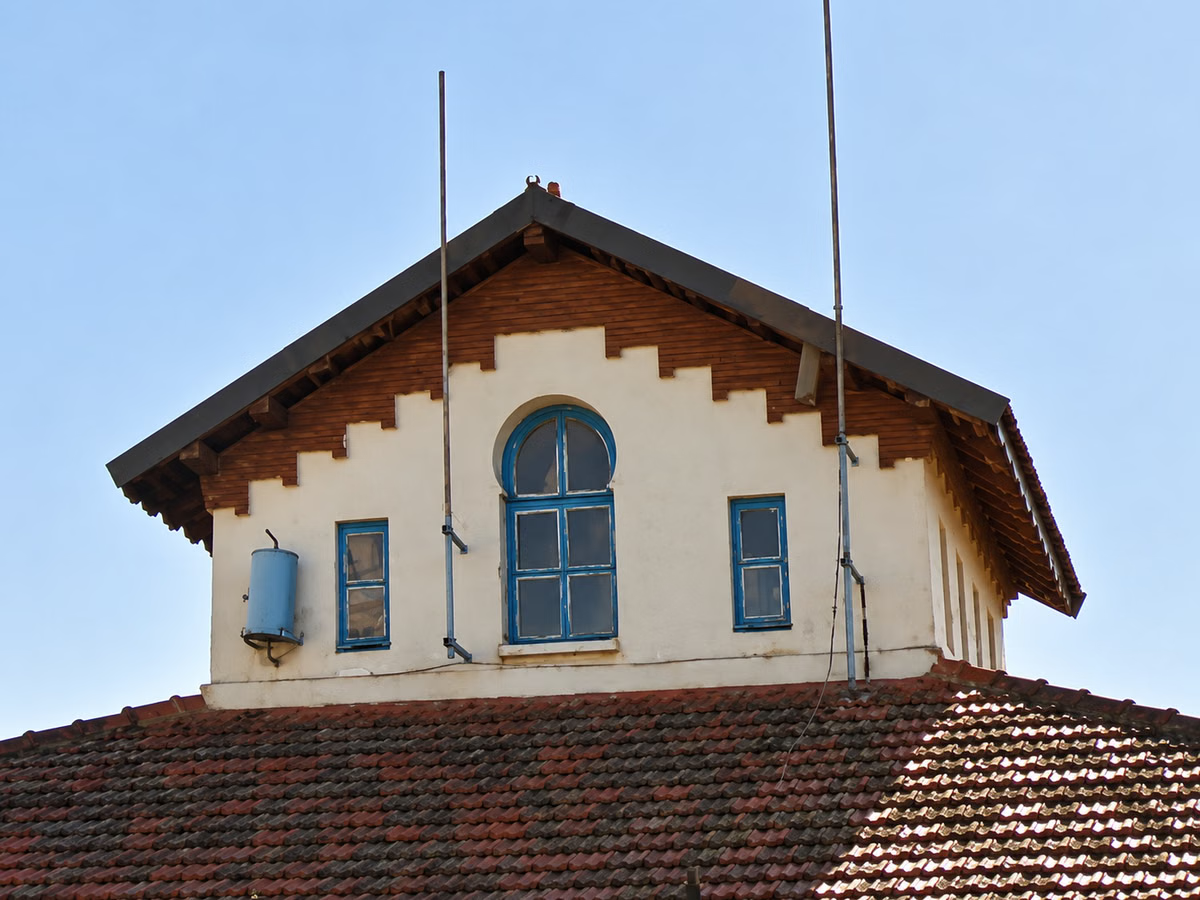
Doors, gates, windows, and other architectural elements in Tunisia are sometimes painted in this distinctive traditional shade of blue.
Note: This shade can be found throughout the country, but it is particularly common on the island of Djerba.
Eswatini (SZ)
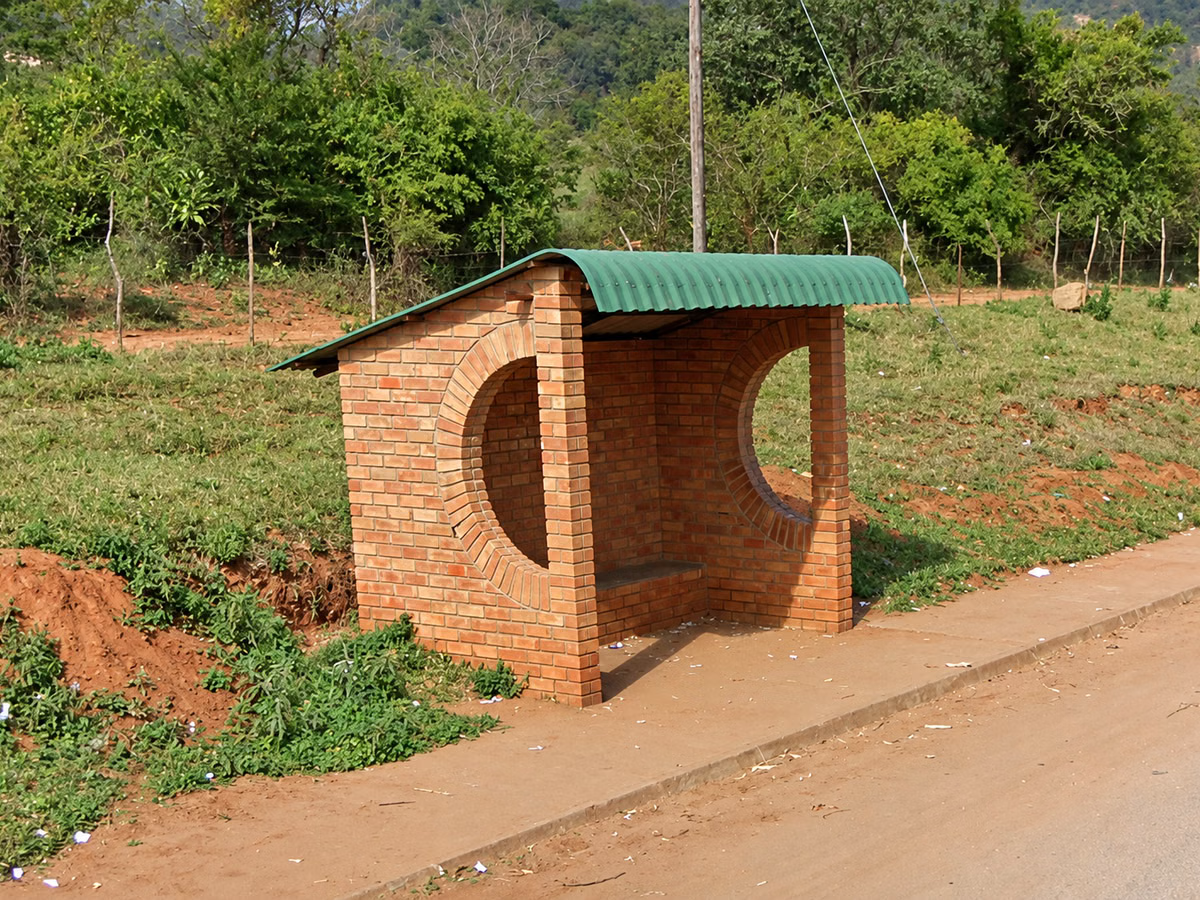
In Eswatini, you can find bus stops made of concrete or brick. They stand out for their solid design and decorative details.
Rwanda (RW)
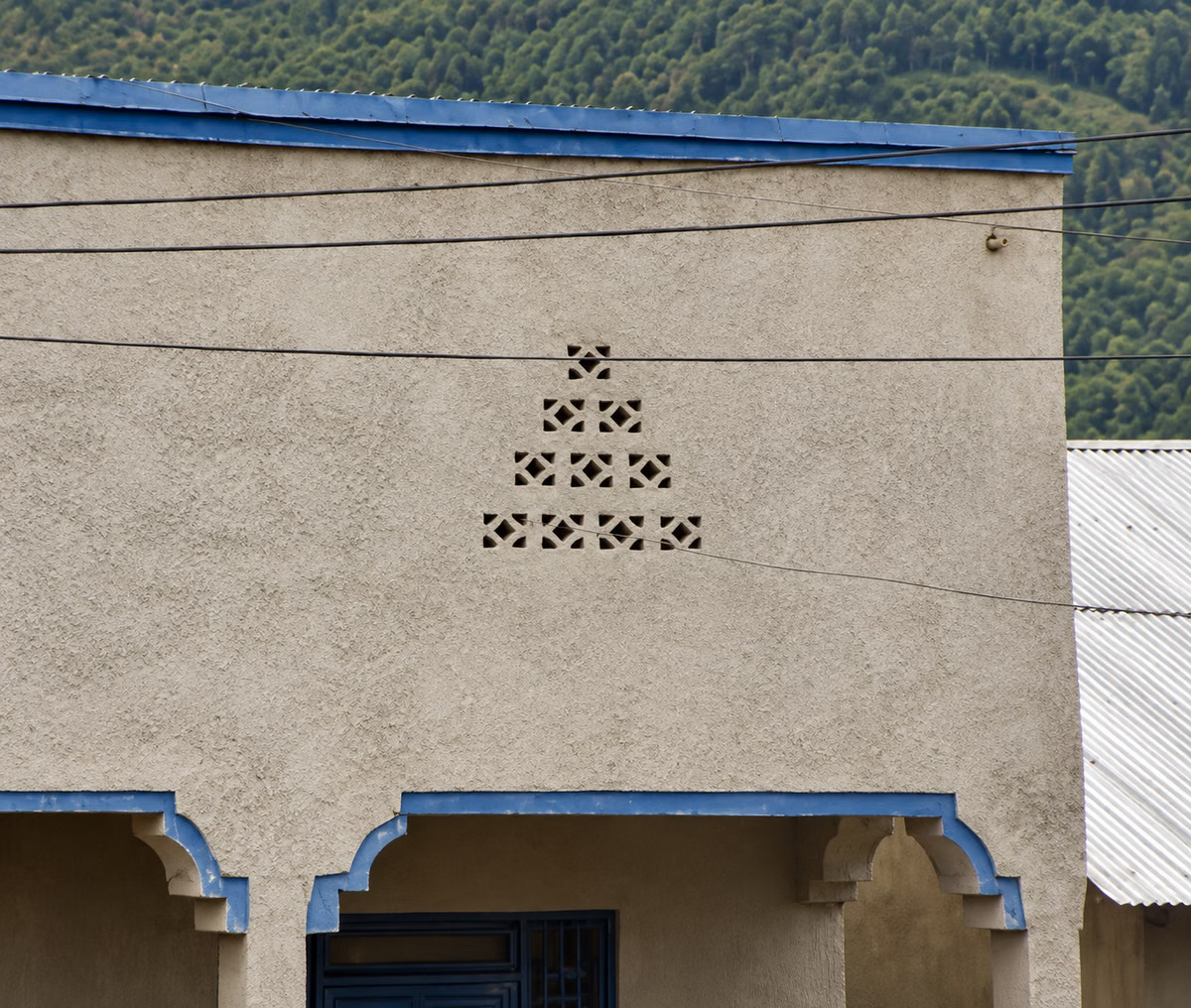
Brick and concrete are widely used in Rwandan architecture. Most roofs are steep and pitched, similar to those found in Nigeria, although flat roofs are also common. Houses are often surrounded by fences or walls for security.
Key detail: One of the most distinctive features of Rwandan architecture is the use of ventilation bricks, which can be seen in many houses.
Tunisia (TN)
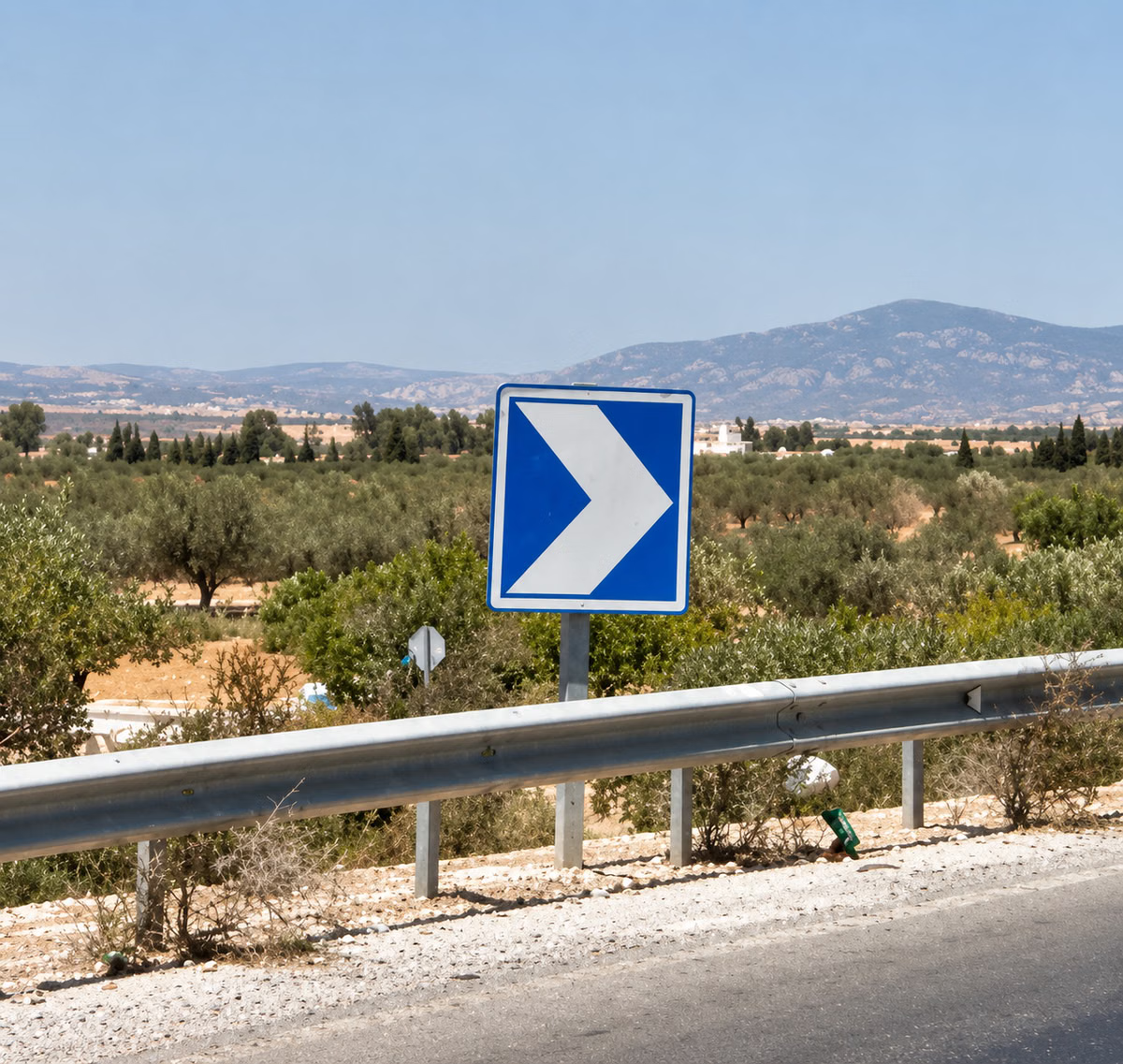
Tunisia has distinctive chevron signs featuring a white arrow on a blue background.
Note: They are similar to chevrons used in Spain and France.
South Africa (ZA), Namibia (NA), Lesotho (LS), Eswatini (SZ), Botswana (BW)
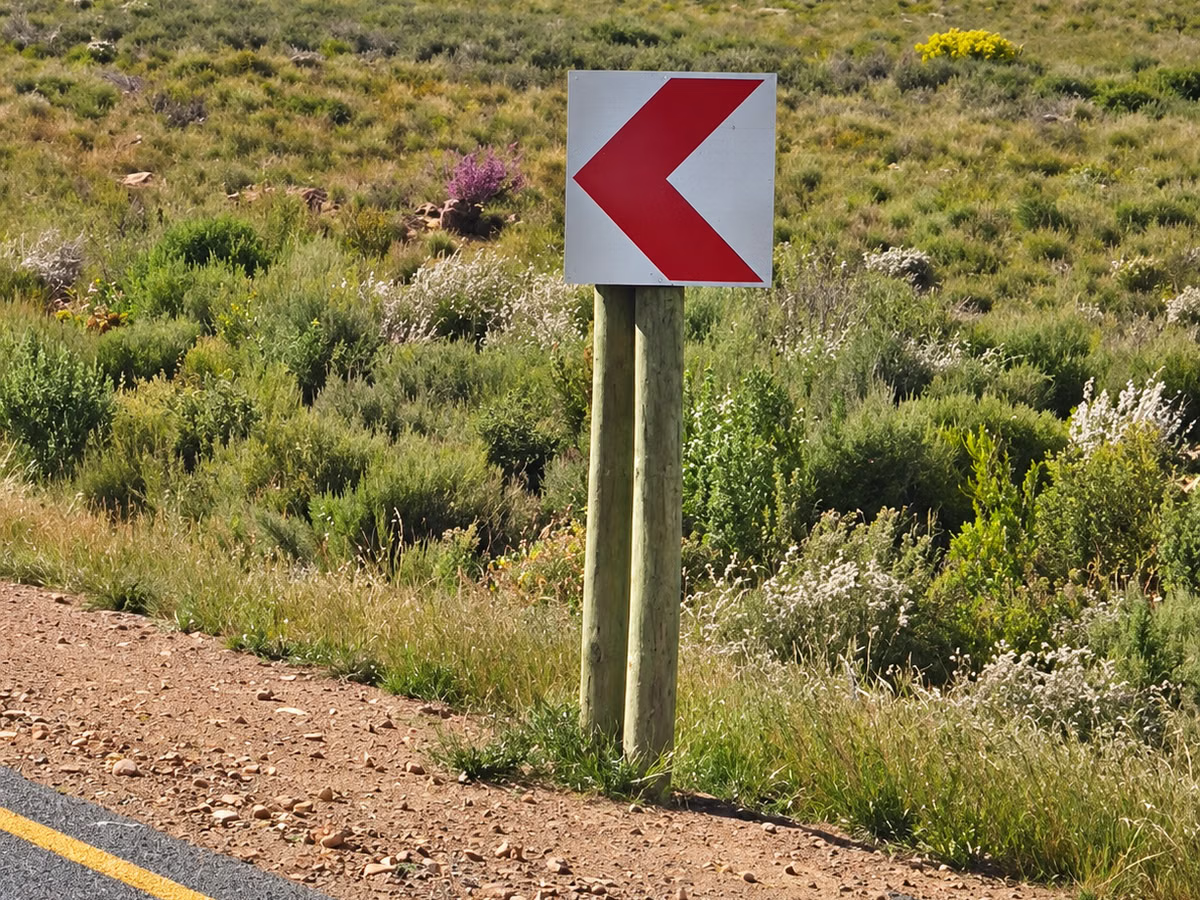
Chevrons with a white background and a red arrow are characteristic of the southern African countries of South Africa, Namibia, Botswana, Lesotho, and Eswatini.
South Africa (ZA), Botswana (BW), Namibia (NA)
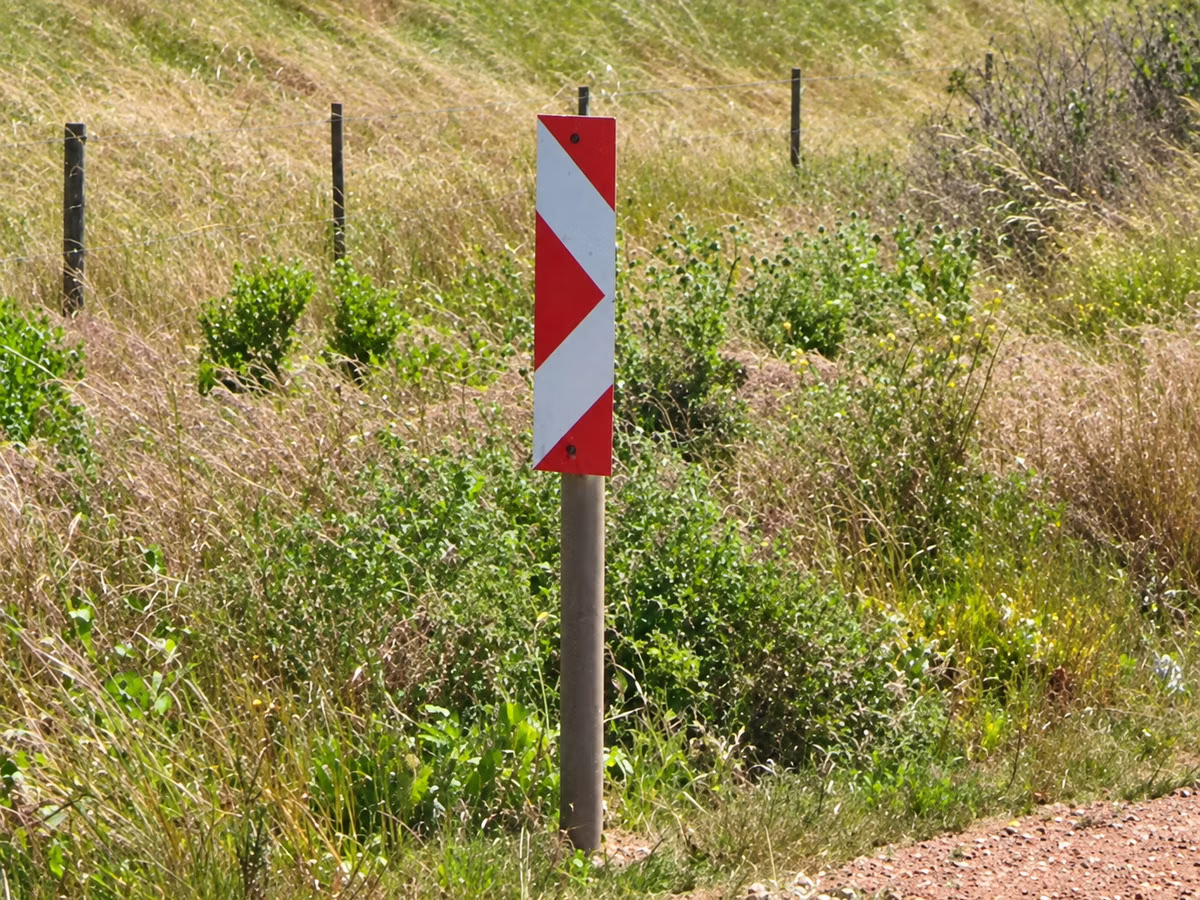
Red-and-white hazard markers are especially common in South Africa, Namibia, and Botswana. They are less frequently seen in Lesotho and Eswatini.
Note: Very similar hazard markers can also be found in Turkey.
South Africa (ZA)

South Africa uses green direction signs, with route numbers shown in yellow.
Key detail: South Africa uses N and R prefixes for national and regional/provincial routes.
Botswana (BW)
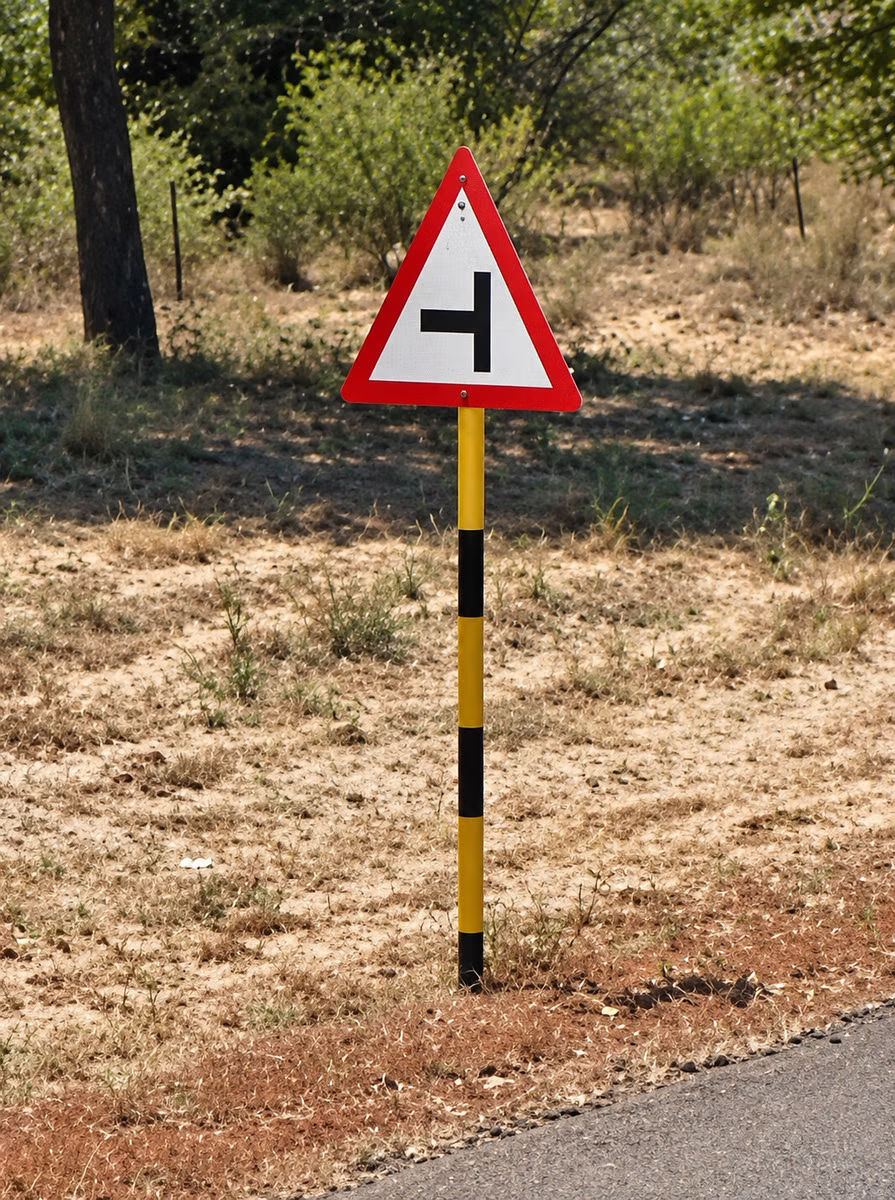
Botswana has a distinctive road sign design with black-and-yellow stripes. Red-and-white striped versions are also found, but less commonly.
Ghana (GH)

Black-and-white striped signposts are common in Ghanaian cities. They can be found in other African countries too, but Ghana is one of the places where they appear most often.
Tunisia (TN)
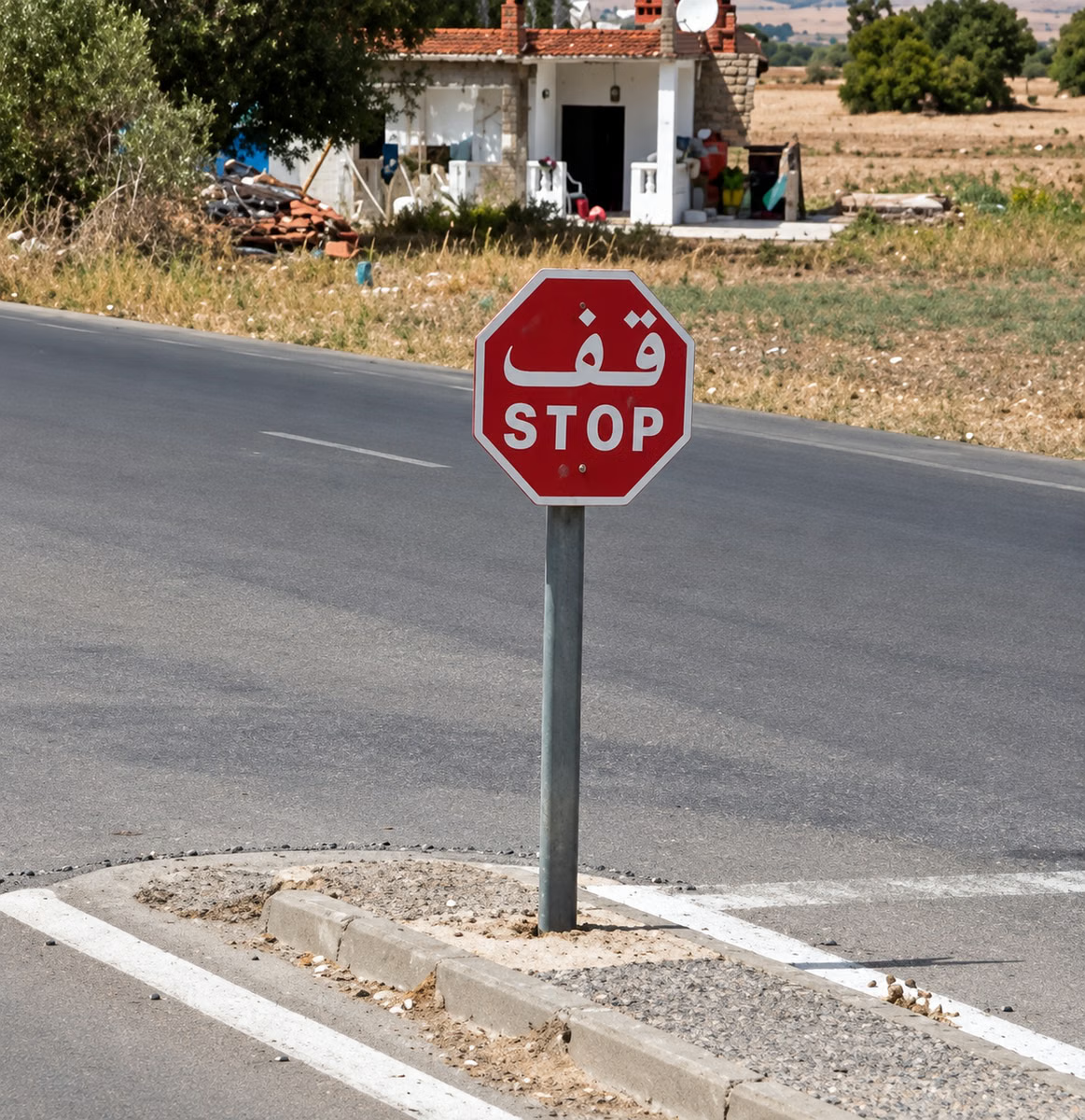
Tunisia has a distinctive STOP sign featuring both Arabic and Latin script.
Note: Similar bilingual STOP signs can also be found in Jordan and the UAE. In Israel and Palestine, a different distinctive STOP sign is used, featuring a hand symbol instead of text.
Tunisia (TN)
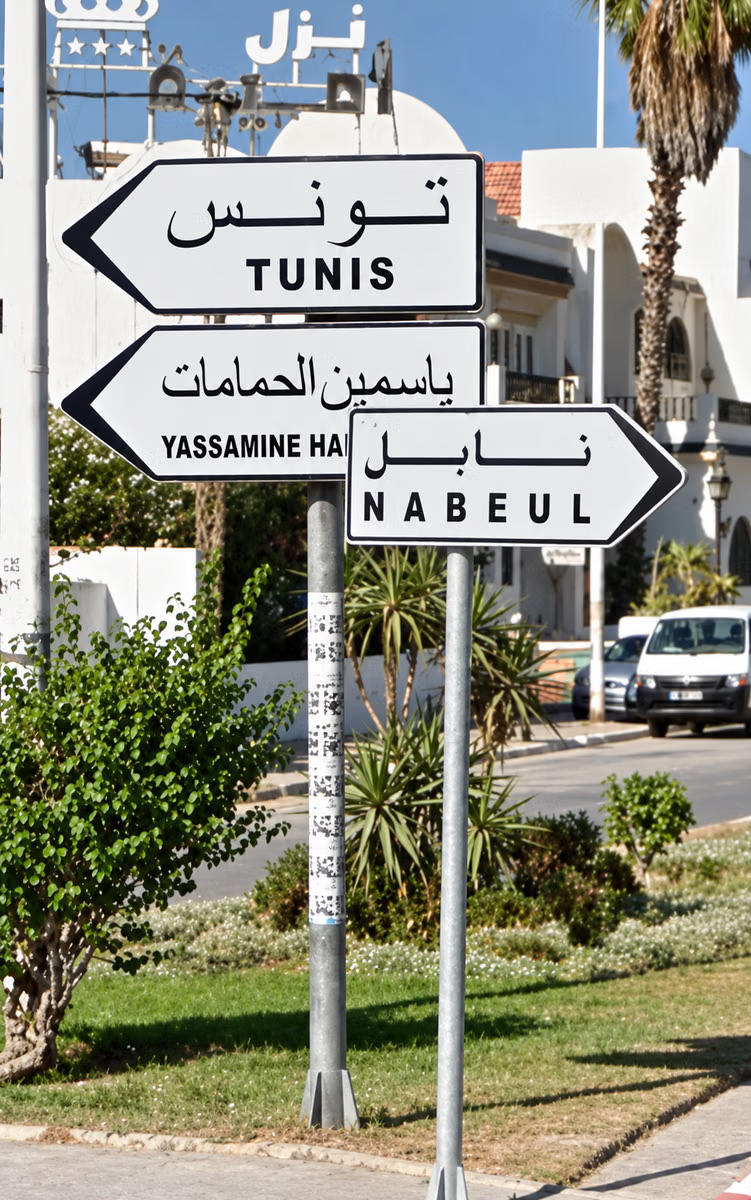
Most road signs in Tunisia have a white background, with place names written in both Arabic and Latin script. The Latin lettering is usually quite distinctive.
Note: Blue direction signs can also be found occasionally in Tunisia.
Eswatini (SZ)
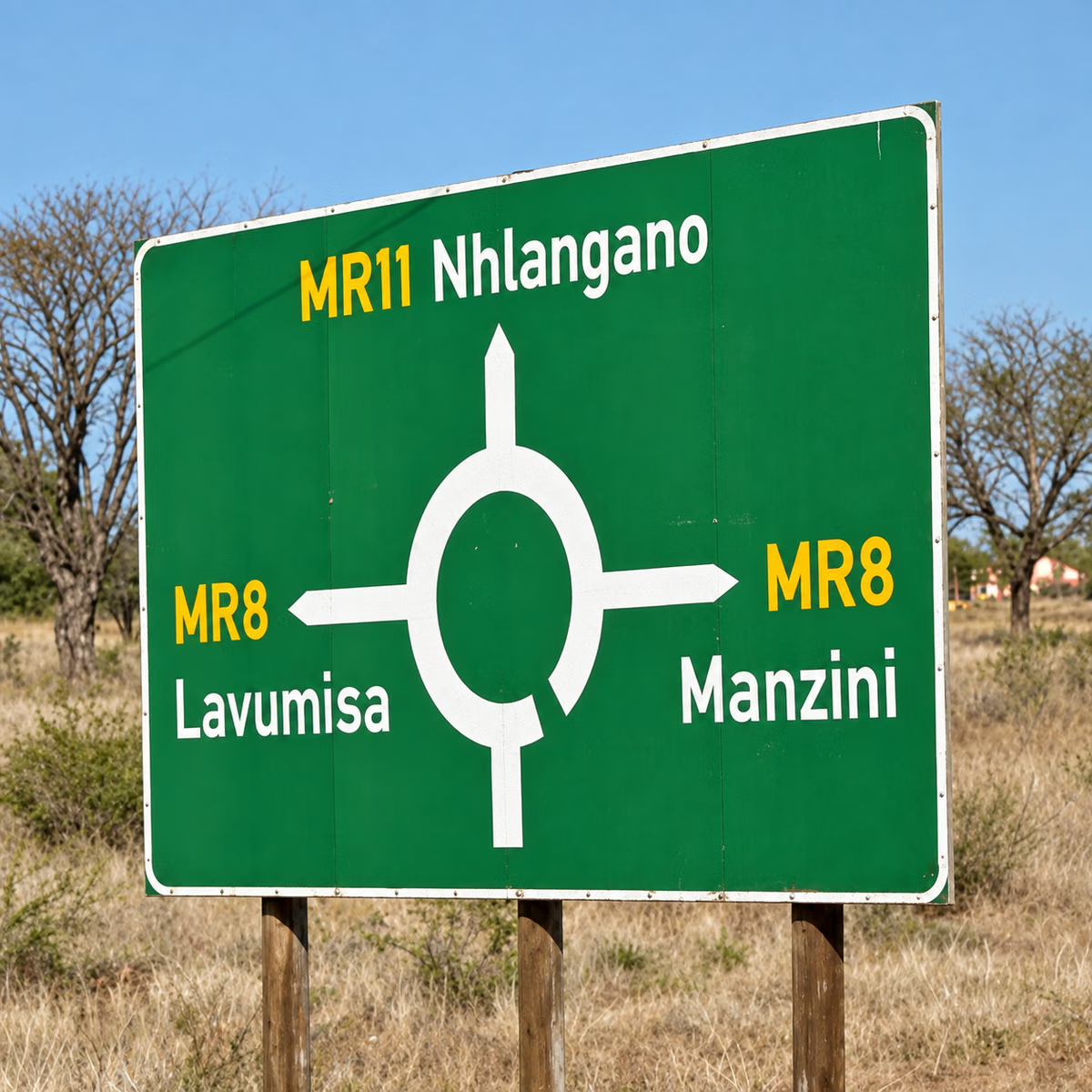
Roads with route numbers starting with MR are exclusive to Eswatini.
Namibia (NA), Botswana (BW), Lesotho (LS)
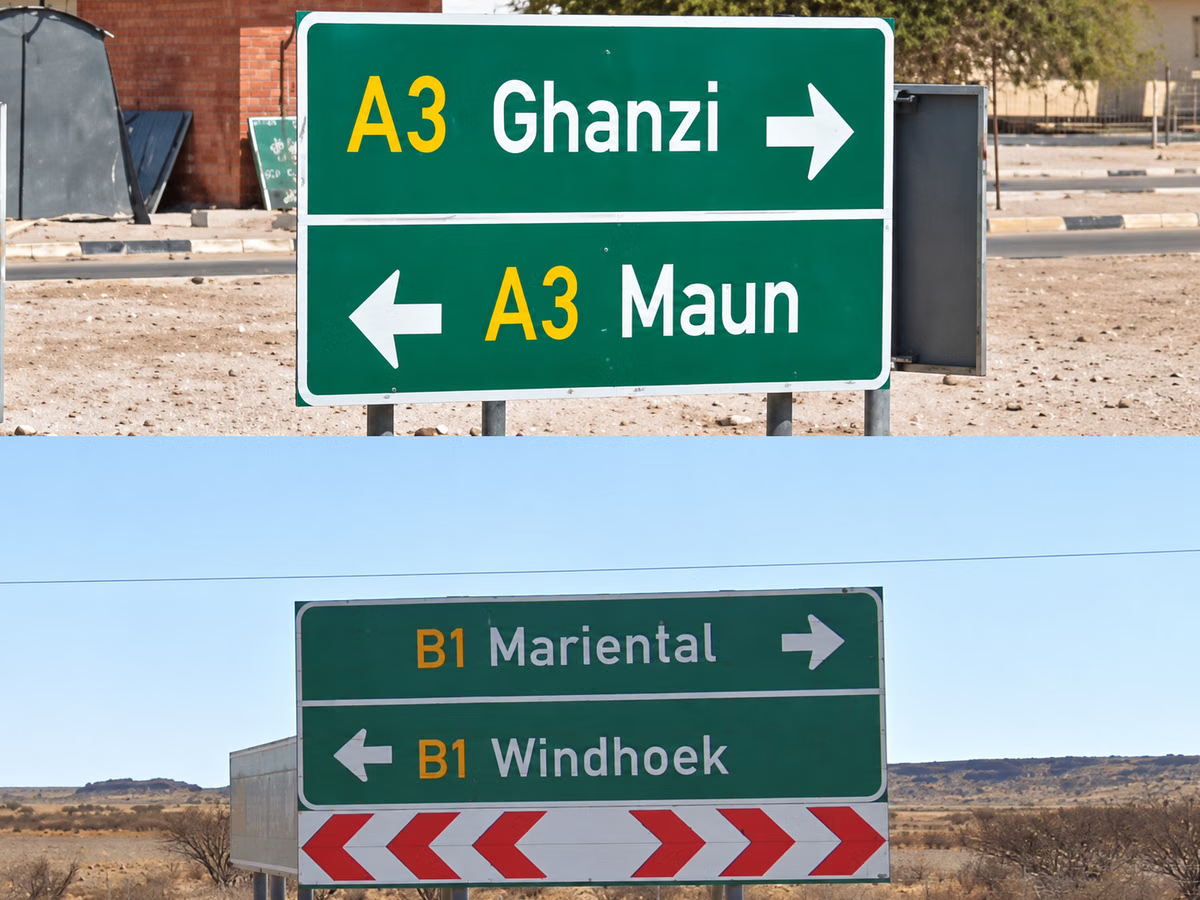
In Southern Africa, A- and B-prefixed roads are used in Namibia, Lesotho, and Botswana.
Notes:
Kenya also has green road signs, but the arrow shape, font, and thick border are different.
Namibia (NA)
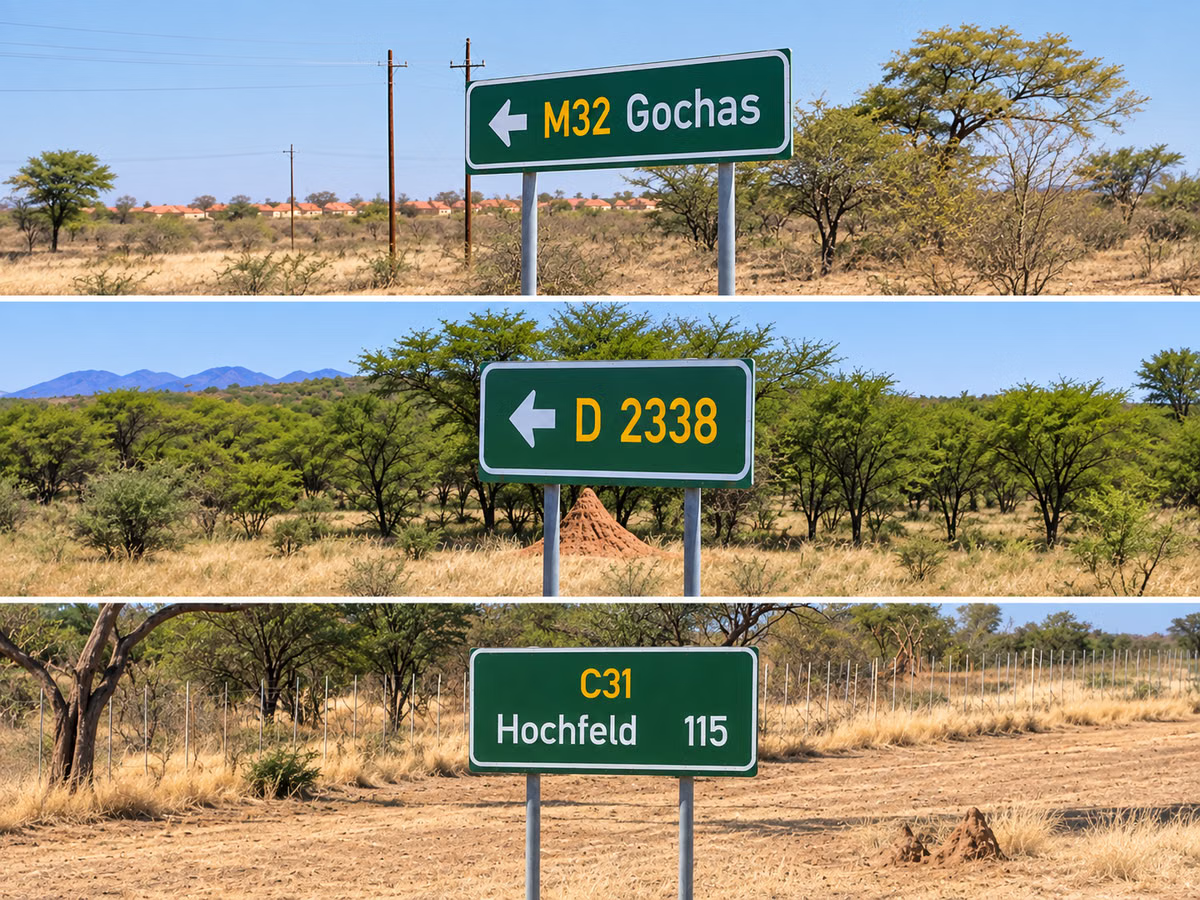
Namibia has distinctive road prefixes, including D, C, and M.
Notes:
Senegal (SN), Réunion (RE)

Road signs in Senegal and Réunion, like many other elements of the country’s road infrastructure, often follow French-style designs. They may feature one or more of the following:
Botswana (BW)
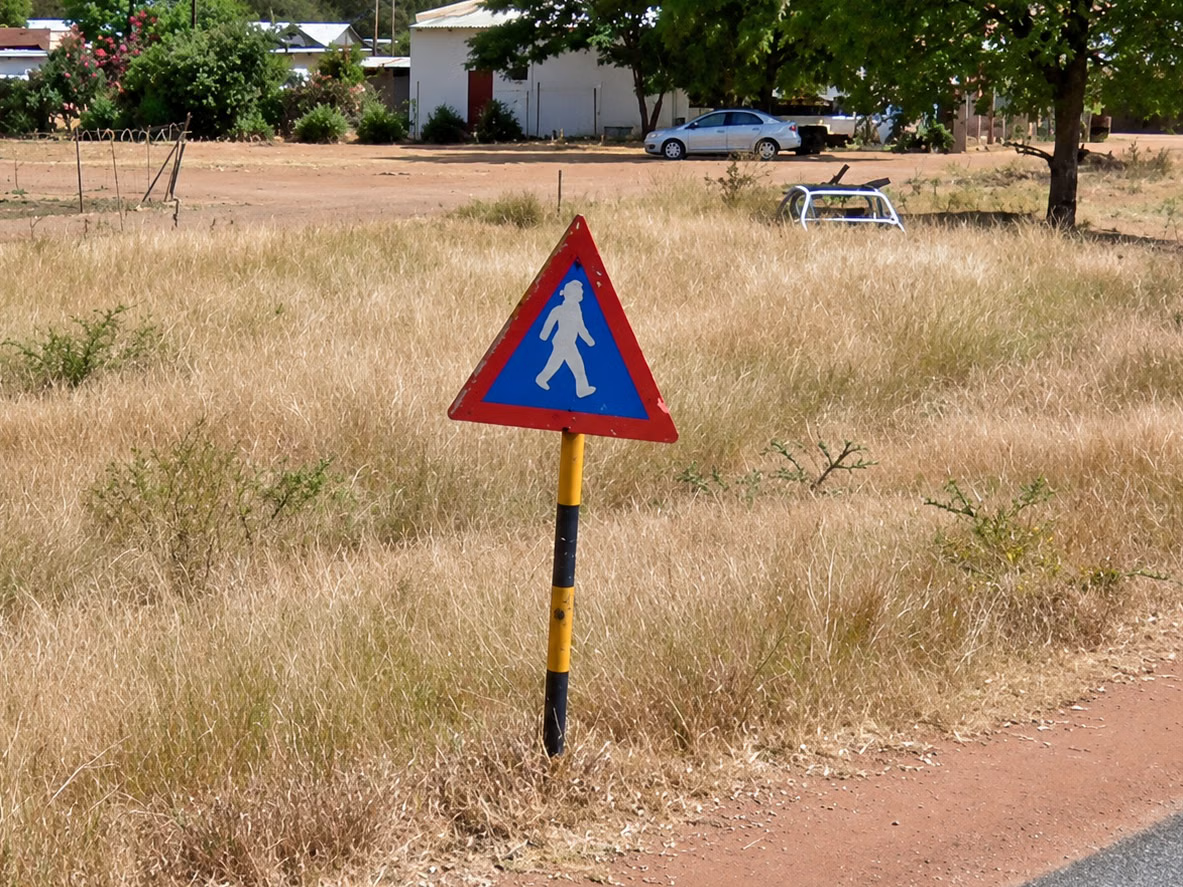
In Botswana, some road signs have a blue background. This is an older style of signage that was used before signs with white backgrounds were introduced.
Note: Most road signs in Botswana now have the newer white background.
Senegal (SN)
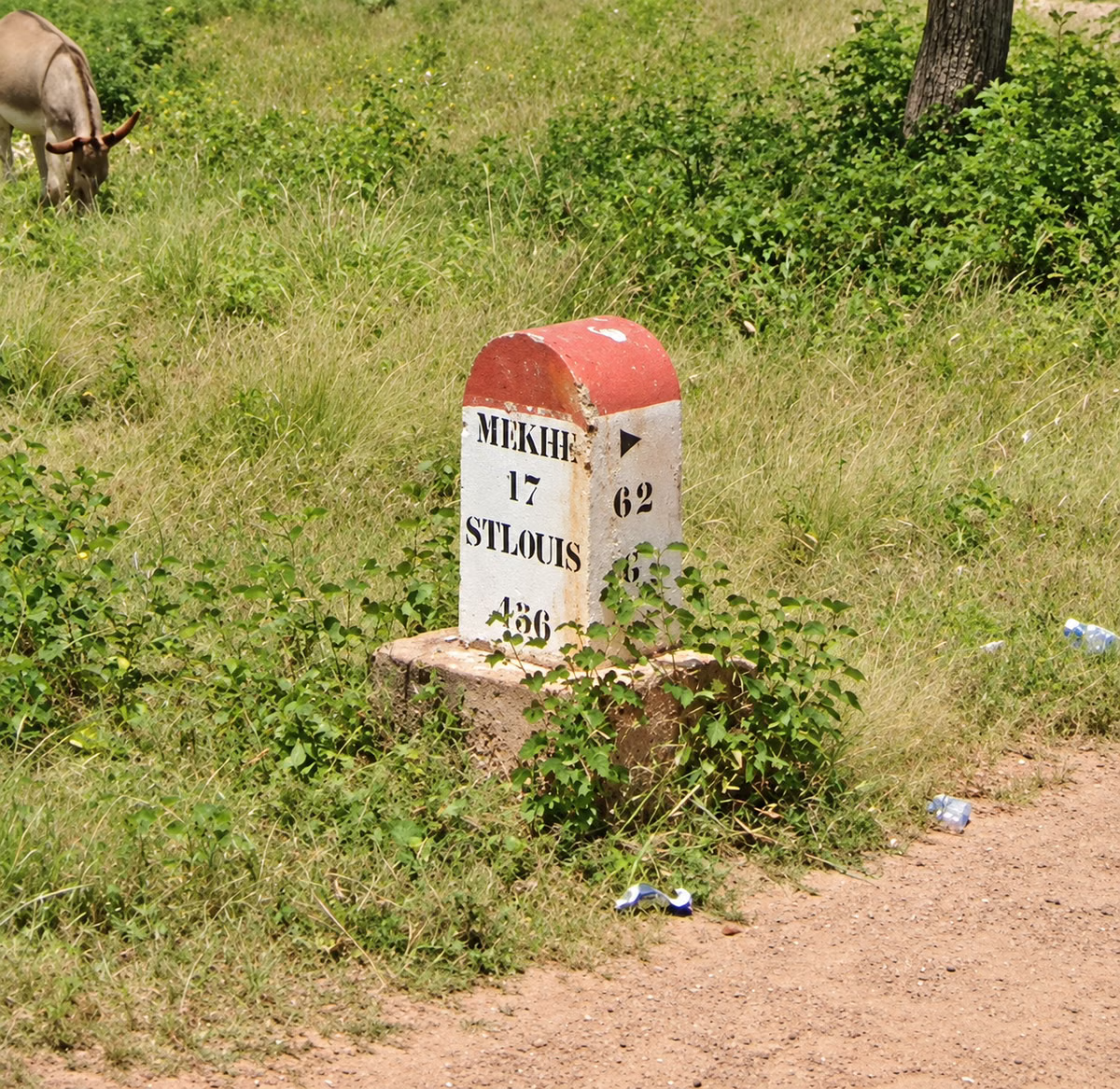
These white roadside milestones with colored tops show the road number and the distance to nearby towns.
Note: Very similar milestones can be found in Tunisia. The main difference is the language: in Tunisia, the information is also written in Arabic.
Tunisia (TN)
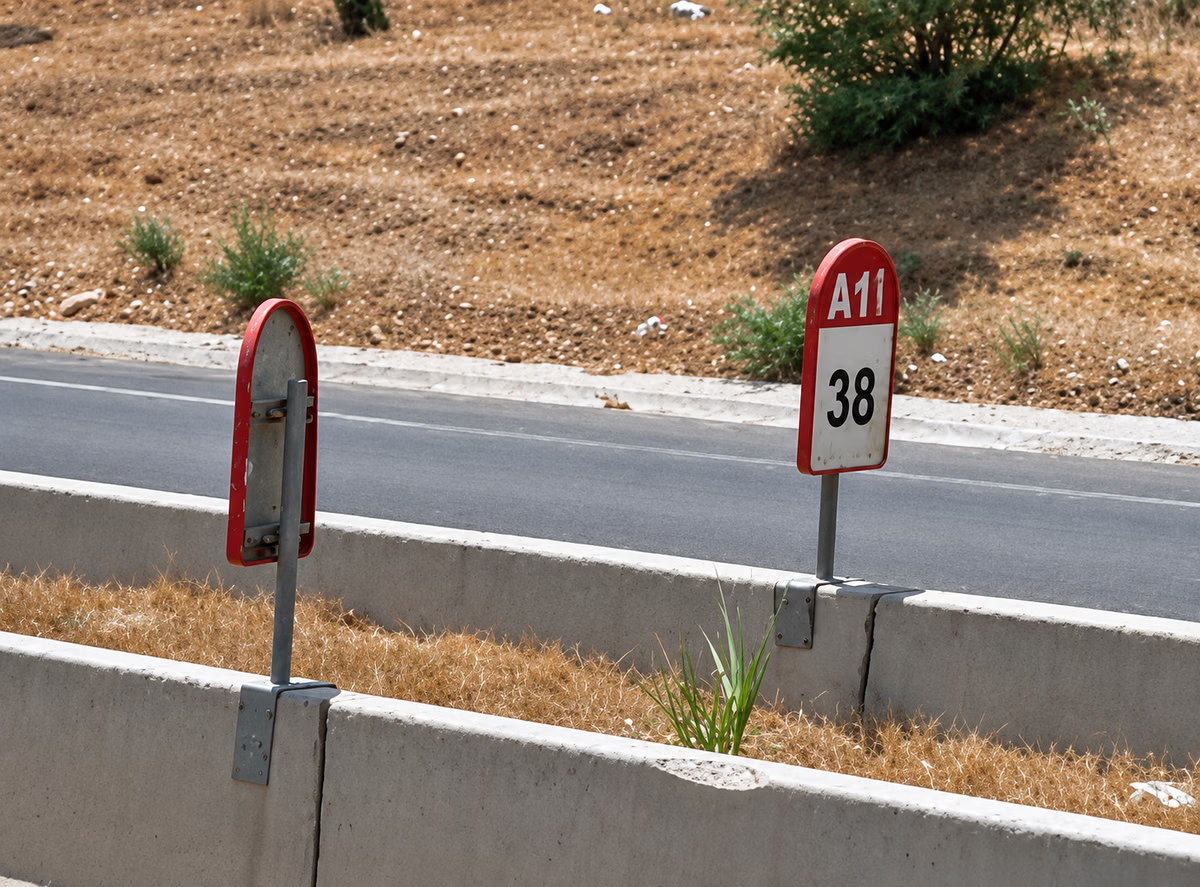
Kilometer markers in Tunisia are white with rounded tops and are most commonly found along major highways. On smaller roads, concrete roadside milestones are more common.
Tunisia (TN)
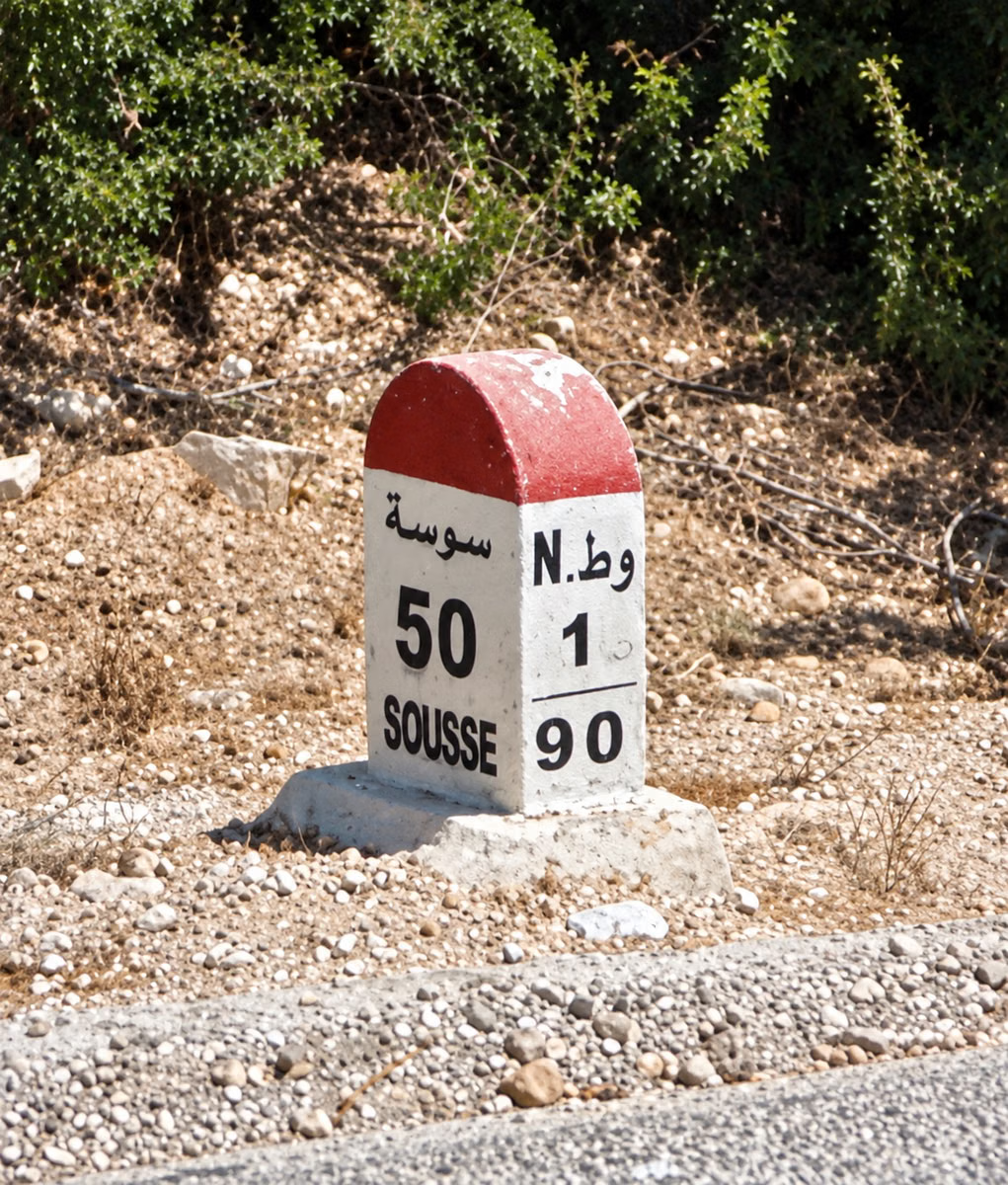
These white concrete roadside milestones with rounded tops can be found throughout Tunisia. The top can be red, green, or yellow. Similar roadside milestones can be found in Senegal, but the information on them is written in Latin script.
Note: They are very useful for pinpointing your location. The distance in kilometers to the nearest city is shown on both sides. The side facing the road shows the road number, in this case 1.
Senegal (SN)

Senegal is the only African country known for using fully blue license plates. This is a distinctive and useful meta when identifying Senegal.
Note: A newer version can be found in Generation 4 coverage. It follows a more European-style design, with a white plate and a blue strip on the left.
Nigeria (NG)

Nigeria uses short license plates that can appear slightly greenish when blurred.
South Africa (ZA), Lesotho (LS), Botswana (BW), Namibia (NA), Eswatini (SZ)
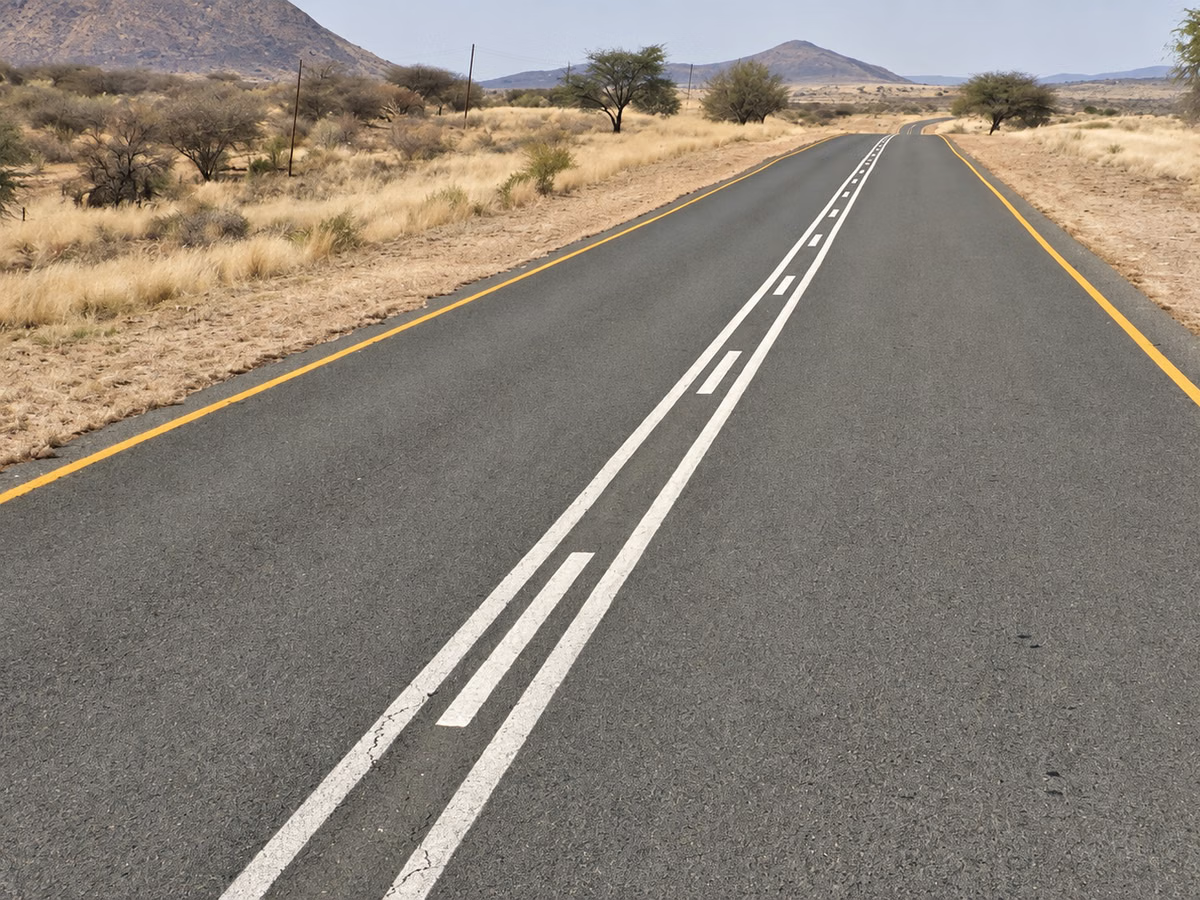
In South Africa, Botswana, Eswatini, Lesotho, and Namibia, you can sometimes encounter unique white triple center lines, consisting of two solid lines on the outside and a dashed line in the middle.
Note: Another distinctive type of triple center line can also be found, consisting of two white lines with a yellow line in the middle. These markings are usually seen on major highways.
South Africa (ZA), Namibia (NA), Eswatini (SZ), Botswana (BW), Lesotho (LS)
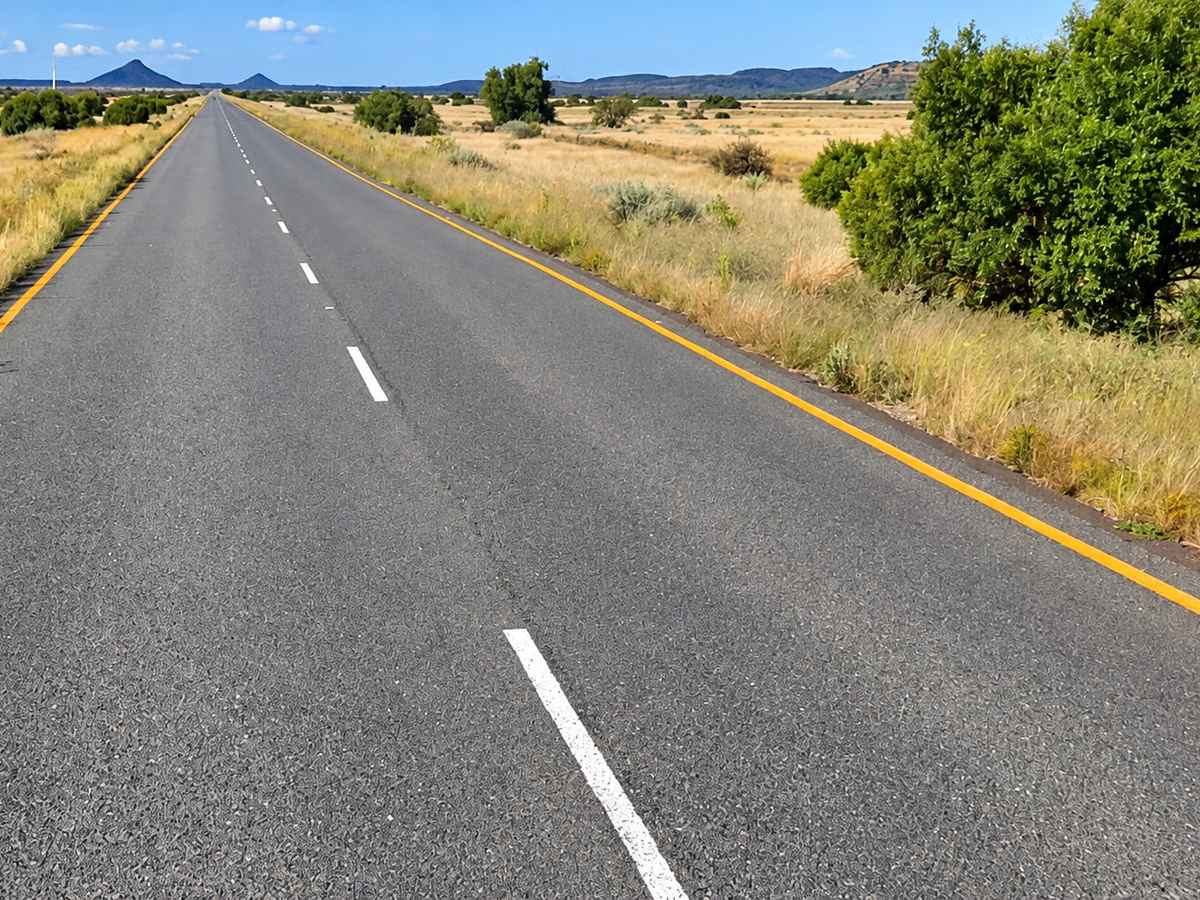
A useful clue for identifying countries in Southern Africa is the combination of yellow edge lines and white center lines.
Senegal (SN), Réunion (RE)
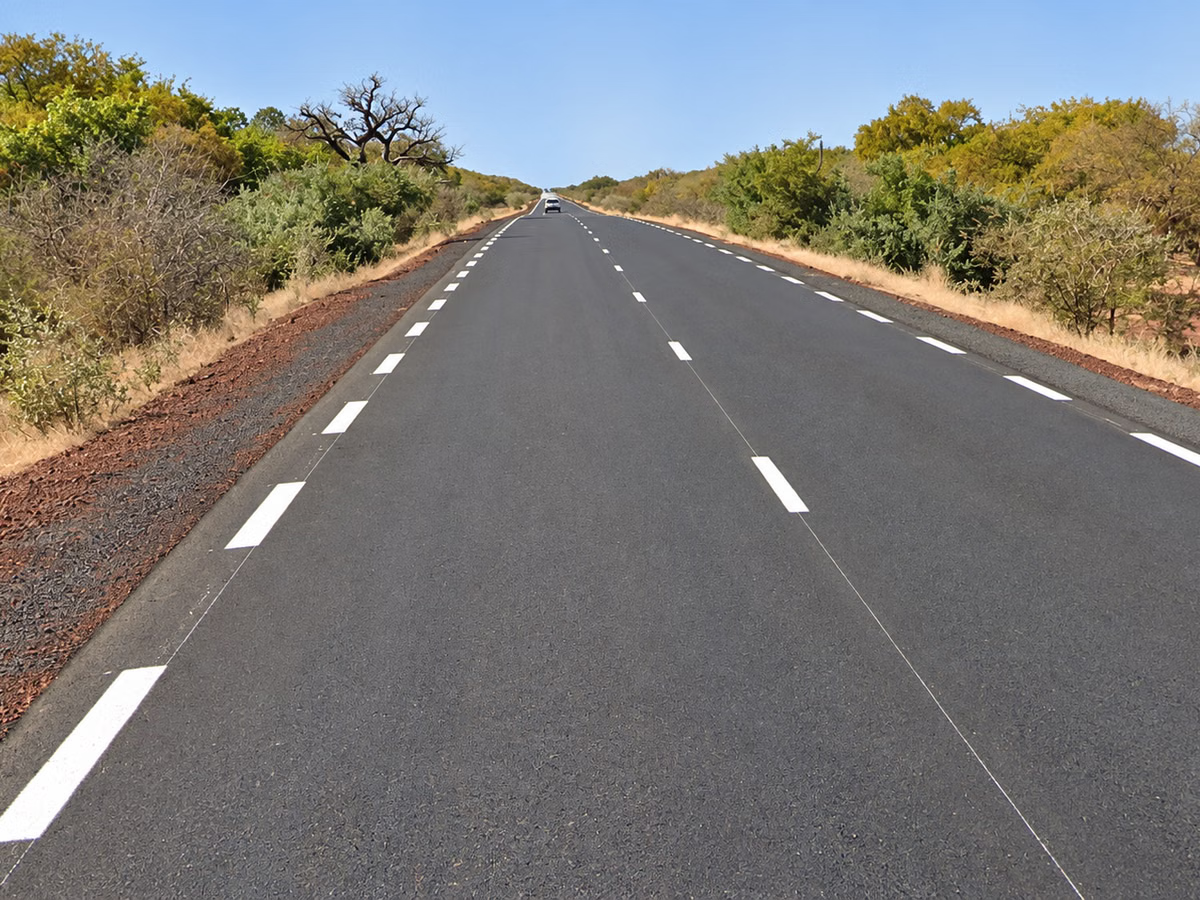
White dashed edge lines are another example of French-style road infrastructure found in Senegal and Réunion.Note: Similar road markings can also be found in Tunisia.
Kenya (KE)
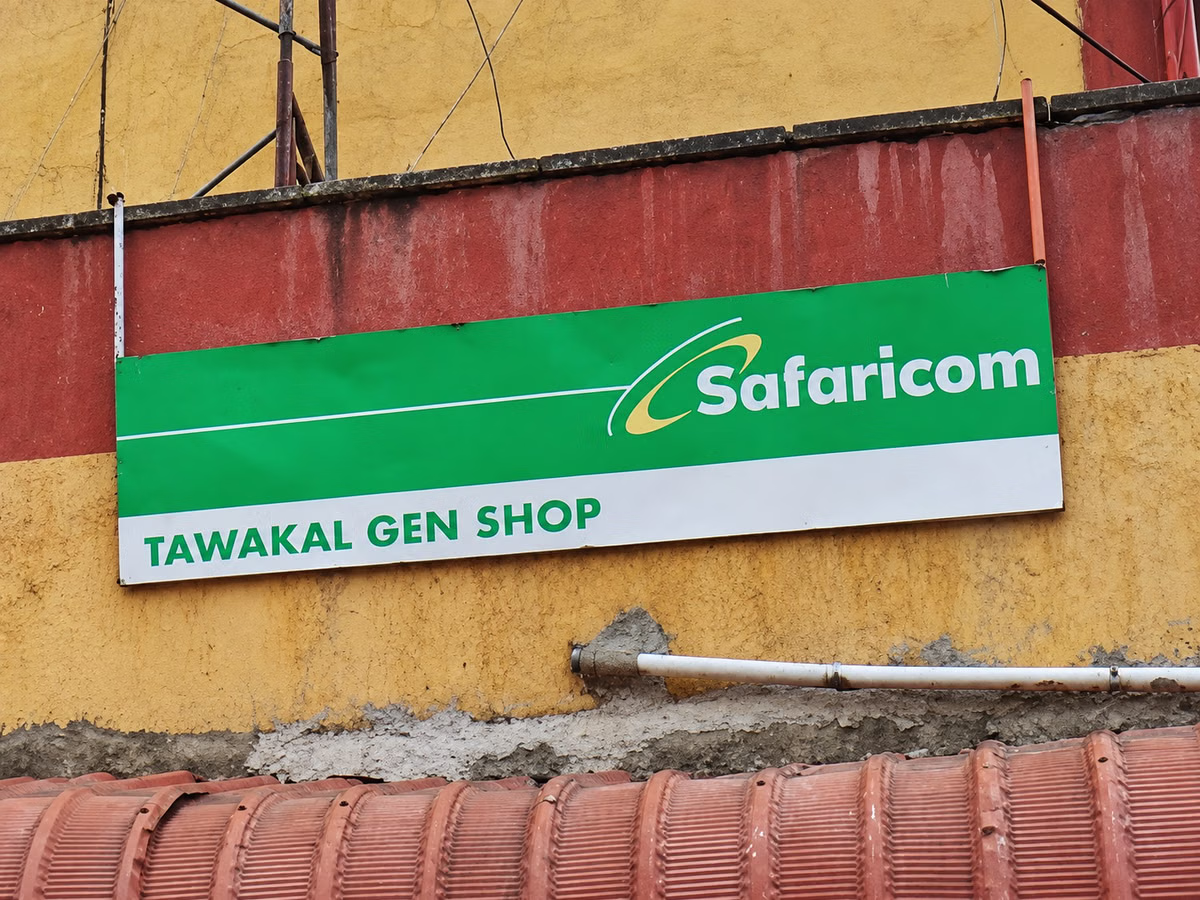
Safaricom is a mobile network brand unique to Kenya. Its distinctive green branding can be seen throughout the country, with Safaricom shops and dealers found in cities and towns across Kenya.
Ghana (GH)
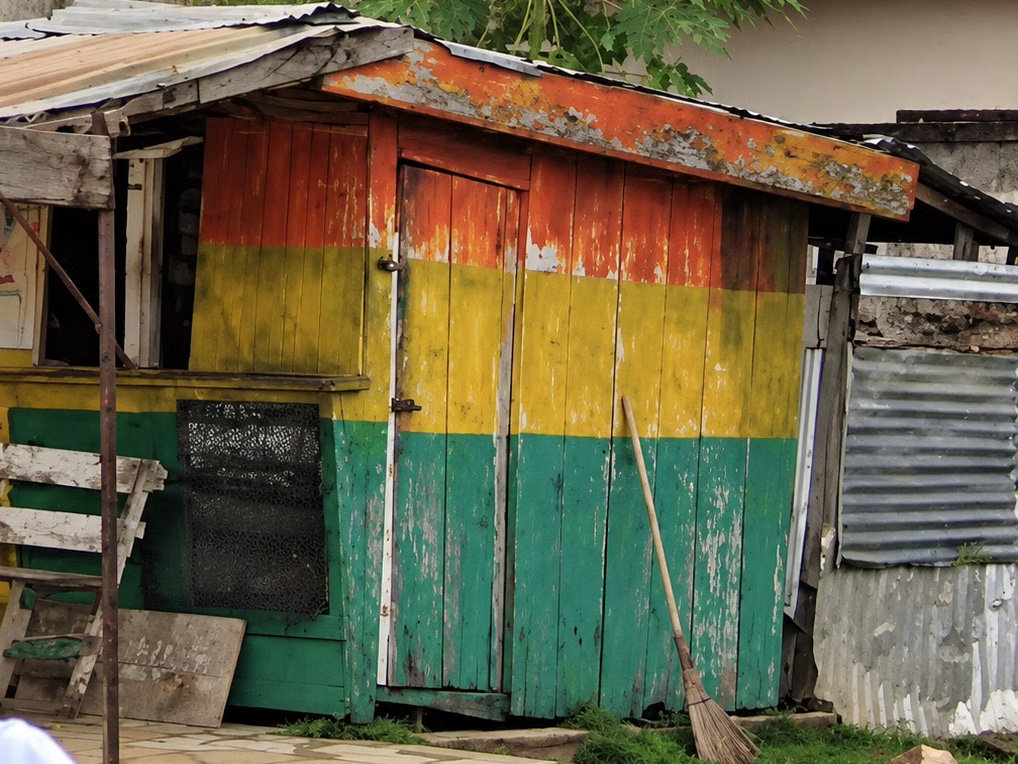
In Ghana, objects painted in the national flag colours - red, yellow, and green - are commonly seen, sometimes with a black star.
Note: The most frequently encountered example is a small market or trading kiosk.
Senegal (SN)
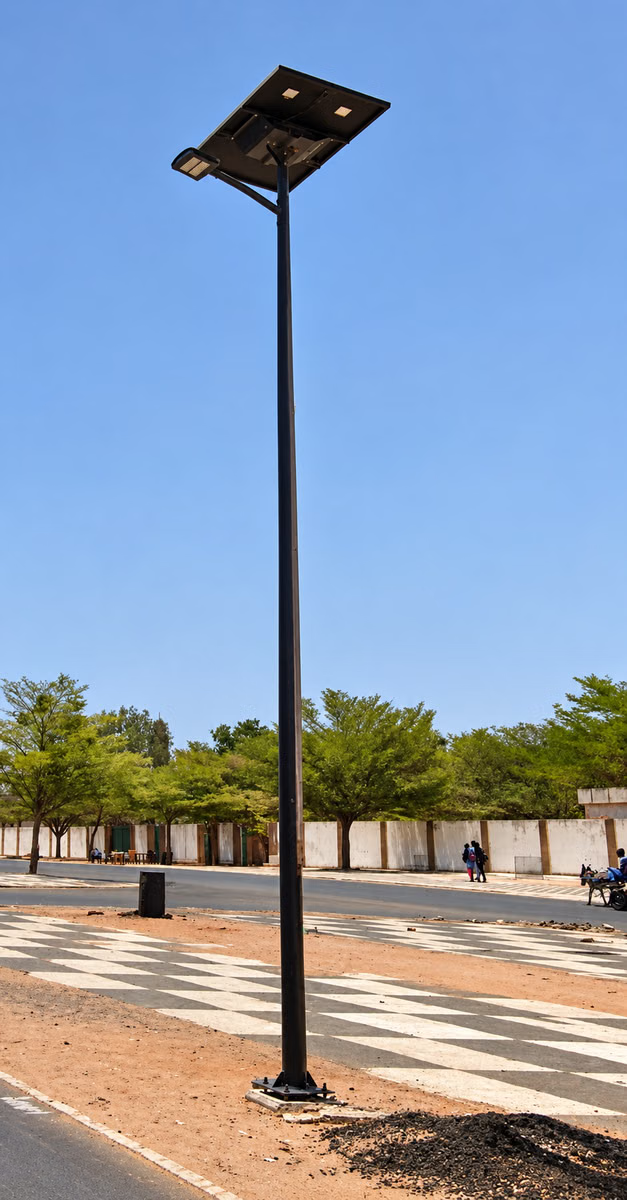
Simple black, and less commonly white, solar streetlights are frequently found in Senegal and can be a useful clue when identifying the country.
Lesotho (LS)
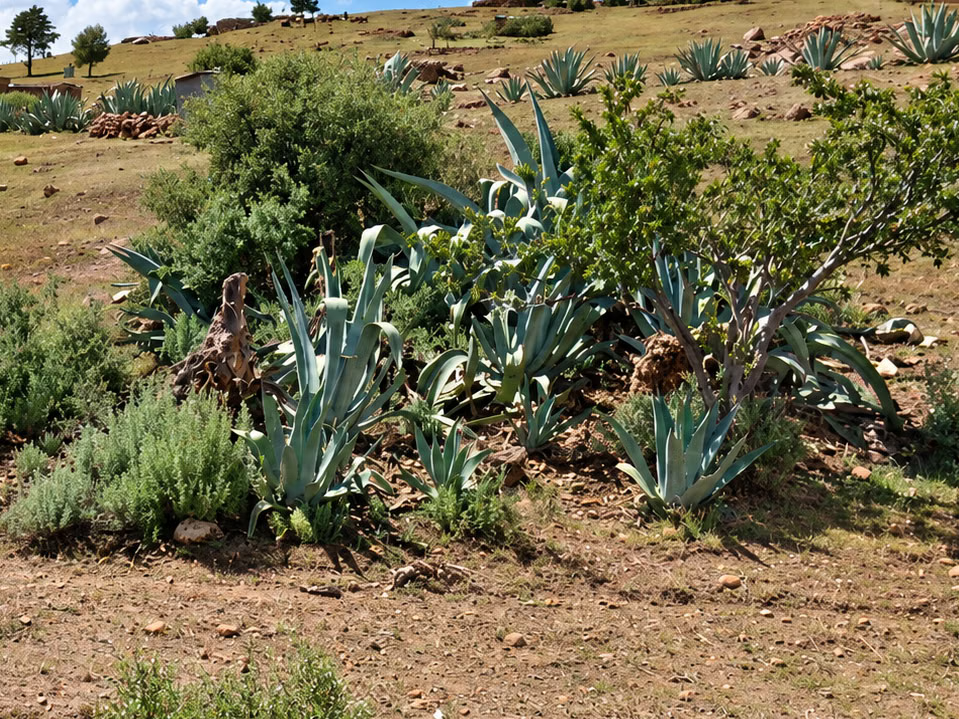
Agave plants are widespread in rural Lesotho and can often be a useful visual clue for identifying the country.
Namibia (NA)
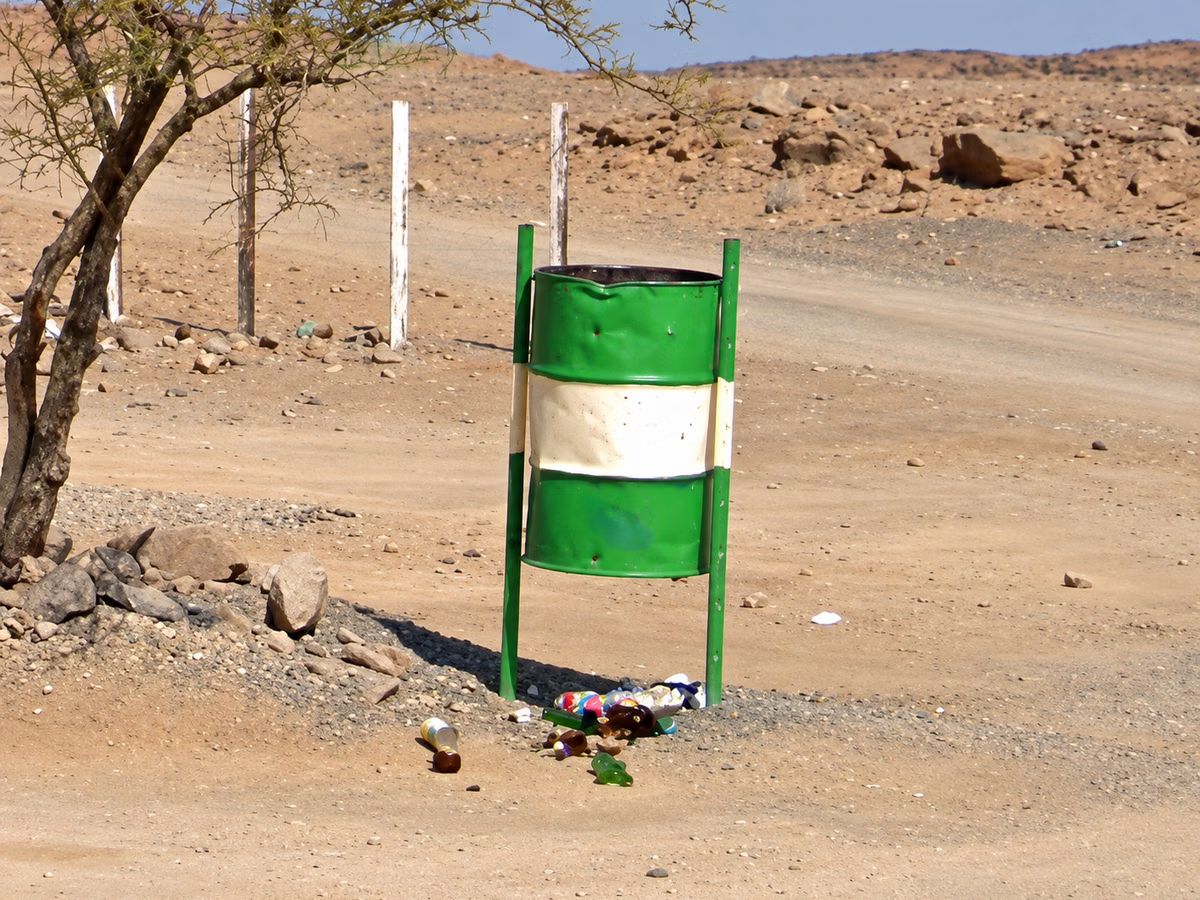
In Namibia, round metal trash bins can often be seen at roadside rest areas and intersections, frequently painted green and white.Note: On some streets, these bins may be painted in other colors.
Senegal (SN)

Most town entry signs in Senegal are white, with a thick pink and black border. The town name is also written in bold black lettering.
Botswana (BW), Uganda (UG)
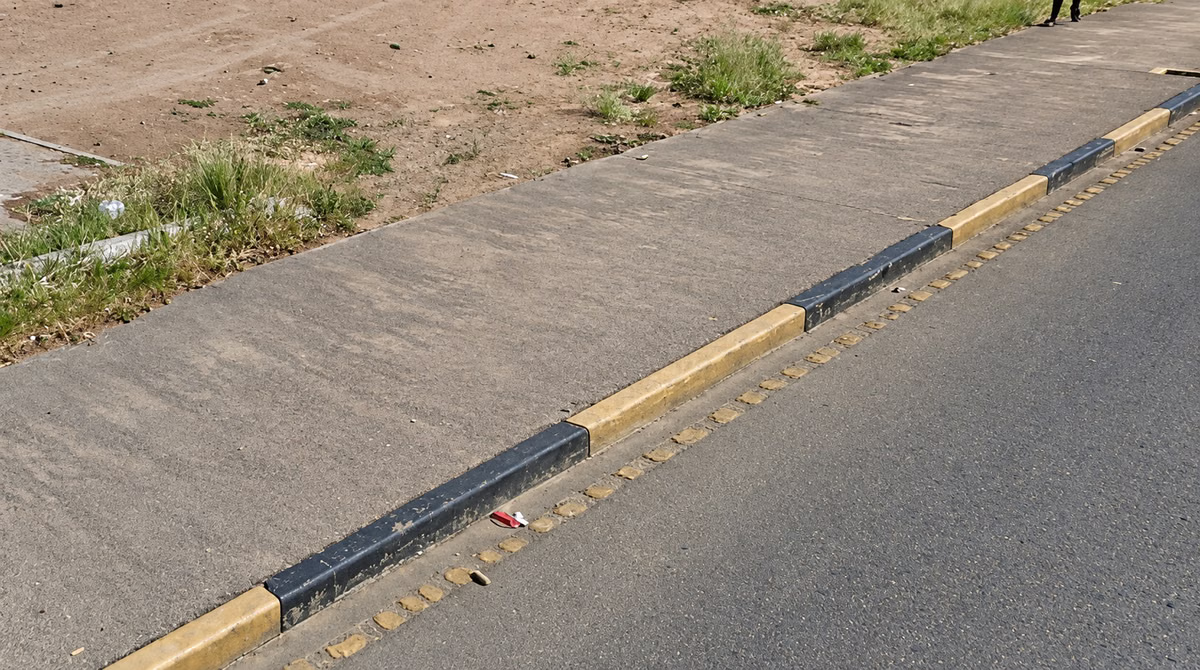
Among African countries, black-and-yellow painted curbs are most commonly found in Botswana and Uganda.
Note: Botswana also commonly has curbs painted in red and white or black and white.
Tunisia (TN), Botswana (BW)
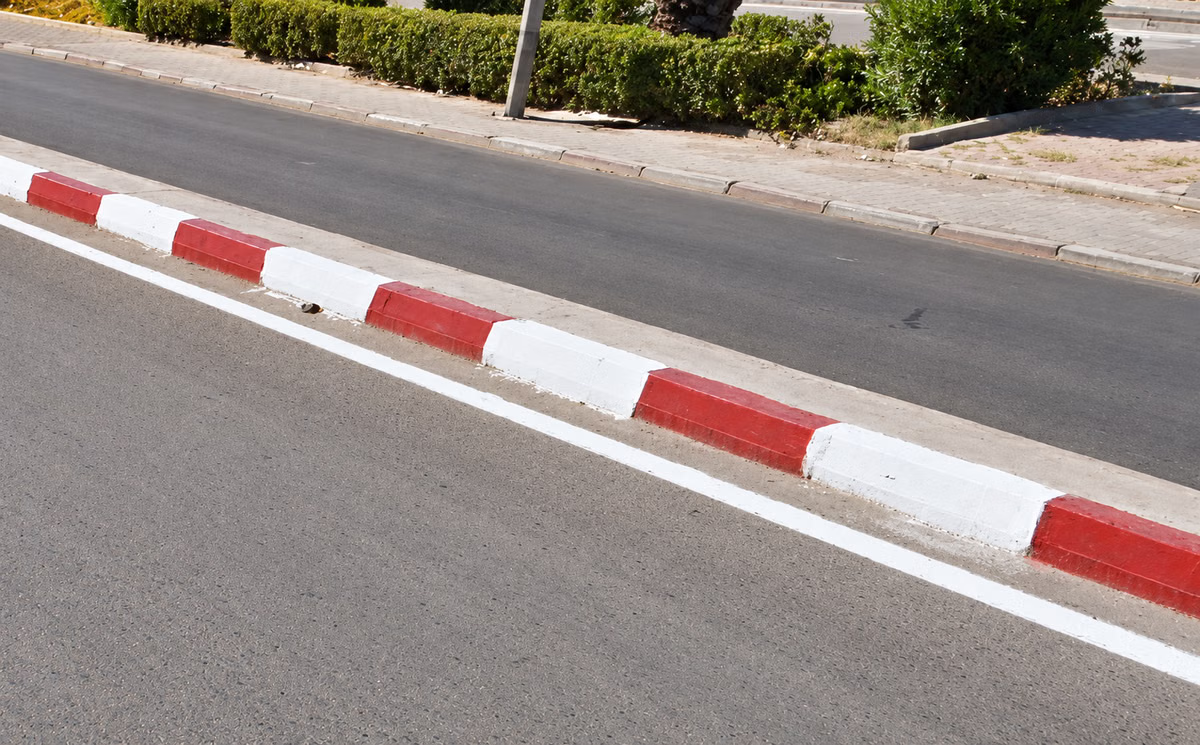
Among African countries, red-and-white painted curbs are most commonly found in Tunisia and Botswana.
Note: In Botswana, curbs painted in other colors are also common.
Rwanda (RW), Botswana (BW)
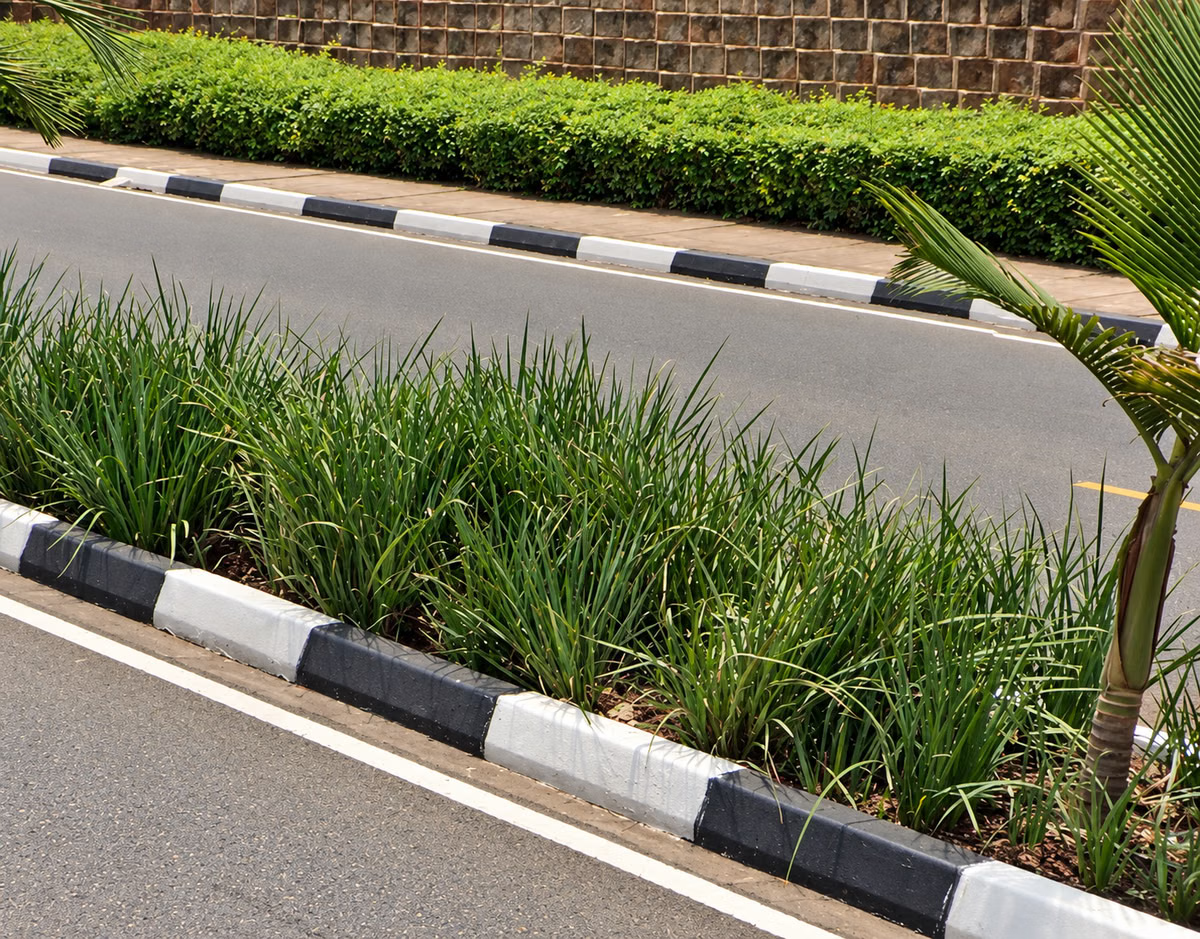
Black-and-white curbs are most commonly found in Rwanda and Botswana among African countries.
Note: In Botswana, curbs painted in other colors are also common.
Tunisia (TN)
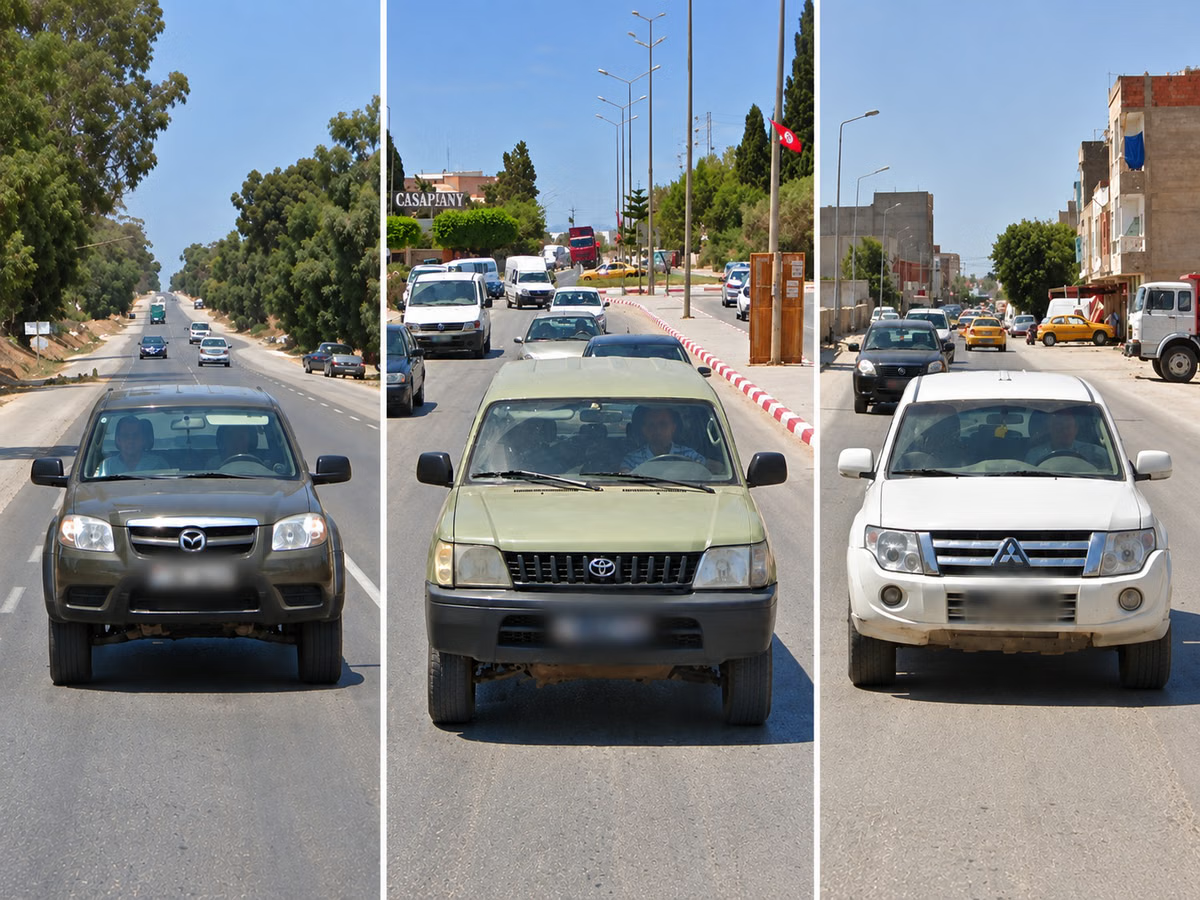
In Tunisia, the Street View car is almost always accompanied by a follow car.
There are several different types of follow cars, with these being the three most commonly encountered.
Note: Follow cars can be either in front of the Street View car or far behind it.
Kenya (KE)
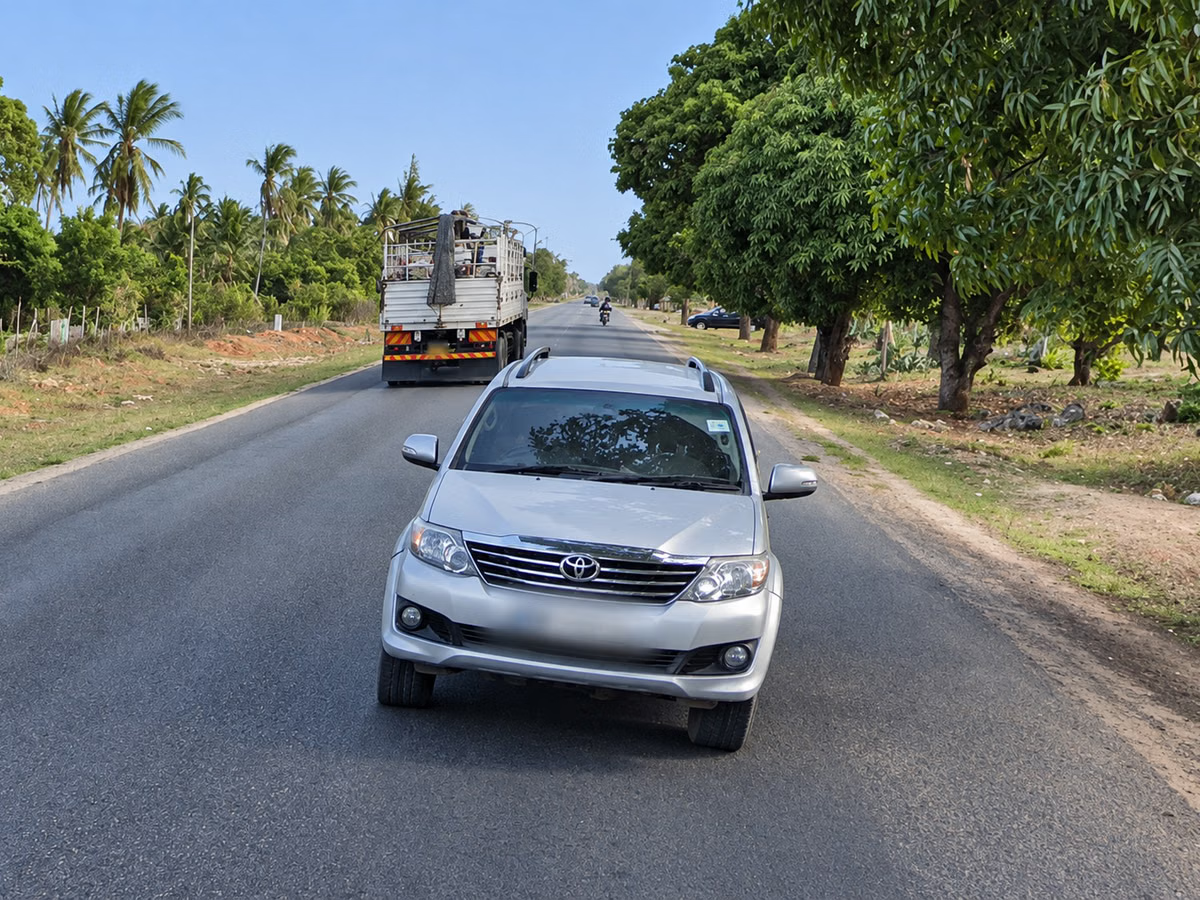
In Kenya, a gray Toyota vehicle can often be seen following the camera car.
Nigeria (NG)
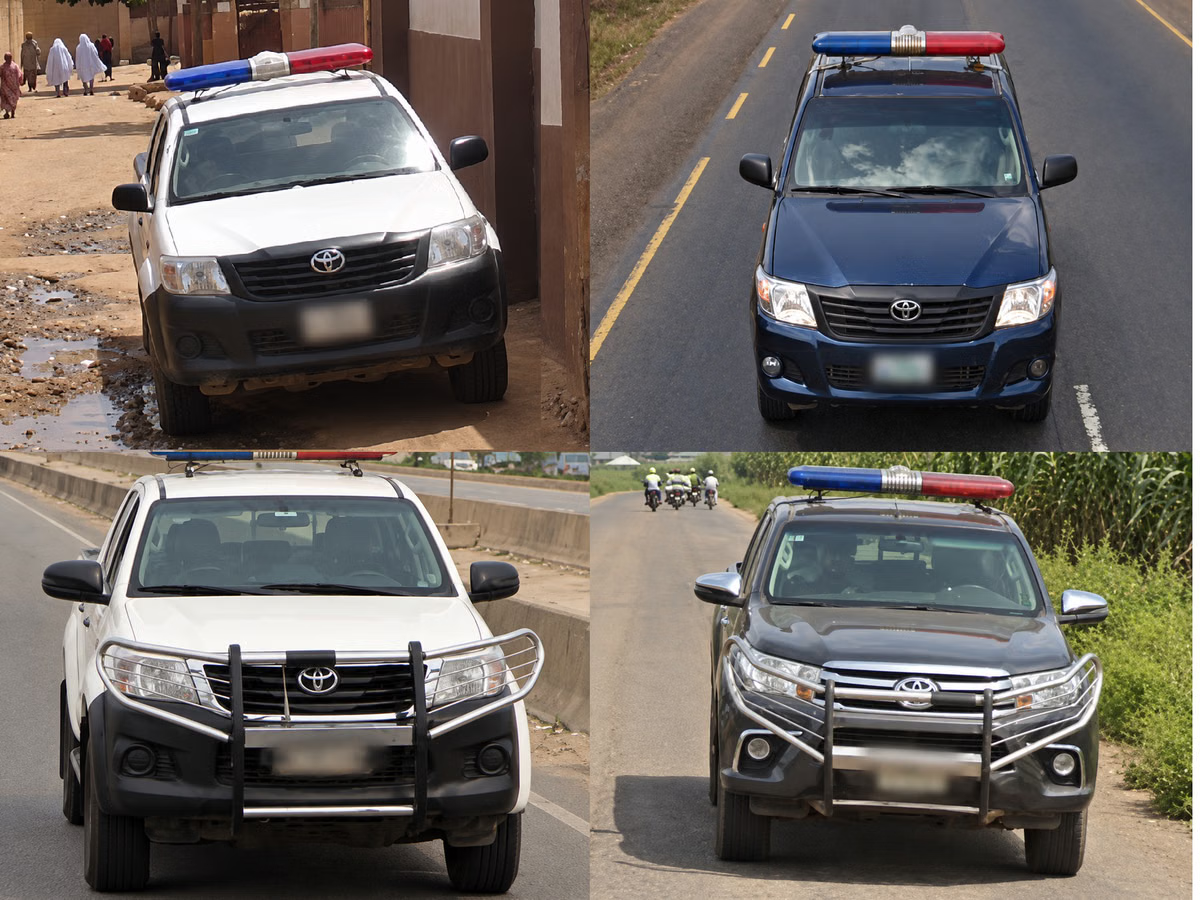
In Nigeria, a police follow car can often be seen behind the Street View car. These vehicles are most commonly white, black, or blue, although other types and colours may also occur.Note: Nigeria is particularly notable for follow cars equipped with flashing lights.
Kenya (KE)
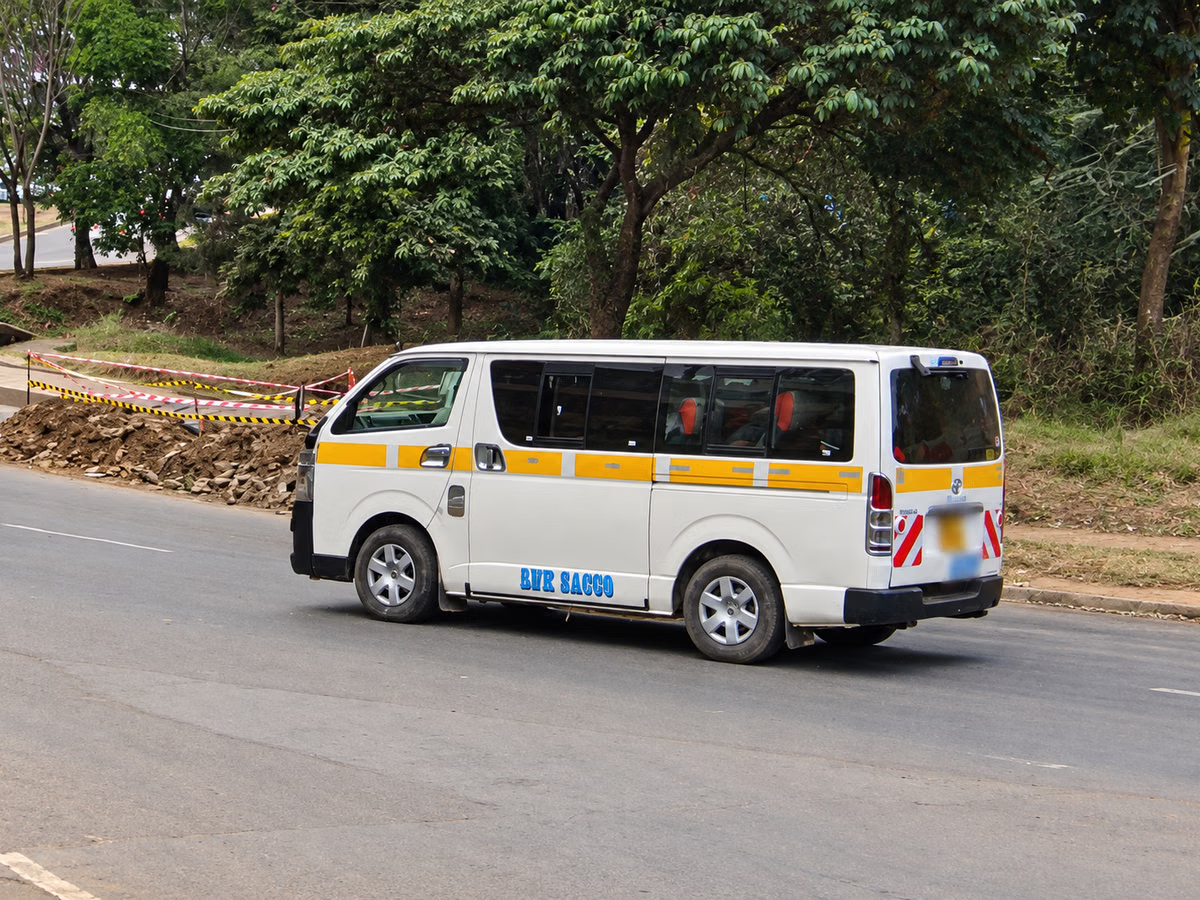
These taxi vans can be found throughout Kenya. They are usually recognizable by the yellow stripes along the body.Note: Similar vans can also be found in Uganda, but the color scheme and body design are noticeably different.
Ghana (GH)

Taxis in Ghana can come in different colours. The key identifying feature is that the fenders and side panels are always painted orange-yellow.
Rwanda (RW)
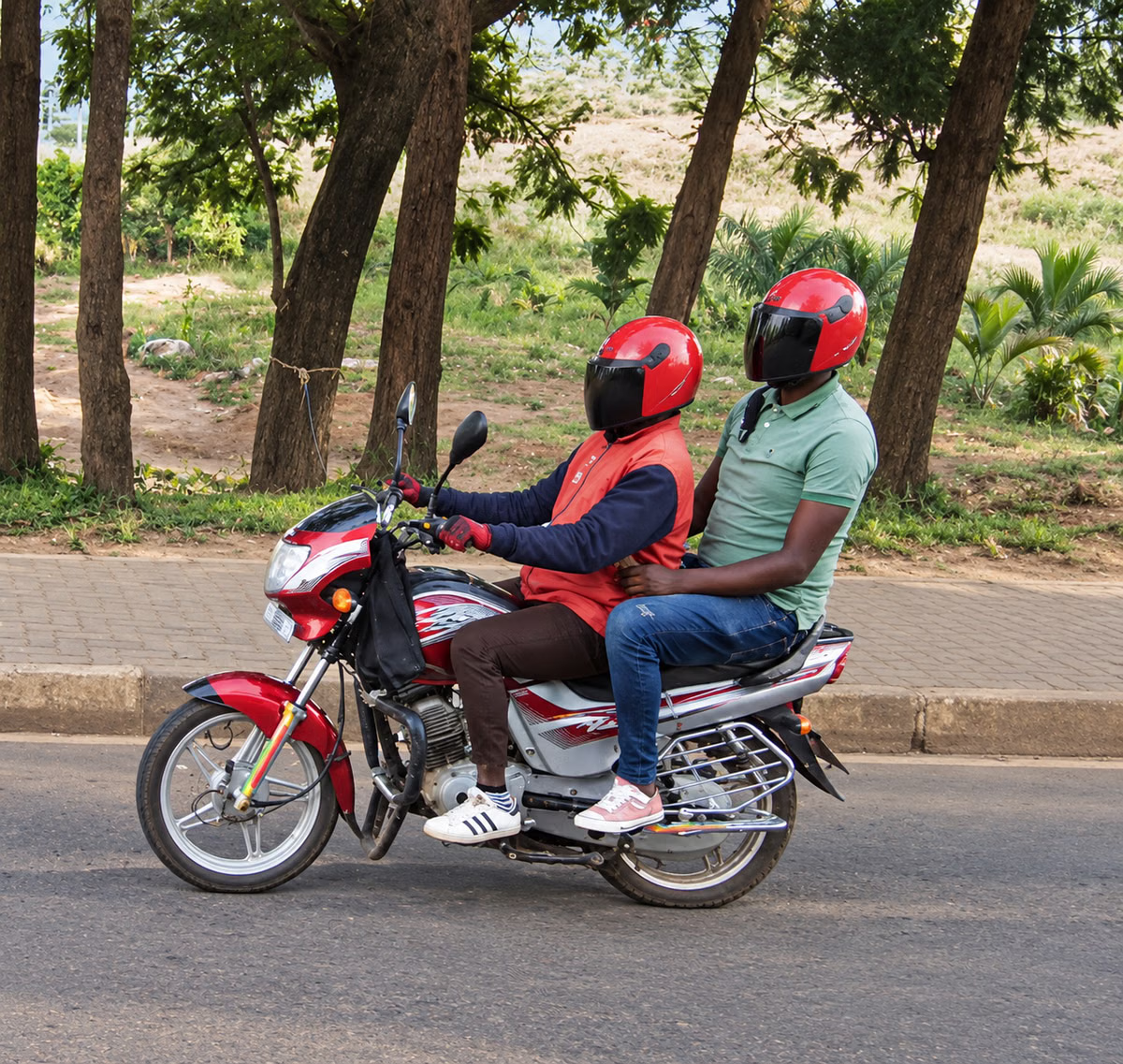
In Rwanda, motorcycle riders are required to wear red vests and helmets.
Sao Tome and Principe (ST)
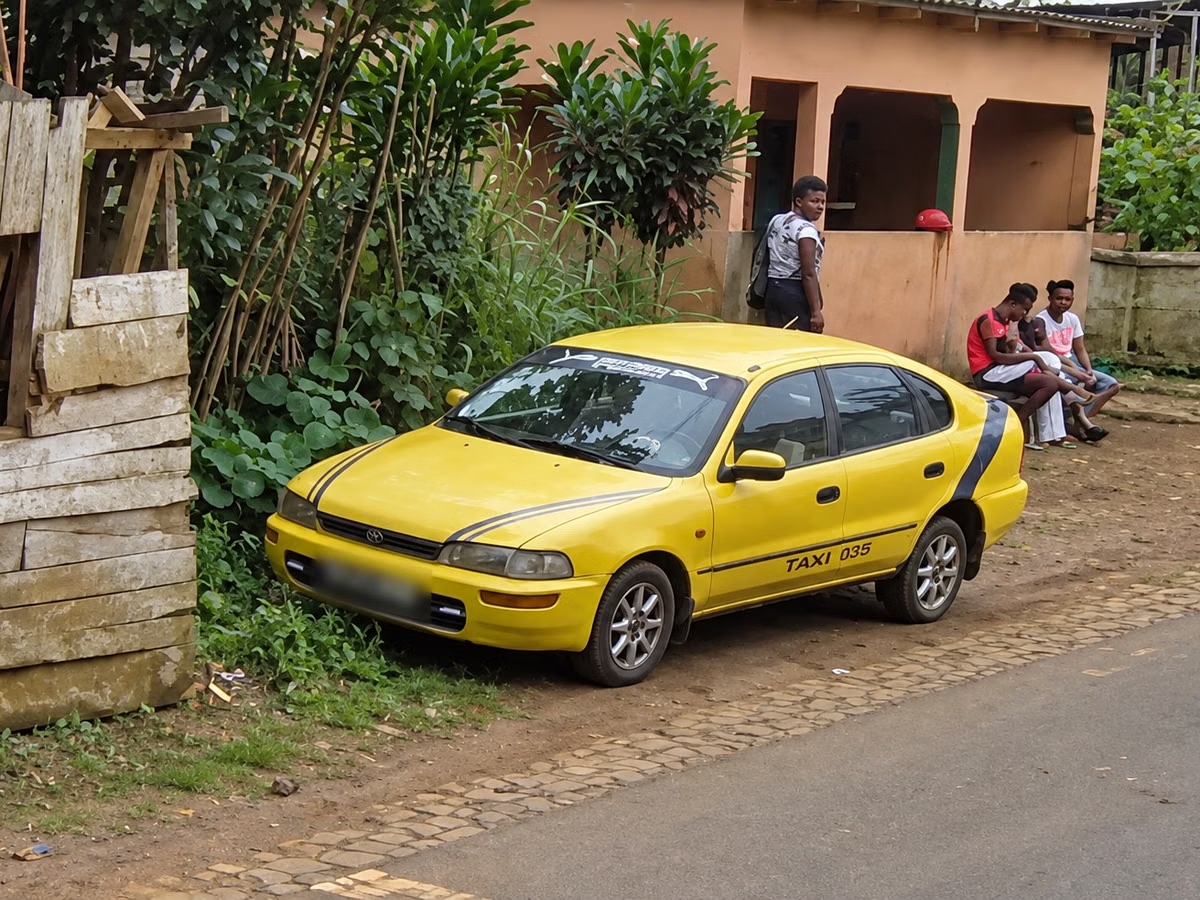
In São Tomé and Príncipe, taxis and buses are painted bright yellow, making them easy to recognize on the streets.
Senegal (SN)
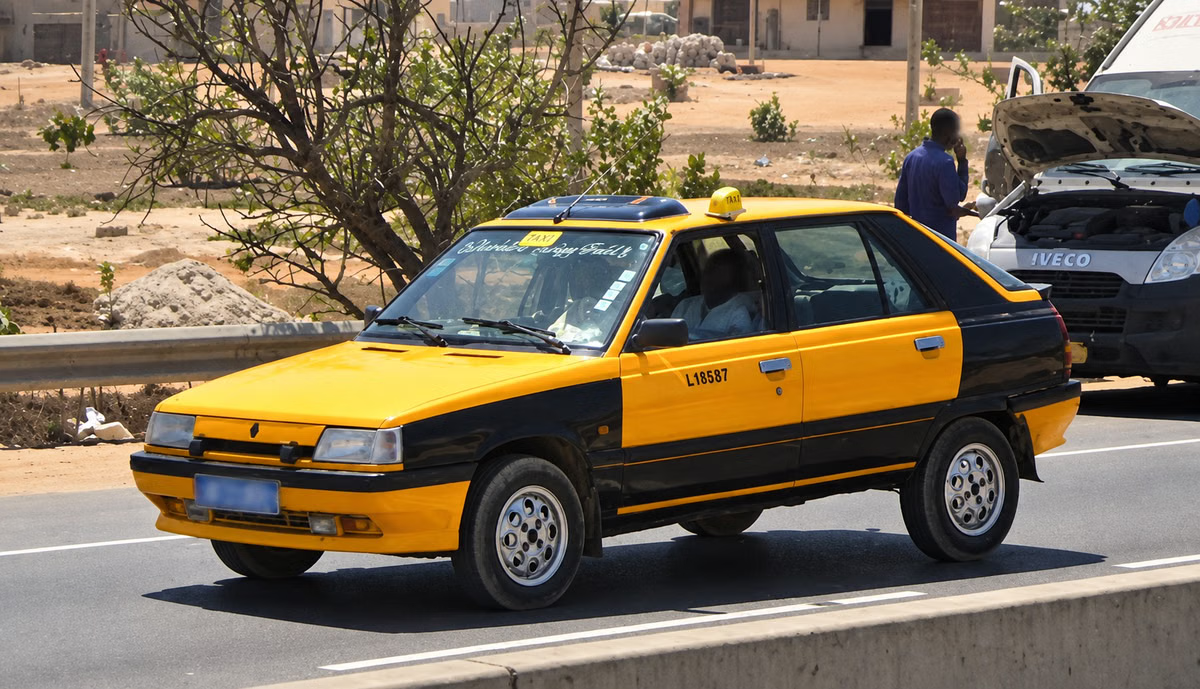
In Senegal, taxis are often yellow-orange with black fenders, making them a useful clue when identifying the country.
Uganda (UG)
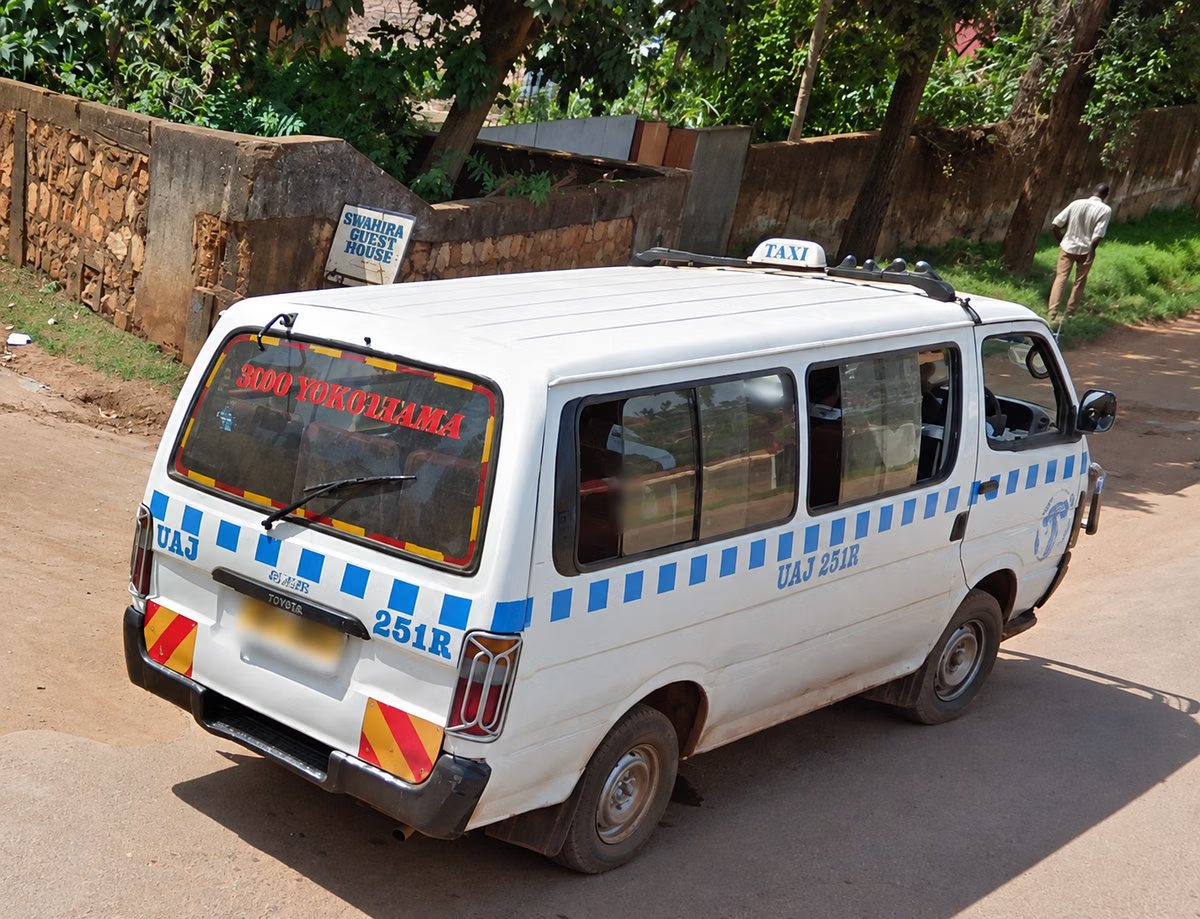
In Uganda’s capital, Kampala, white minibus taxis are commonly seen with a distinctive blue checkered band along the sides.Interesting fact: These 14-seater minibuses are locally known as matatus or kamunye and are a major form of public transport in the city.
Tunisia (TN)
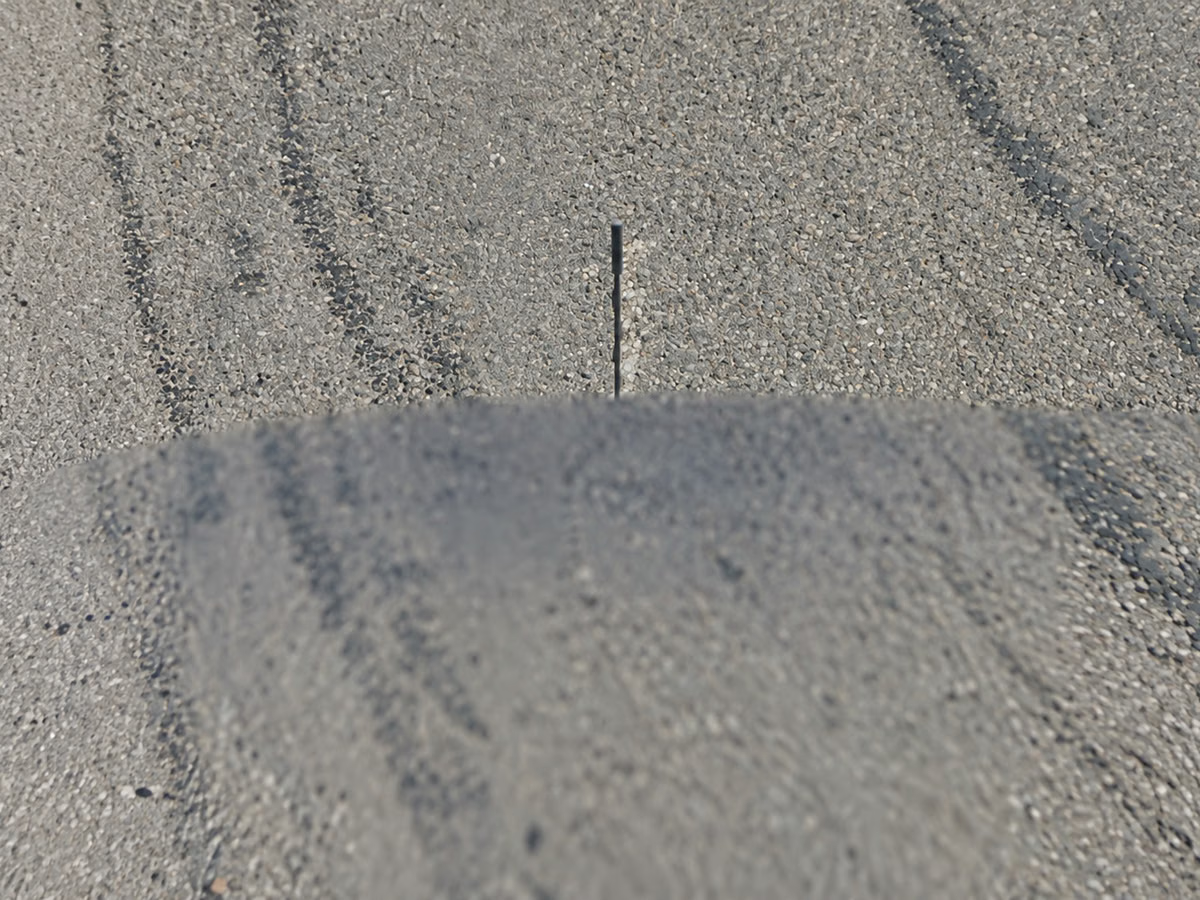
The Gen 3 car in Tunisia is black and equipped with a thin, medium-length antenna.Note: The car’s color is not always clearly visible, and the antenna may appear shorter than it actually is. Be sure to look around and find other useful clues.
South Africa (ZA)
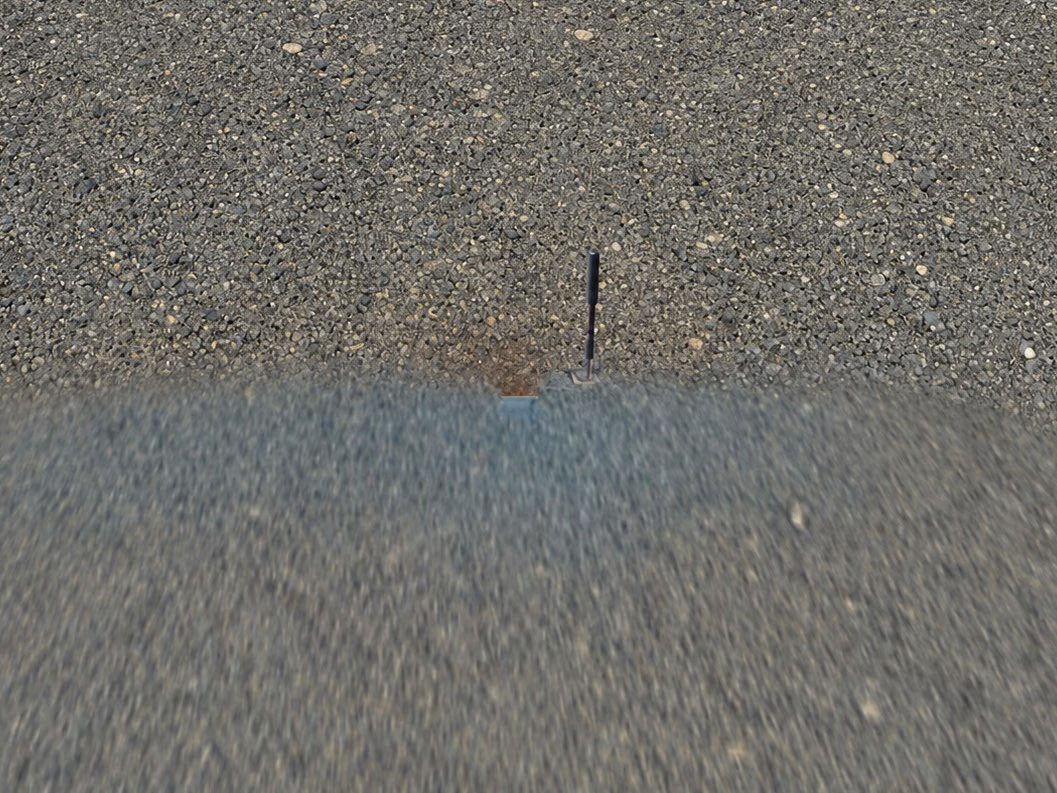
Generation 4 coverage in South Africa also features a blue car with a short antenna mounted on the rear.Note: The antenna may not always be visible.
Namibia (NA), Ghana (GH), Kenya (KE), Senegal (SN)

A white pickup with a spiral antenna can be found in only four African countries: Kenya, Namibia, Senegal, and Ghana. The pickup may be visible to different degrees.Notes:
Be careful: similar pickups can be found in many countries around the world, as example in Oman and Costa Rica.
Ghana (GH)

Generation 3 coverage in Ghana features a unique car with a visible roof rack and a piece of black tape on the right end of the front bar.
The hood is also usually visible, showing a Street View car wrap with a red rectangle and other recognizable elements.
Kenya (KE)

Generation 4 coverage in Kenya features several different pickup trucks, some of which are equipped with a snorkel. The pickups may be either fully or partially blurred.Note: Kenya is the only country besides Mongolia where snorkel-equipped vehicles appear in Generation 4 coverage.
Nigeria (NG)
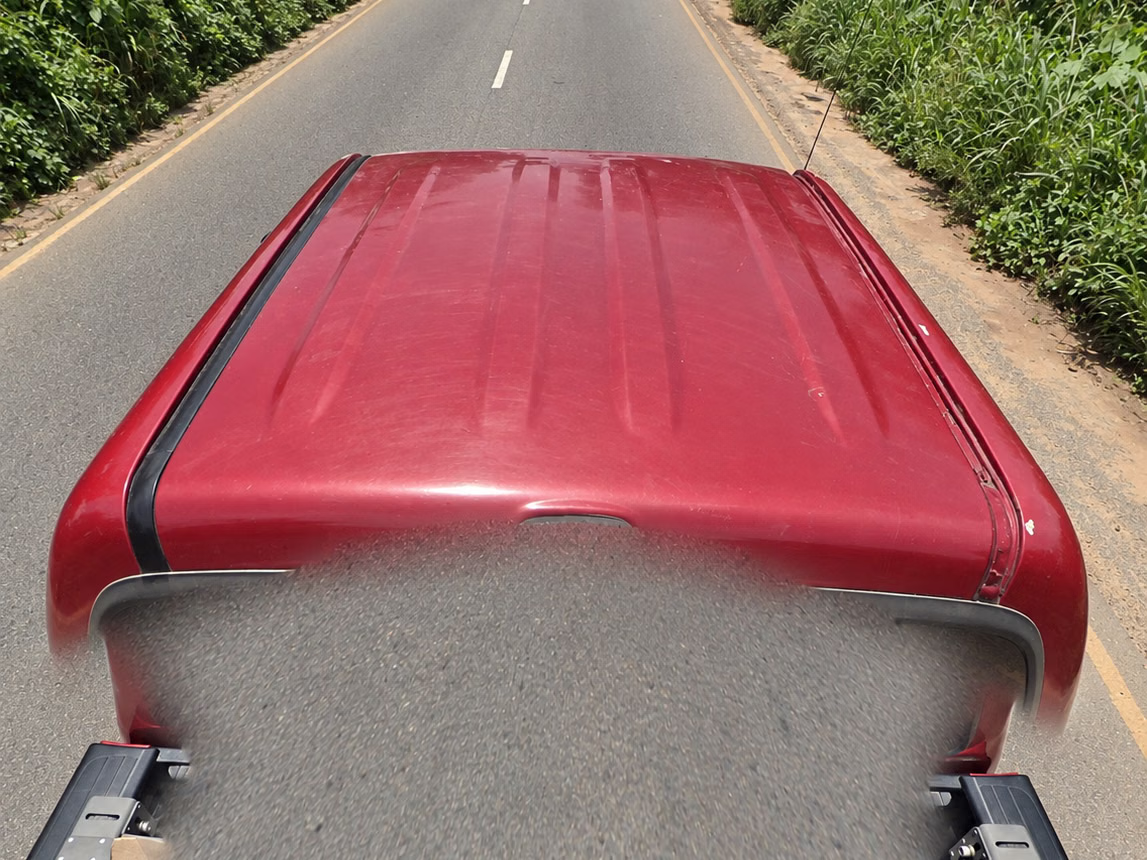
In most Generation 4 coverage in Nigeria, a pickup truck with a visible cab and bed can be seen. The cab colour and other vehicle features may vary. The main and most recognizable pickup variants are shown here.Note: The pickup may be fully or partially blurred.Similar pickup trucks can also be found in other countries, such as Uganda, but differences in their details can help distinguish them.
Rwanda (RW)
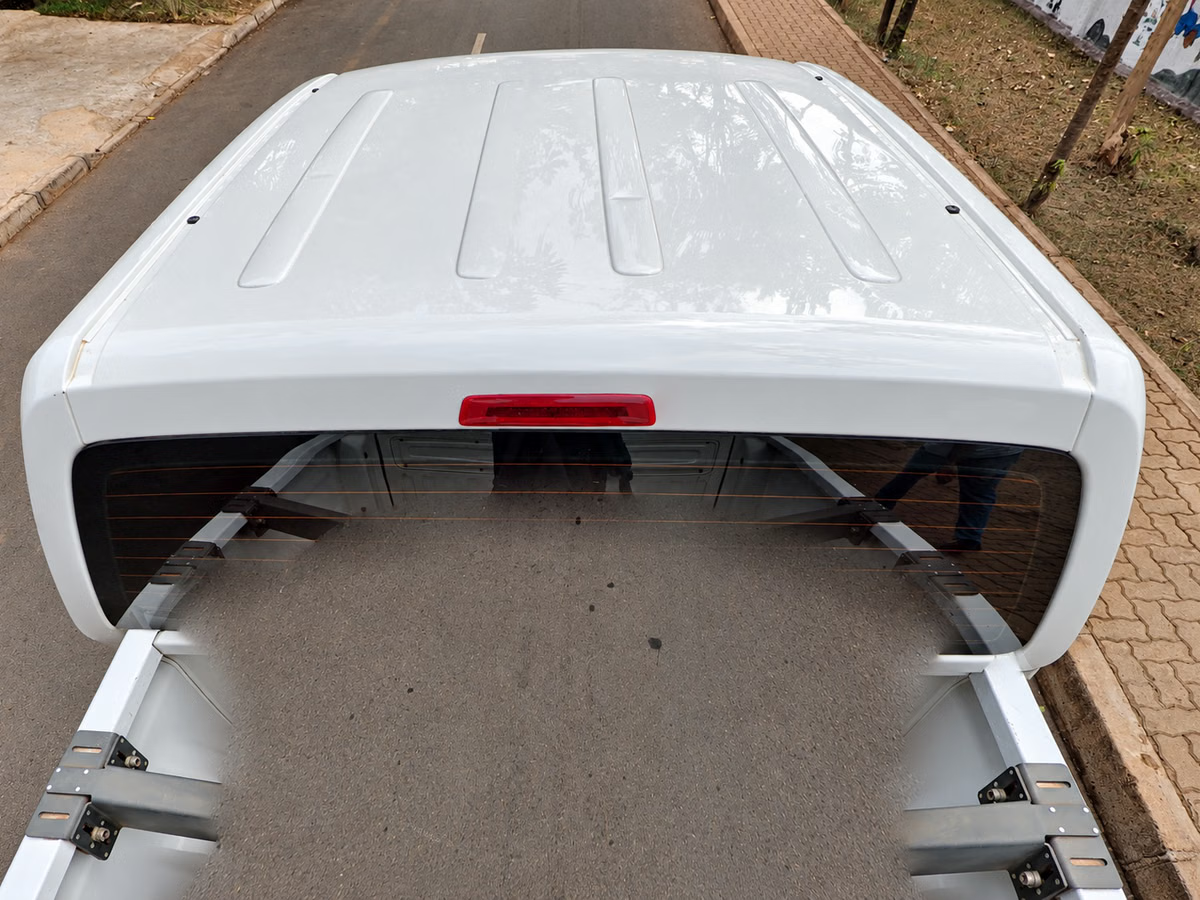
All coverage in Rwanda uses a Gen 4 pickup, which is most often completely hidden behind a large blur.Note: However, the car is sometimes fully visible: it is a large white or brown pickup with a distinctive-shaped brake light.
Sao Tome and Principe (ST)
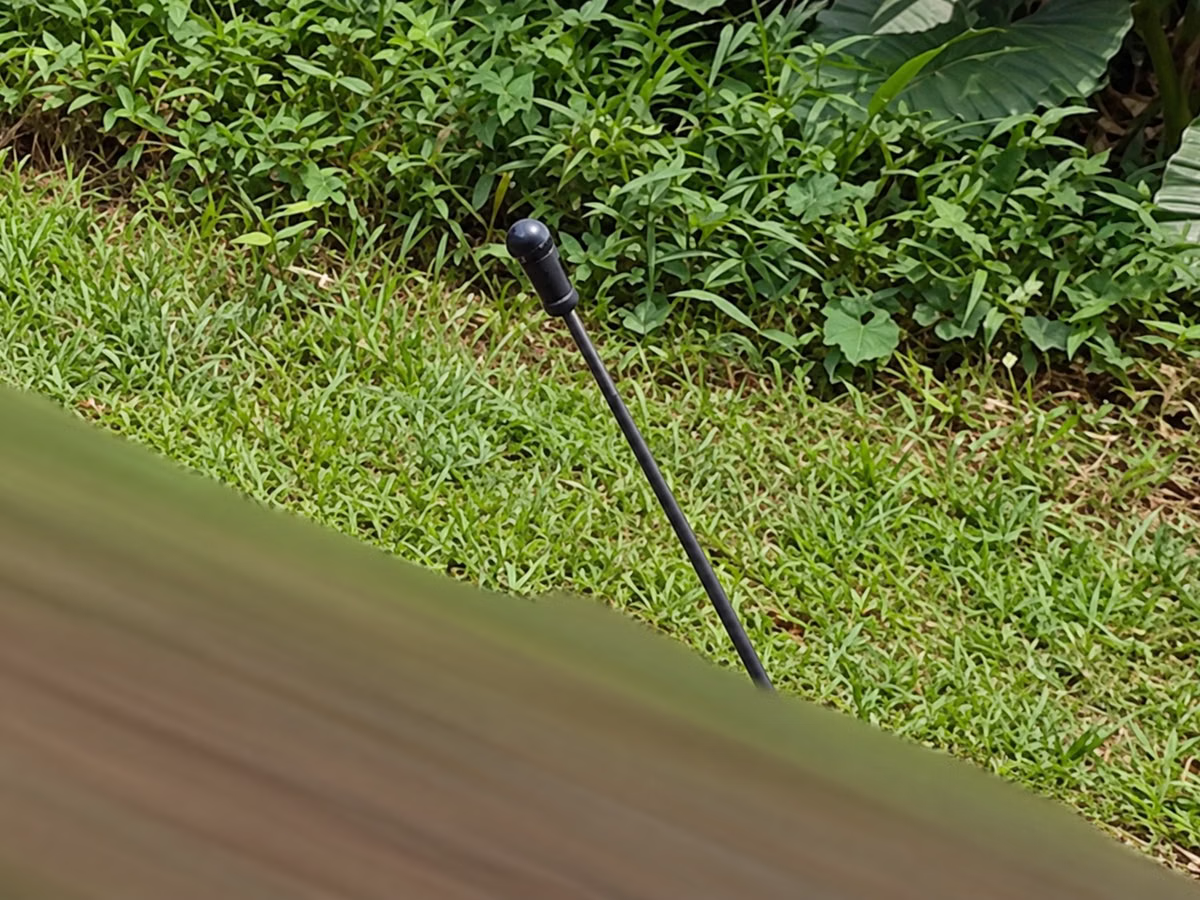
In many locations across São Tomé and Príncipe, a distinctive slanted antenna protruding from the side of the car can be seen.
South Africa (ZA)
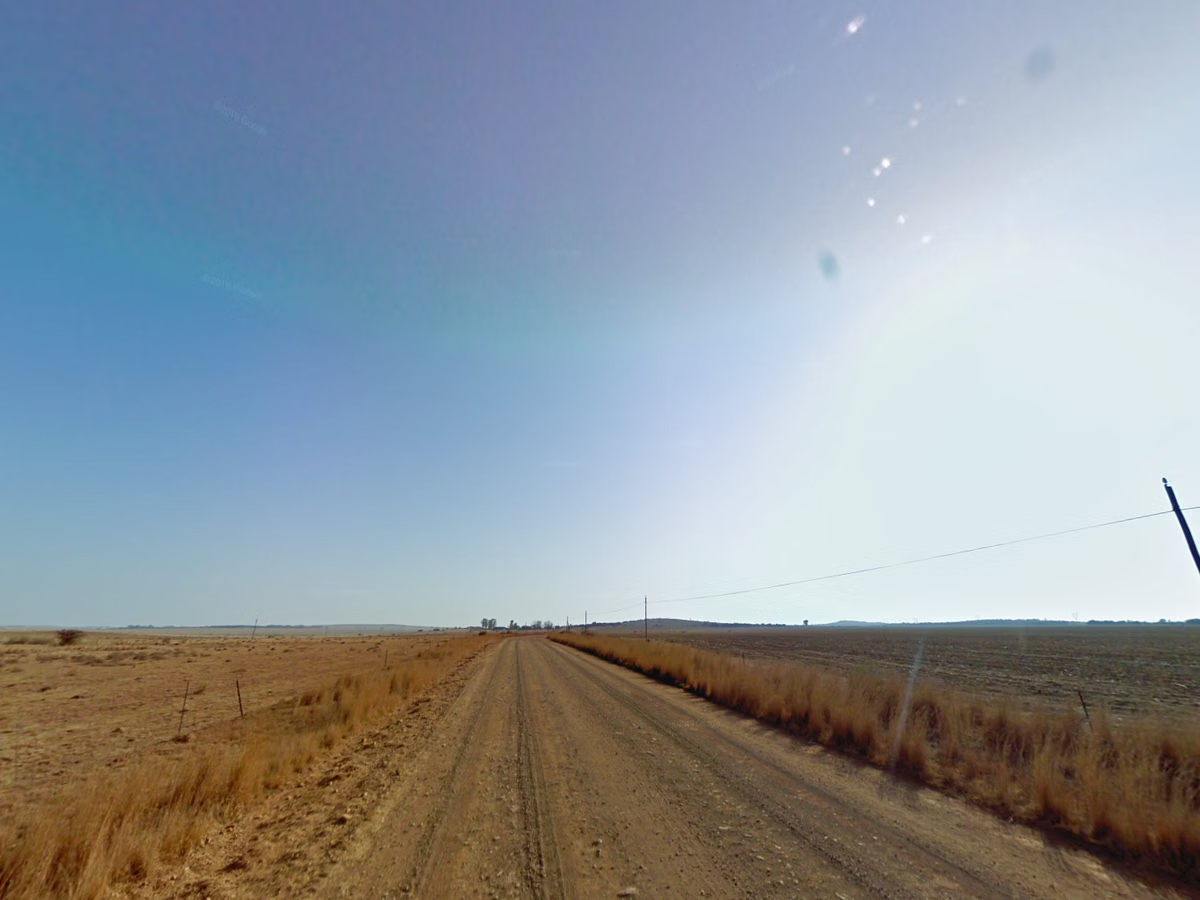
Generation 2 coverage can still be found in South Africa. It can be identified by the large, circular blur over the car, along with a distinctive color distortion in the sky that creates a halo-like effect.Note: South Africa is the only country in Africa where Generation 2 coverage can be found.
South Africa (ZA)
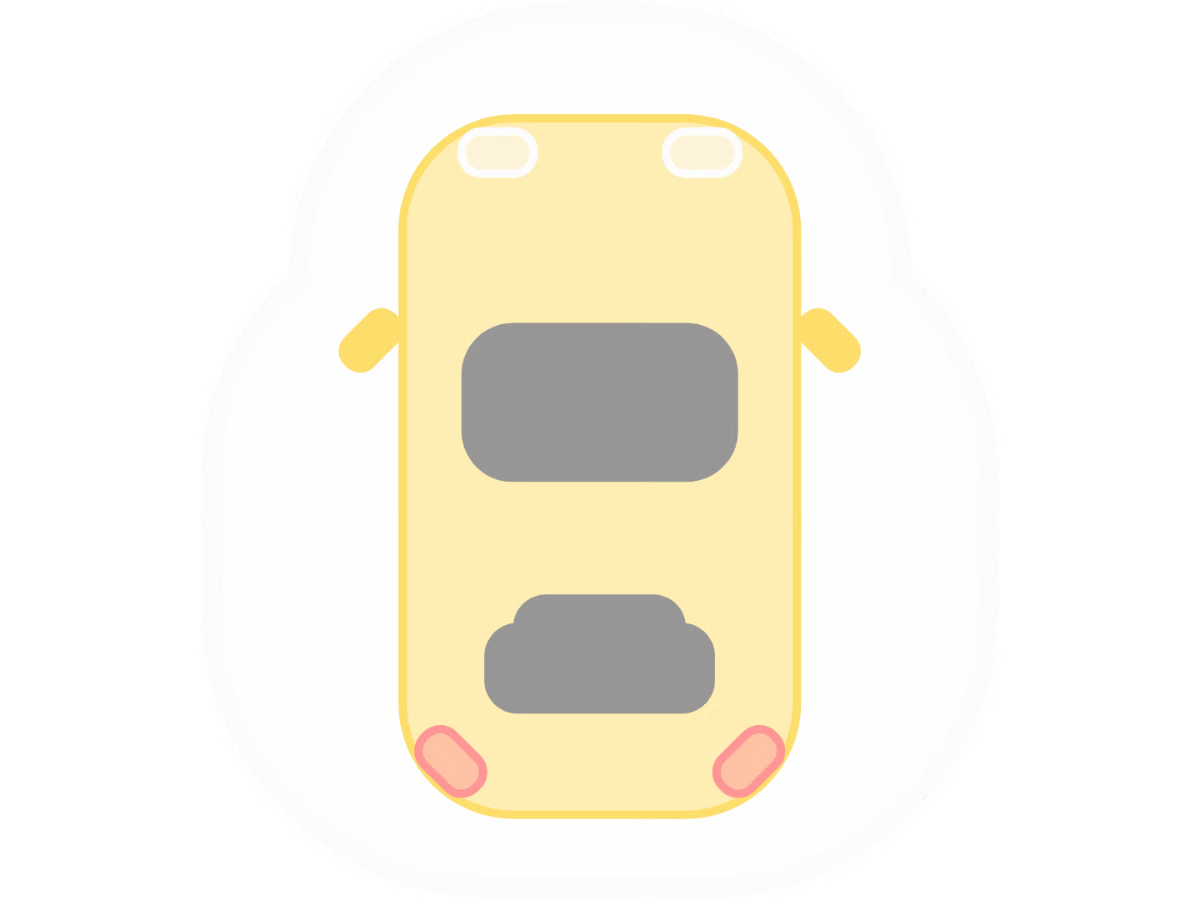
South Africa also features a Generation 4 smallcam, mounted lower than standard Generation 4 cameras.Important: It can be recognized by a relatively large, circular blur with a small protrusion at the front. In some cases, the blur may be completely transparent, while a short antenna can be visible at the rear.
Uganda (UG)
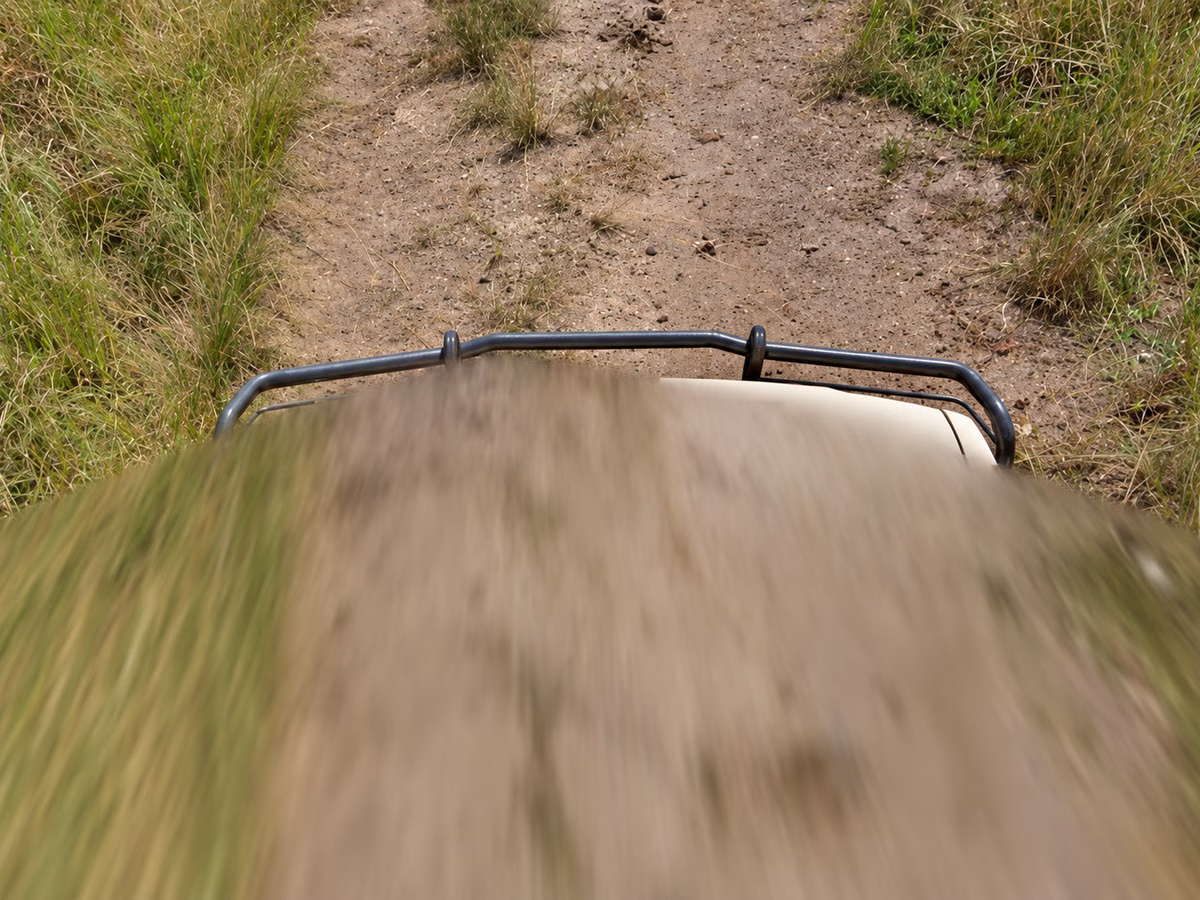
Most Street View coverage in Uganda’s national parks was captured with a car similar to the one seen in Kampala, but with a black bull bar along the front of the vehicle.Note: The visibility of the car varies considerably, and it is often not visible at all.
Nigeria (NG)
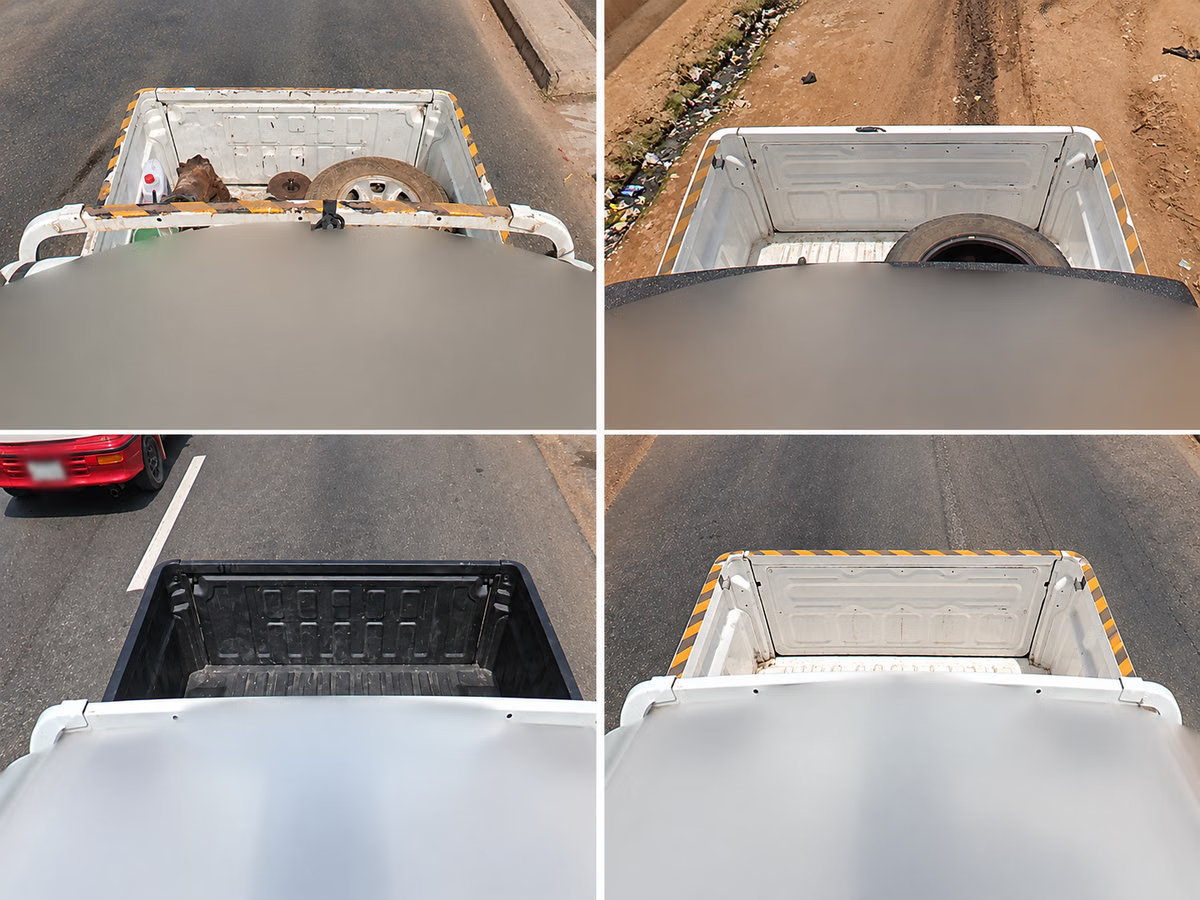
In Nigeria, more than half of the current coverage consists of low-quality coverage, known as “shitcam”. Even in shitcam coverage, the car meta can sometimes be visible, with a huge variety of different vehicles. We have chosen to show only some of the more distinctive car metas with an open pickup bed.
Note: Shitcam can also be found in São Tomé and Príncipe.
South Africa (ZA), Eswatini (SZ), Botswana (BW), Lesotho (LS)
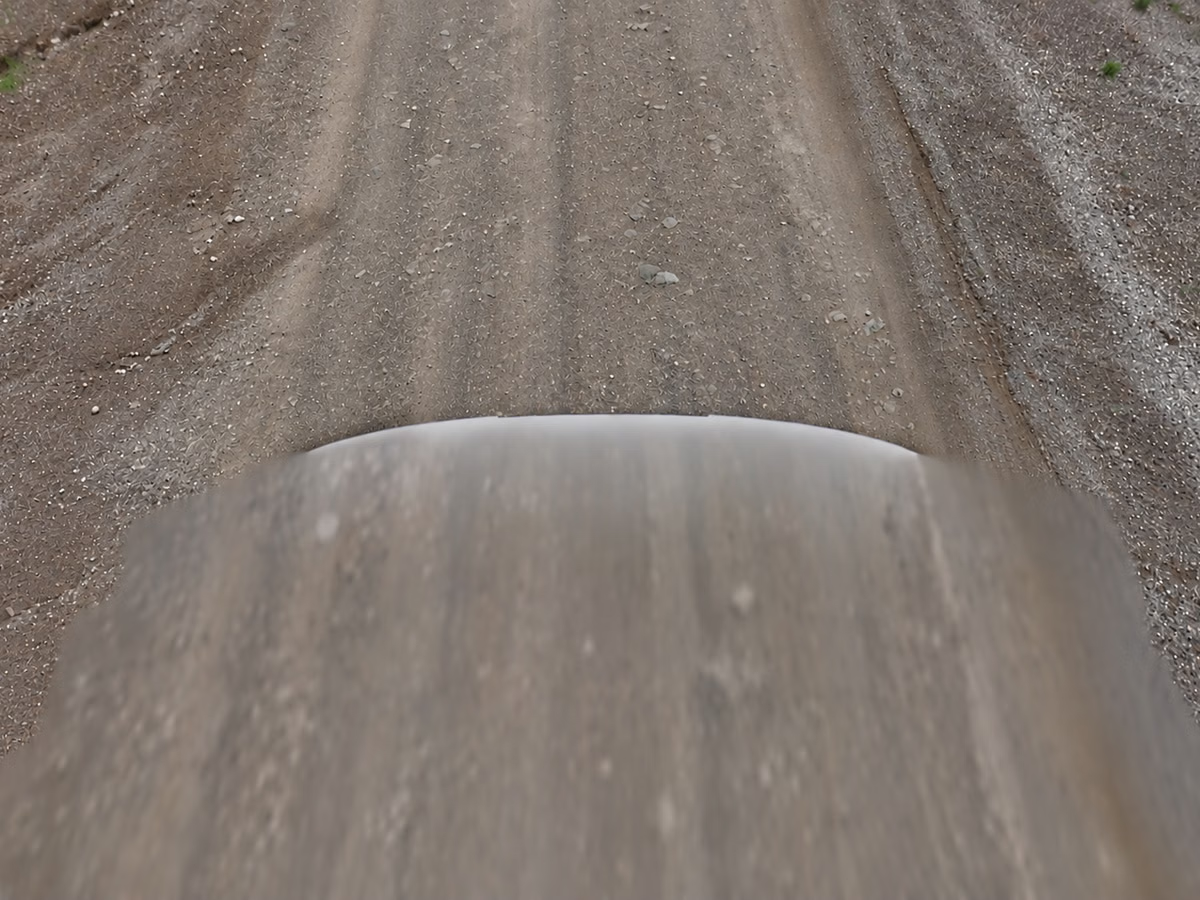
All coverage in Botswana, Eswatini, and Lesotho was captured with a white car without an antenna.Note: The same car can also be found in South Africa, but unlike the three countries above, South Africa has other camera generations and car metas as well.
Uganda (UG)
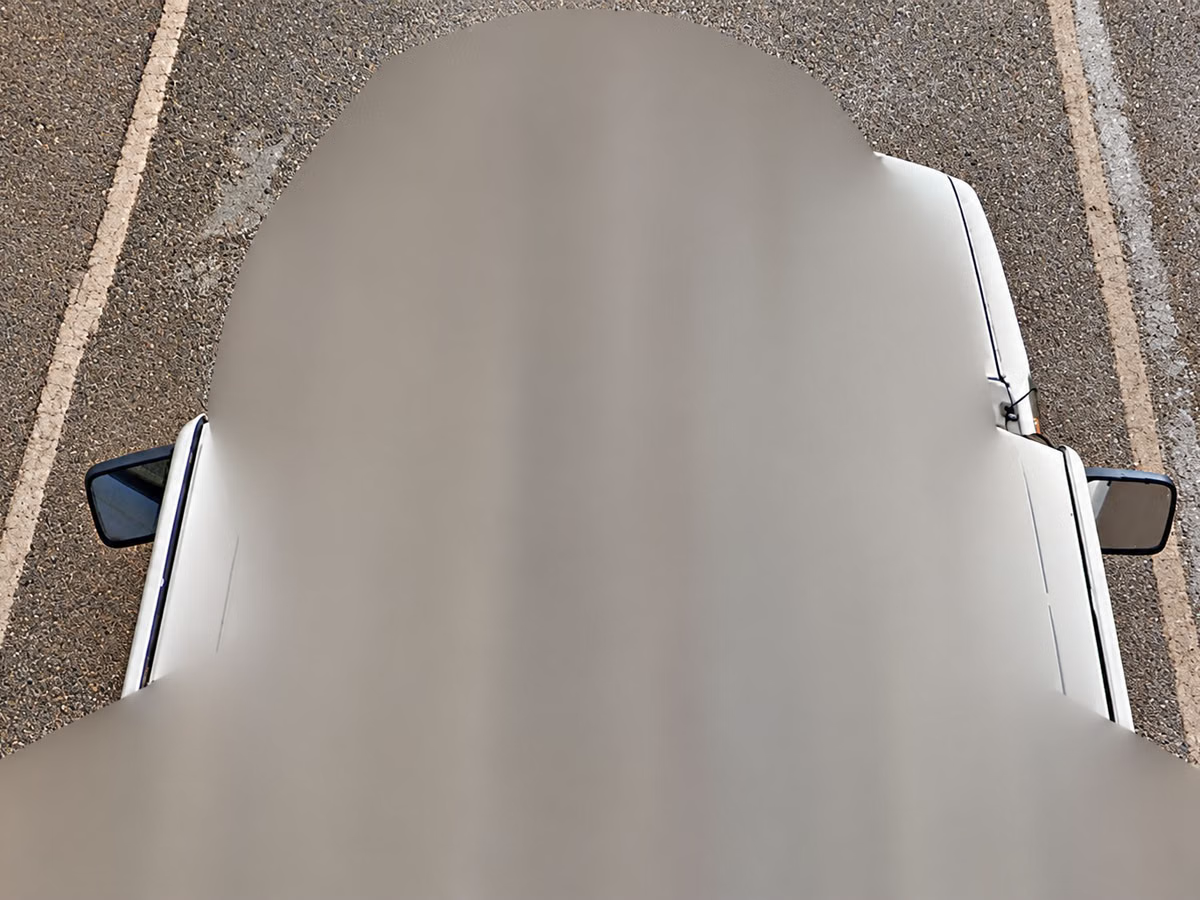
In Kampala, a distinctive white car can be seen with square side mirrors and a boxy design.
Note: This car is found only in Uganda and is characteristic specifically of Kampala and its outskirts.
Réunion (RE)

In Réunion, a white car can be identified by black tape on the right rear roof rack bar.Note: Don't confuse it with the car found in Ghana, which has tape on the front right roof rack bar.
Madagascar (MG)
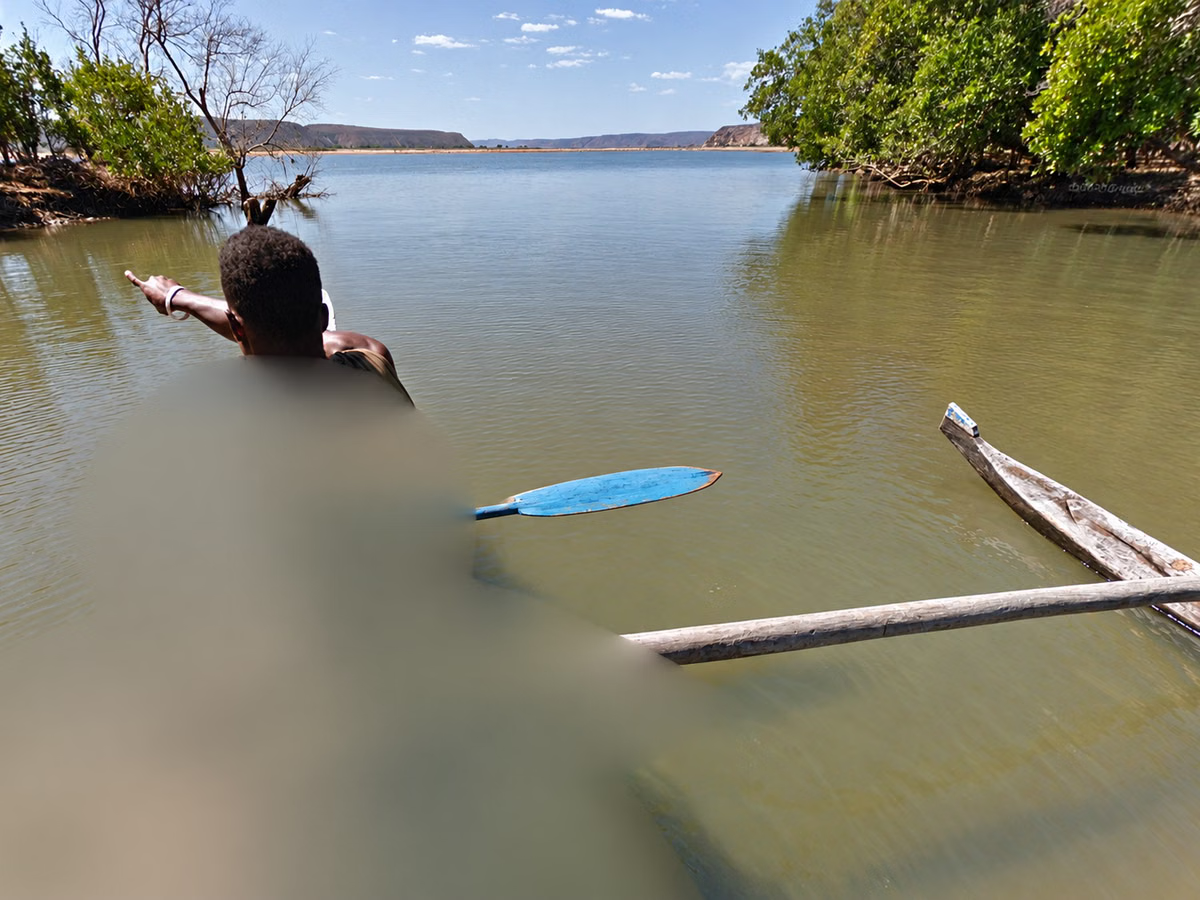
Madagascar has many different types of boat trekkers.
Madagascar (MG)
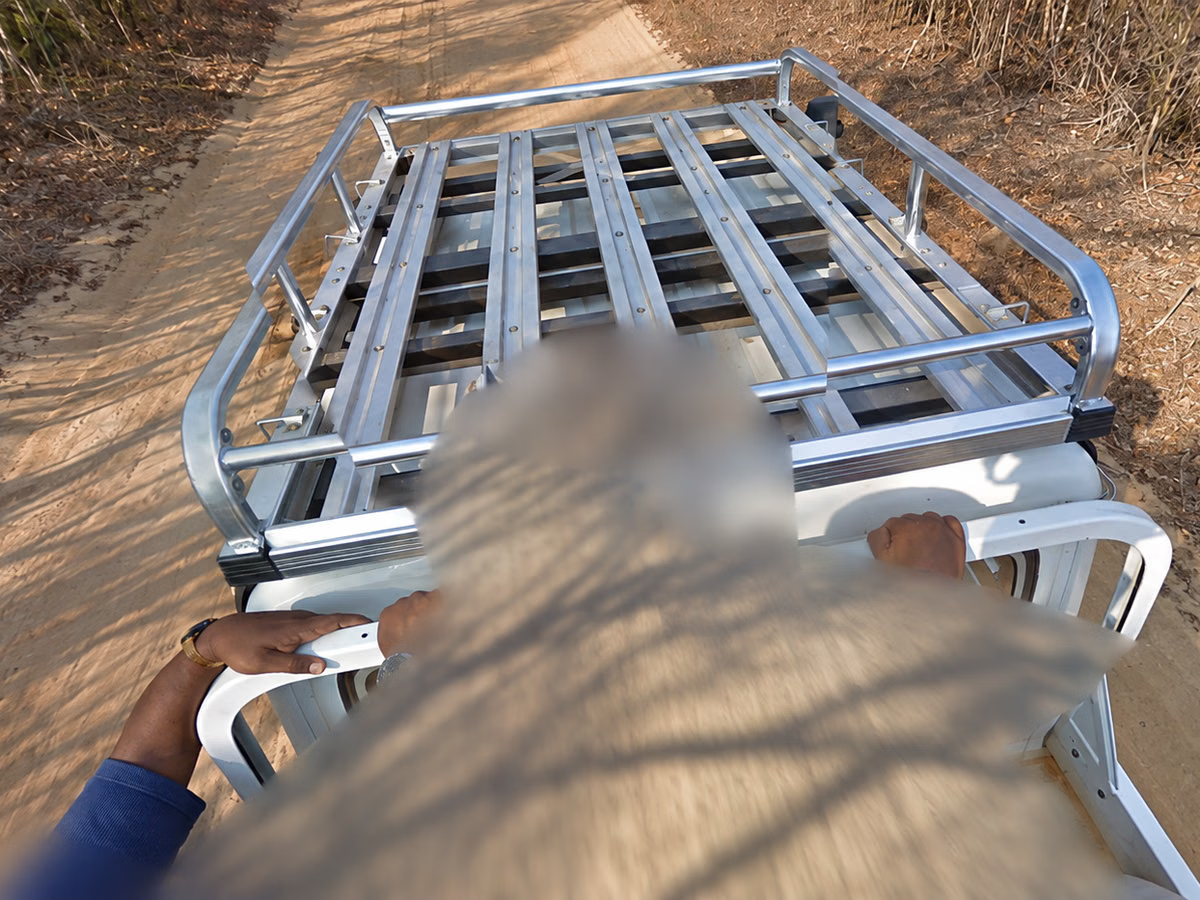
Some coverage in Madagascar was recorded from ox-drawn carts. You may also spot a truck with an unusual roof.
Madagascar (MG)
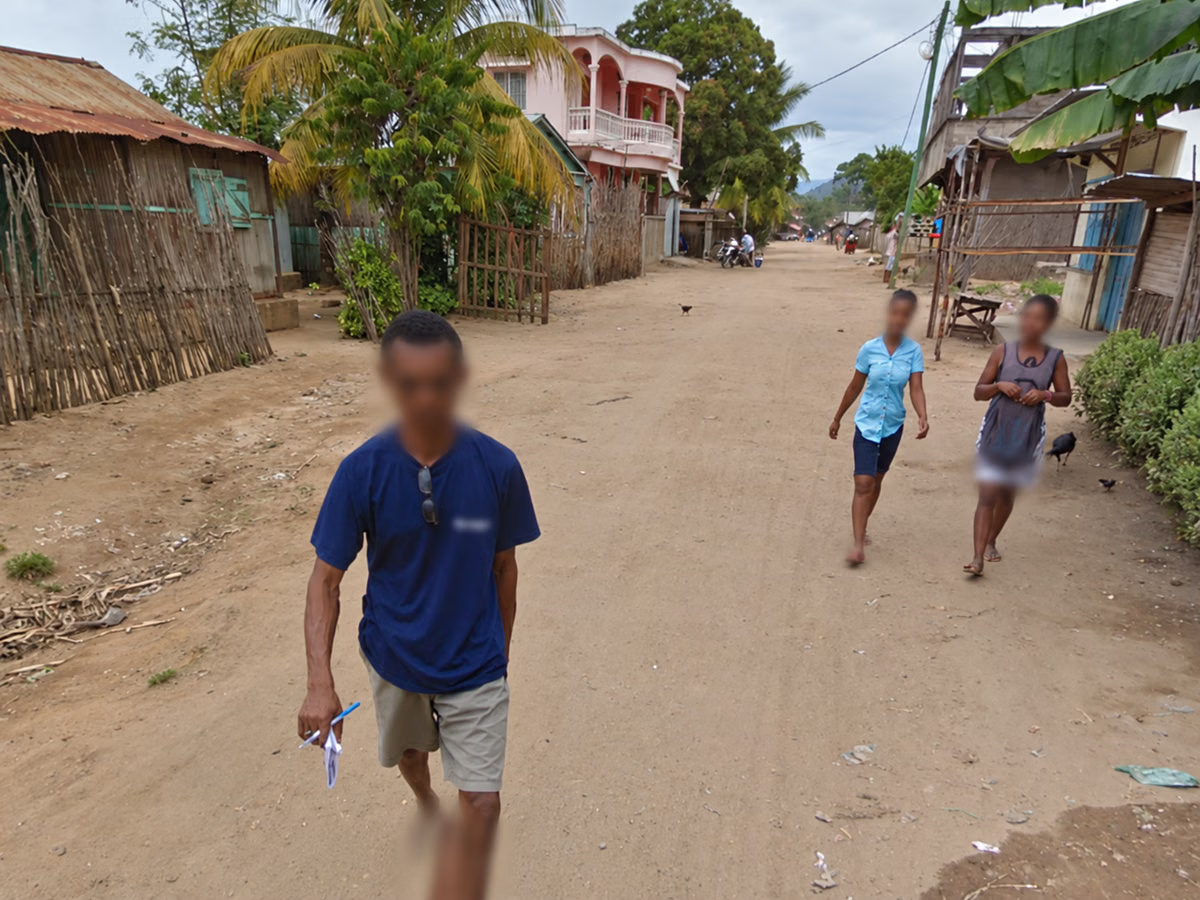
Madagascar’s coverage uses a Gen 3 Trekker. Tourists sometimes walk alongside the operator, but they may vary in other images.
Note: The tourists accompanying the operator may vary from those shown in the images.
Africa - How to Identify covers 71 metas in Senegal, Réunion, Ghana, South Africa, Sao Tome and Principe, Nigeria. Every one of them shows up in practice until you can place it from memory.


%20--%3e%3csvg%20version='1.1'%20id='Layer_1'%20xmlns='http://www.w3.org/2000/svg'%20xmlns:xlink='http://www.w3.org/1999/xlink'%20x='0px'%20y='0px'%20width='16px'%20height='16px'%20viewBox='0%200%2016%2016'%20style='enable-background:new%200%200%2016%2016;'%20xml:space='preserve'%3e%3cstyle%20type='text/css'%3e%20.st0{fill:%2357AEFF;}%20.st1{fill:%237A6BFF;}%20.st2{fill:%23AB5CFF;}%20.st3{fill:%23FF7DC0;}%20.st4{fill:%23FFBE57;}%20.st5{fill:%2373E61C;}%20.st6{fill:%23FF6242;}%20.st7{fill:%23F2F2F2;}%20.st8{fill:%23696969;}%20.st9{fill:%23FF3029;}%20.st10{fill:%23131F24;}%20.st11{fill:%23F1F7FB;}%20.st12{fill:%23EE5555;}%20.st13{fill:%2349C0F8;}%20.st14{fill:%233F85A7;}%20.st15{fill:%231CB0F6;}%20.st16{fill:%2393D333;}%20.st17{fill:%2379B933;}%20.st18{fill:%23FFAB33;}%20.st19{fill:%23FFC700;}%20.st20{fill:%23D84848;}%20.st21{fill:%23FB7185;}%20.st22{fill:%23DCE6EC;}%20.st23{fill:%2352656D;}%20.st24{fill:%2337464F;}%20.st25{opacity:0.5216;fill:%23FF3029;}%20.st26{opacity:0.5216;fill:%23F2F2F2;}%20.st27{clip-path:url(%23SVGID_2_);fill:%23F2F2F2;}%20.st28{clip-path:url(%23SVGID_4_);fill:%23F2F2F2;}%20.st29{clip-path:url(%23SVGID_6_);fill:%23F2F2F2;}%20.st30{clip-path:url(%23SVGID_8_);fill:%23F2F2F2;}%20.st31{clip-path:url(%23SVGID_10_);fill:%23F1F7FB;}%20.st32{clip-path:url(%23SVGID_12_);fill:%23F1F7FB;}%20.st33{fill:none;stroke:%2393D333;stroke-width:0.3;stroke-miterlimit:10;}%20%3c/style%3e%3cpath%20class='st13'%20d='M16,0.55v14.9c0,0.31-0.41,0.56-0.91,0.56H0.92C0.41,16,0,15.75,0,15.44V0.55C0,0.25,0.41,0,0.92,0h14.16%20C15.59,0,16,0.25,16,0.55z'/%3e%3cpath%20class='st11'%20d='M5.83,15.25V1.17c0-0.37,0.3-0.67,0.67-0.67h3.66c0.37,0,0.67,0.3,0.67,0.67v14.08c0,0.37-0.3,0.67-0.67,0.67%20H6.5C6.13,15.92,5.83,15.62,5.83,15.25z'/%3e%3cpath%20class='st12'%20d='M6.89,5.32V2.35c0-0.43,0.35-0.78,0.78-0.78h1.13c0.43,0,0.78,0.35,0.78,0.78v2.97c0,0.43-0.35,0.78-0.78,0.78%20H7.68C7.24,6.1,6.89,5.75,6.89,5.32z'/%3e%3cpath%20class='st17'%20d='M16,14.49v0.96c0,0.31-0.41,0.56-0.91,0.56H0.92C0.41,16,0,15.75,0,15.44v-0.96H16z'/%3e%3c/svg%3e)


 15
15


 Browse all theory →