British Columbia - Darker poles
Canada (CA)
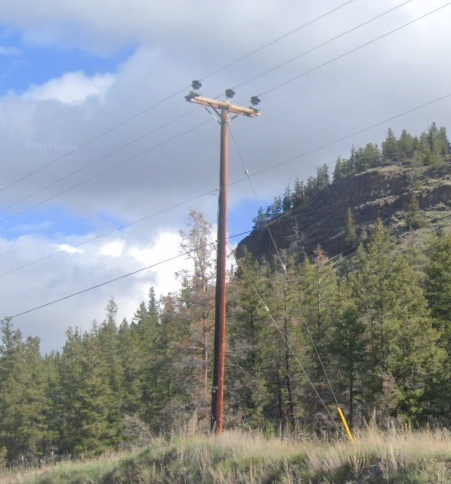
Poles in Western Canada - especially in BC - tend to be darker and have fewer knots than poles in the East. In BC, it is common to find poles with a reddish tint.
172 metas (location clues) in A Comprehensive Canada - Regionguessing: tag names, country, example imagery, and a short explanation for each.

@burmalda194 plays172 metas
Exam Score
 British Columbia - Darker polesEastern Canada - "A"-frame poleEastern Canada - Lighter polesYukon - Orange tint poleAlberta - Standard poletopBritish Columbia - 2+1 poletopBritish Columbia - Double crossbeamBritish Columbia - Longer secondary crossarmBritish Columbia - Standard poletopManitoba - Trident poletopSaskatchewan - Long crossarm poleNewfoundland & Labrador - Double crossbar poletopNova Scotia - Main poletopOntario - Longer crossarmOntario / British Columbia - Secondary crossarmPrince Edward Island - Standard polePrince Edward Island - Ribbed insulator poletopsQuébec / New Brunswick - T poleAlberta - ">"-shaped poletopAlberta - Missing insulator poletopBritish Columbia / Québec - "L" poletopNewfoundland - Eastern poletopNova Scotia - Québec style poletopNewfoundland & Labrador - Long trident poletopNewfoundland & Labrador - Short trident poletopOntario - Railway poletopBritish Columbia - Fake Ontario poletopManitoba - Hanging insulator poletopSaskatchewan - Rare poletopsYukon - Complicated crossbeamEastern Canada - Isolated UFO insulatorNew Brunswick - 1 bolt poleNew Brunswick - Double insulator poleNewfoundland - Eastern insulatorQuébec / Nova Scotia - Perpendicular insulatorManitoba - Insulator patternsOntario - 3 tall ribbed insulatorsOntario - Tilted attachmentOntario / British Columbia - Tilted insulatorsOntario / Manitoba - Mini insulatorsSaskatchewan - Lower insulatorNew Brunswick - Green stickerNew Brunswick - Yellow pole stickerNewfoundland & Labrador - Metal plateNova Scotia - Wire stickerOntario - Colorful markingsOntario - Silver numbersOntario - Small pole plateOntario - Number stickersAlberta - Horizontal stickerBritish Columbia - Metal circlesBritish Columbia - Metal pole rectangleManitoba - Keyhole stickerSaskatchewan - Blank metal stripAtlantic Canada - Square lamp stylesEastern Canada - Tiny hanging lampNew Brunswick - Long straight lampNewfoundland & Labrador - Extra short lampNova Scotia - Short curved lampOntario - Octo lampOntario - Larger top lampQuébec - Curved lampQuébec - Gaspé lampQuébec - Unique lamp armAlberta - Standard Canadian lampManitoba - Long supported lamp armSaskatchewan - Green lampSaskatchewan - Lamp support and curveBritish Columbia - StoplightsNew Brunswick / Nova Scotia - Stoplight stylesQuébec - Horizontal stoplightAlberta - Peace River street signAtlantic Canada - Blue house numberManitoba - Sign claspOntario - County road signOntario - Green Rural addressOntario - Rural street signSaskatchewan - Rural street signBritish Columbia - Yellow fire hydrantsOntario - Northern red hydrantsOntario - Southern red hydrantsOntario - Yellow fire hydrantNew Brunswick / Nova Scotia - Curved sign borderNewfoundland & Labrador - Provincial routesNova Scotia - Green signbackNova Scotia - Isolated exit numberOntario - Curve ahead signsQuébec - Curve ahead signsQuébec - Snowmobile signQuébec - Southwestern crossAlberta - Generic guardrailNew Brunswick - Generic guardrailNova Scotia - Pokey guardrailOntario - Metal guardrailNova Scotia - Reflector guardrailOntario - Blue cap guardrailSaskatchewan / Manitoba - Weird guardrailsNova Scotia - Guardrail sticksQuébec - Guardrail endingsSaskatchewan - Guardrail endingNew Brunswick - BollardsNewfoundland & Labrador - BollardsNorthwest Territories - Other bollardsOntario - Intersection pole ringSaskatchewan - "Alberta" bollardsYukon - SnowpolesAlberta - Central rumble stripBritish Columbia / Alberta - Yellow curbsManitoba - Gravel ditchNew Brunswick - No roadlines coverageNorthwest Territories - Unpaved roadsSaskatchewan - Rural road qualityNewfoundland & Labrador - Wooden signpostOntario - Rectangular signpostOntario - Wooden signpostQuébec - Double signpostQuébec - Metal signpostNorthwest Territories - White highway postSaskatchewan - White signpostYukon - White highway postManitoba - Side wire attachmentOntario / Québec - Wire flagsPrairies - Orange-red wire markerSaskatchewan - Gas pipeline markerSaskatchewan - Yellow wire markerBritish Columbia - Hydro boxBritish Columbia - Metal flareOntario - Paired boxesOntario - Green electrical boxOntario - V-shaped sewer coverQuébec - Cement blockAtlantic Canada - Colorful housesAtlantic Canada - Clapboard architectureOntario - LCBO storesOntario - Southern architectureBritish Columbia - Redcedar needlesEastern Canada - Eastern white pineEastern Canada - Maple treesSaskatchewan - Northern vegetationYukon - Pink fireweedAlberta - Isolated hillsNew Brunswick - Forested hillsNova Scotia - Hilly landscapePrince Edward Island - Hilly areasQuébec - Appalachian vibesBritish Columbia - Northwestern landscapeBritish Columbia / Alberta - RockiesNewfoundland - Southwestern mountainsQuébec - LaurentidesYukon - Treeless mountainsBritish Columbia - Flat landBritish Columbia - Northeastern landscapeManitoba - Typical landscapeNorthwest Territories - Southern vibesSaskatchewan - Extreme flatnessAlberta - Extreme SouthwestBritish Columbia - Vancouver Island vibesNewfoundland - Burin drynessNewfoundland - Exposed rockNorthwest Territories - Canadian ShieldManitoba - October snowOntario - Gen 3 snowYukon - September 2022Yukon / British Columbia - Cloudy borderOntario - Knotty fenceOntario / Québec - Corn productionOntario / Québec - FarmsPrairies - Smooth fenceNew Brunswick - Language regionsNova Scotia - BilingualismOntario - BilingualismPrince Edward Island - Bilingual street sign
How it looks
Where to find it
CanadaExplanation
Poles in Western Canada - especially in BC - tend to be darker and have fewer knots than poles in the East. In BC, it is common to find poles with a reddish tint.
Canada (CA)
Poles in Western Canada - especially in BC - tend to be darker and have fewer knots than poles in the East. In BC, it is common to find poles with a reddish tint.
Canada (CA)
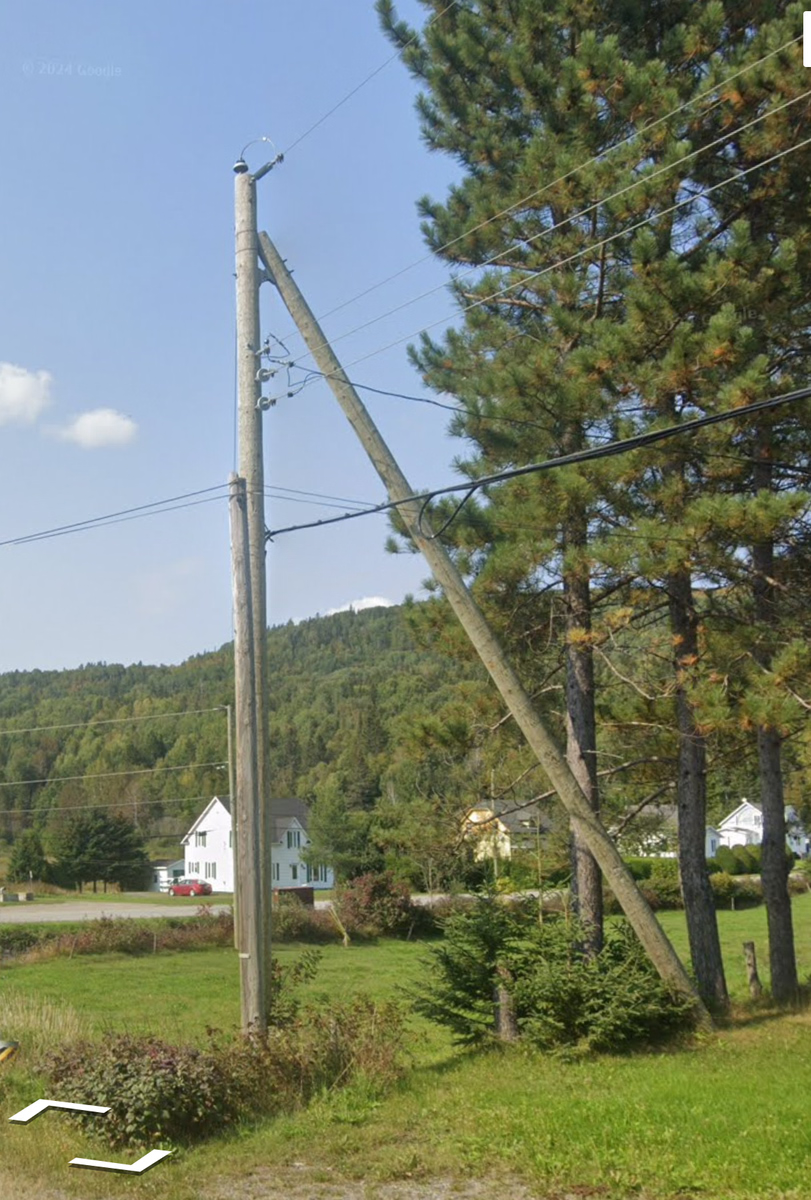
If you see an "A"-frame pole, New Brunswick is the most likely option followed by Newfoundland & Labrador, Québec and Ontario.
Note: While these poles are generally rare in Canada, they can occasionally show up in any part of the country. Look for other clues first!
Canada (CA)
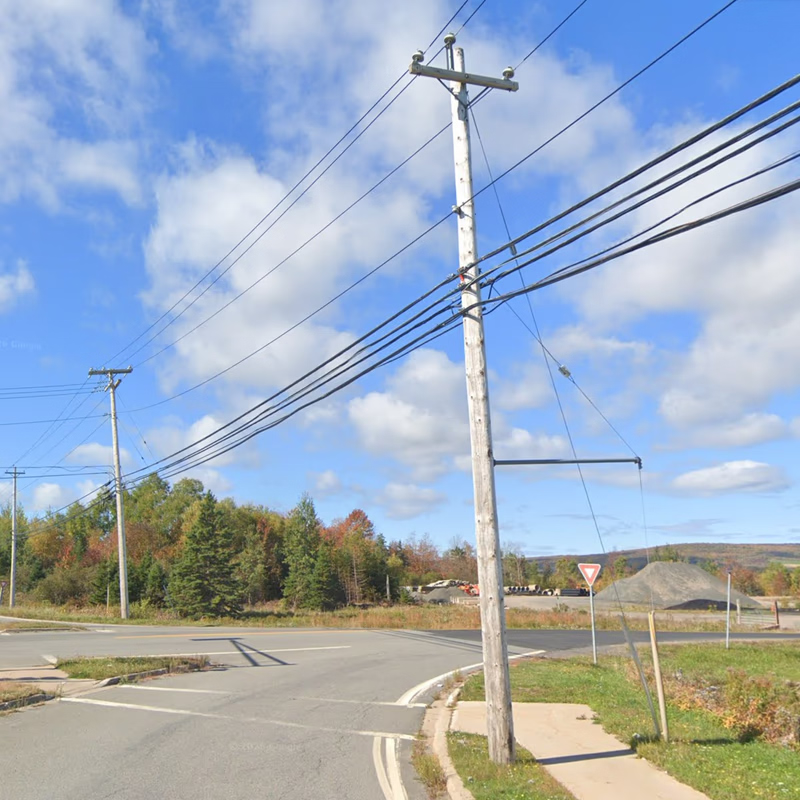
Utility poles in Eastern Canada (The Maritimes and Québec - especially the East) are made of a lighter coloured wood and have more visible knots on them.
Canada (CA)
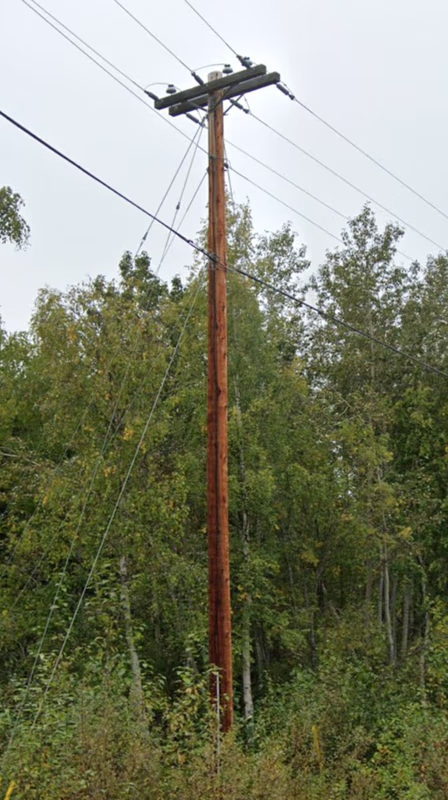
Most utility poles in Yukon are generic T-poles with a distinct orange tint.
Canada (CA)
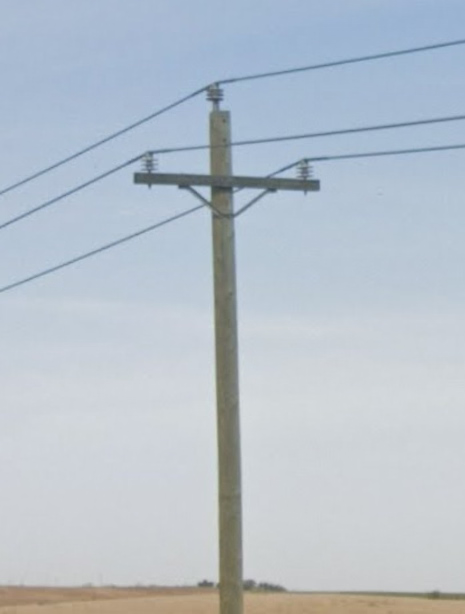
The standard Alberta poletop looks fairly generic: it has a medium-lenght crossbar with 3 vertical insulators each connected to its own wire.
Canada (CA)

Poletops with asymmetrical insulators, arranged in a 2+1 pattern are common in British Columbia.
Note: Usually they don't alternate like the ones in Saskatchewan.
Canada (CA)
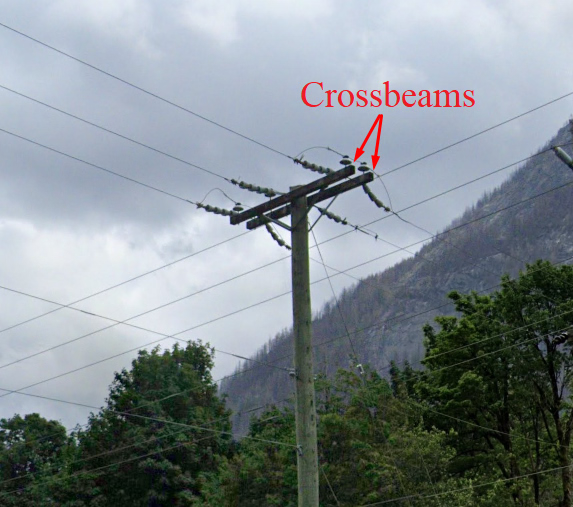
Double crossbeams can often be found on utility poles in British Columbia.
Canada (CA)
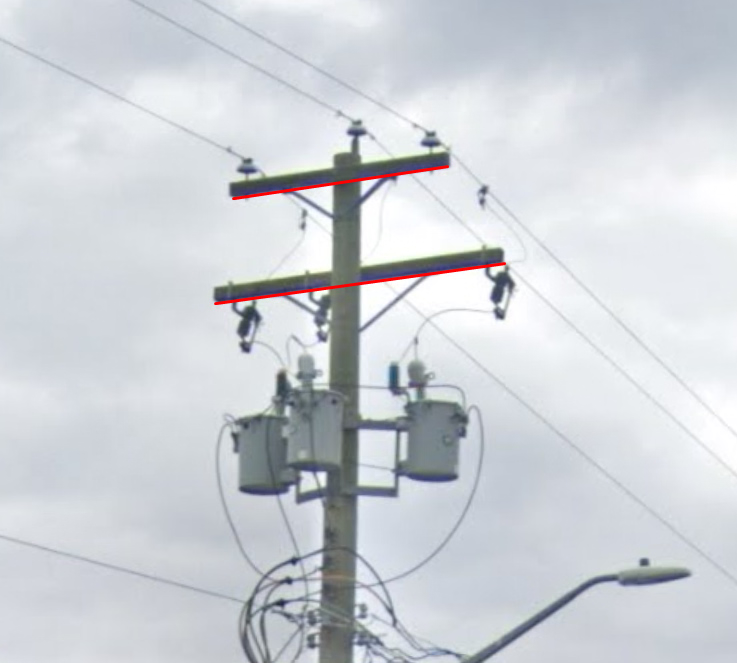
In British Columbia, secondary crossarms on utility poles are usually longer than the top ones.
Canada (CA)
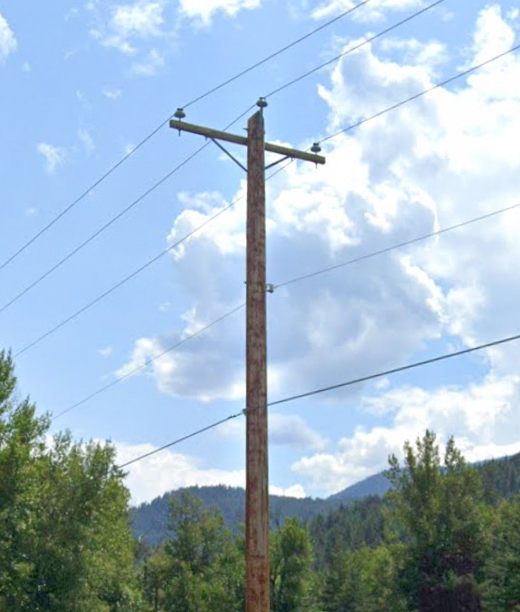
The most common poletop in British Columbia is a simple T-poletop with 3 (usually white) mushroom insulators. The middle one is mounted higher than the other 2.
Note: This poletop also exists with large UFO-shaped insulators in BC.
Canada (CA)
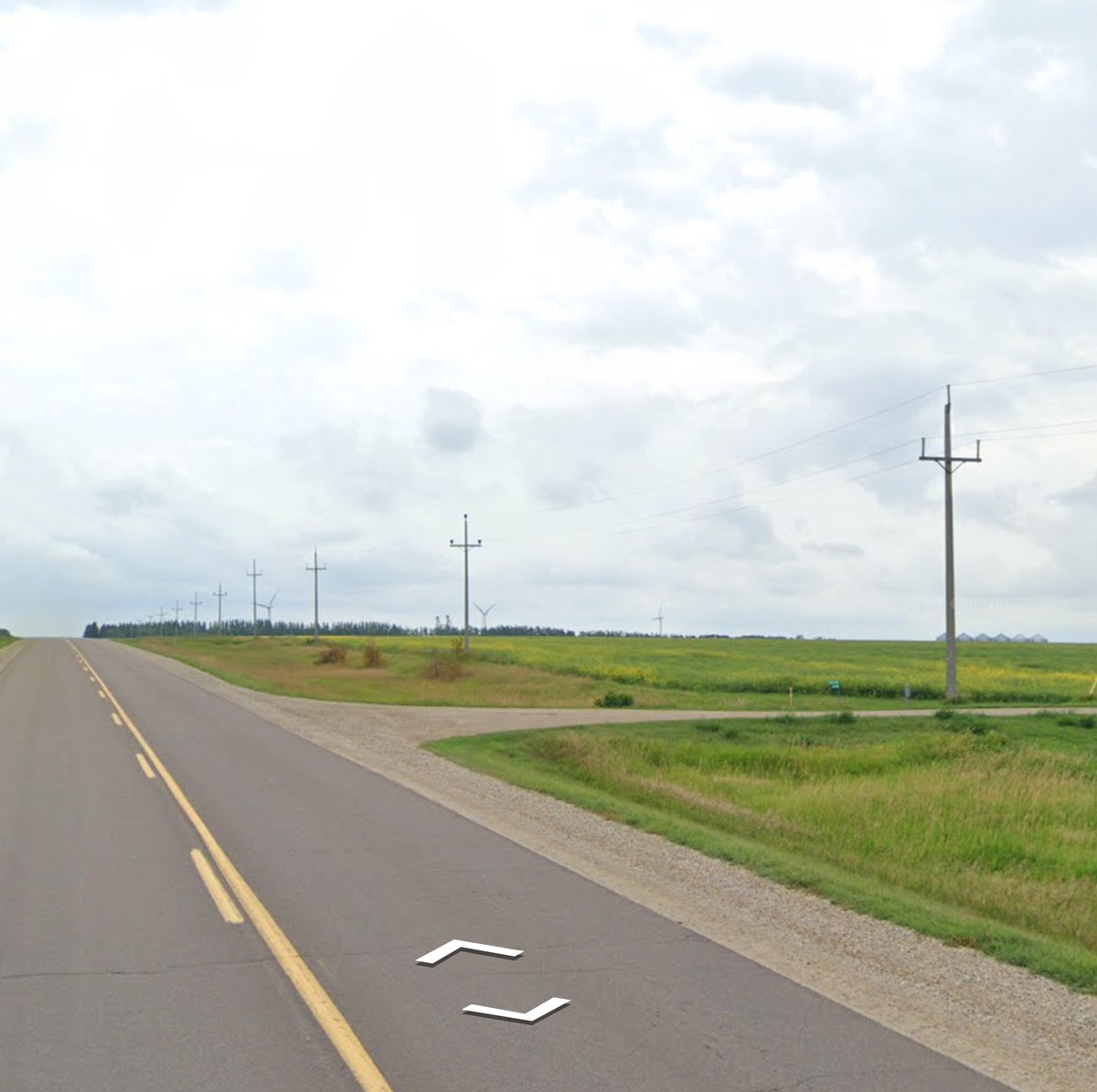
Manitoba's most iconic poletop is a long trident with long insulators, often with a secondary crossbar underneath.
Note: It also exists with alternative insulator types - what matters is the long trident shape.
Canada (CA)
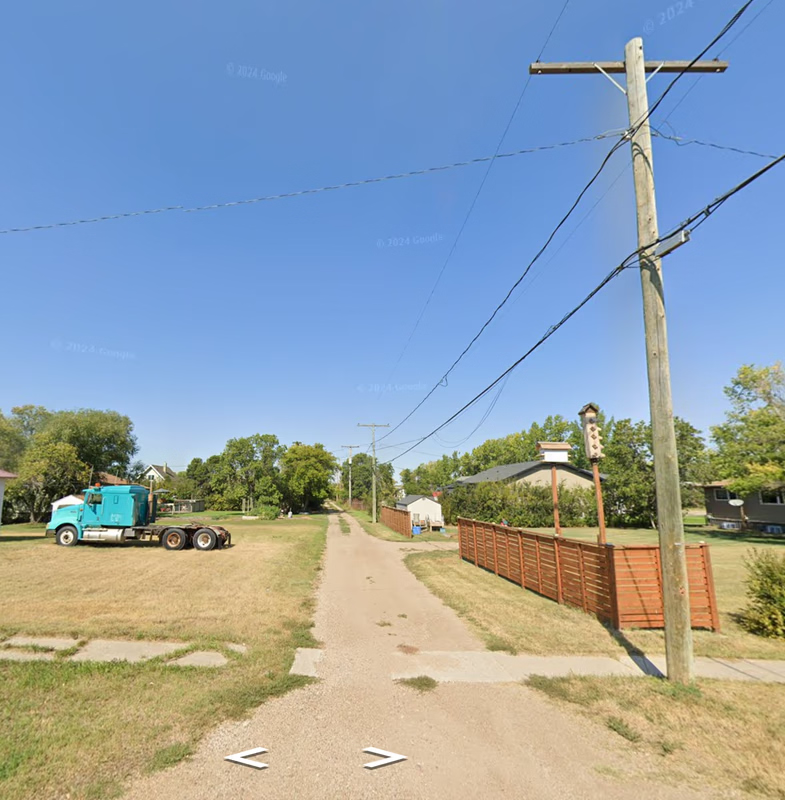
If you can't find typical 2+1 alternating insulator poletops in Sask, you can still rely on the excessive lenght of the crossbar to identify the province.
Note: Ontario also likes long crossarms.
Canada (CA)
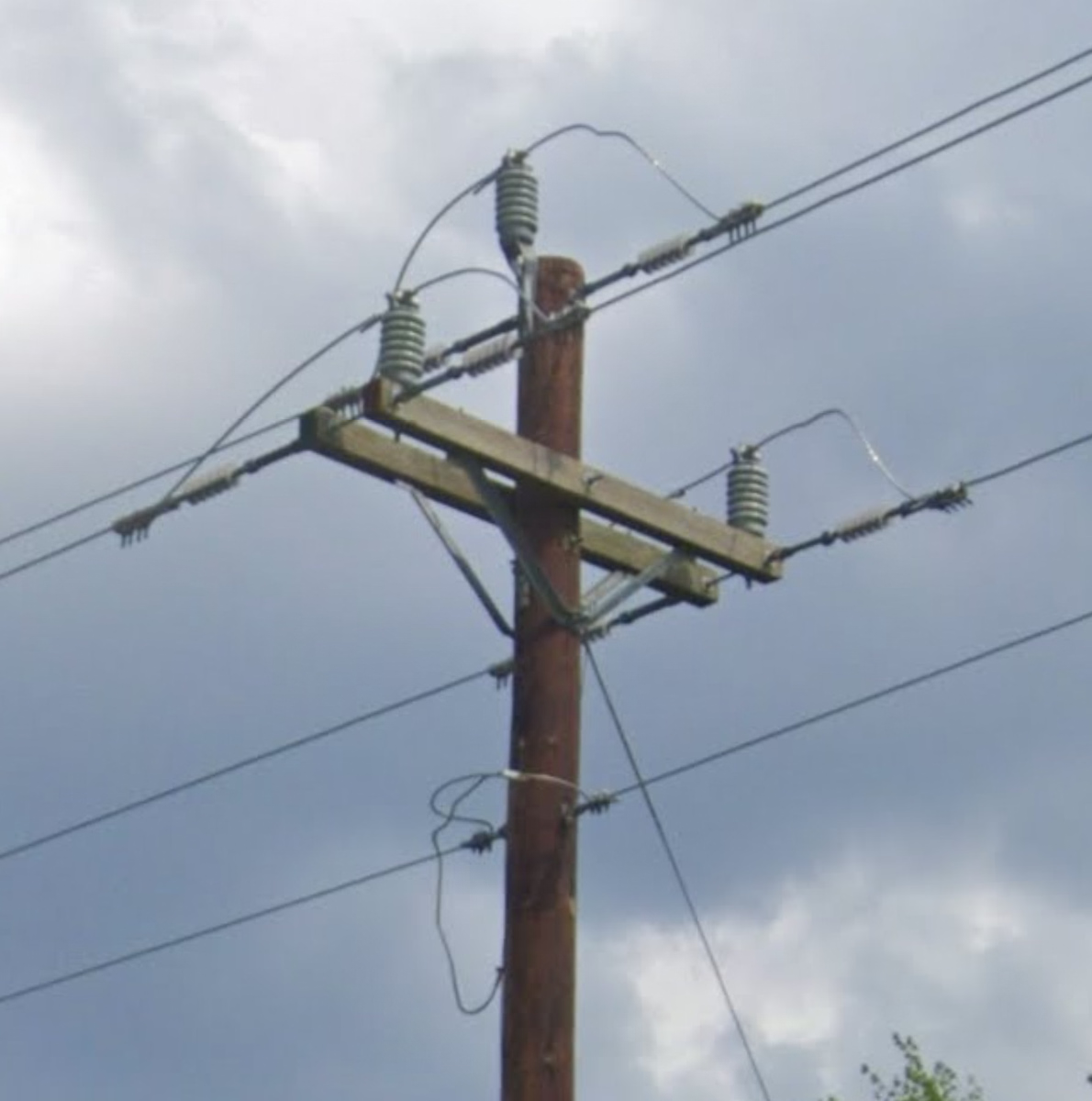
One of Newfoundland & Labrador's most common poletops is a trident poletop with double crossbars and thick insulators.
Note: The shape of the insulators can vary.
Canada (CA)
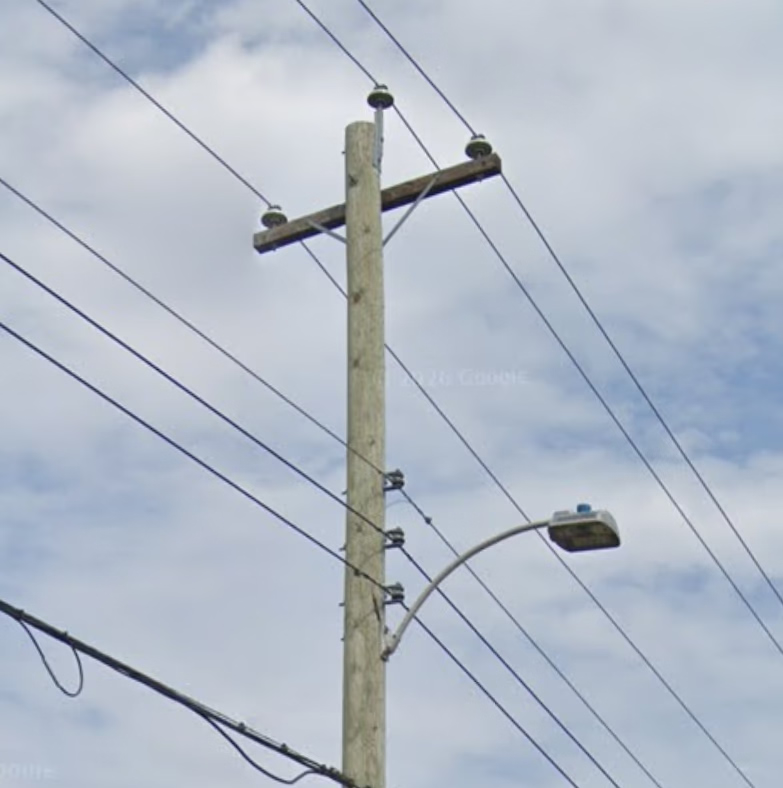
The main poletop in Nova Scotia has a noticeably short and low crossbeam.
Note: The middle insulator is perpendicular to the wires.
Canada (CA)
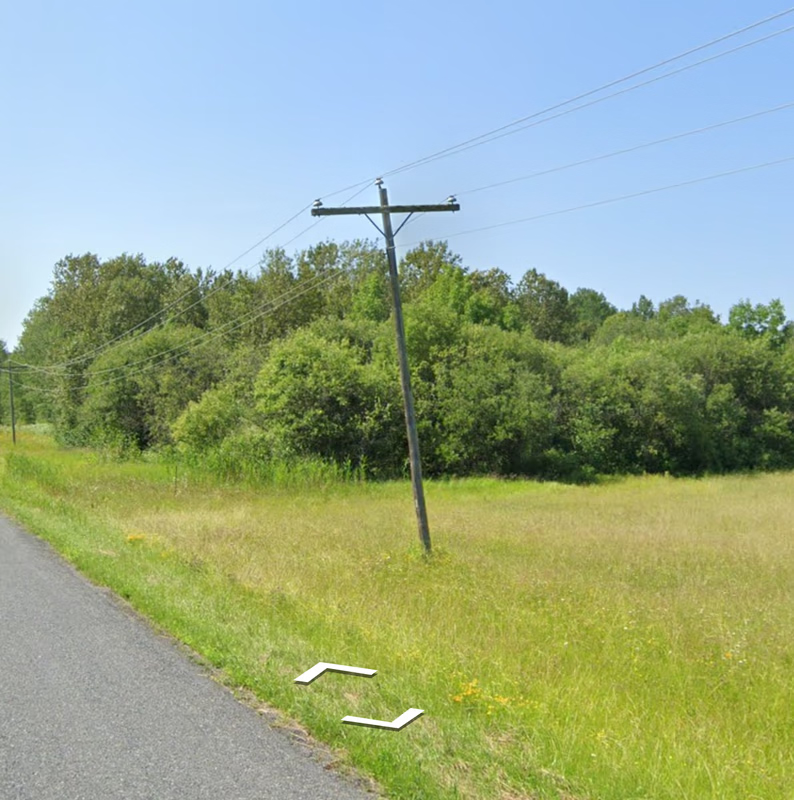
With a bit of training you might notice that Ontario uses a longer crossarm on its generic Canadian poles that most other provinces. In addition, the middle insulator will be parallel to the wire.
Note: Long crossarms can also be seen in Saskatchewan.
Canada (CA)
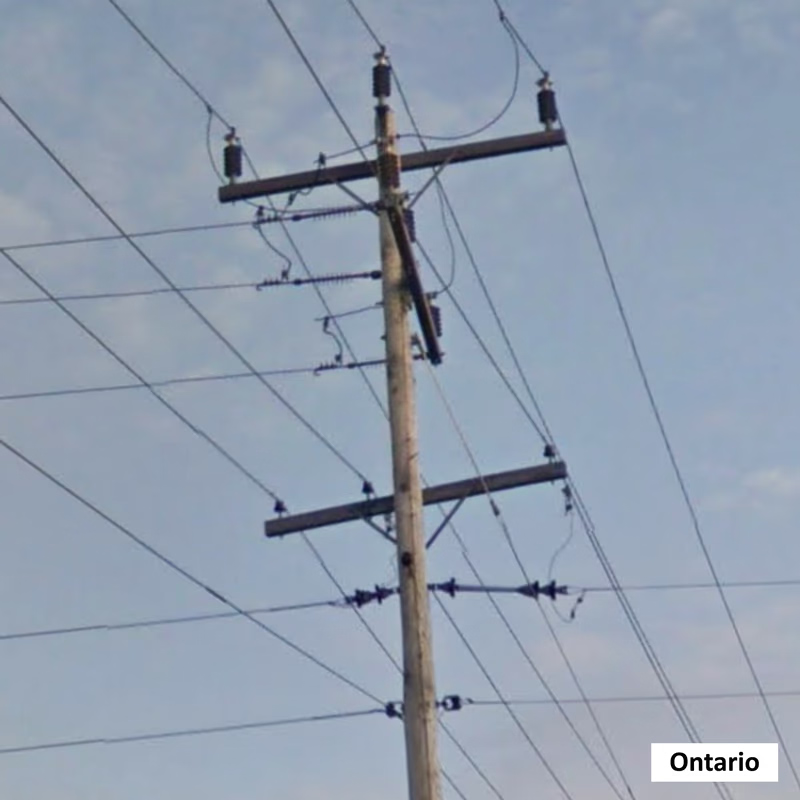
Secondary crossarms on utility poles are typical in Ontario and British Columbia. To differentiate between the two provinces, you can check the following:
Note: In the Prairies you will only see large secondary crossarm poles with downward facing insulators. The Maritimes don't use secondary crossarms.
Canada (CA)
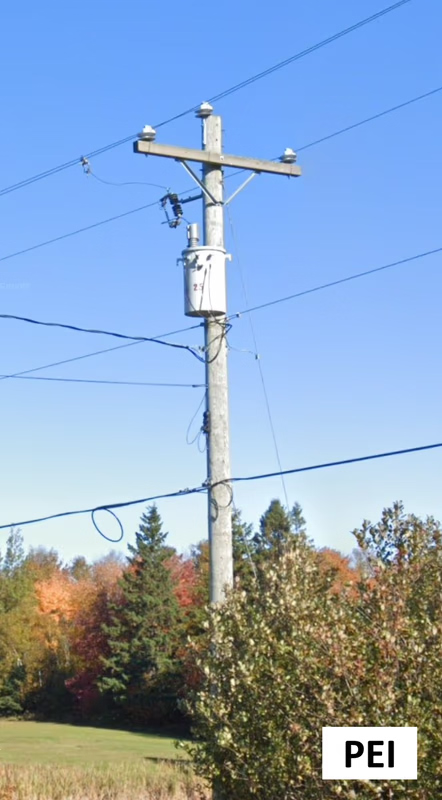
The most dominant pole on Prince Edward Island is similar to the Nova Scotia pole (insulators perpendicular to the wire, crossbar not as high up as in NB), but it has a slightly longer crossbar.
Note: The lamps can be both NB and NS style.
Canada (CA)
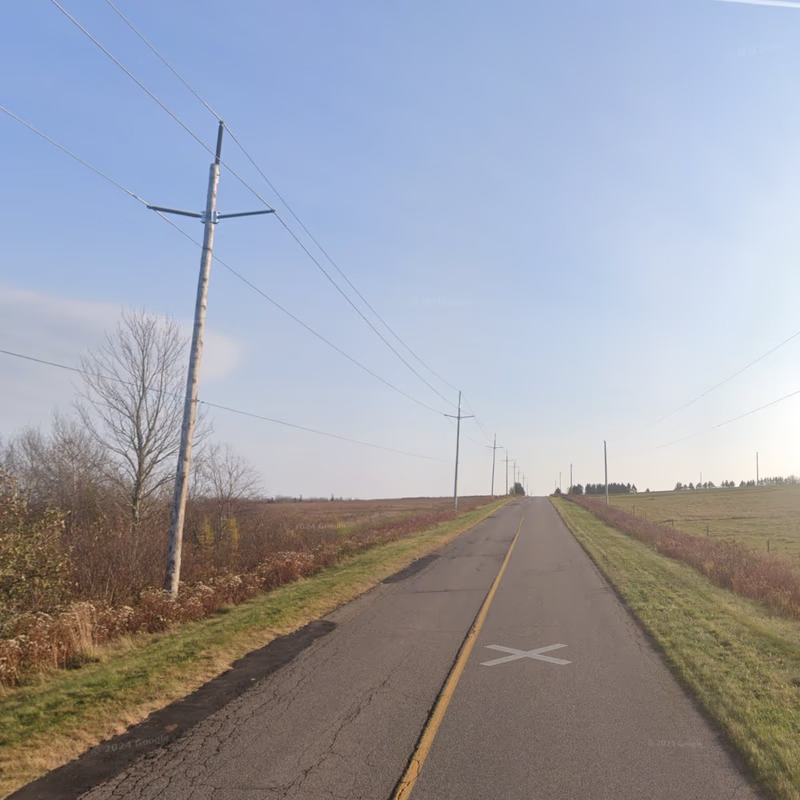
A distinct poletop with 3 long thin ribbed insulators can be found on Prince Edward Island. A variant of this poletop with 2 angled up brackets, just like an Ontario poletop is specific to the region North of Montague.
Canada (CA)
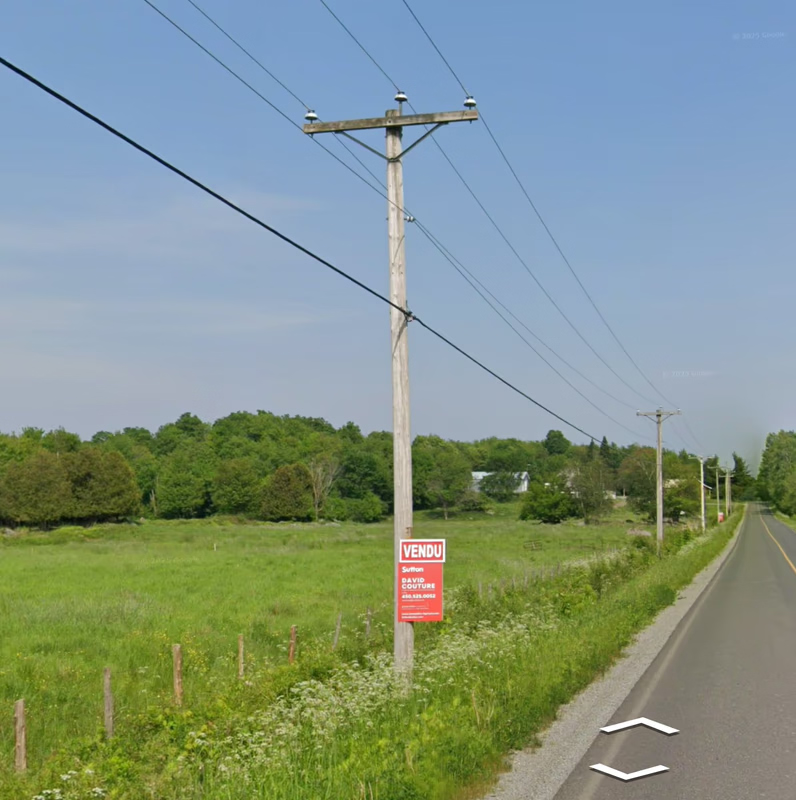
On generic poletops, the horizontal crossbar is higher up in Québec and New Brunswick than in the other Canadian provinces. (The pole looks more like a "T" than a "t".)
Note: Middle insulators in Québec are perpendicular to the wire, in NB they are parallel.
Canada (CA)
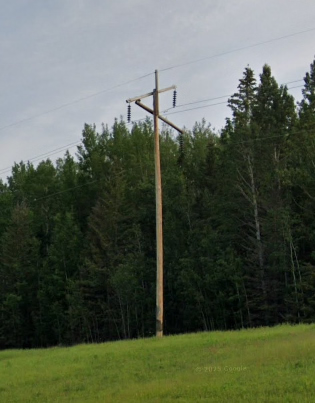
A very distinct ">" shaped poletop can be found on the roads of Northern Alberta.
Note: It is especially common on the MacKenzie Highway (Hwy 35) between High Level and Warrensville, as well as West of High Level on Hwy 58
Canada (CA)
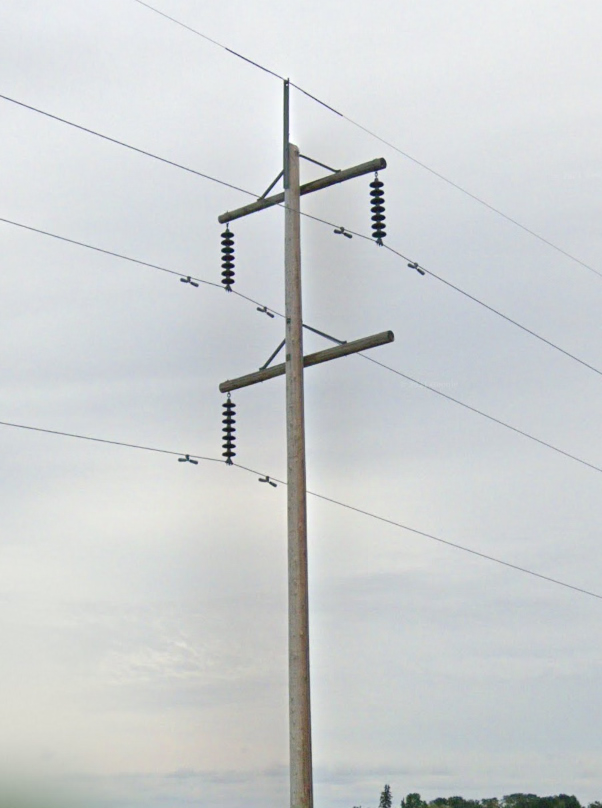
Alberta has a poletop that is similar to the one found in Manitoba, but with a missing insulator on the bottom crossbar.
Note: The poletop is found in abundance around Edmonton.
Canada (CA)
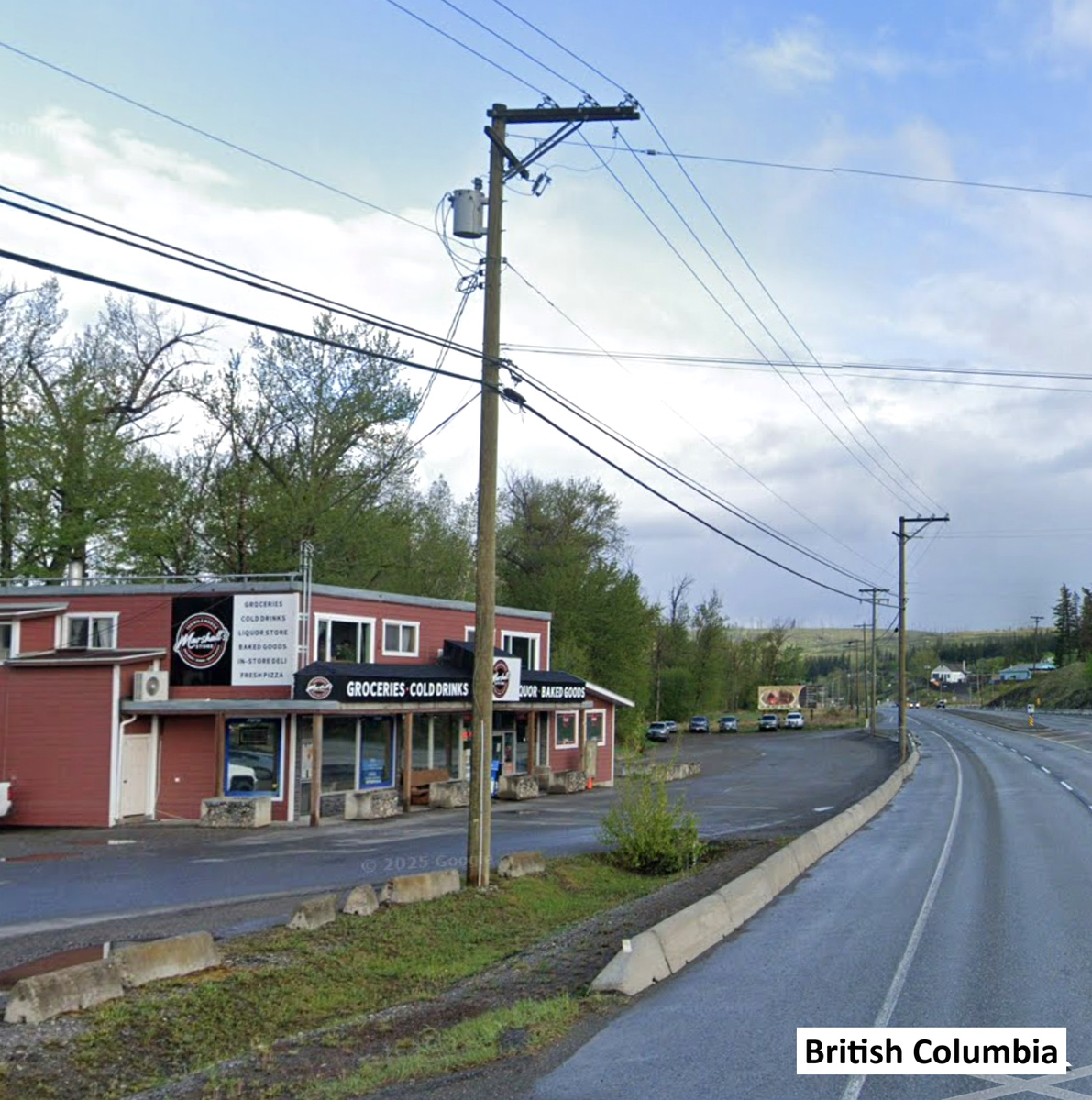
Reverse L-shaped poletops are common in British Columbia and Québec - especially on the Gaspé-peninsula.
Note: The insulators and the colour of the wood are different in the two provinces.
Canada (CA)
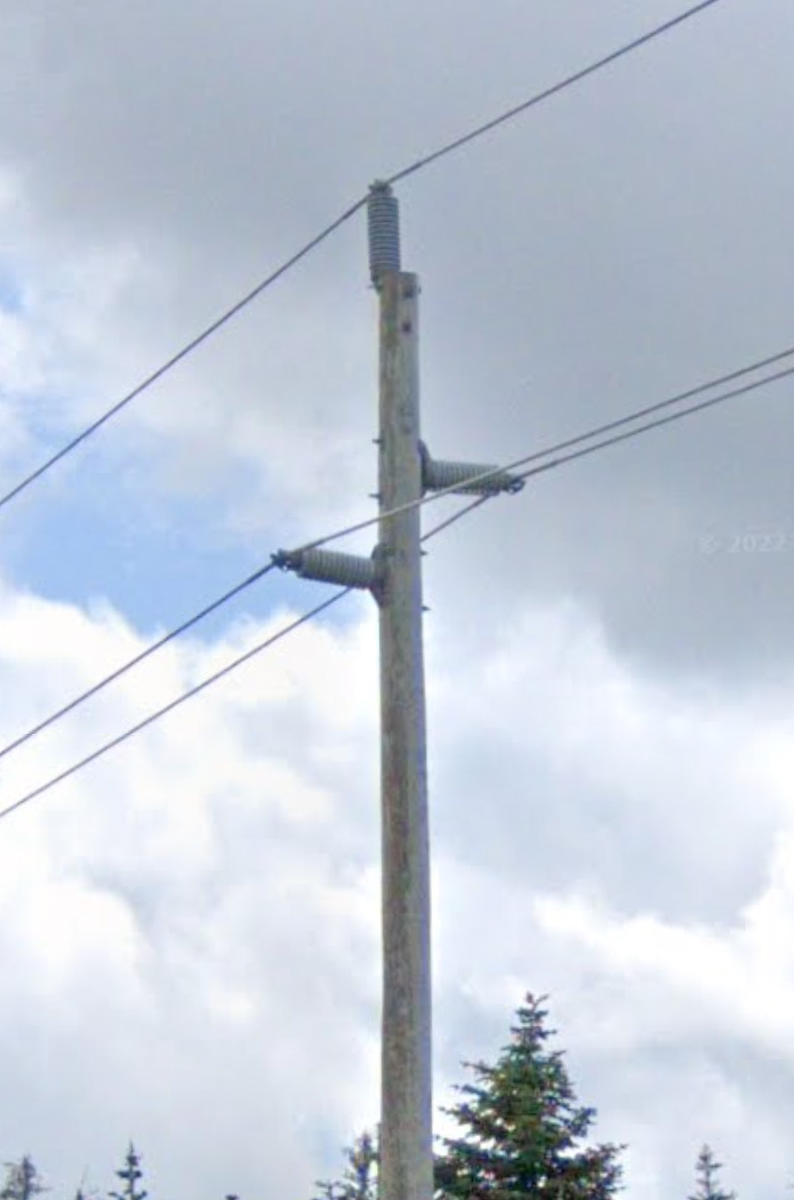
A poletop with 2 horizontal insulators pointing in opposite directions and one vertical insulator is commonly found on the Eastern part of Newfoundland.
Note: If you see this poletop in a cloudy October landscape with a 2019 copyright you are on road NL-230. On Gen 4 it's probably the NL-10 South of St. John's, but there might be more around.
Canada (CA)
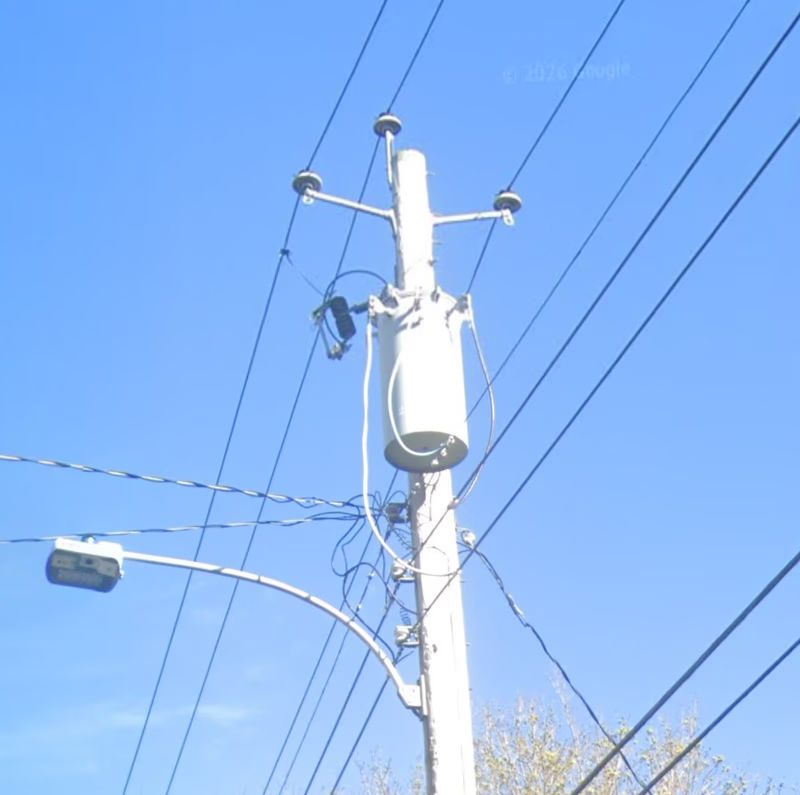
It is fairly common to see Québec-style poletops in Nova Scotia, especially in the larger towns.
Note: The shape of the lamp attached will be different in the two provinces.
Canada (CA)
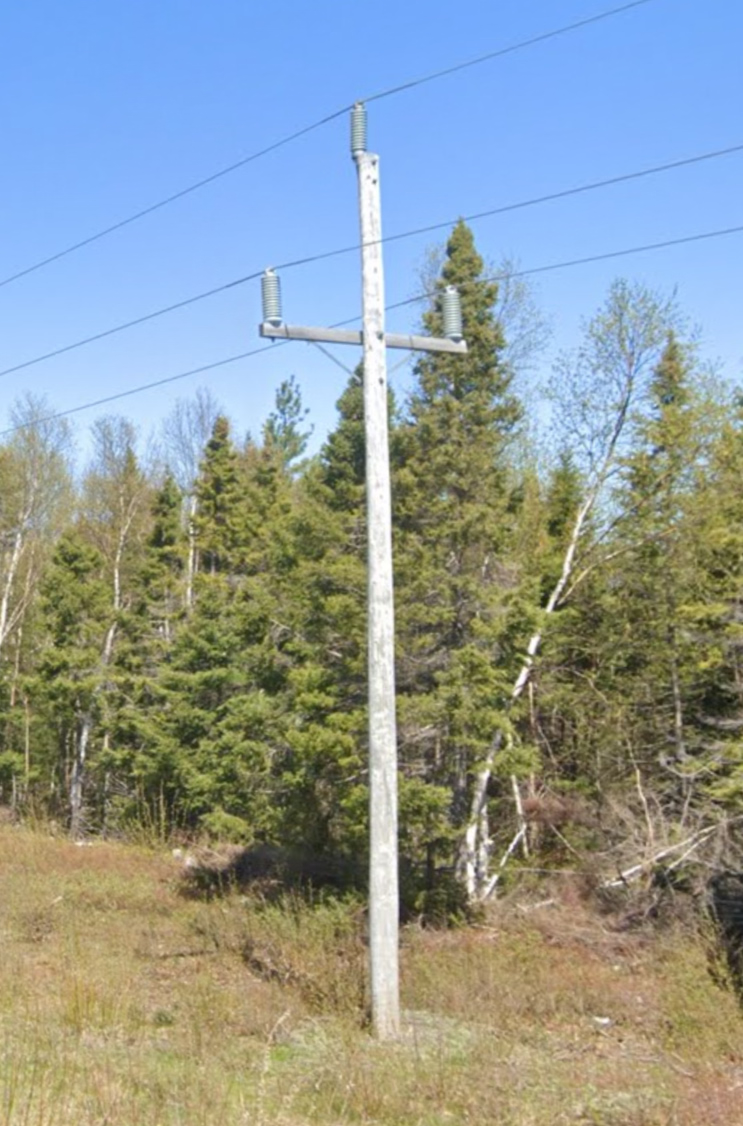
The second most common poletop in Newfoundland and Labrador is a trident poletop with a low crossbar and long insulators.
Note: Manitoba's trident poletop looks similar, but that one has skinnier insulators and a second crossbar below the main one. (Not to mention the landscape couldn't be more different.)
Canada (CA)
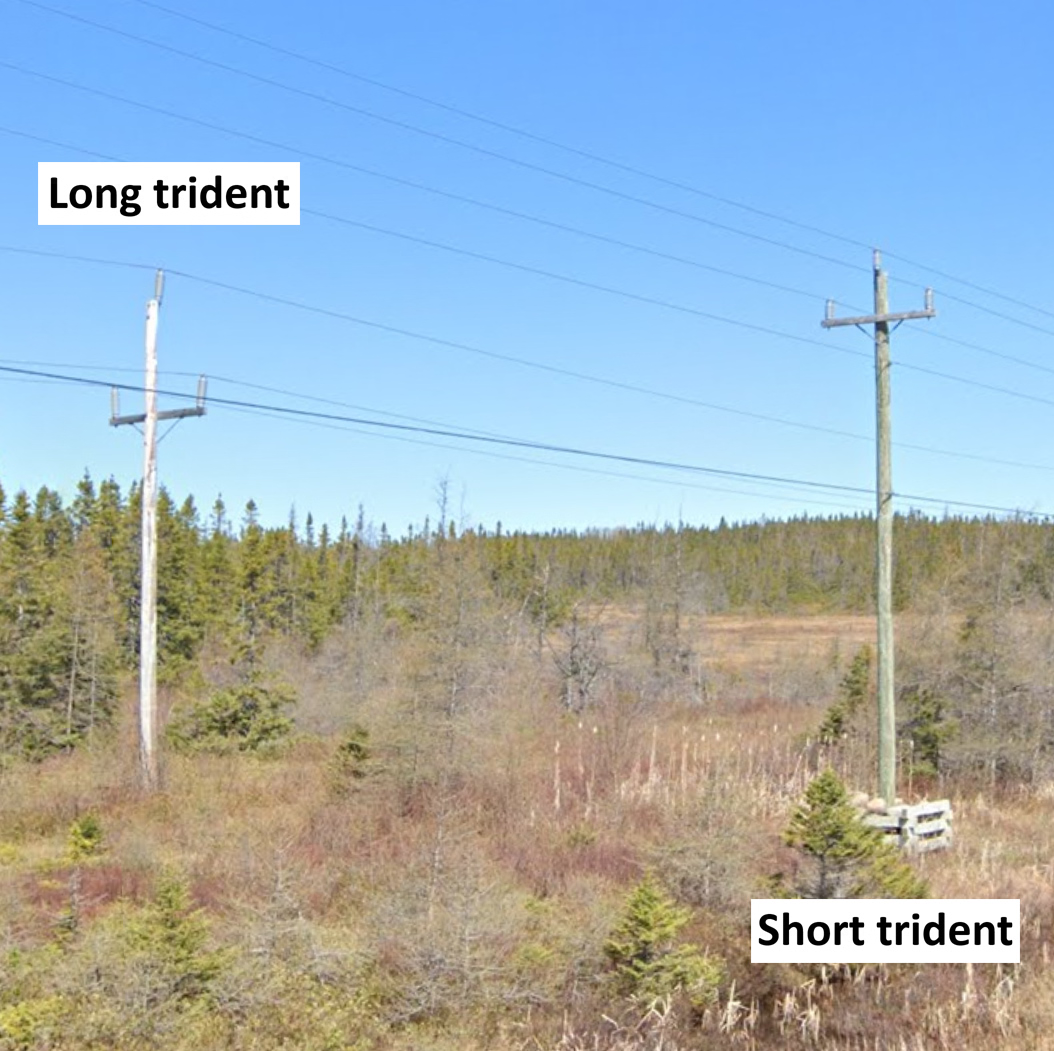
The iconic long trident poletop of Newfoundland and Labrador has a very common variant with shorter vertical bars. The isulators can vary (usually stubby with 3 ribs or long with many ribs).
Canada (CA)
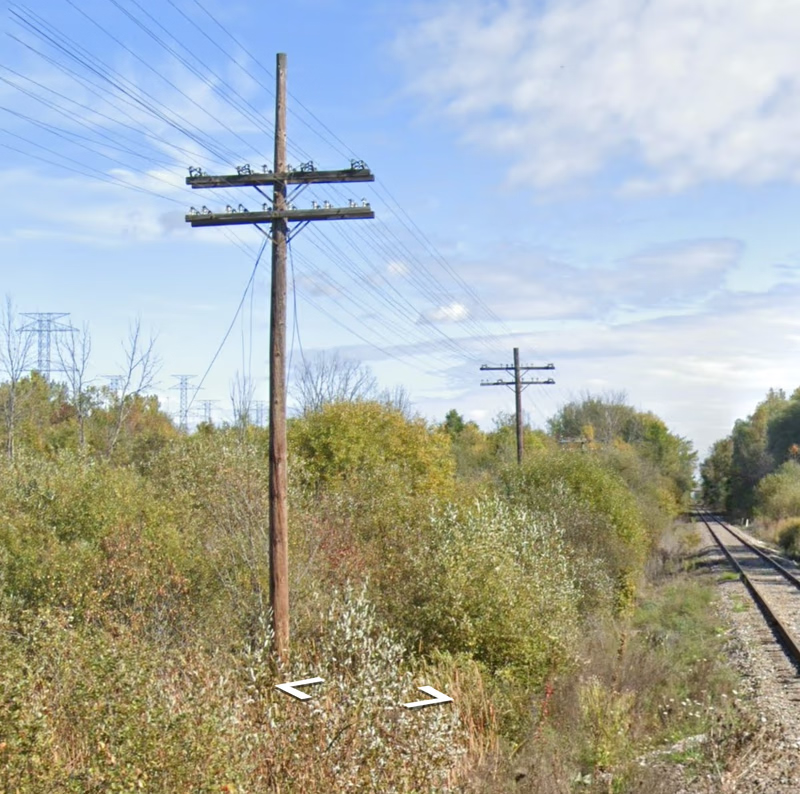
Nearby railway tracks in Ontario poles with a large number of small insulators can be present. These poletops can have a lot of extra crossarms.
Canada (CA)
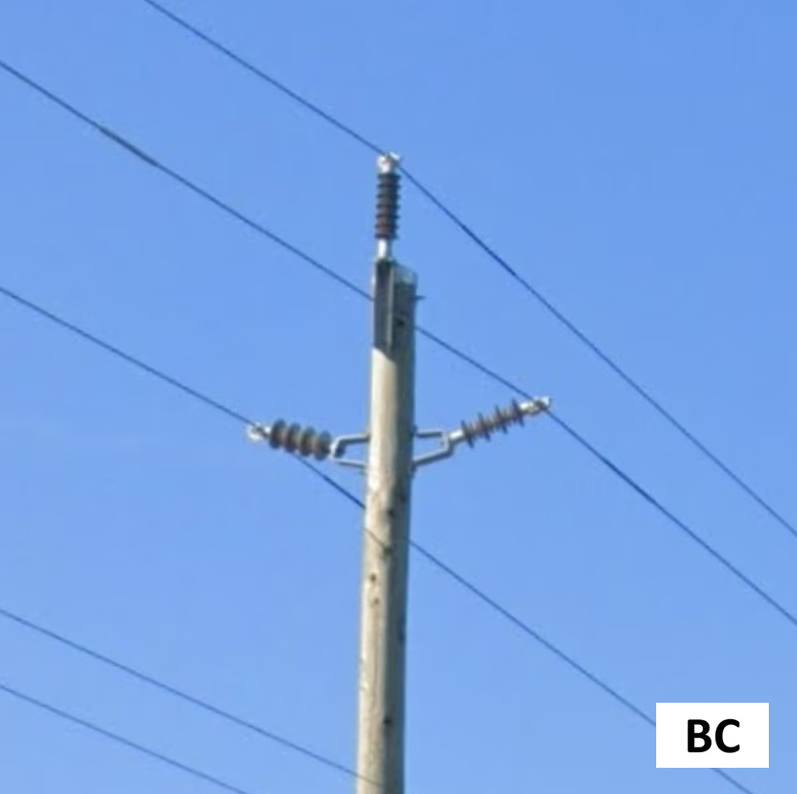
Occasionally, you might find poletops in BC that resemble the classic Ontario poletops.
The best way to not get confused is just to look at the landscape first, but here are some details to look for:
Canada (CA)
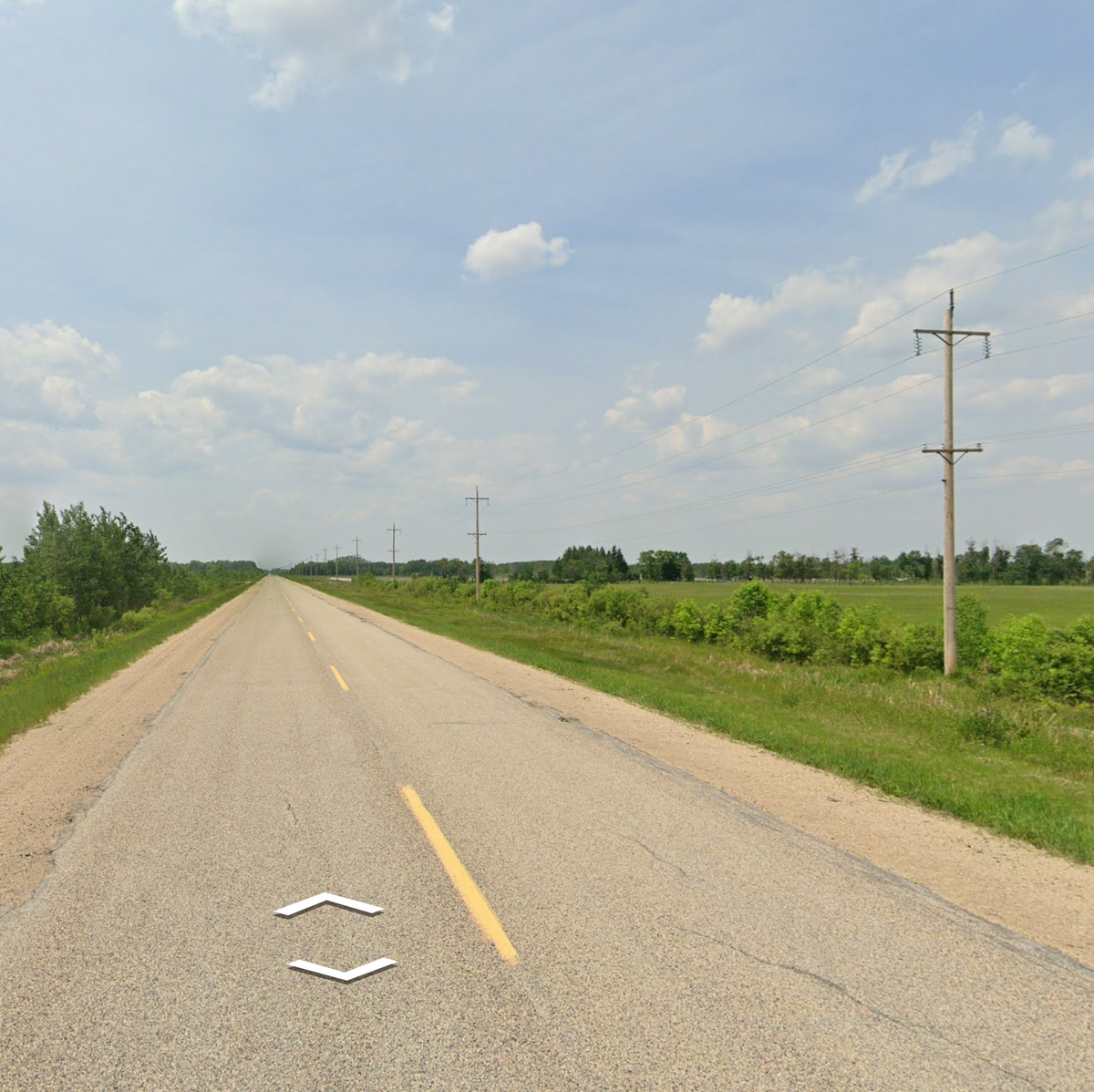
Trident poletops with 2 hanging insulators are pretty much unique to Manitoba. They exist with or without a secondary crossbar.
Note: This poletop is way more common on the Southern plains of Manitoba than further North.
Canada (CA)
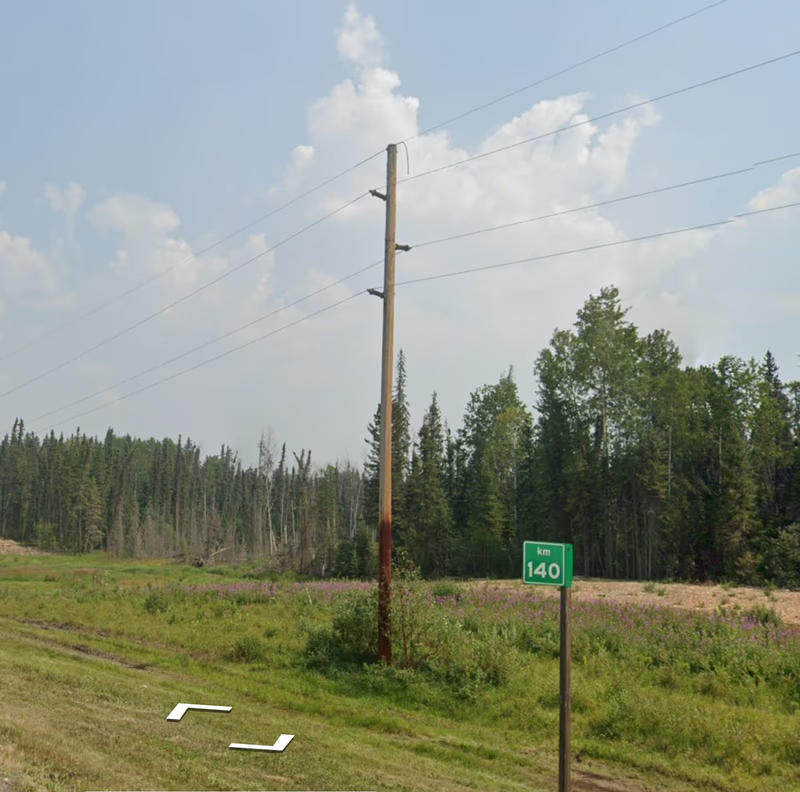
Northern Saskatchewan is home to a wide range of intriguing poletops
Note: The "missing insulator pole" in Alberta is missing its insulator on the bottom bar, otherwise it is similar to the one in the example.
Canada (CA)
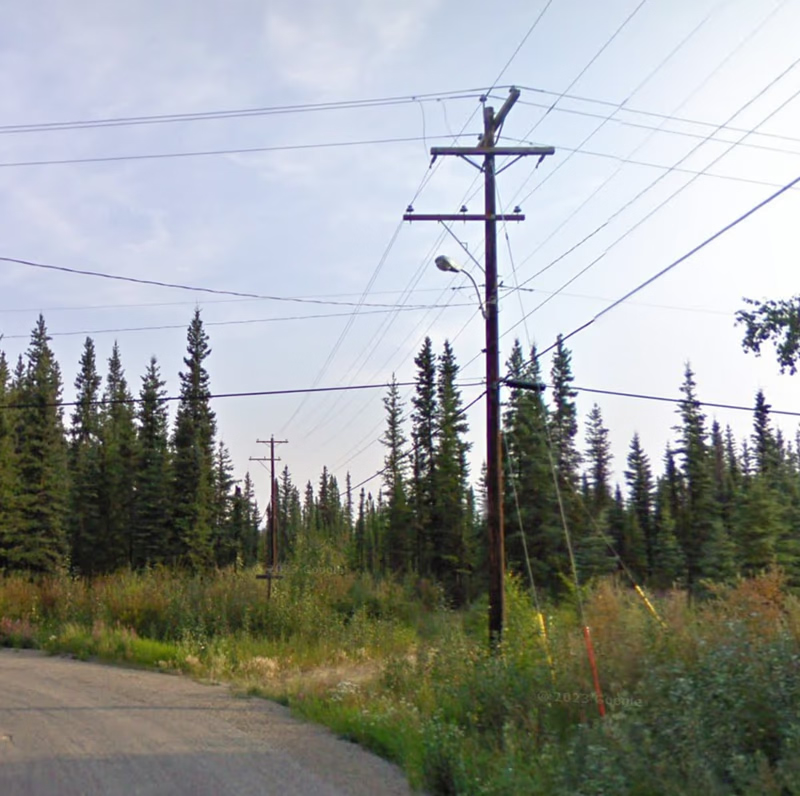
Utility poles in Yukon can have rather complicated secondary crossbeams. They can be assymmetrical or twisted and they usually have a number of extra insulators on them.
Canada (CA)
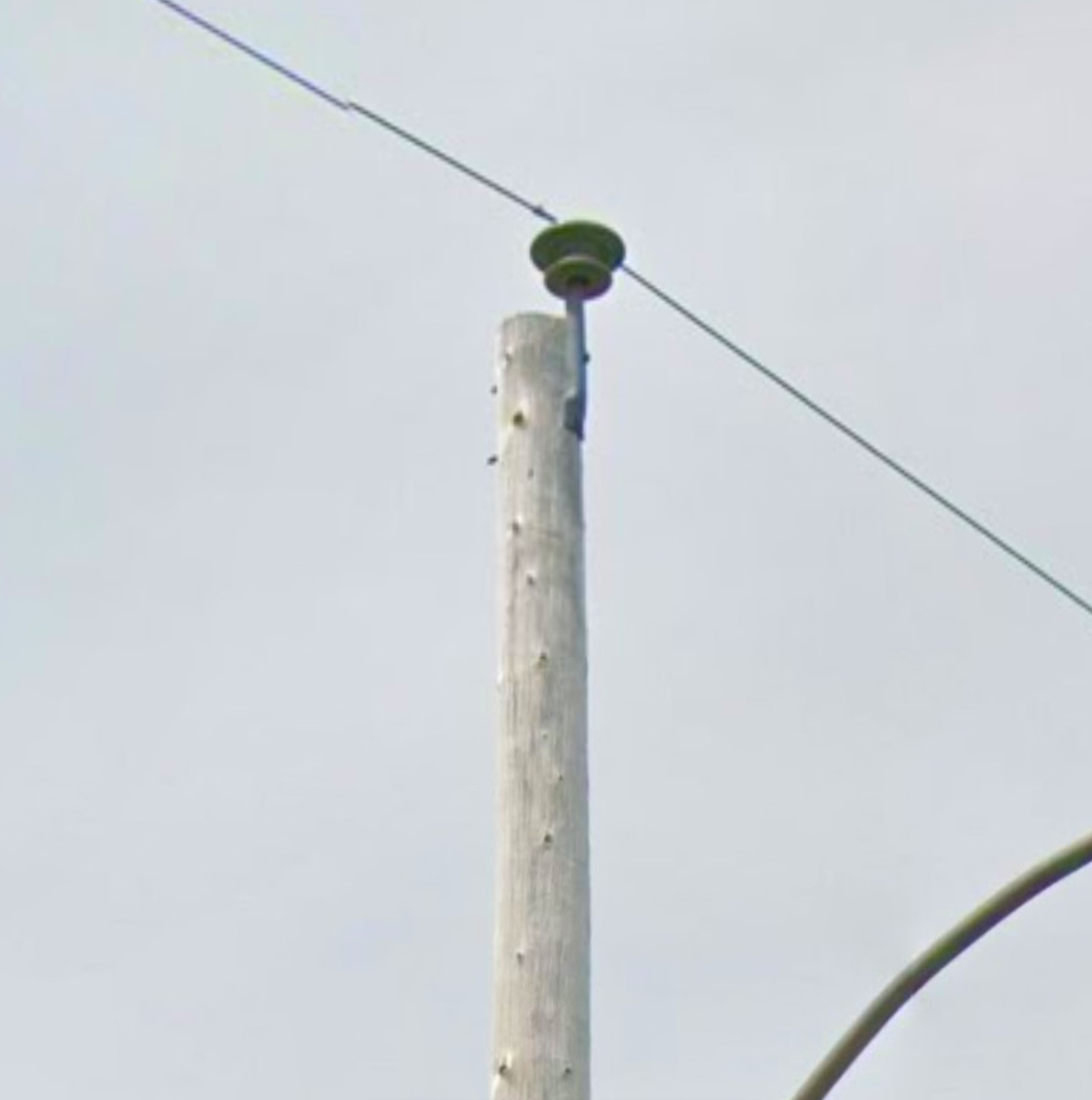
Isolated stubby ribbed insulators (UFO shape) can be found in Ontario, Québec and Newfoundland & Labrador.
Note: Some regions have more of them, such as the extreme Southwest in Ontario or the far East of Québec.
Canada (CA)
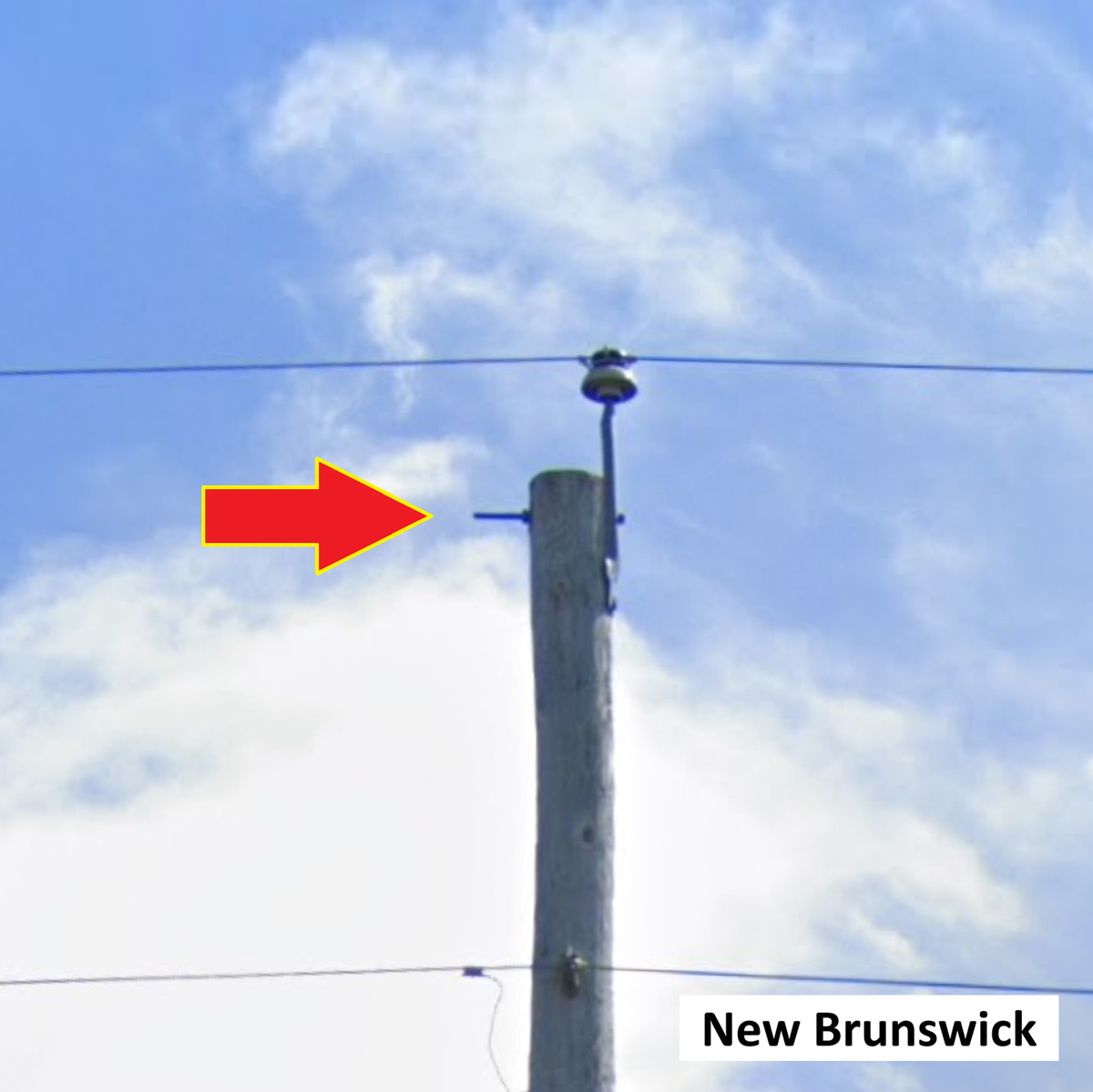
Many insulators in New Brunswick are fixed with only 1 bolt to the pole. The rest of Canada uses 2.
Canada (CA)
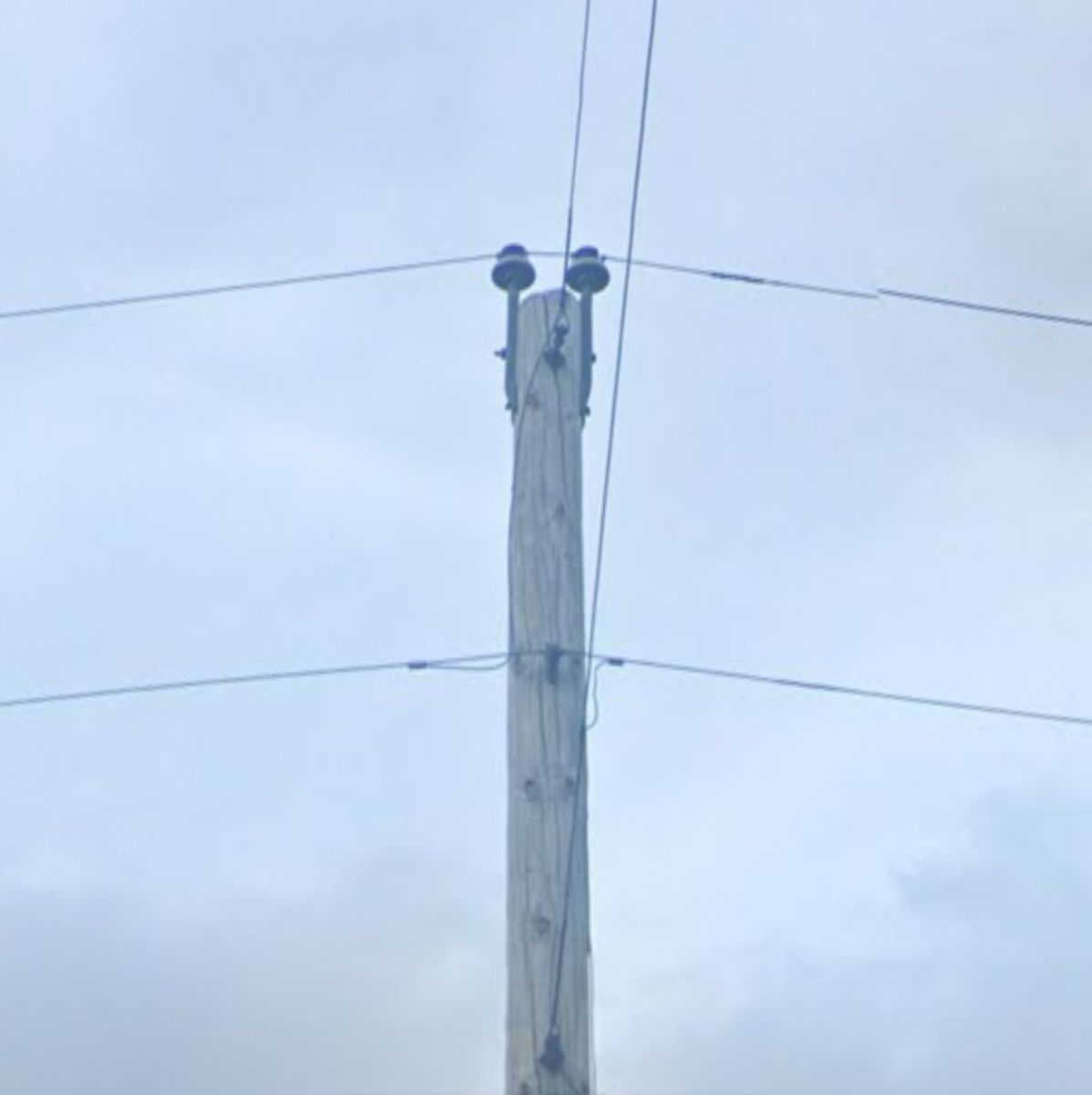
Poles with two insulators on top are more common in New Brunswick than in any other province.
Note: Newfoundland and Labrador seems to have a lot of these poles too.
Canada (CA)
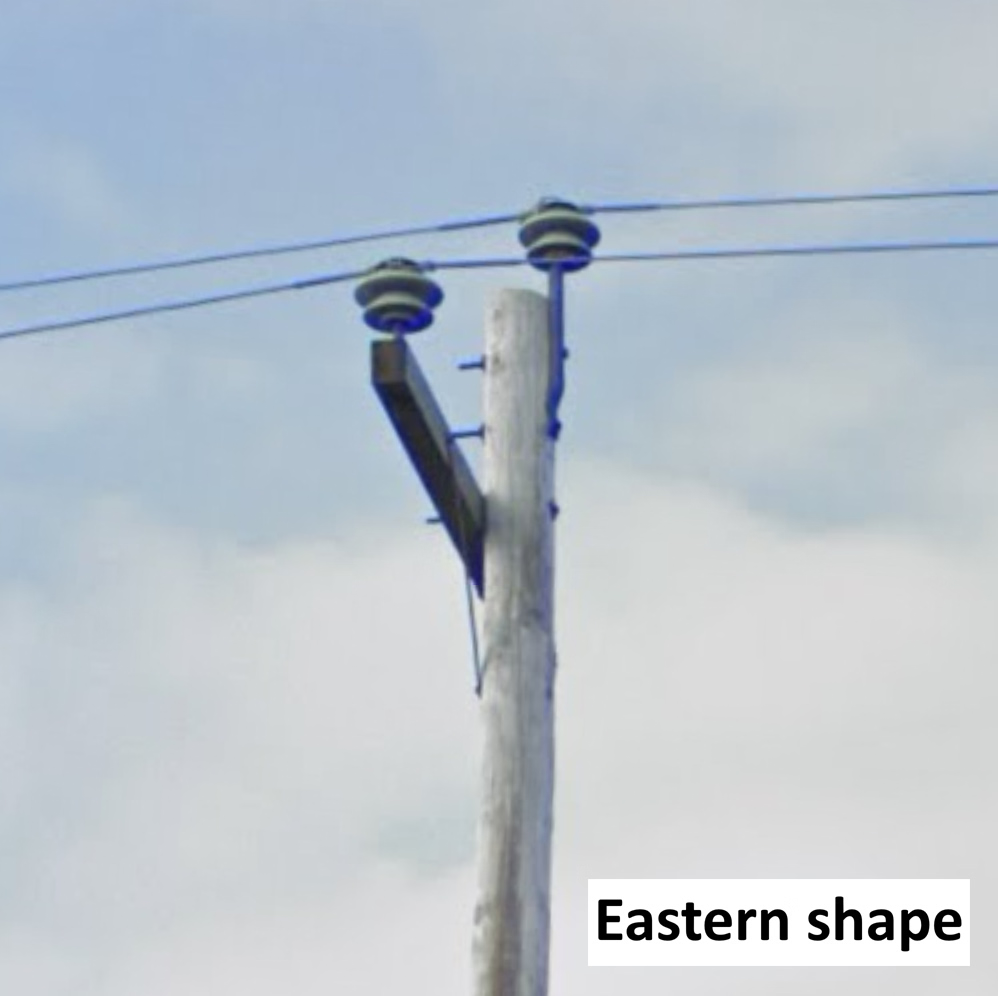
Insulators whose top rib is larger than the bottom one are the most common on the Eastern parts of Newfoundland. The Avalon Peninsula seems to love them a lot.
Note: There is another insulator type on the island with 2 equally small ribs and a larger top one. This is not specific to the East!
Canada (CA)

In Québec, Nova Scotia and on Prince Edward Island middle insulators (or standalone insulators) will be perpendicular to the wire.
Note: Parallel is the Canadian standard.
Canada (CA)
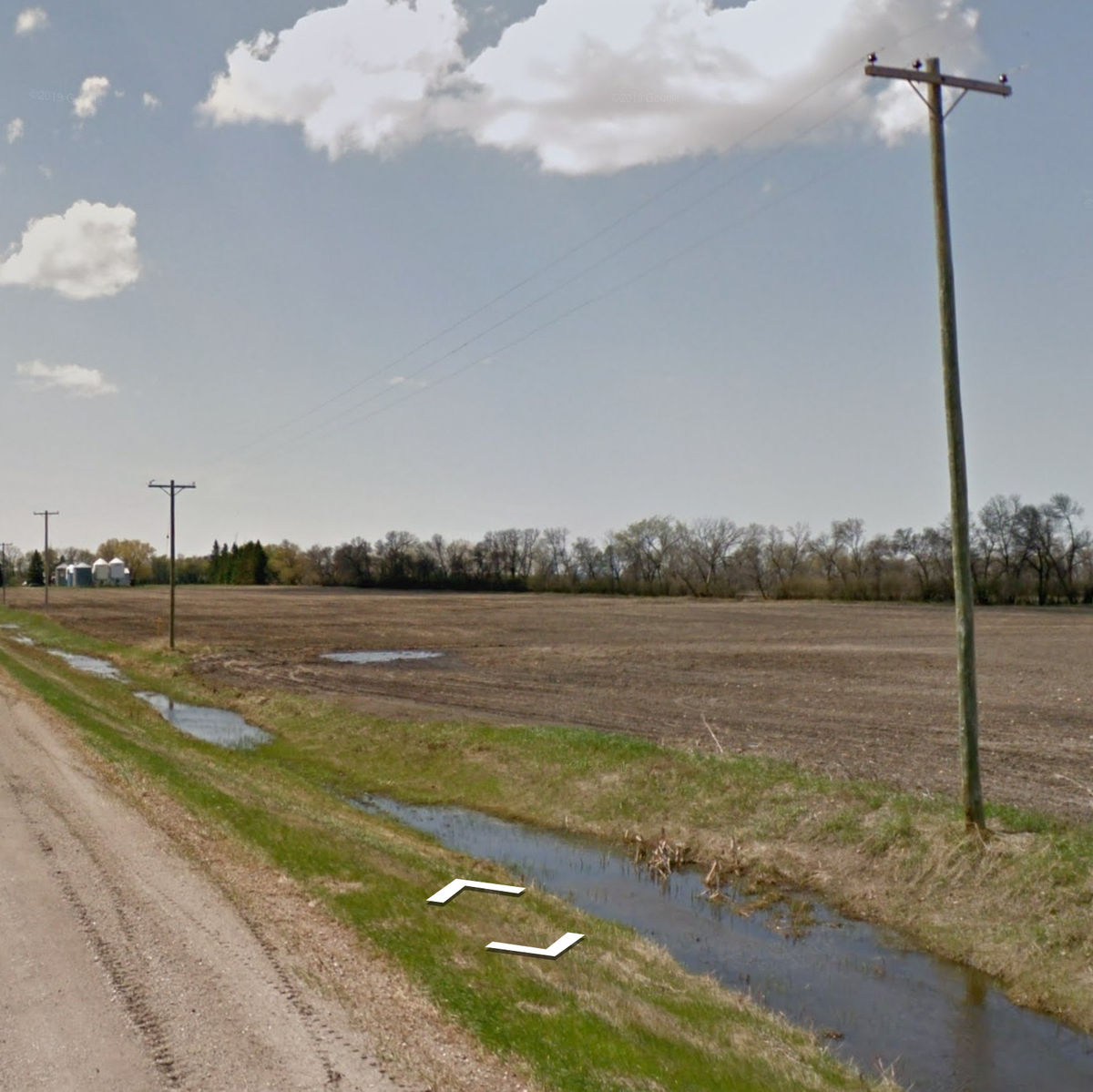
Manitoba's wooden poles can have the same 2+1 arrangement as Saskatchewan's, but they will not alternate consistently. It is possible to find poles with different insulator patterns standing right next to each other.
Note: Manny's crossbars are also shorter and the insulators are often smaller or darker than Sask's.
Canada (CA)
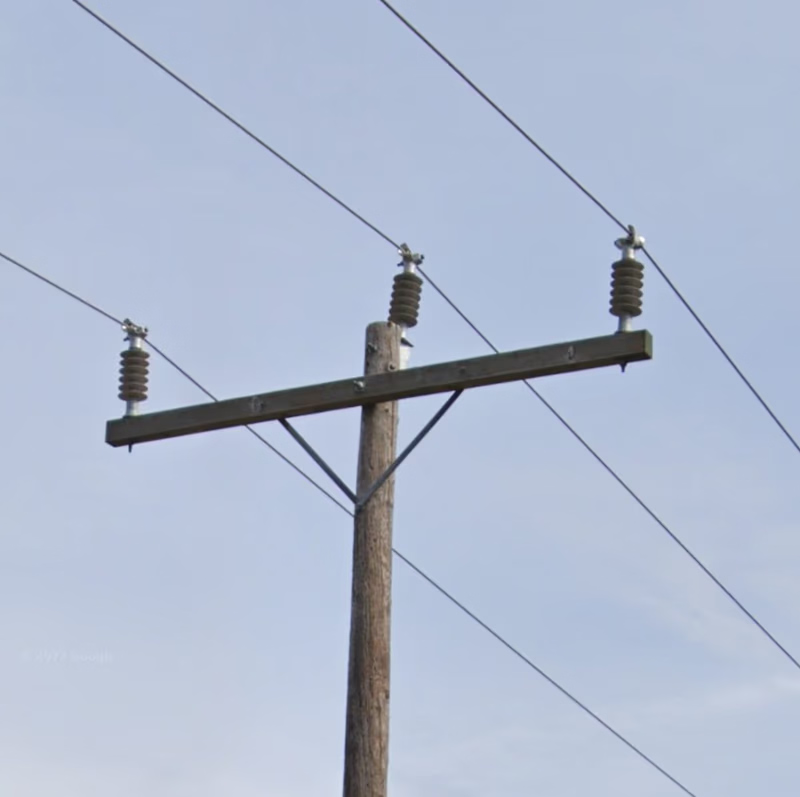
Tall ribbed insulators are most common Ontario, followed by BC and NL. Crossarm poles with 3 tall ribbed insulators however are only found in Ontario.
Note: The 3 insulators can be upright or tilted.
Canada (CA)
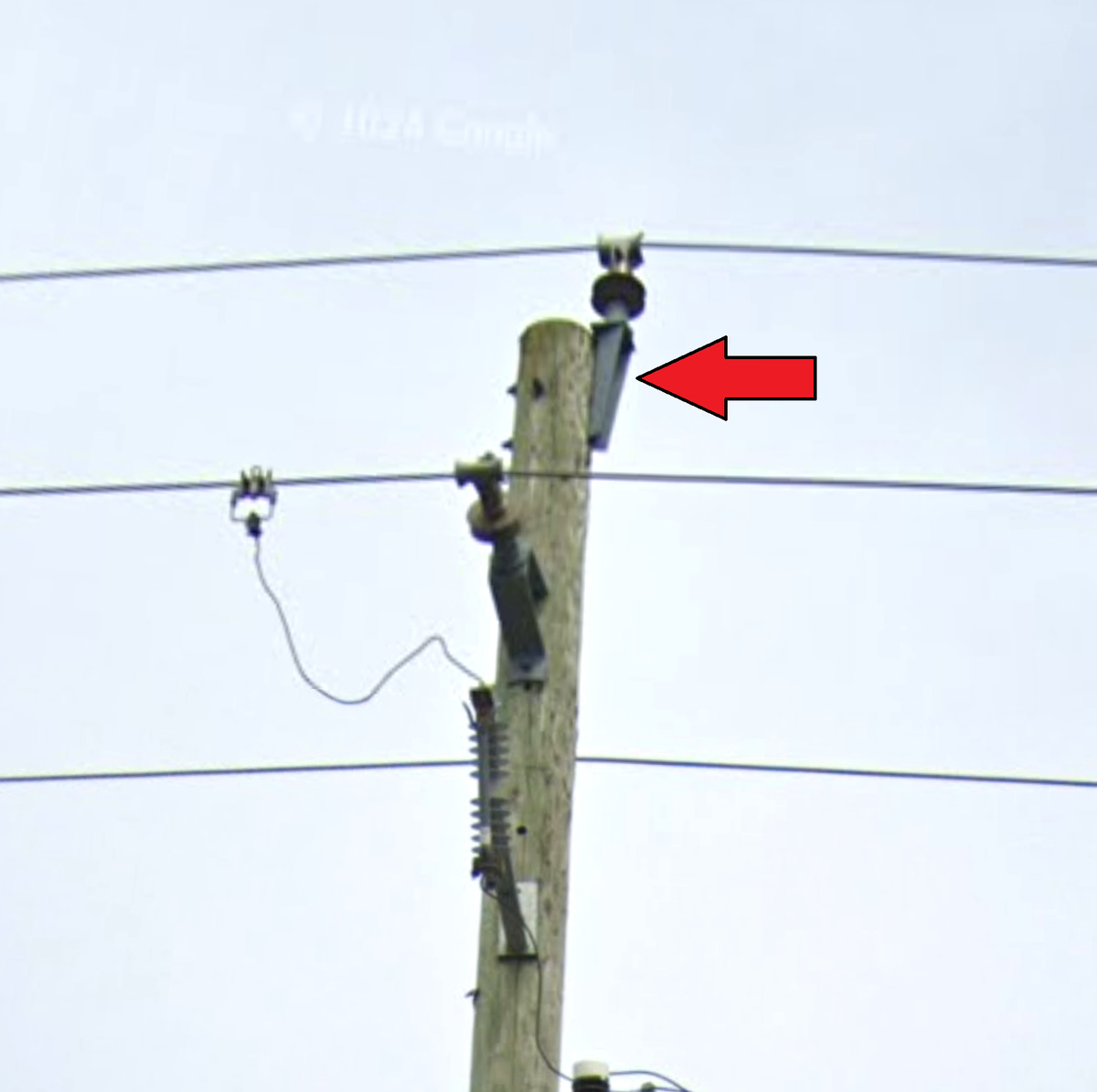
A tilted attachment piece under the insulator is unique for Ontario. It can appear both on single insulator poles and the classic V-shape Ontario poletops, under the middle insulator. The insulators themselves are usually ribbed and sit parallel to the wire.
Note: The similar-looking V-poletops in BC don't have this attachment.
Canada (CA)
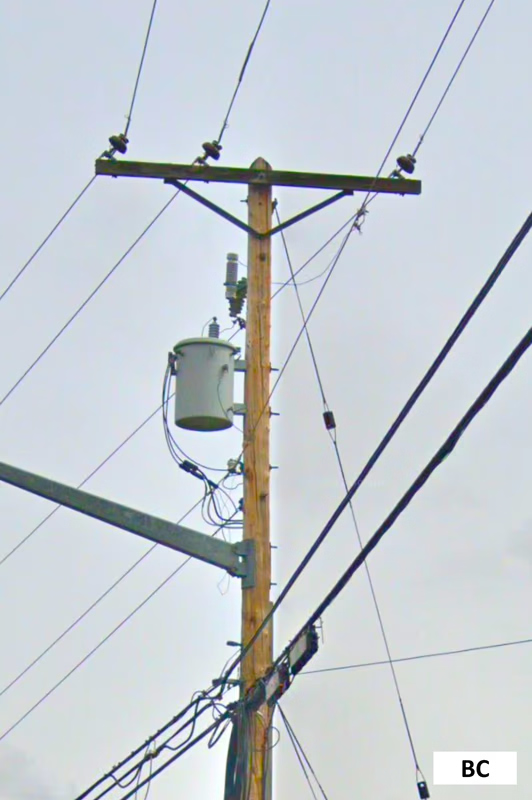
Poletops with 3 tilted insulators are commonly found in British Columbia and Ontario.
Tips to differentiate:
Note: I have seen tilted insulator poletops in Nova Scotia too. Look at the colour of the wood to rule it out!
Canada (CA)
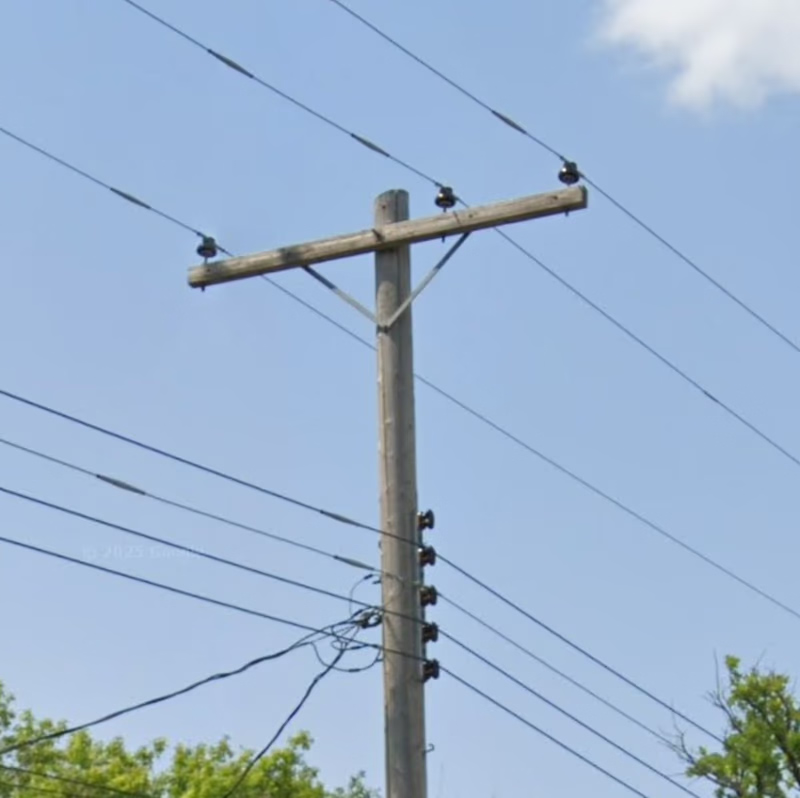
Insulators that are visibly smaller than the standard can be found in Ontario and Manitoba. They can appear on single insulator poles or full crossarm poletops.
Note: Mini insulators can sometimes appear in Saskatchewan and rarely in Alberta too.
Canada (CA)
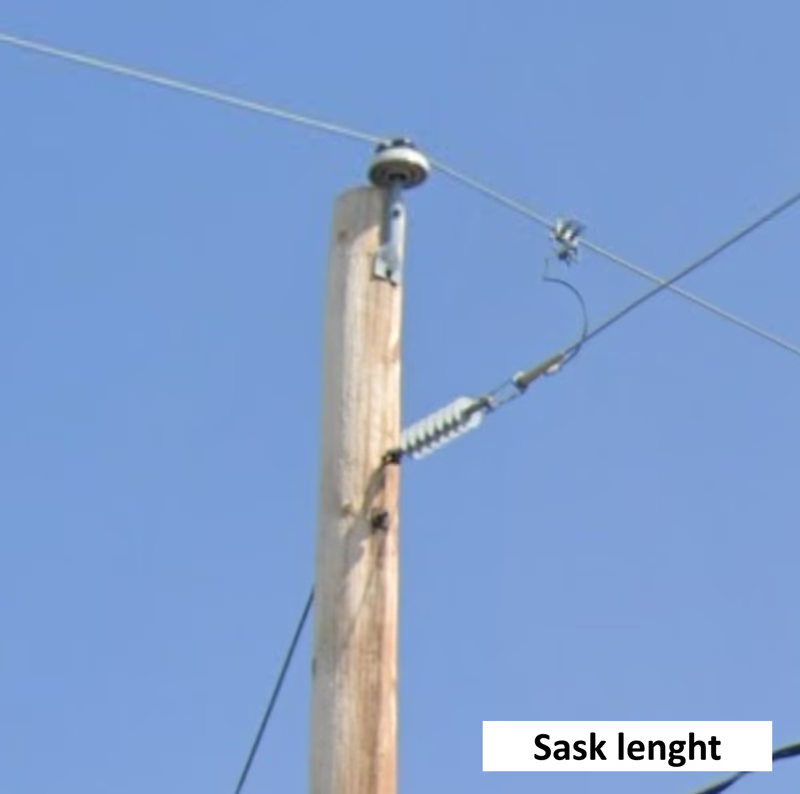
In Saskatchewan, you can sometimes find insulators that are mounted lower than the generic Canadian ones. Not every insulator will be like this, but it is a unique feature of Sask.
Canada (CA)
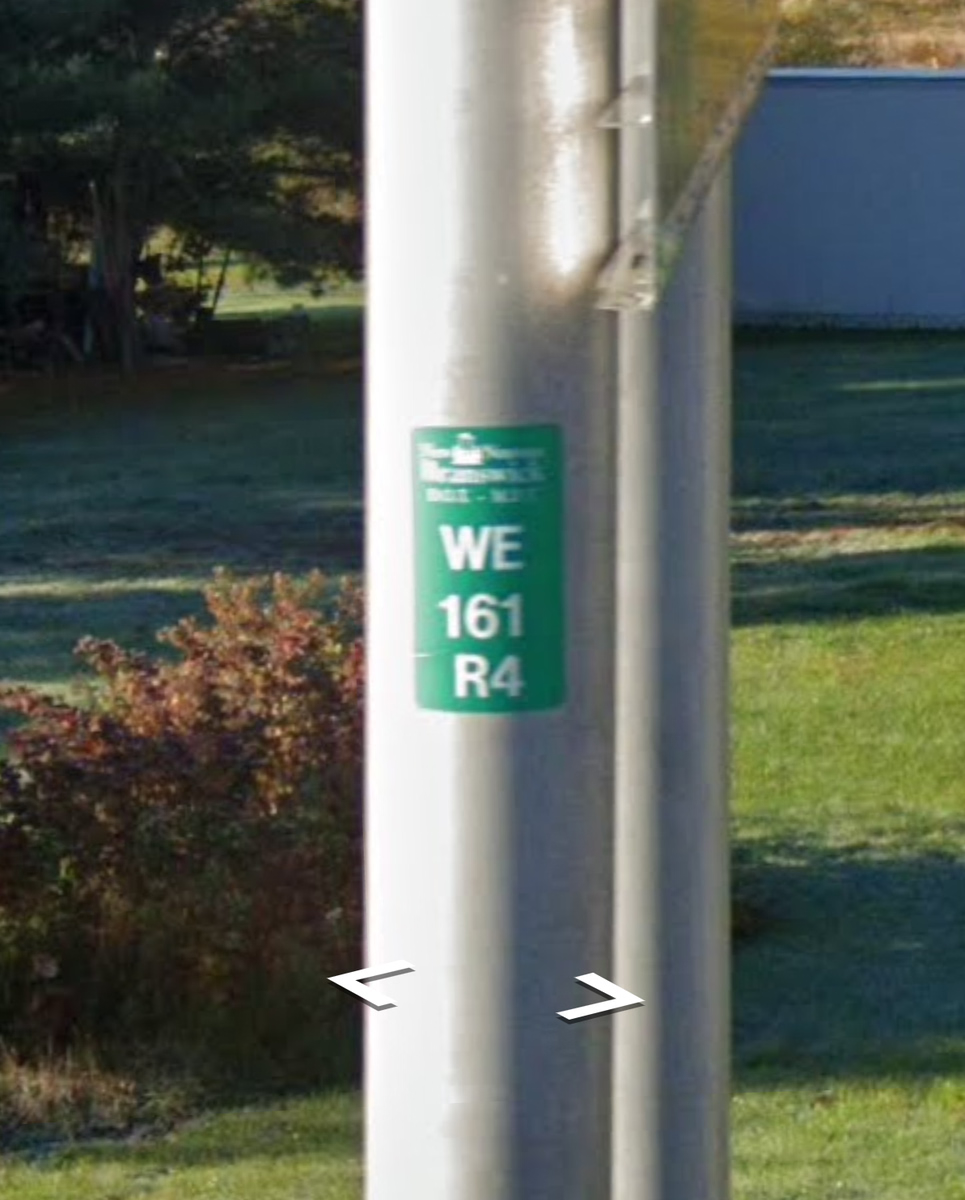
Directional signs and poles at larger intersections in New Brunswick often have a green sticker with white lettering on the signpost.
Note: Many of these green stickers have "New Brunswick" written on the top alongside a logo, but you need to go close to be able to read it.
Canada (CA)
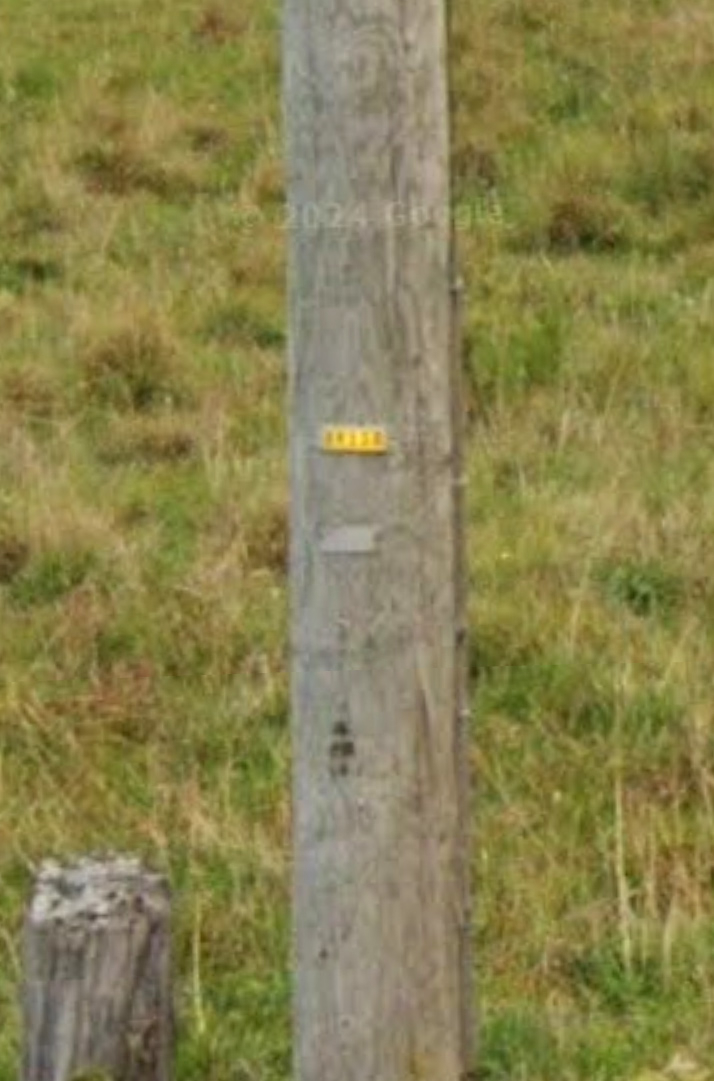
Yellow horizontal pole stickers with black numbers are common in New Brunswick. There can be one or more on the same utility pole.
Canada (CA)
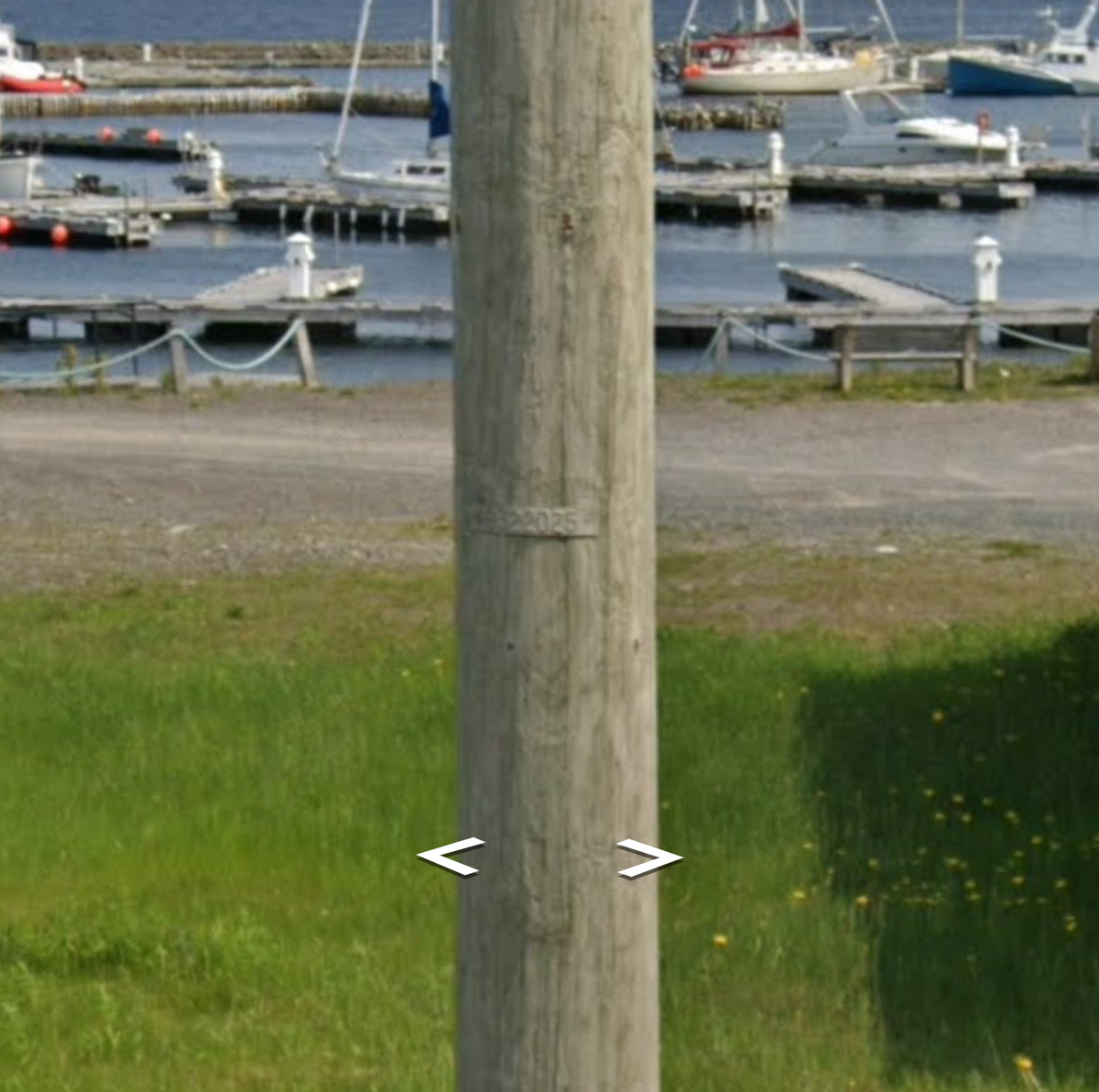
A simple horizontal metal plate is hiding in plain sight on the utility poles of Newfoundland and Labrador.
Canada (CA)
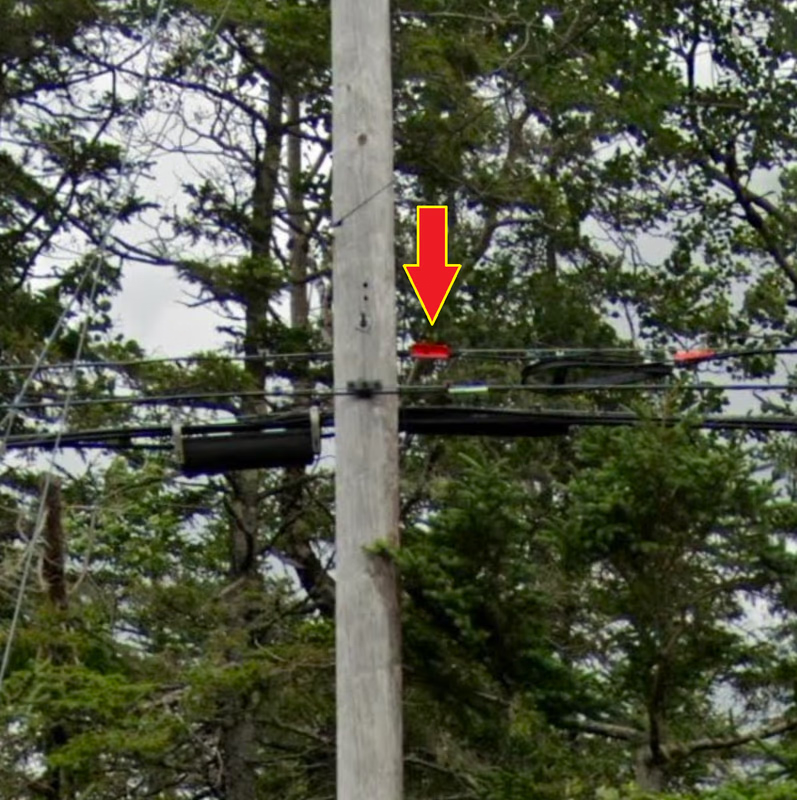
In Nova Scotia it is common to see red stickers wrapped around, or hanging from wires. The stickers can sometimes also show up in New Brunswick.
Note: The wire flags of Ontario and Québec can look very similar, but there you are more likely to see multiple stickers next to one another. Also, Nova Scotia doesn't use circle stickers. Look for other clues first!
Canada (CA)

In Ontario it is common to see one or more colourful circles on the utility poles. Usually, they are red, blue or white, but I have also seen black and brown ones.
Canada (CA)
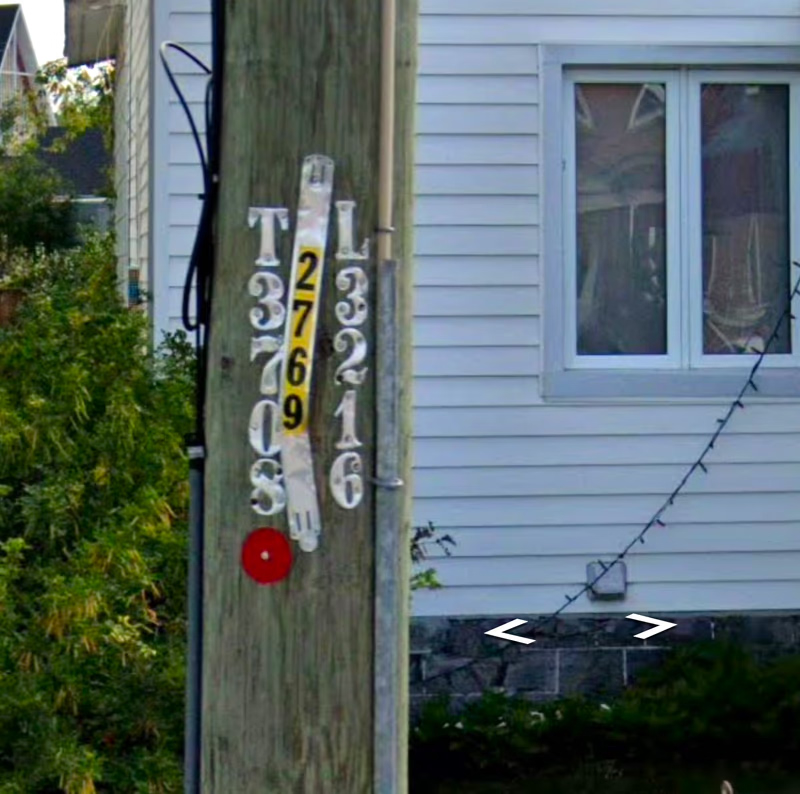
Large silver numbers bolted on the utility poles are common in Ontario. They can be arranged vertically, diagonally or horizontally and usually you can also see the bolts holding them up.
Note: In reality, you will often find a mix of different markings on the pole.
Canada (CA)
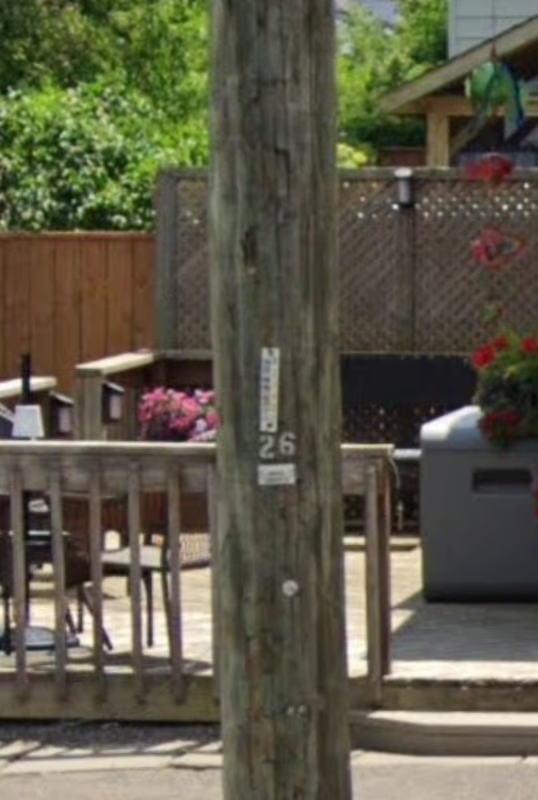
A very small, vertical pole plate made of metal can be found on utility poles accross Ontario.
Canada (CA)
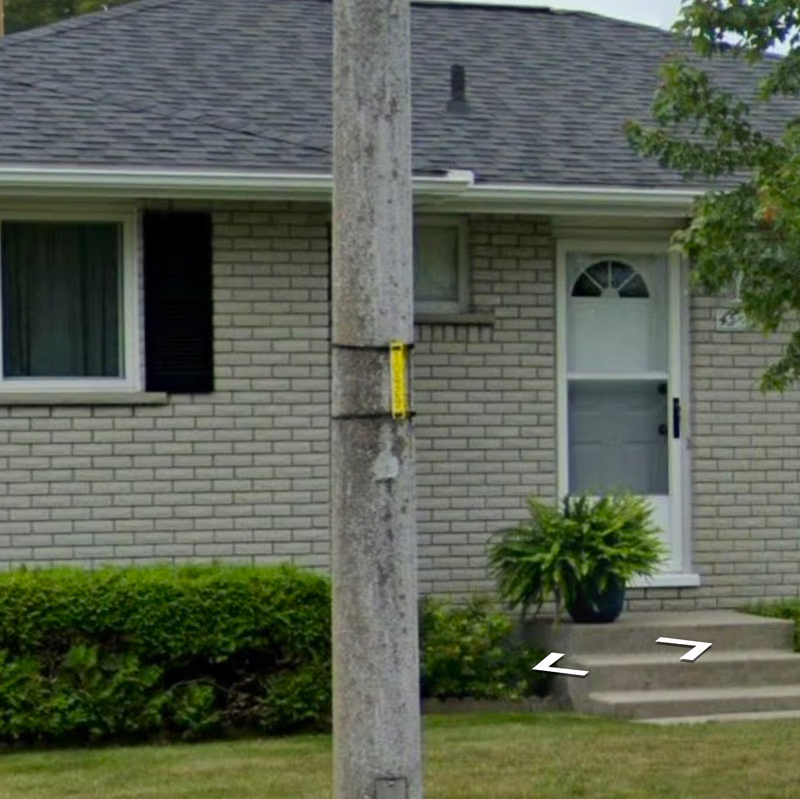
Utility poles in Ontario can have a variety of yellow number stickers on them. Variants include a vertical sticker with 5-6 numbers, a horizontal version, and a much larger type with inverted colours.
Note: Some of the smaller yellow plates are fixed to the pole using 2 black rings.
Canada (CA)
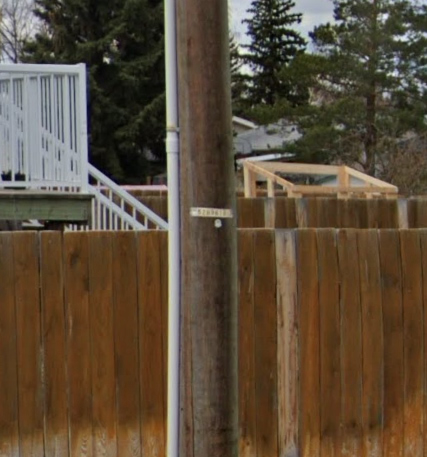
Even though pole stickers are not the most reliable in the Prairies, horizontal metal stickers are common in Alberta. They are usually grey and can be either blank or have small numbers on them. Yellow variants exist too.
Canada (CA)
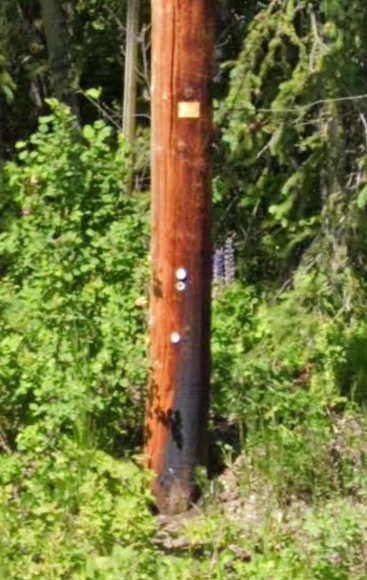
BC would often have 1 to 5 small metal circlesat the lower part of her utility poles.
Canada (CA)
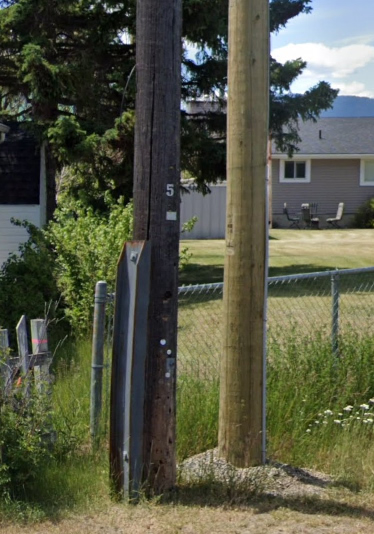
Small yellow or grey metal rectangles are found on most utility poles in BC.
Canada (CA)
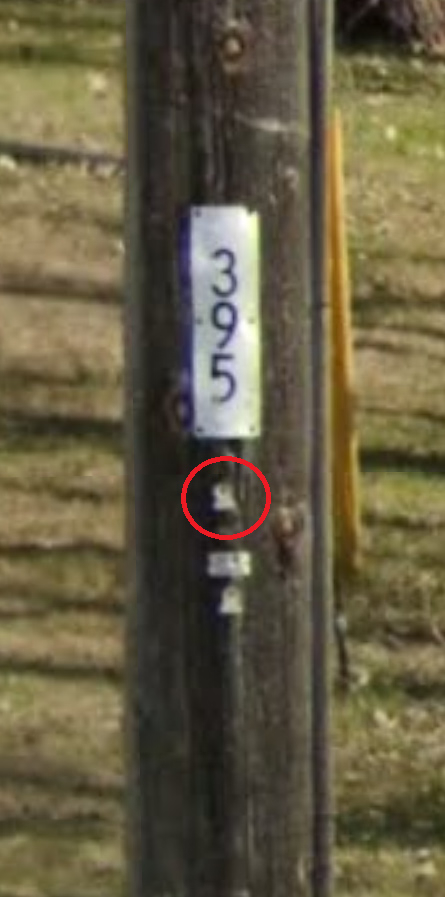
Even though rural pole stickers are quite unreliable on the Prairies, Manitoba's poles often have a distinct metal sticker shaped like a "keyhole". (A circle with a trapezoid underneath).
Canada (CA)
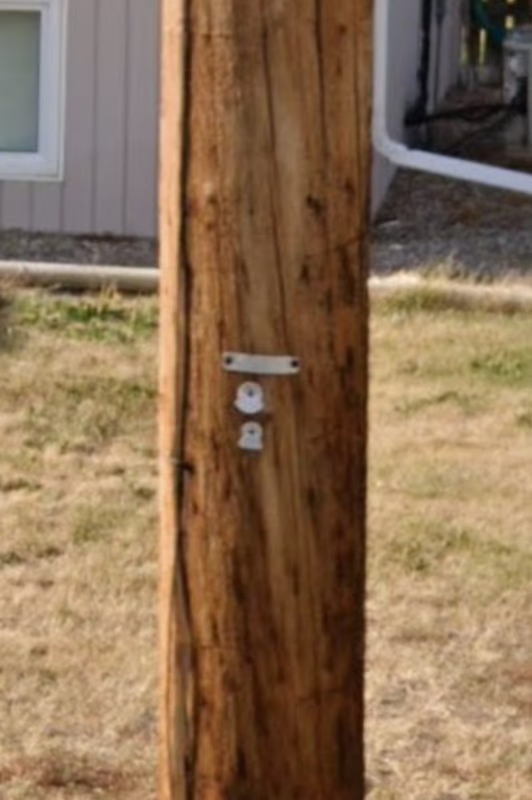
Rural pole stickers in Saskatchewan can be quite random, but a completely blank silver metal strip is commonly seen.
Note: Alberta has a similar sticker, but it is more likely to feature numbers. Use with caution.
Canada (CA)
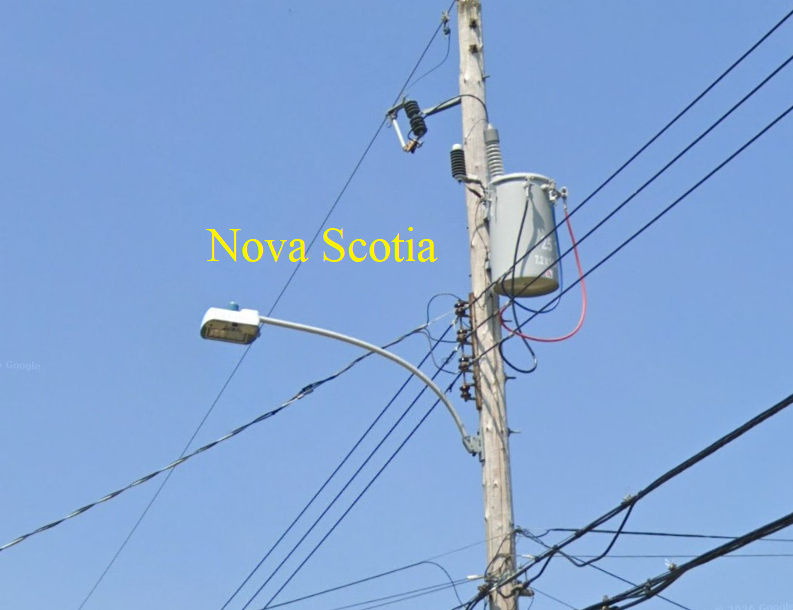
Square lamp heads are common in both New Brunswick, Nova Scotia and Prince Edward Island. To differentiate, you can look at the lamp arm: NB mostly uses long, straight ones while NS prefers short and curved. PEI's lamps are usually similar to the ones in Nova Scotia, although I have also seen the New Brunswick style there.
Note: Don't rely on the blue bumps on the top of the lamps being only in NS as NB also has them!
Canada (CA)
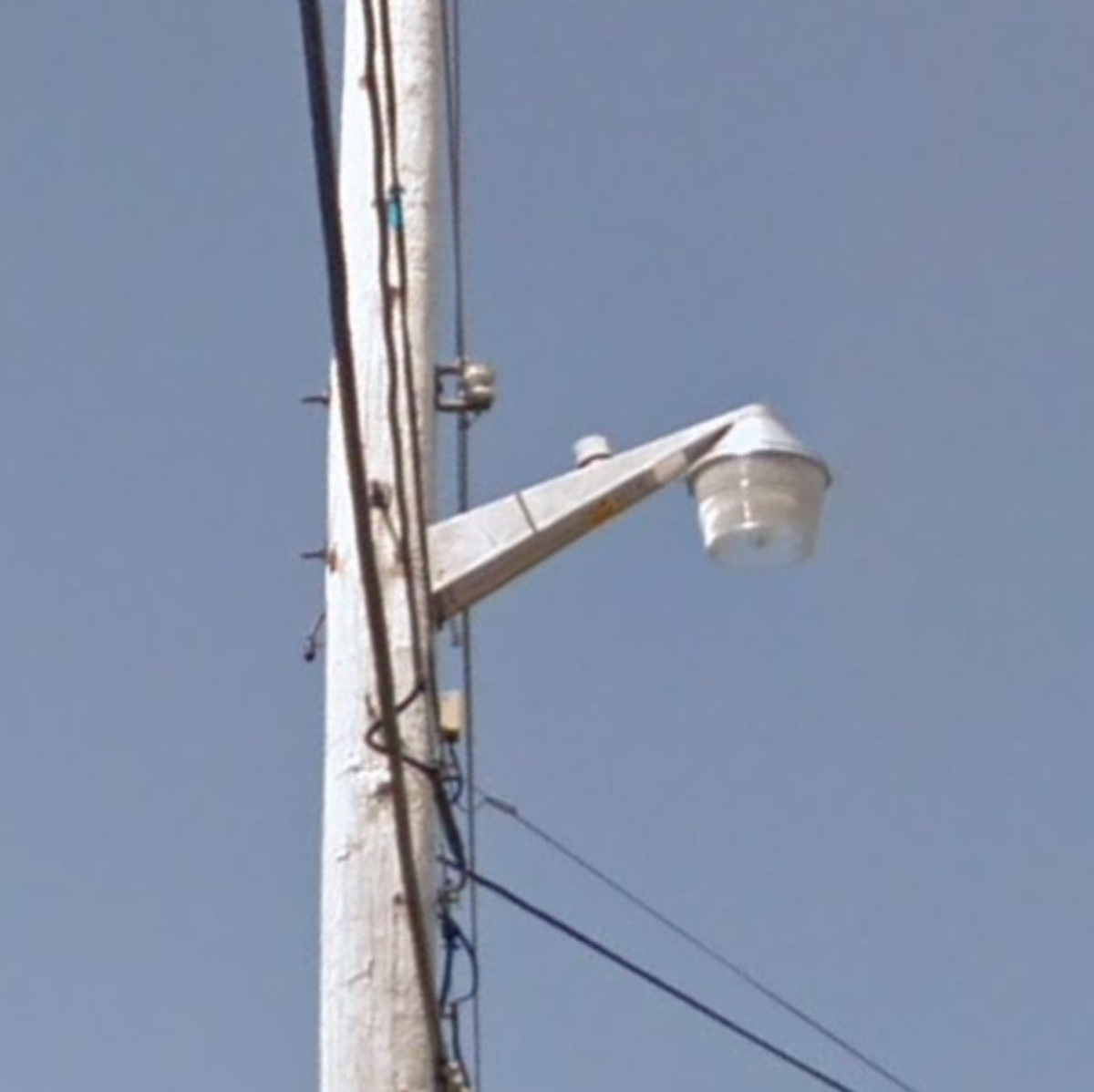
An old-timey looking lamp hanging from a very short, triangle shaped arm is unique to the Maritime Provinces. It is by far the most common in Nova Scotia.
Note: While I haven't seen this design on Newfoundland Island, Labrador seems to like it a lot. More research needs to be done on PEI.
Canada (CA)
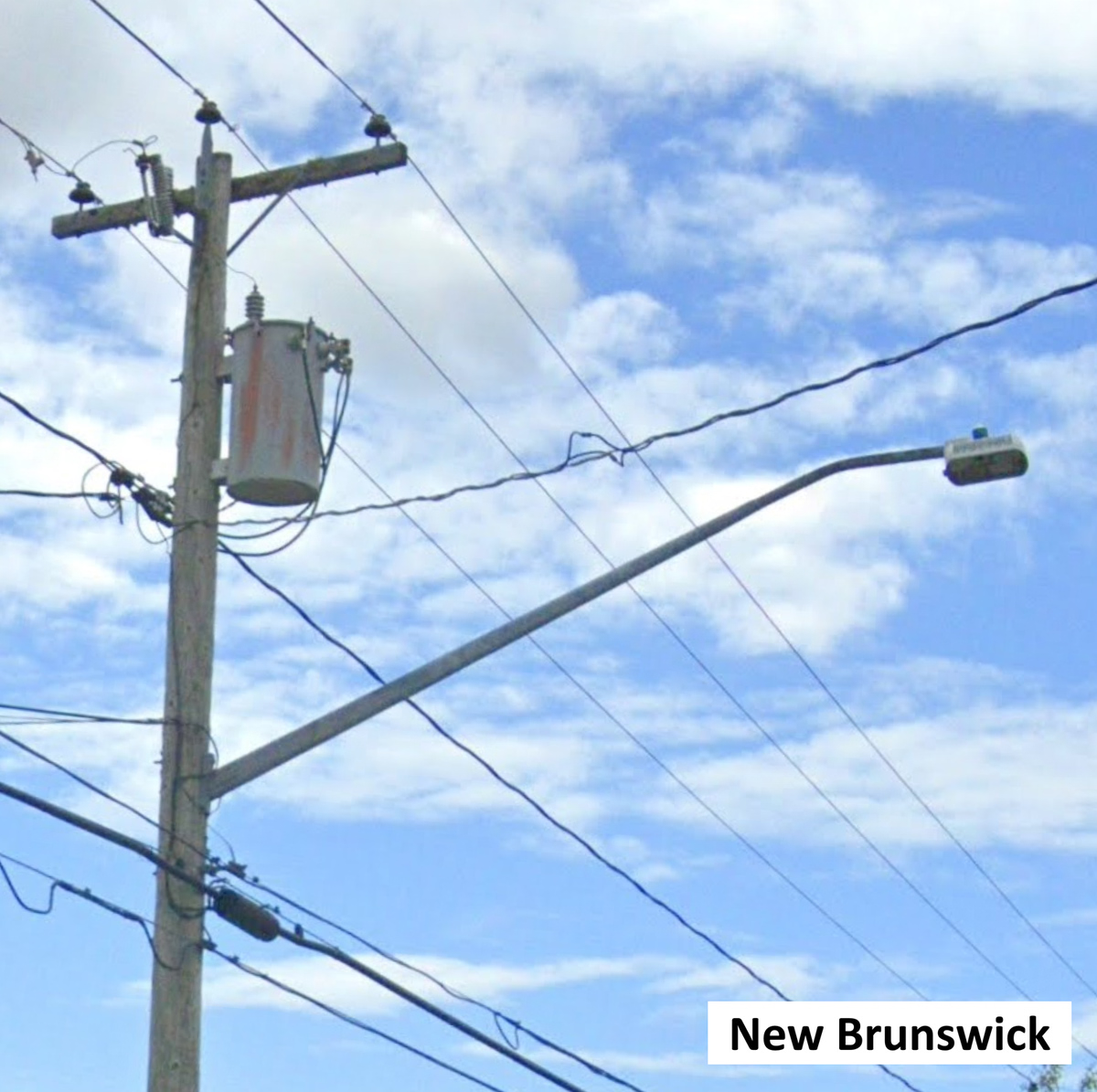
New Brunswick lamps can be recognised by their length and straightness. They usually feature square lamps with a blue photocell on top.
Note: Lamp arms in Nova Scotia are shorter and more curved.
Canada (CA)
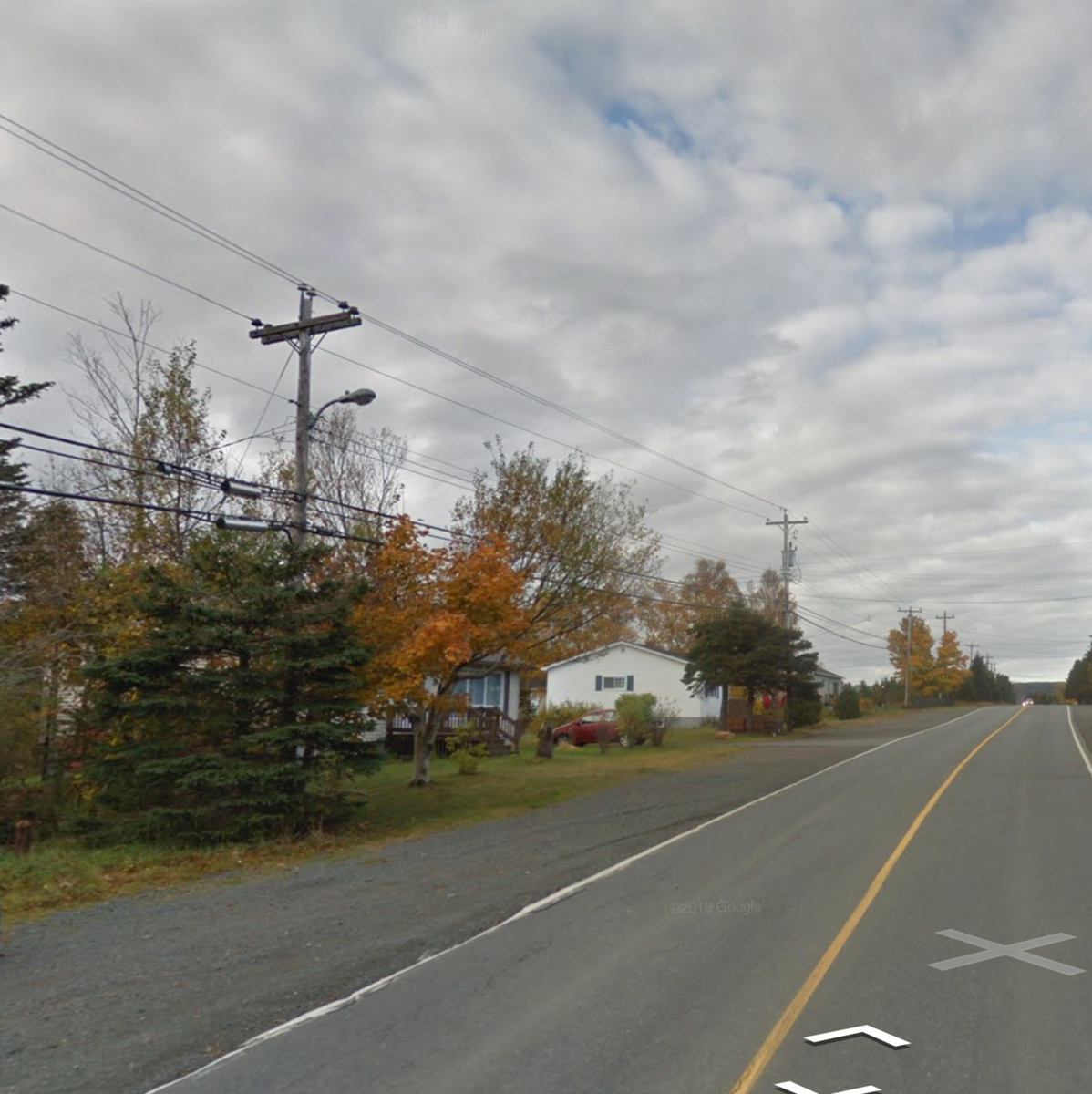
Lamps with extra short arms are a unique feature of Newfoundland and Labrador.
Note: The rest of their lamps are similar to the old, curved lamps of Nova Scotia.
Canada (CA)
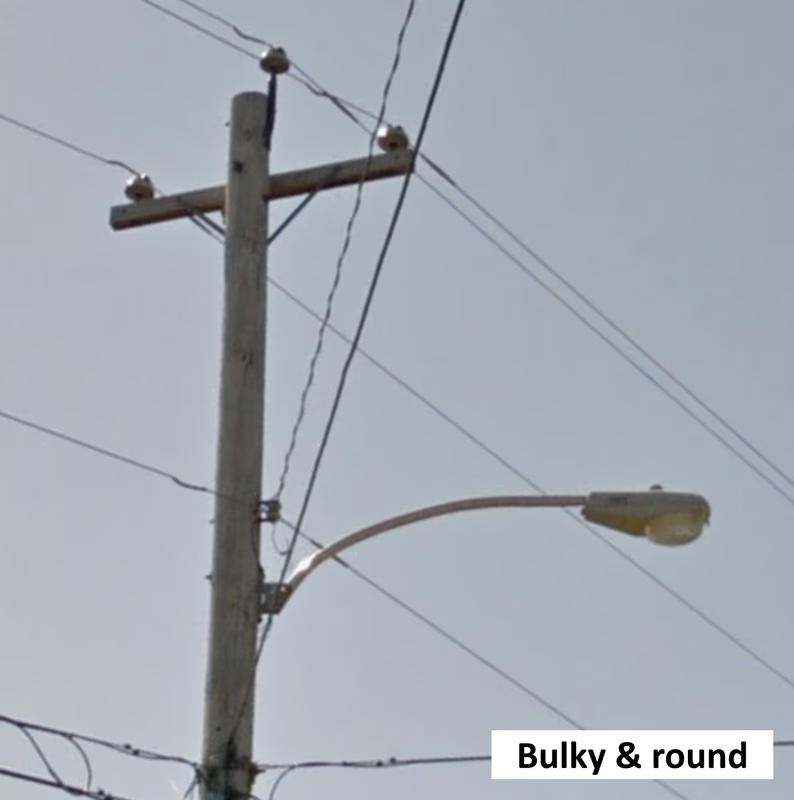
Lamps in Nova Scotia tend to have short, curved arms. There are 3 types of common lamp heads:
bulky and round (more on older coverage)
the "classic" square shaped
long and flat (more on newer coverage)
Canada (CA)
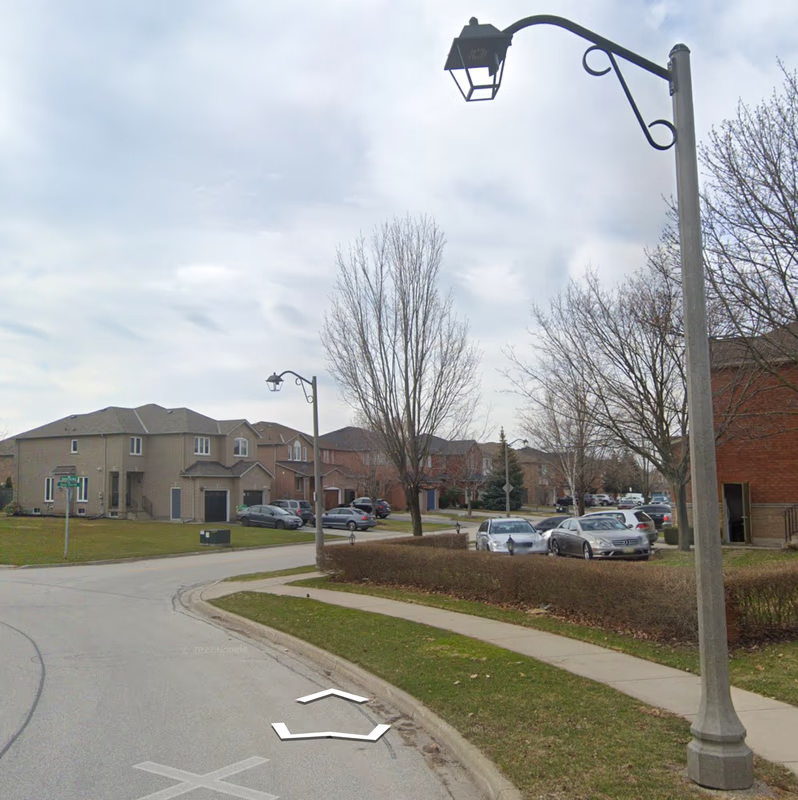
In the Greater Toronto Area a unique lamp can be found in large quantities. Although its top is usually very distinct, what makes it count as a meta is its octagonal shape and spotted grey colour.
Note: The post exists with more generic lamp heads too.
Canada (CA)
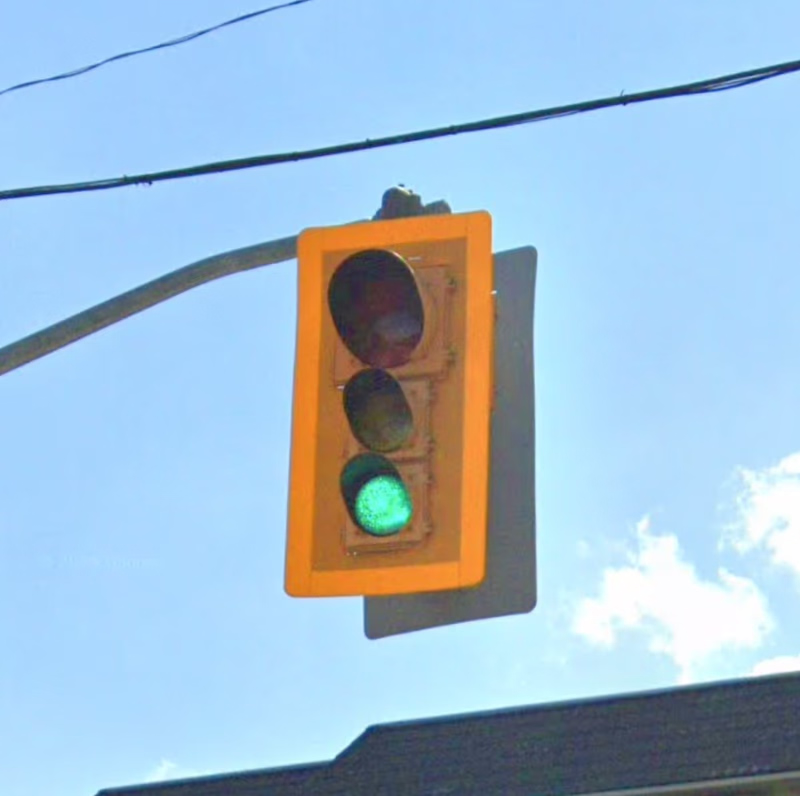
Ontario's traffic lights are unique, because the top lamp is larger than the bottom two. This is only true for 3-lamp setups, 4-lamp traffic lights are usually uniform.
Note: Rarely, you can find traffic lights without this feature in Ontario, especially in downtown Toronto.
Canada (CA)
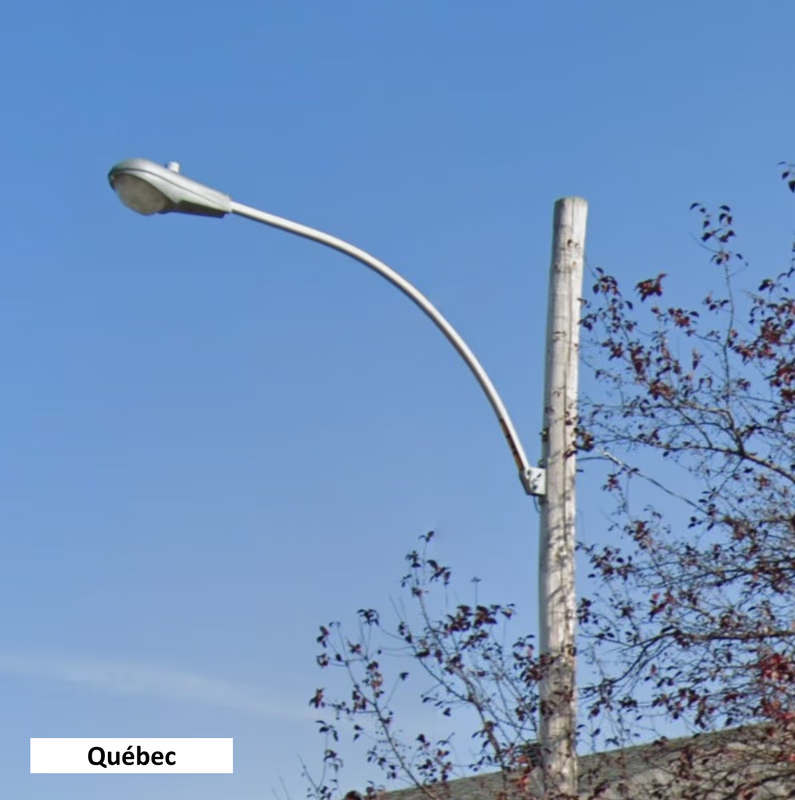
Lamps in Québec curve more than in other provinces.
Note: They are longer than the curved lamps found in the Maritimes.
Canada (CA)
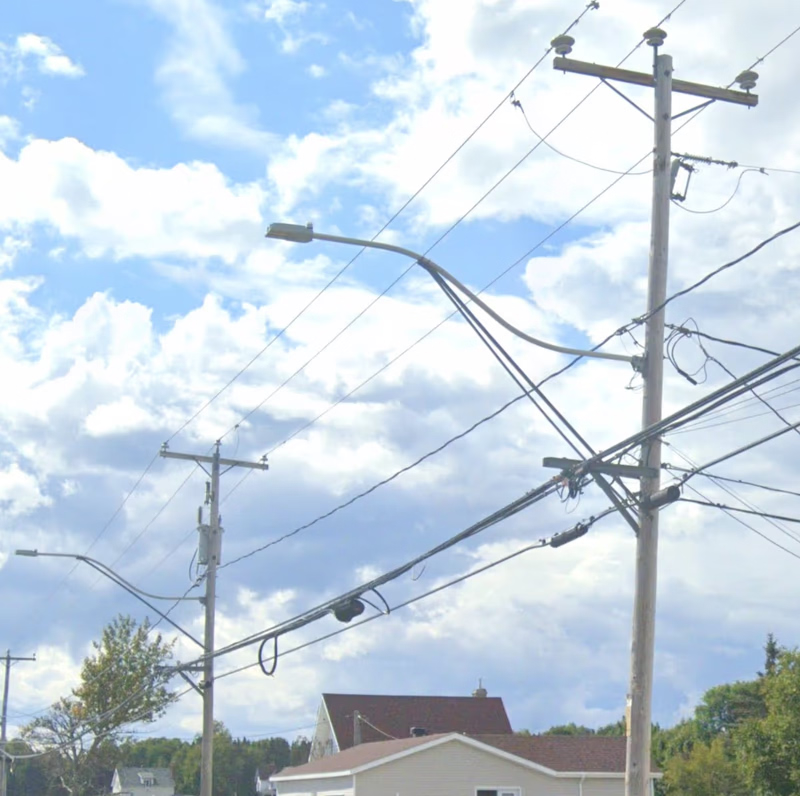
S-curve lamps are typically found on the Gaspé Peninsula. Many of them have an extra support bar below
Canada (CA)
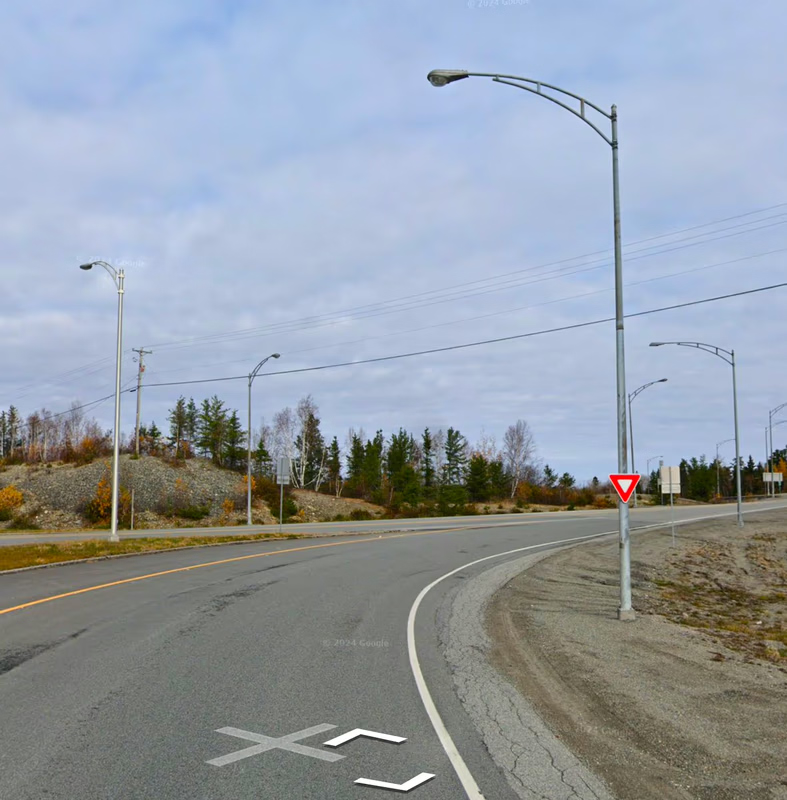
Double lamp arms with 2 vertical bars in between are unique to Québec.
Canada (CA)
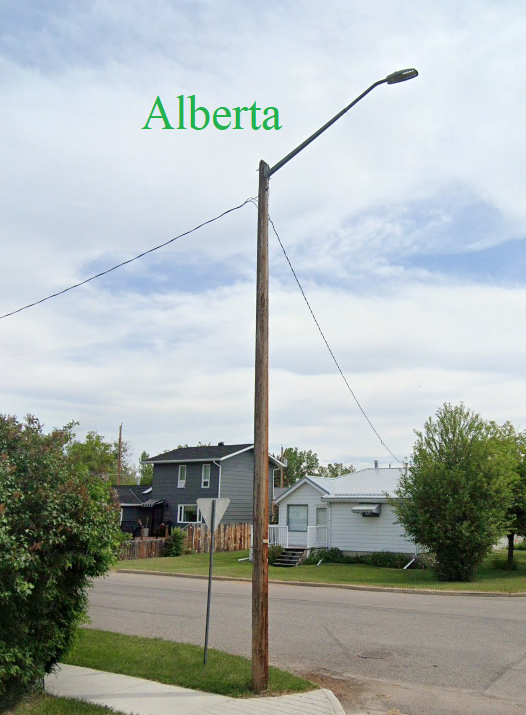
Lamps in Alberta follow the standard Canadian design: no curve, no support bar.
To differentiate from other Prairies:
Canada (CA)
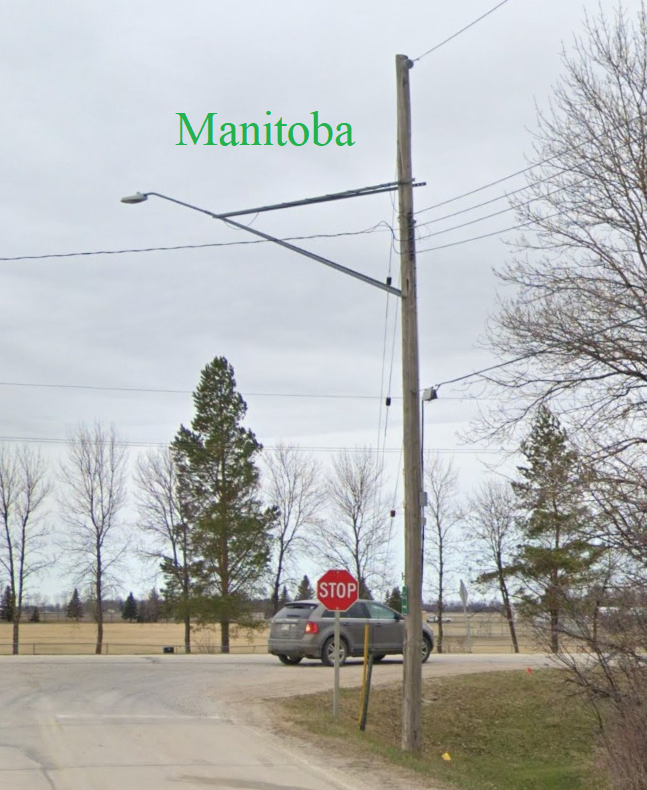
An excessively long, supported lamp arm will most likely put you in Manitoba.
Note: Most of Manitoba's lamp arms will be the standard Canadian style though.
Canada (CA)
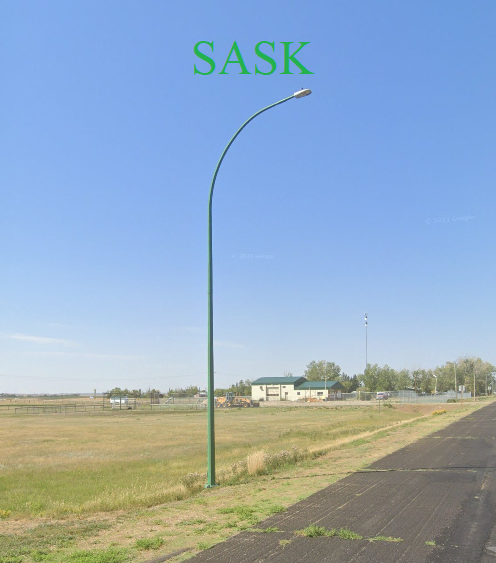
Isolated lamps in Saskatchewan are often green.
Note: They are commonly seen in suburbs and small towns.
Canada (CA)
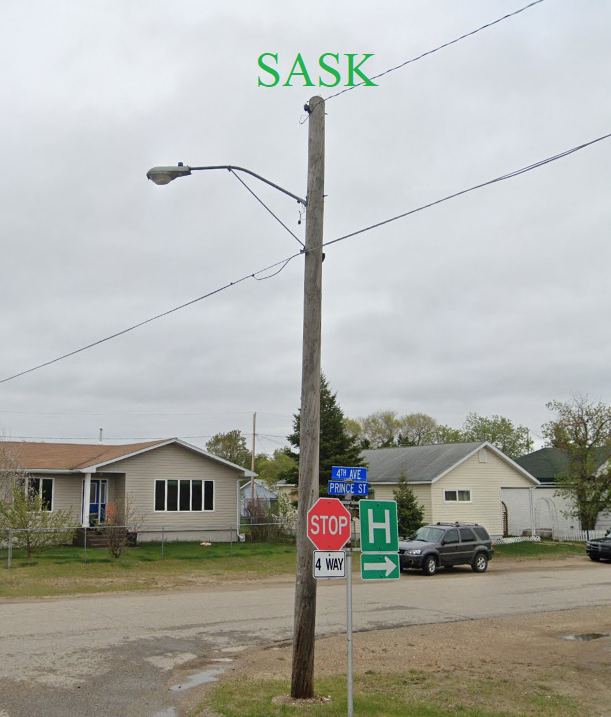
Lamps in Saskatchewan are often curved and have a support bar underneath. (About 60% of their lamps are like this.)
Canada (CA)
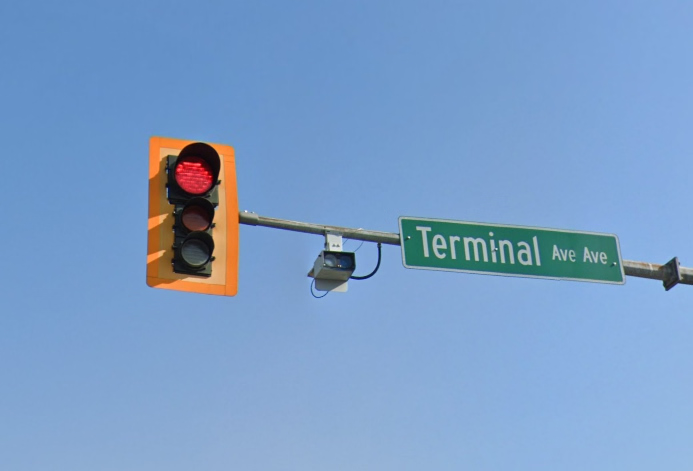
Stoplights in British Columbia are always vertical and yellow. The middle part can be yellow (eg. Vancouver City, Kamloops) or black.Stoplights in British Columbia are always vertical and yellow. The middle part can be yellow (eg. Vancouver City, Kamloops) or black.
Note: Middle part colours can be quite inconsistent, even within the same town.
Canada (CA)
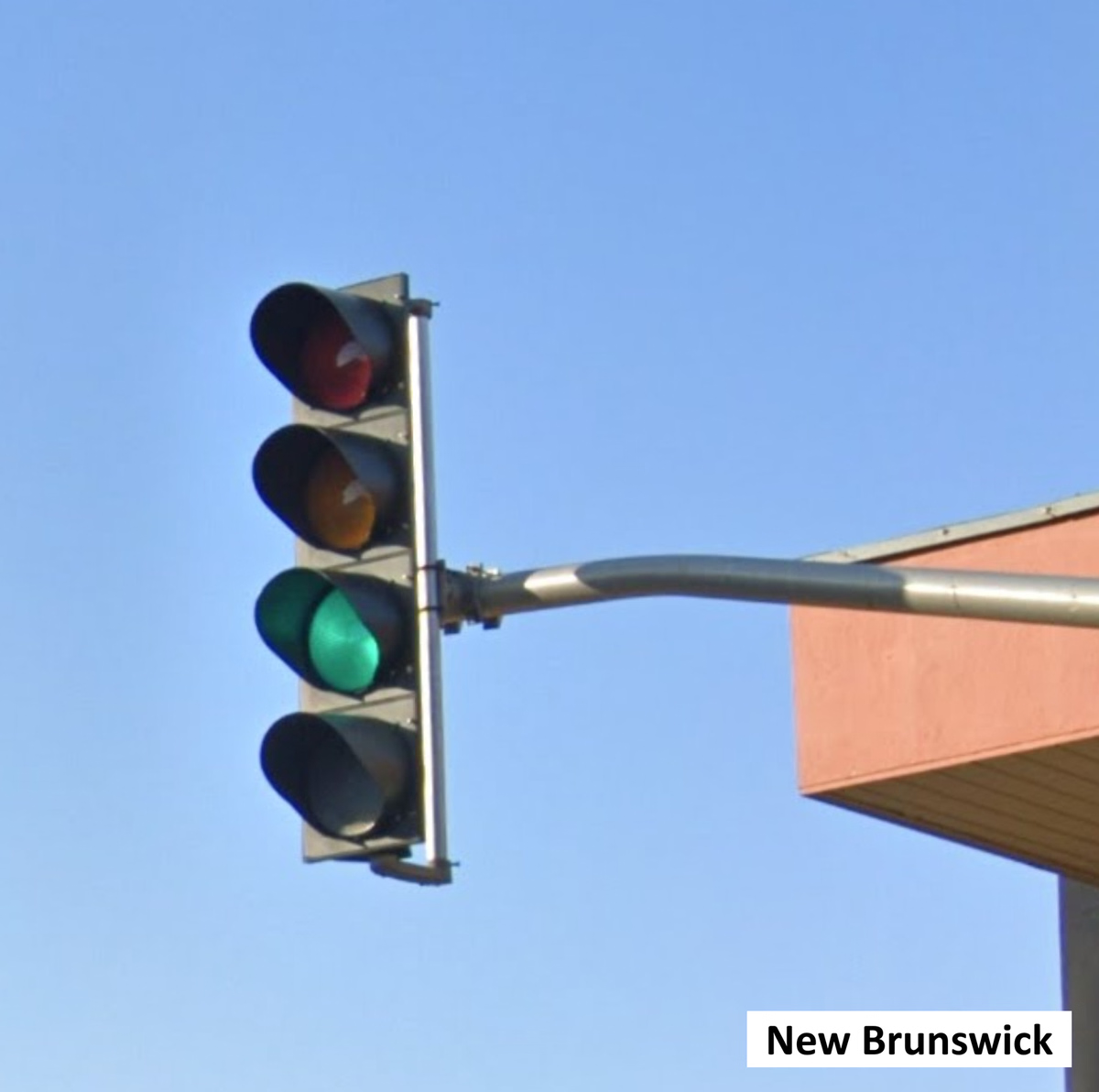
Nova Scotia and New Brunswick use similar stoplight designs, but NS is more likely to use solid yellow ones, while NB has more solid black ones, or yellow ones with a black middle part.
Note: The city of Amherst (NS) close to the border with NB uses solid black stoplights.
Canada (CA)
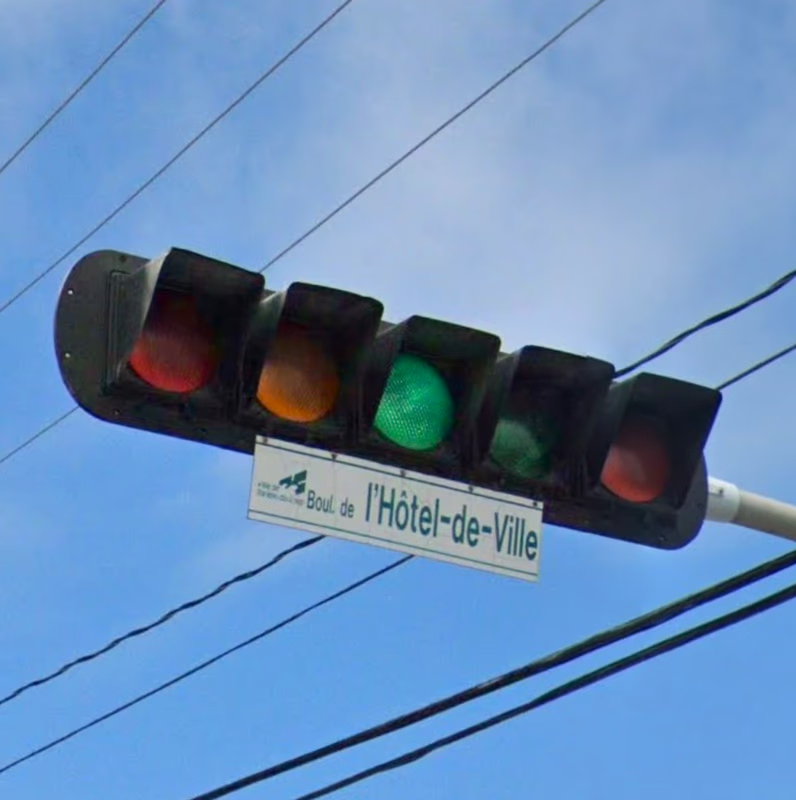
Québec uses horizontal stoplights. Most of them are fully black, but yellow outlines are also common.
Canada (CA)
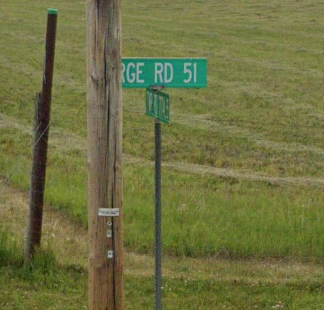
While most rural street signs in Alberta are blue, green signs can be found concentrated around the Peace River Area in the Northwest.
Note: In the rest of the Prairies, green is the standard rural street sign colour. Larger cities in Alberta often use green as well.
Canada (CA)
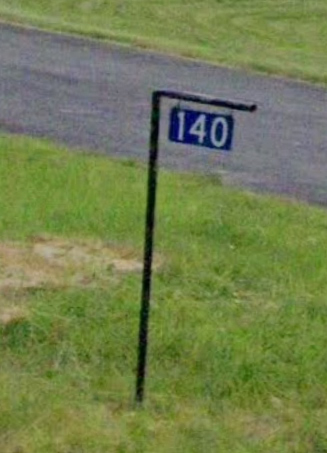
Rural house numbers in Nova Scotia tend to be blue with white lettering.
Canada (CA)
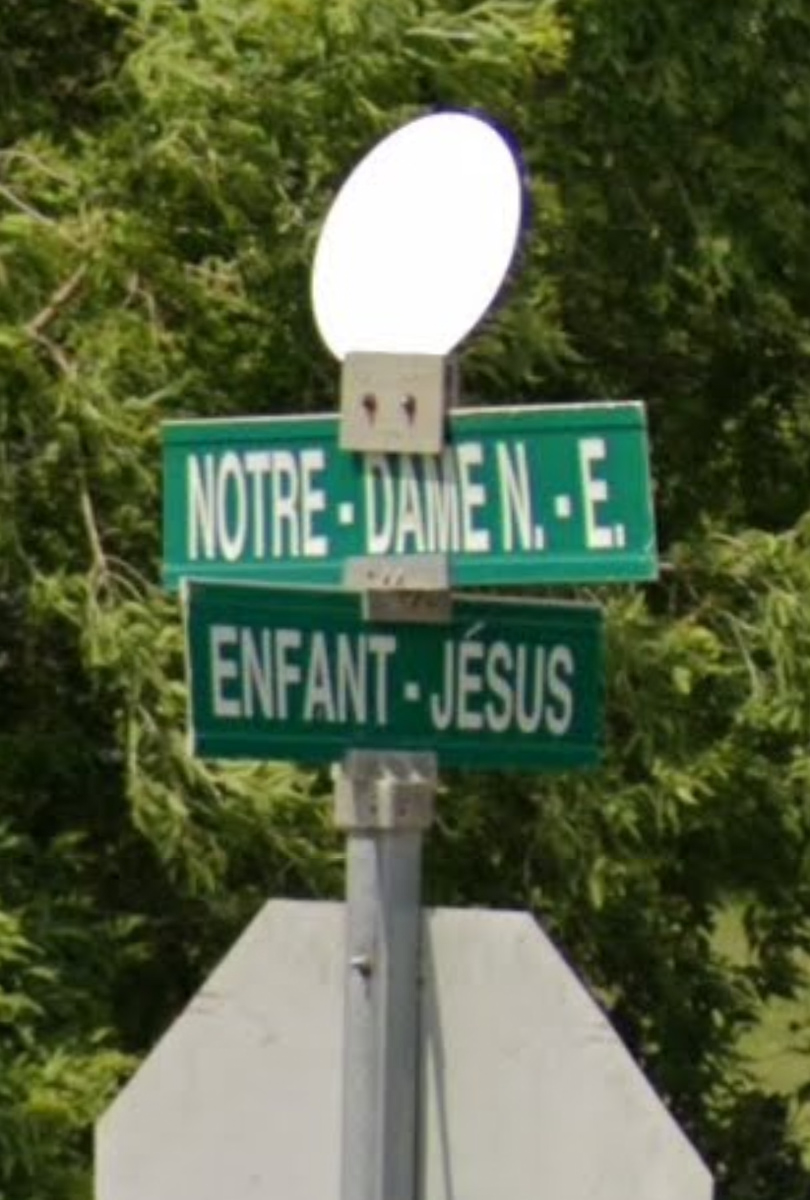
Rural towns in Manitoba still use metal sign clasps specific to the province.
Canada (CA)
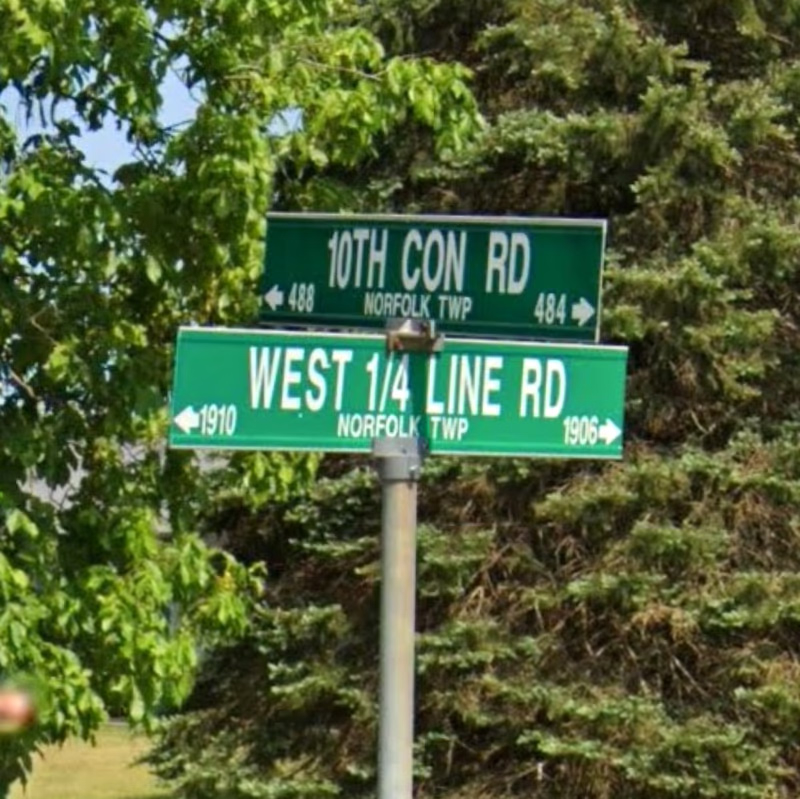
Southern Ontario uses a specific street sign design that includes the county name under the road name. They can also show numbers and direction arrows.
Note: These signs are most common in the extreme Southwest, but can also be found further East.
Canada (CA)
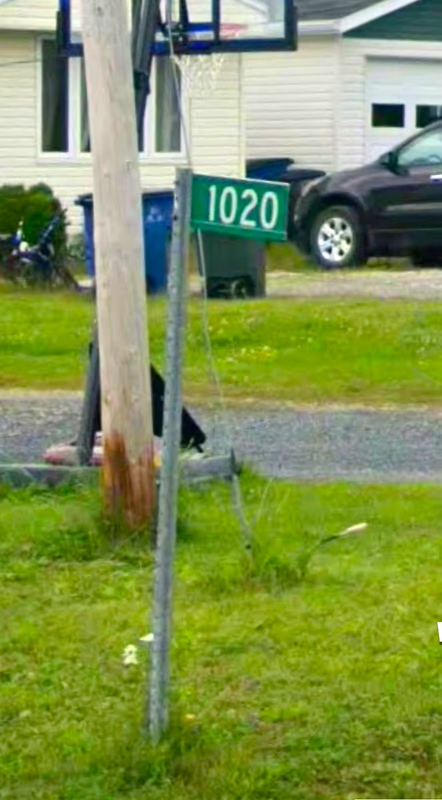
About 80% of rural adress signs in Ontario are green. Exceptions exist in the far West and far East of the province, where they are often blue.
Note: Within Canada, green rural address signs are more common West of Ontario and blue ones are more common East of it.
Canada (CA)
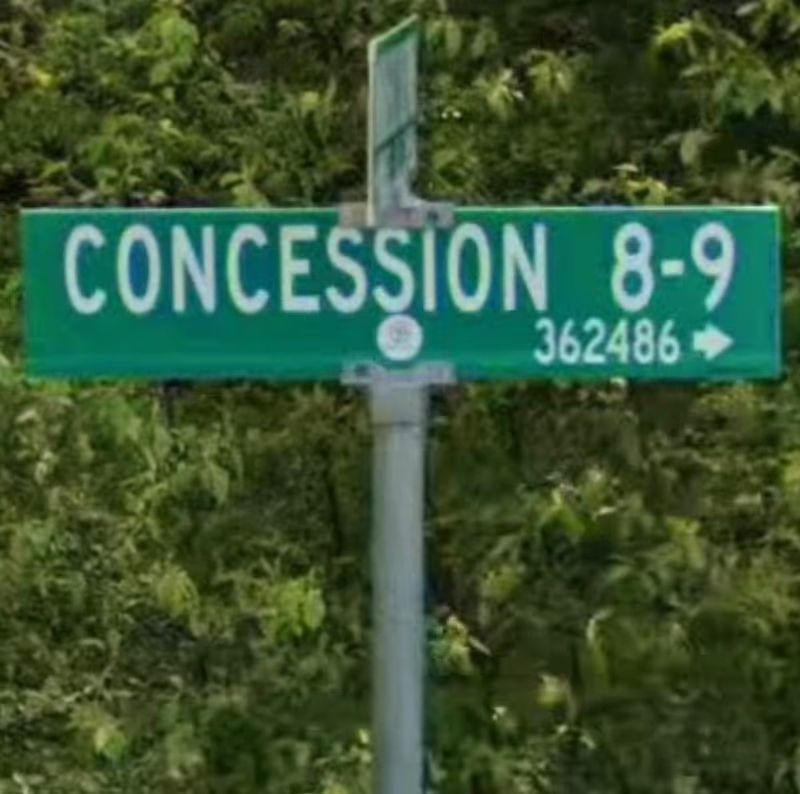
Rural street signs in Ontario are usually green, with white block letters in a specific font / style. The roads are often named "concession", "line" or "sideroad", especially on the far Southern grid.
Note: Many large cities (Toronto, Ottawa, Kitchener, Niagara Falls) use blue street signs instead.
Canada (CA)
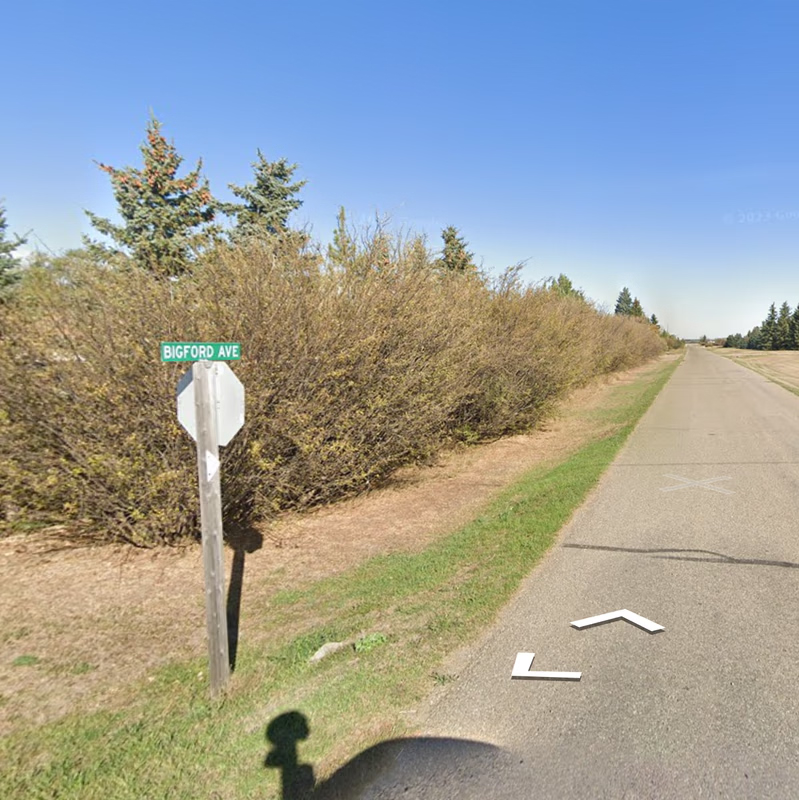
Rural street signs in Saskatchewan are usually green with white letters. Be careful: calling roads "range road" or "township road" aren't exclusive to Alberta - they are also common here!
Note: Most of Alberta's rural street signs are blue.
Canada (CA)
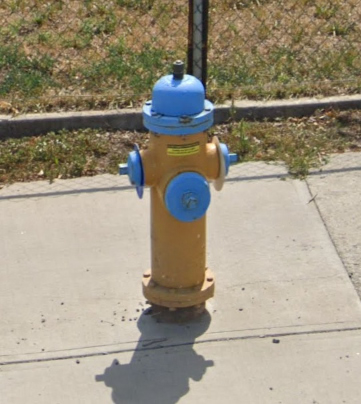
Within British Columbia, you can use fire hydrant body colours for further regionguessing. Yellow body hydrants are found in the Central regions of the province, from the Peace River area through the Okanagan valley, down to the US border.
The peripheries of the province use red body hydrants.
Canada (CA)
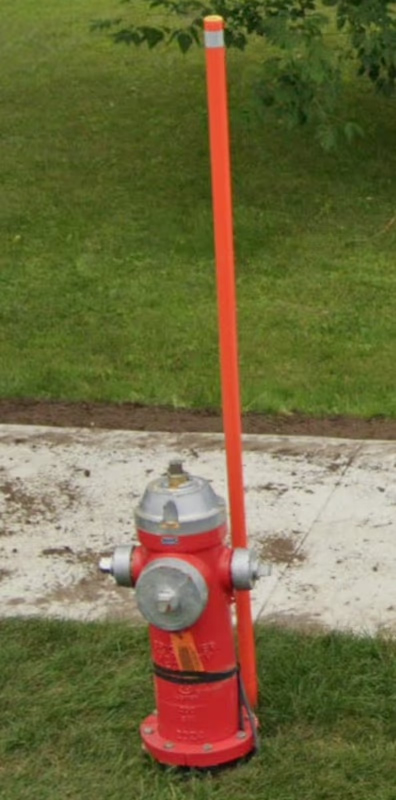
Although most of Ontario uses yellow body fire hydrants, a few regional exceptions exist where the dominant hydrant colour is red.
Notable areas in Central and Northern Ontario:
a few smaller towns in the Clay Belt (Englehart, Earlton)
...and some other very tiny exceptions.
Note: Fire hydrants in the North tend to have a snow pole attached.
Canada (CA)
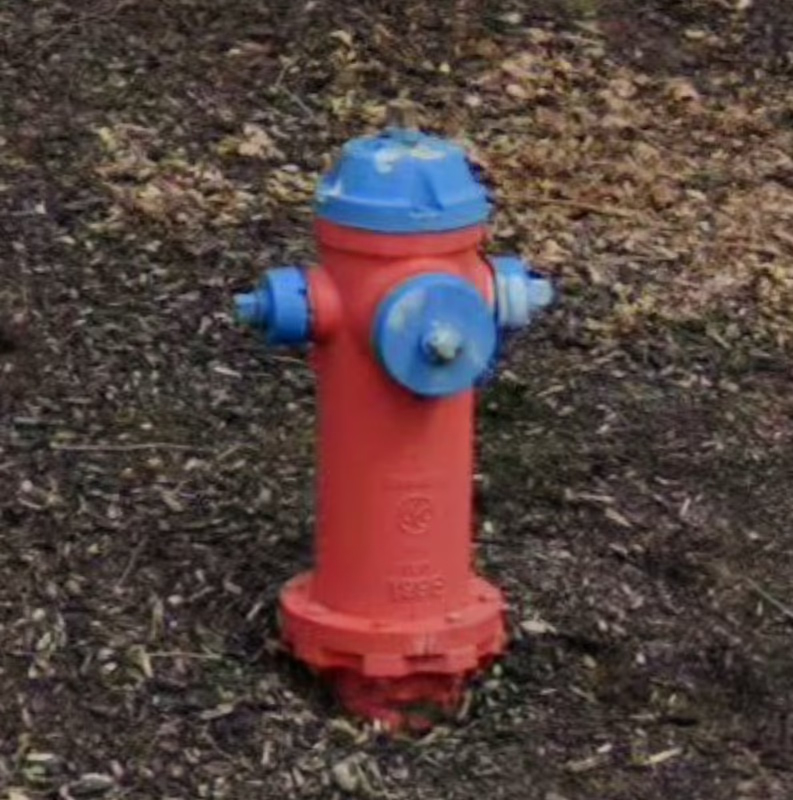
While most fire hydrants in Ontario are yellow, a few regional exceptions exist. In the South, the regions of Hamilton, Halton, Peel and some towns in Niagara consistently use red body hydrants.
Note: For some reason Grimsby, Lincoln and St. Catharines stick with yellow.
Canada (CA)
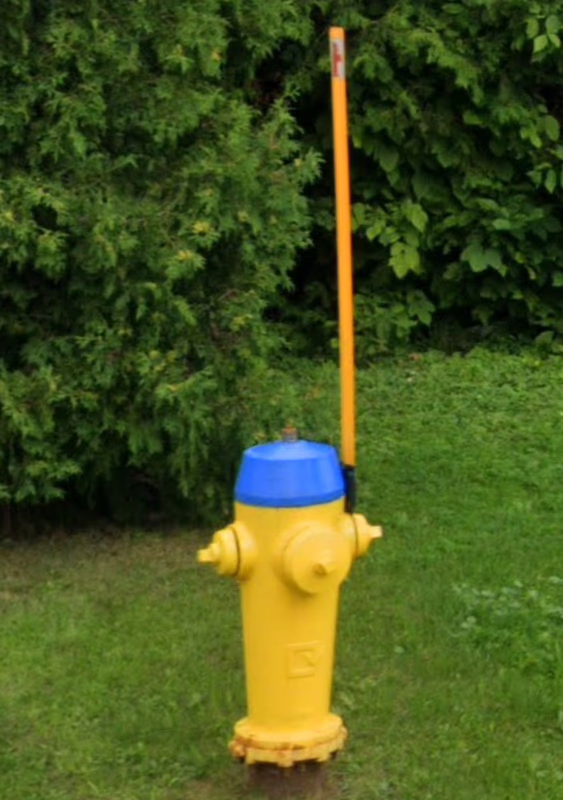
Most of Ontario uses yellow-body fire hydrants. The nozzle and top colours vary from town to town and can be used for more specific guesses. (For more hydrant tips see: "Comprehensive Canada - Cities").
Note: There are a few notable sub-regions in Ontario with red fire hydrants.
Canada (CA)

Rural road signs with a white, curved border can be found in Nova Scotia and New Brunswick.
Note: This is a pretty standard design for directional signs in all of Canada, so make sure it says a road name to narrow it down to NS or NB!
Canada (CA)
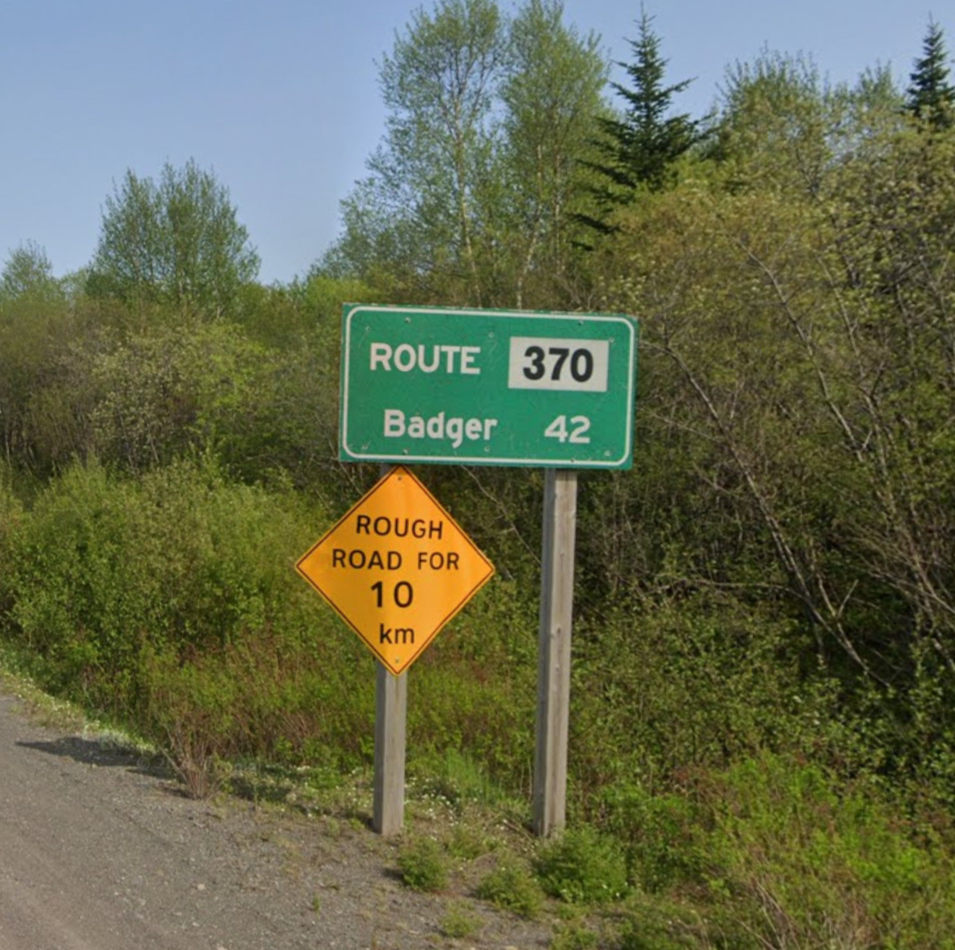
Regular provincial routes in Newfoundland and Labrador are signed as a black number inside a white rectangle. They are organised regionally.
Useful to know:
Canada (CA)

Green signbacks aren't exclusive to British Columbia and PEI: they are fairly common in Nova Scotia too. Here you will often find them supported by thick wooden or metal cross beams.
Canada (CA)
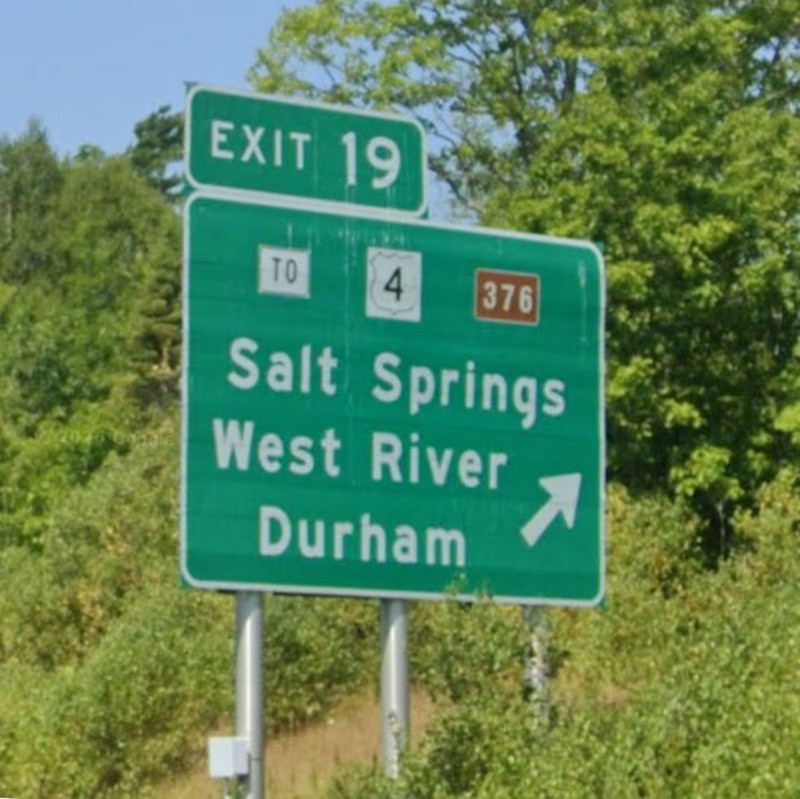
While highway signage in Nova Scotia and New Brunswick looks quite similar, only NS uses isolated exit numbers above the sign.
Note: The shape of the extra piece is useful, even when you view it from behind!
Canada (CA)
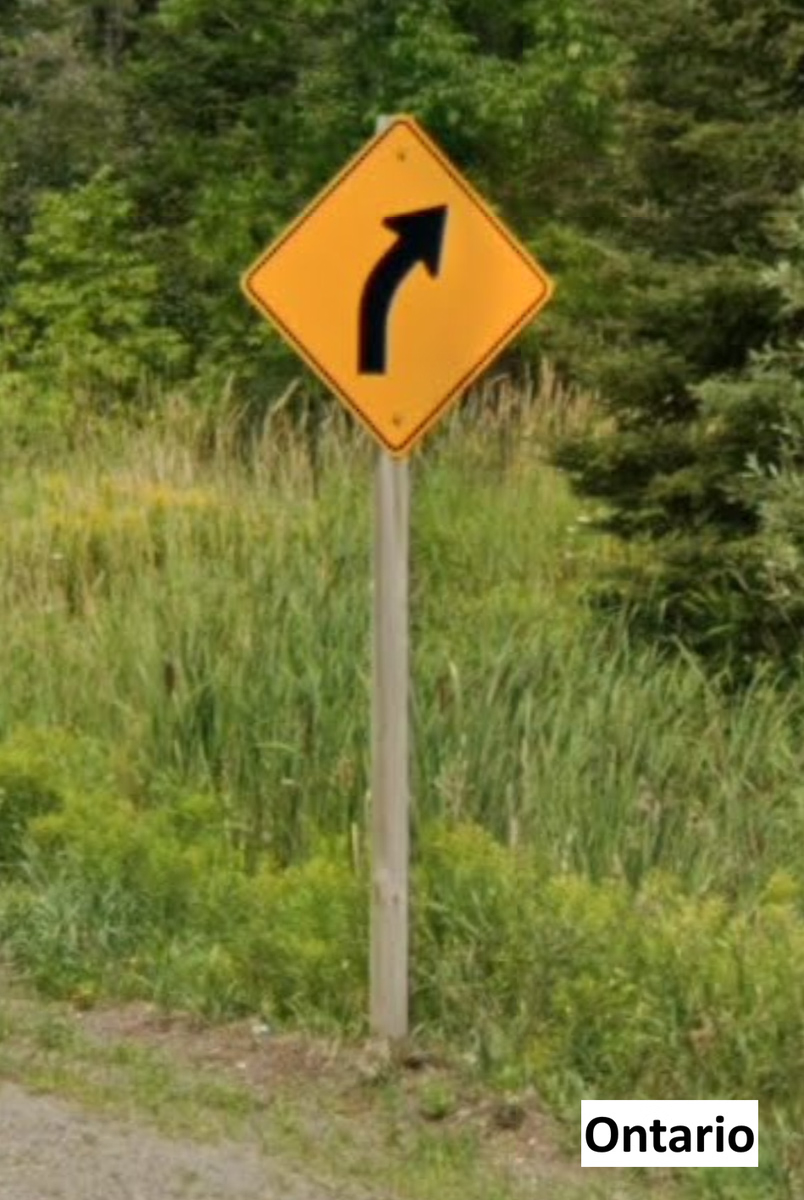
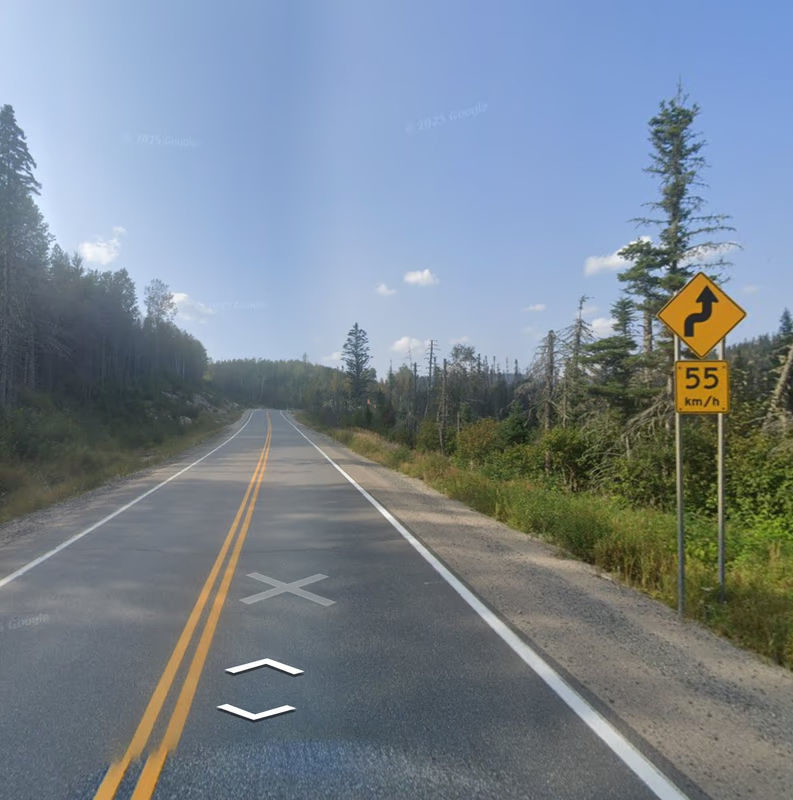
You can tell Ontario and Québec apart by their curve ahead signs: the ones in Ontario curve noticeably less than the ones in Québec.
Note: A wooden signpost can confirm you are in Ontario.
Canada (CA)

You can tell Ontario and Québec apart by their curve ahead signs: the ones in Québec curve noticeably more than the ones in Québec.
Note: A wooden signpost can confirm you are in Ontario.
Canada (CA)
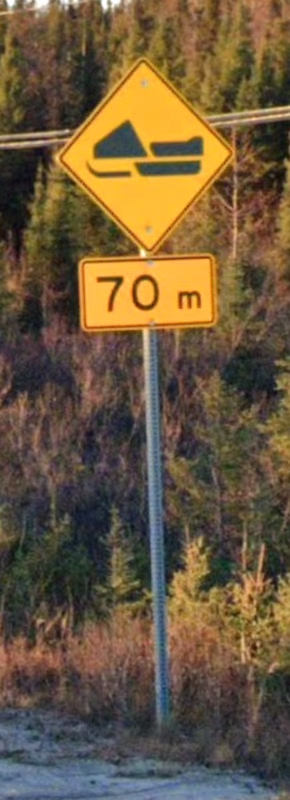
Designated snowmobile trails are common in Québec, especially on the Northern roads. They are indicated by yellow diamond signs with the pictogram of a snowmobile, or more rarely also a quad bike.
Canada (CA)
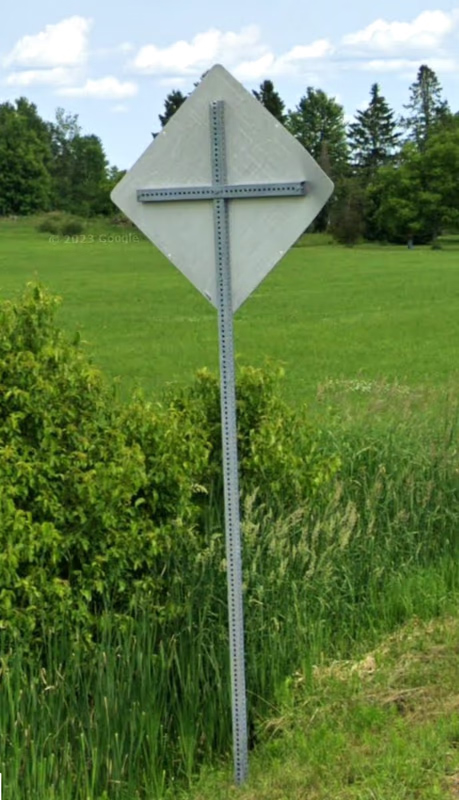
Cross signbacks are a good clue for Southwestern Québec. (Usually on the plains South of Montréal).
Canada (CA)
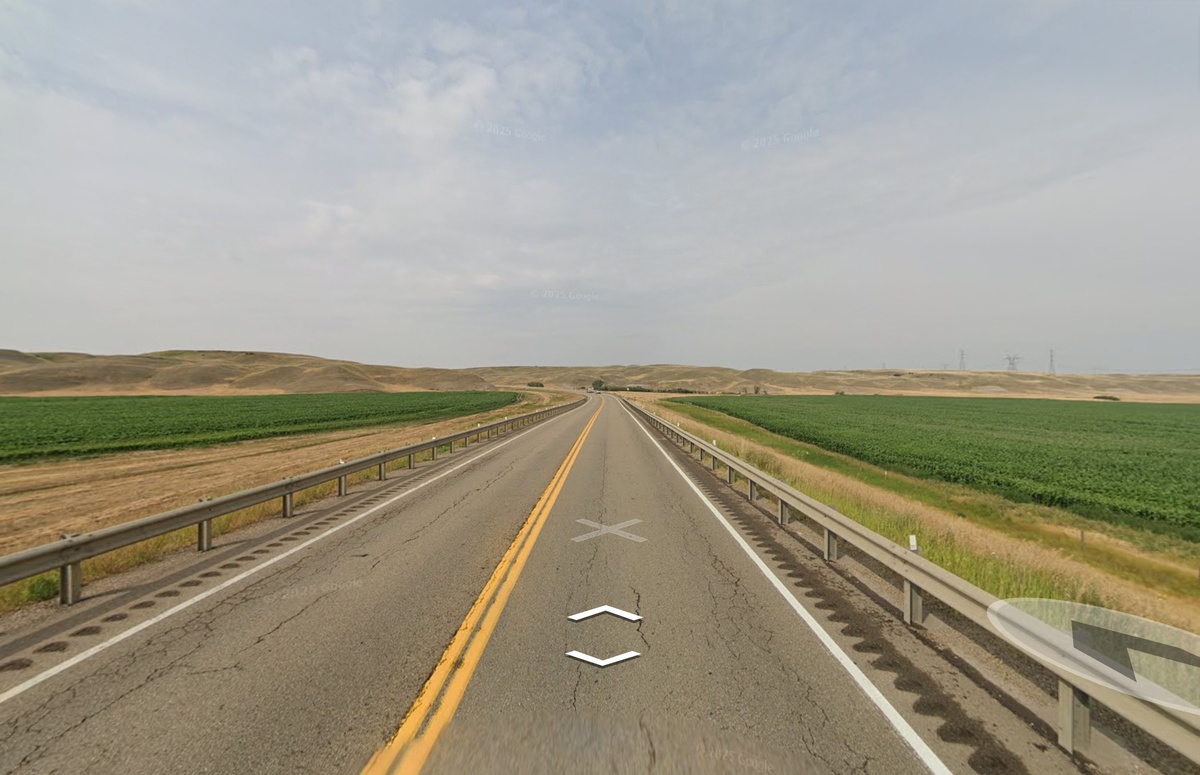
Alberta tends to use more generic guardrails than any other Prairies province. Saskatchewan and Manitoba have way less guardrails in general and those are often of an unconventional type.
Canada (CA)
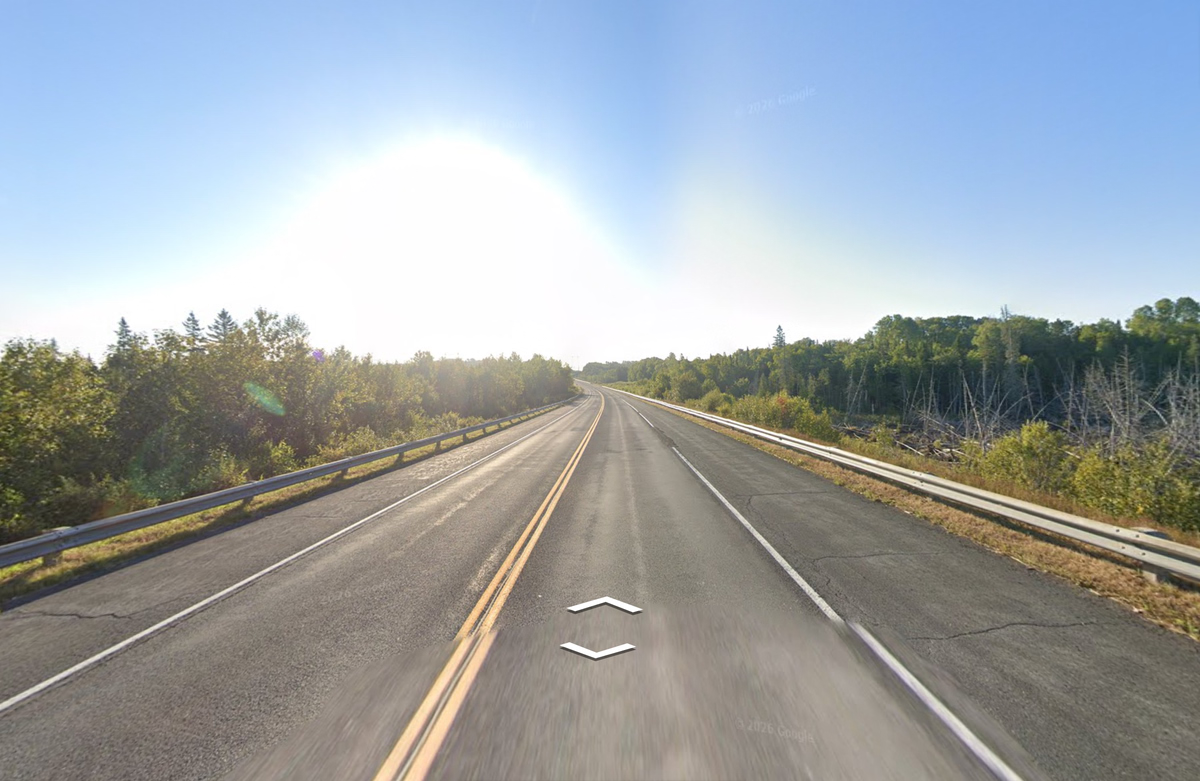
New Brunswick uses pretty generic looking guardrails. This is useful for differentiating between NB and the other Maritimes (especially NS and NL) that use more unique guardrail types.
Canada (CA)
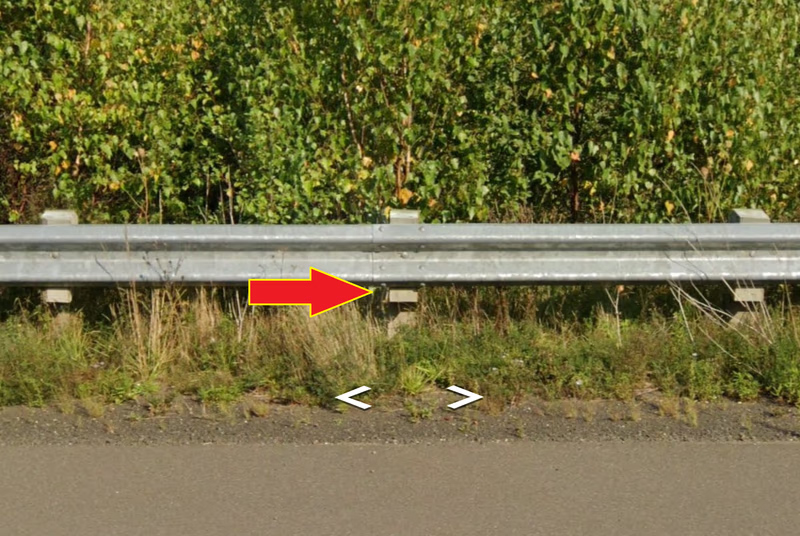
In Nova Scotia the wooden block that connects to the metal part of the guardrail is usually long enough to poke out under the guardrail. This is not the case in New Brunswick.
Note: The yellow reflectors are also more typical for Nova Scotia than for NB.
Canada (CA)
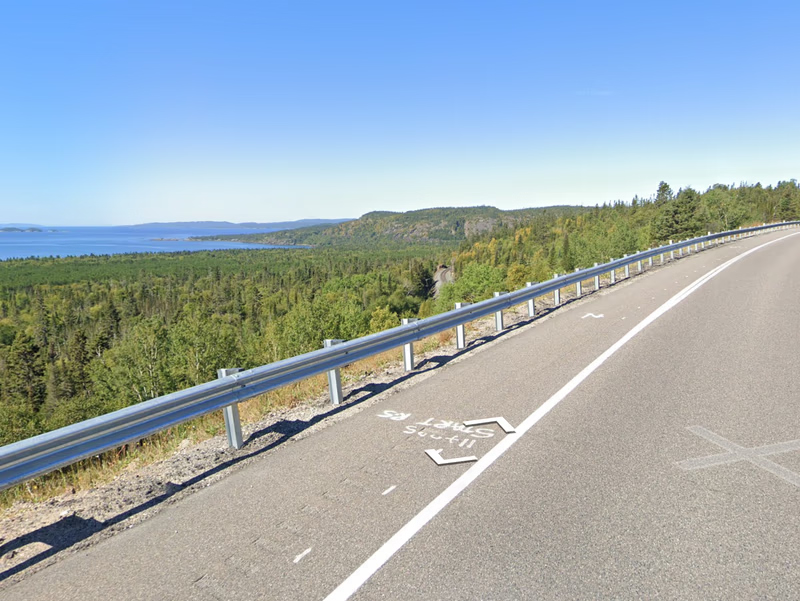
Besides wire guardrails, Ontario also uses metal guardrails with metal or wooden supports. Metal supports are common on large freeways, while the wooden ones are found on smaller highways.
Canada (CA)
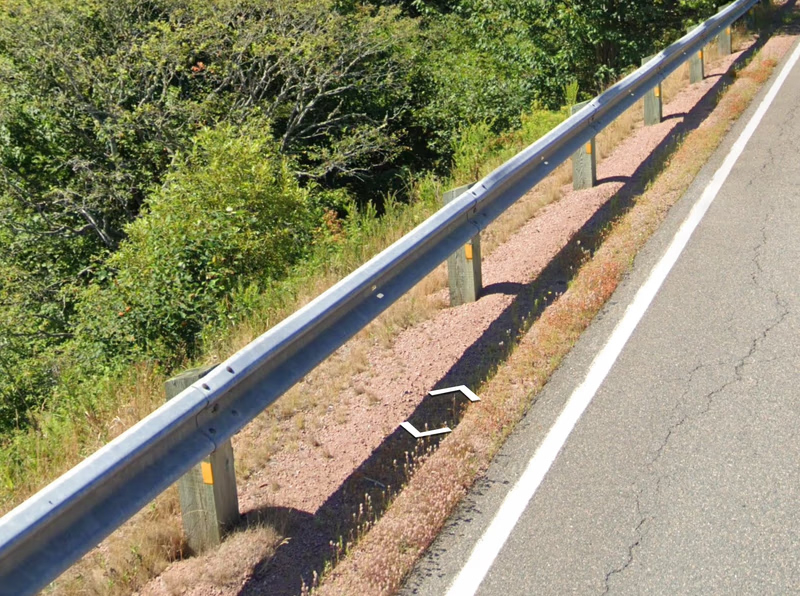
Another common guardrail type in Nova Scotia is one without the extra woodblock. The yellow reflector tapes are still present on each leg.
Canada (CA)
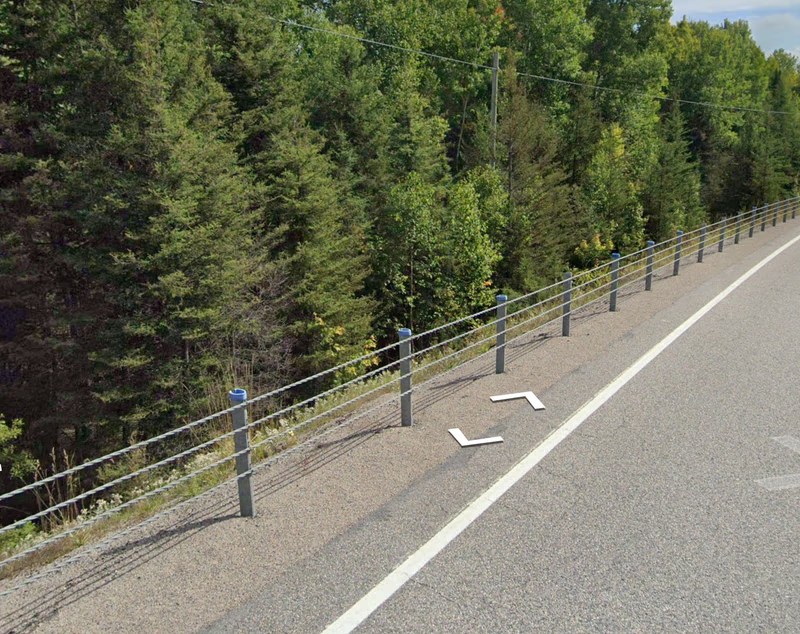
In some areas of Ontario, the standard wire guardrails have been replaced with a wire guardrail on steel posts with a blue cap on top.
Note: Highway 144 is a notable example, but it appears on many Northern highways on Gen 4.
Canada (CA)
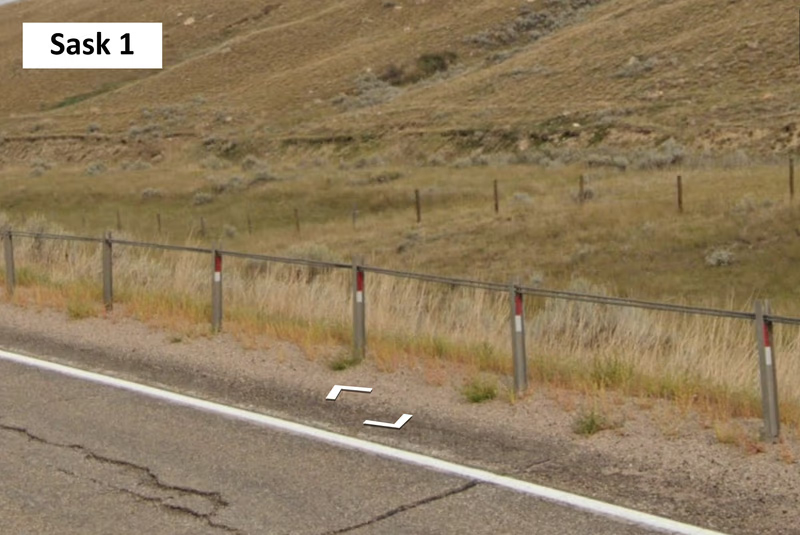
While guardrails in general are quite rare in the Prairies, you can sometimes come accross a few alternative guardrails in Saskatchewan and Manitoba.
Canada (CA)
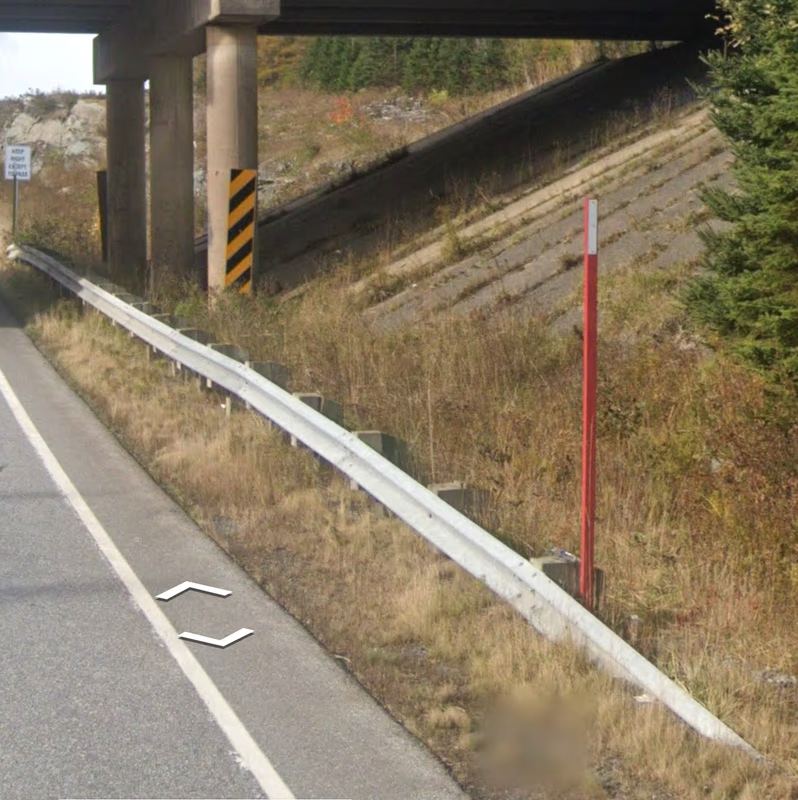
Nova Scotia likes to place colourful snowpoles at the end of her guardrails. The most common style is yellow with a red reflector, but there are lots of possible variations.
Canada (CA)
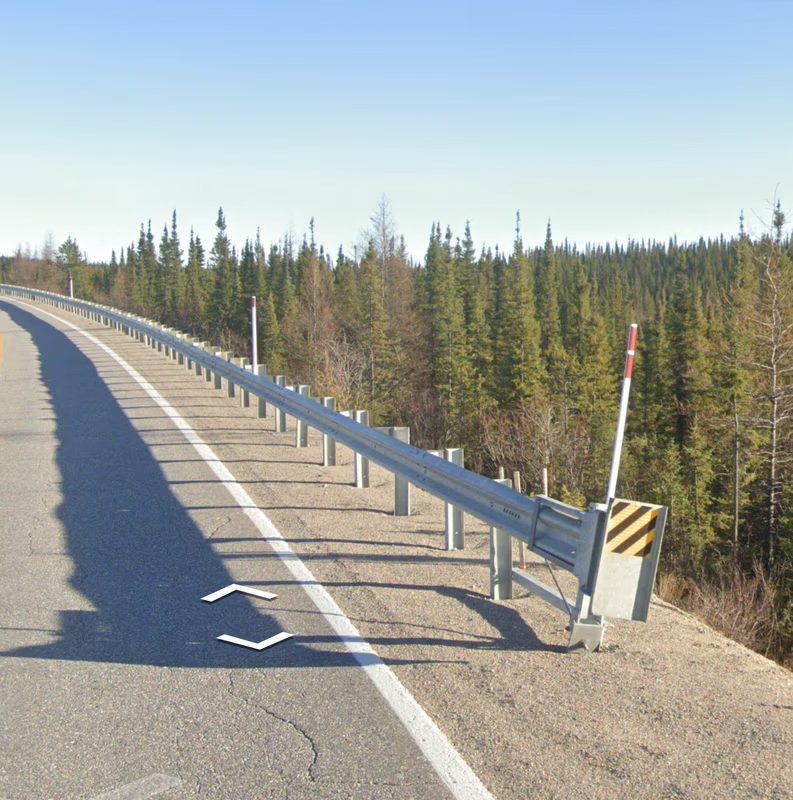
In Québec, guardrails can end in 2 ways:
flat, with black and yellow stripes
in a simple hoop.
In both cases you will see a snow pole-like bollard at the end of the guardrail.
Canada (CA)
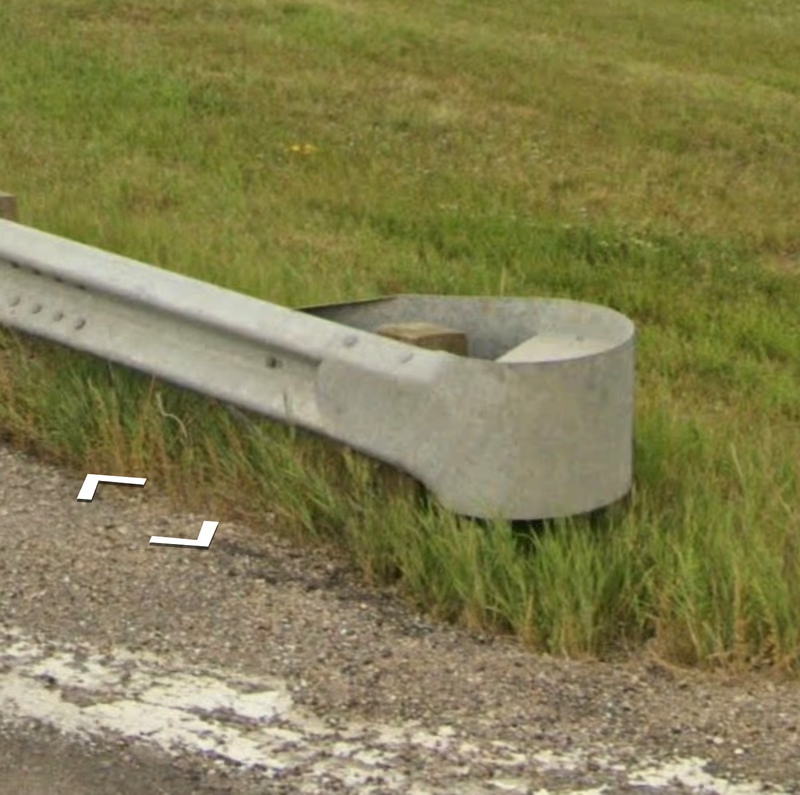
Guardrails are quite rare in Saskatchewan, but when you do see them they end in an open loopand lack the holes seen on Alberta guardrails.
Canada (CA)
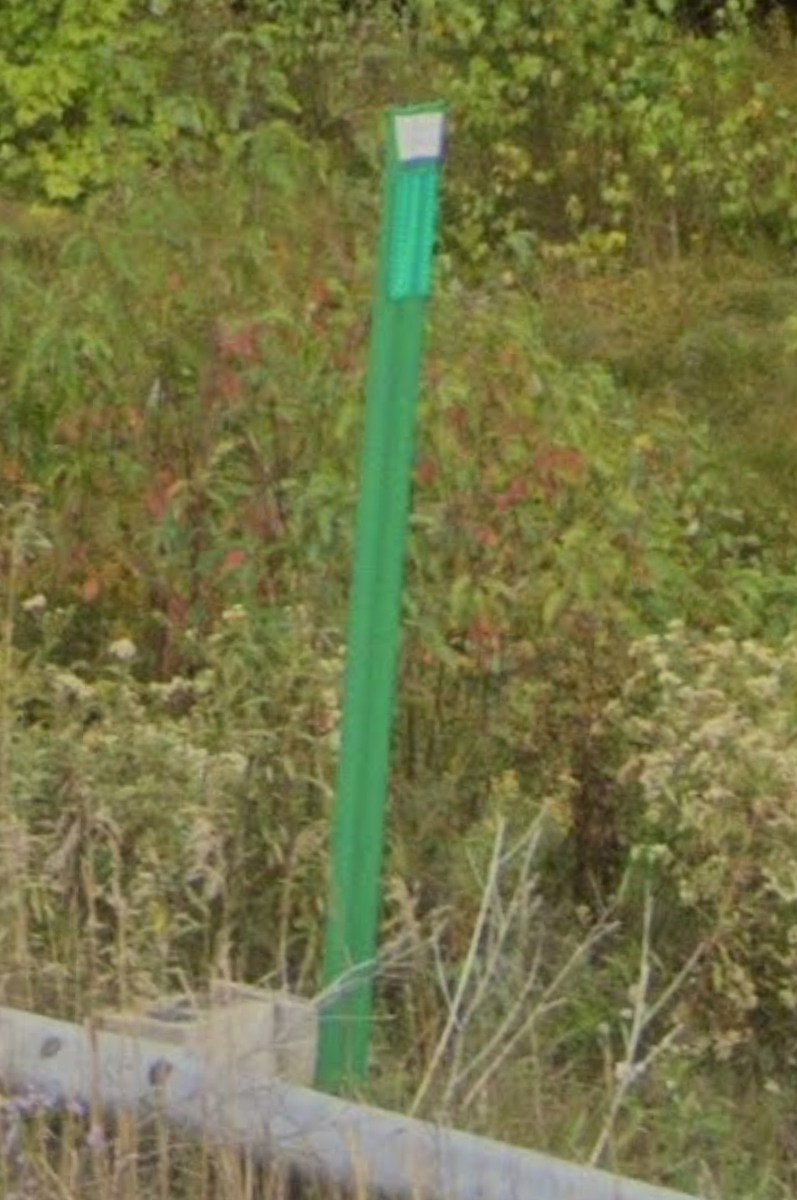
New Brunswick has a variety of rectangular bollards, usually found at guardrail-endings. Most common colours: green, pink and yellow (famously on the Trans-Canada Highway).
Note: Blocky-looking wooden bollards with a red or green reflector are also possible to get.
Canada (CA)
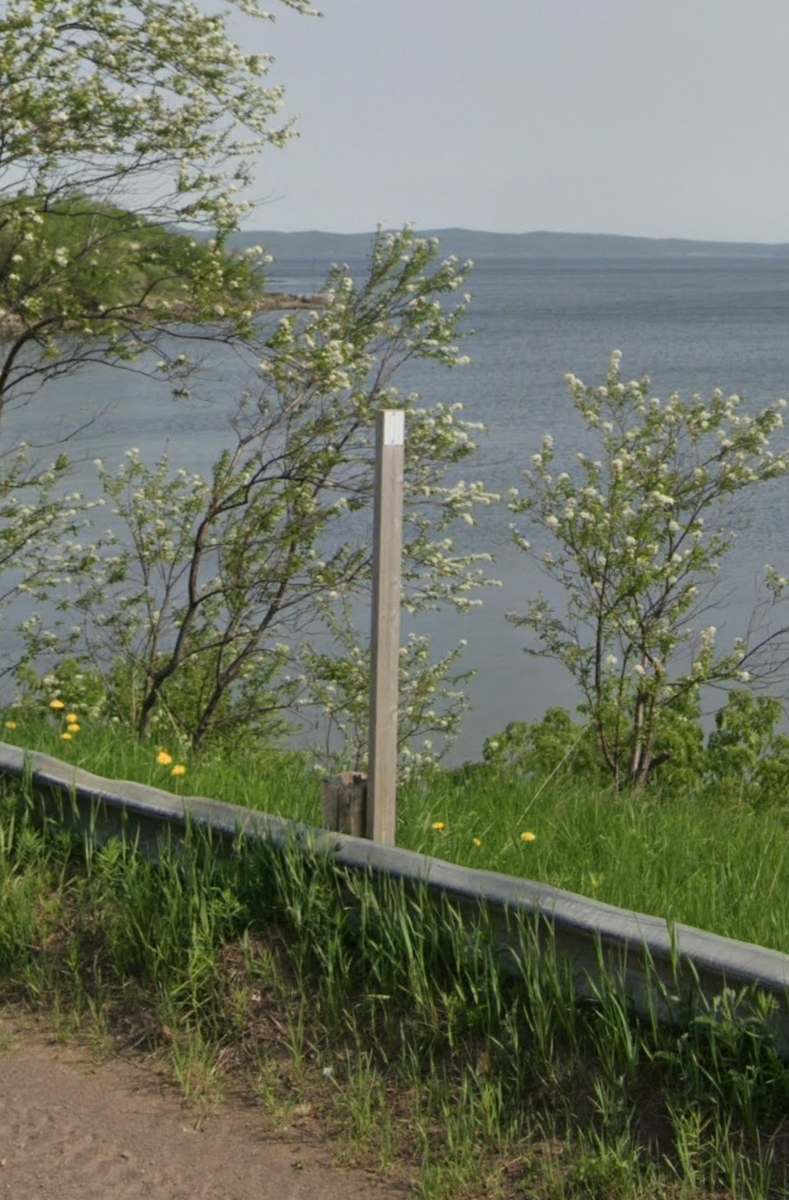
Regular bollards are not too common in Newfoundland and Labrador, but you can sometimes find a rustic-looking wooden bollard at the end of the guardrails, as well as various interesting snowpoles.
Note: It is relatively common to see snowpoles on the side of residential driveways in NL.
Canada (CA)
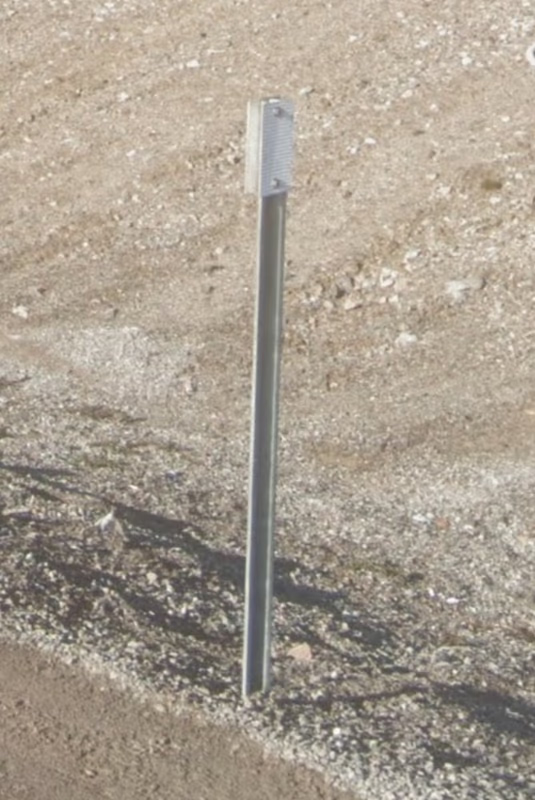
The Northwest Territories has a few bollards even though many of them are more common than the Alberta-style variant. The two main types:
The exact designs are often specific to a certain road. (More about that on the Rural Roads map.)
Canada (CA)
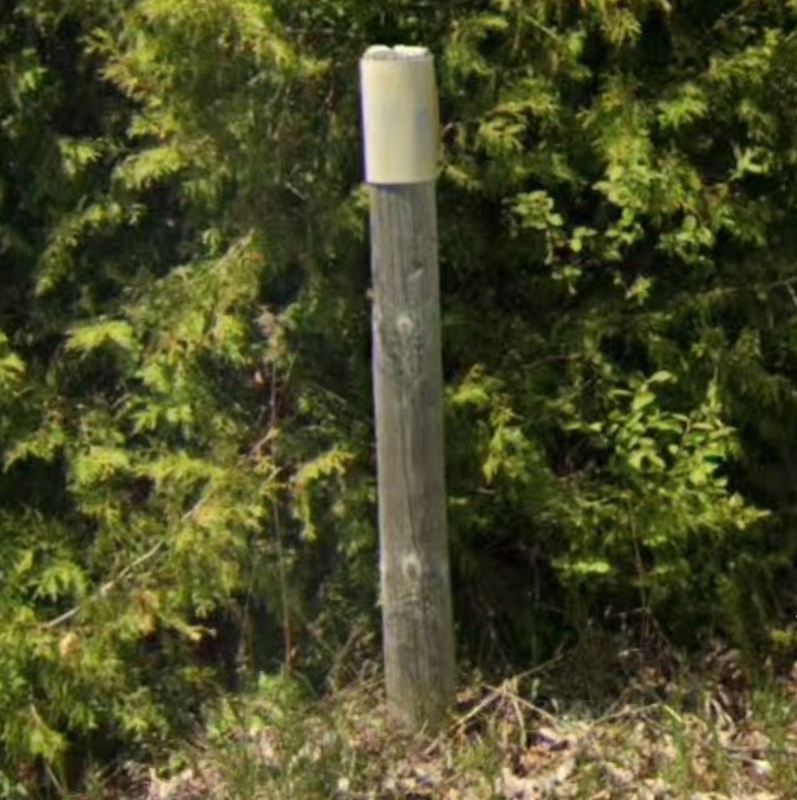
In rural intersections in Southern Ontario you can sometimes encouter these short wooden poles with a ring on them. The ring can be white, yellow, orange or red and can appear on other signposts too. There are a few exception locations in Québec.
Canada (CA)
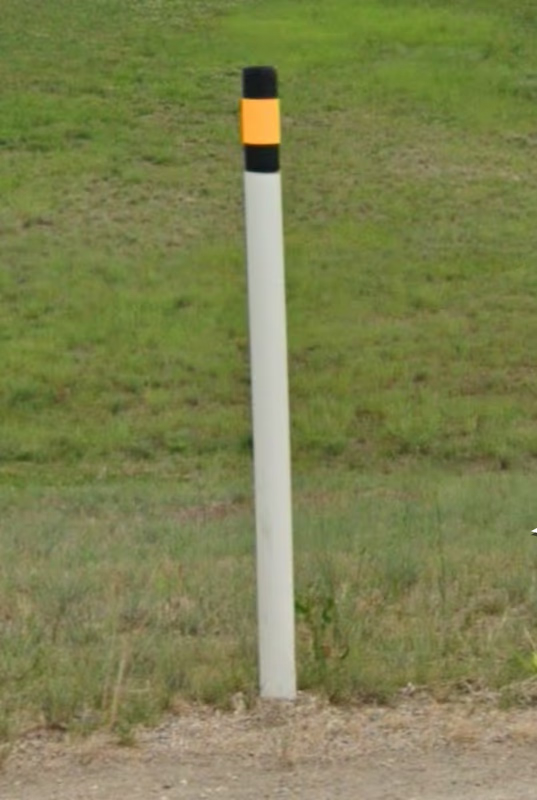
Bollards are a rare sight in Sask due to the straighness of their roads, but beware: on major roads you can sometimes see "Alberta-style" bollards. Manitoba-style ones are also possible, but these are even rarer.
Note: Most of Sask's bollards are found in highway intersections close to one of the largest cities. If you see a bollard on a random rural road you are probably somewhere else.
Canada (CA)
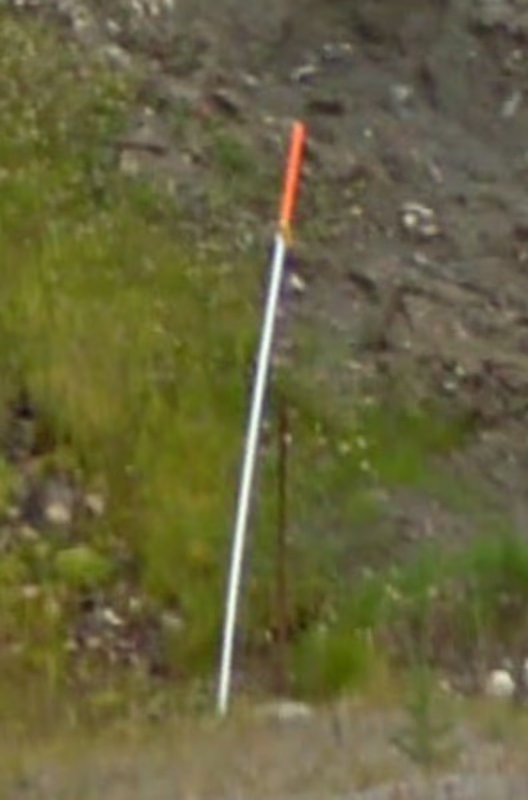
Instead of bollards, Yukon prefers to use a variety of thin snowpoles. Most common designs: thick stripes of 2 colours, or one base colour + a different top. The snowpoles come in handy in border 50/50-s with BC or NWT which use their own bollards.
Note: The exact pattern of colours is often specific to a certain road
Canada (CA)

Within the Prairies(Manitoba, Saskatchewan, Alberta), rumble strips on the centre line are only found in Alberta.
Note: Rumble strips on the outer lines can also be found in other provinces.
Canada (CA)
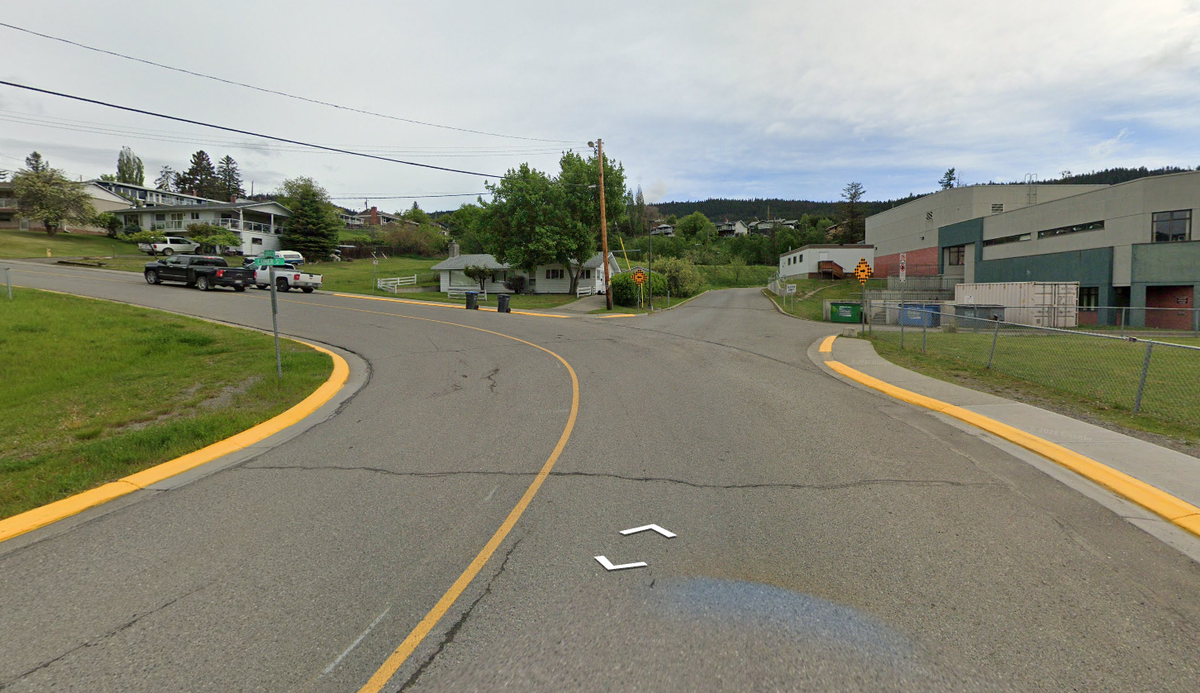
Yellow curbs can often be seen in British Columbia and Alberta.
Note: Other provinces can also have them, so only use this meta if you can't find anything better.
Canada (CA)
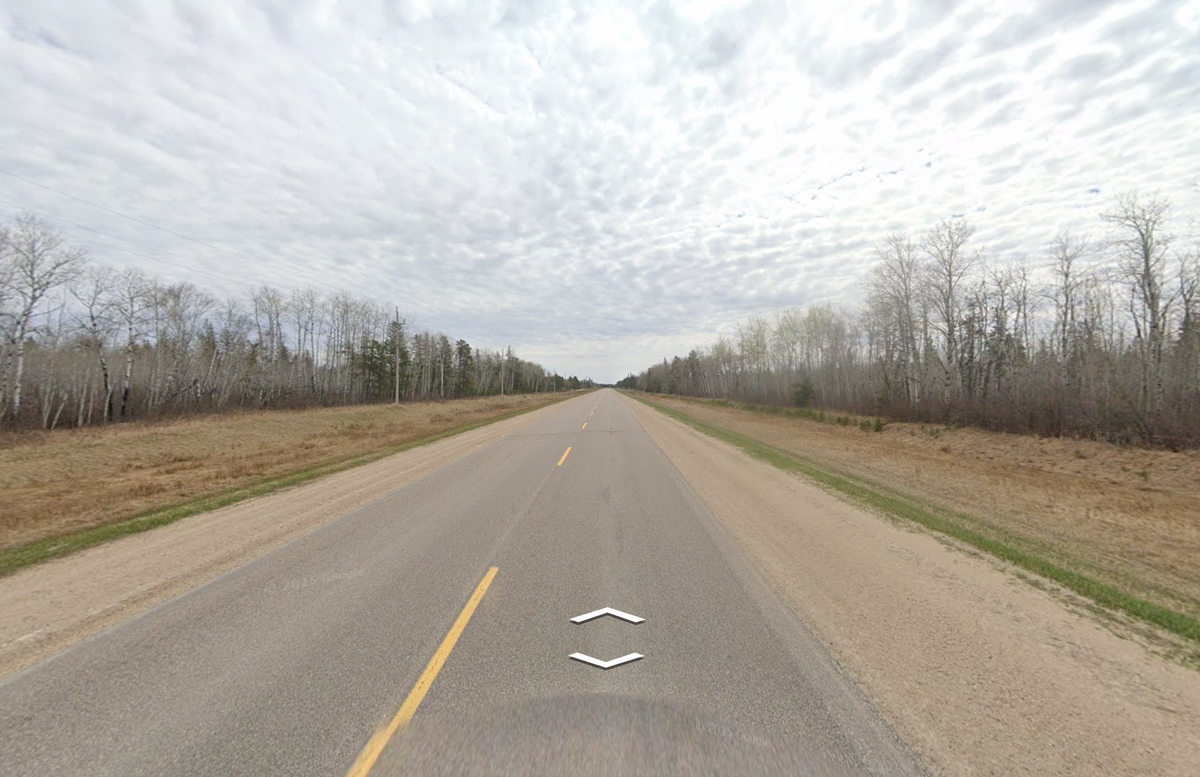
A thick strip of light coloured gravel on the sides of the road is a good clue for Manitoba. On many roads white outer lines are entirely replaced by gravel ditches.
Canada (CA)
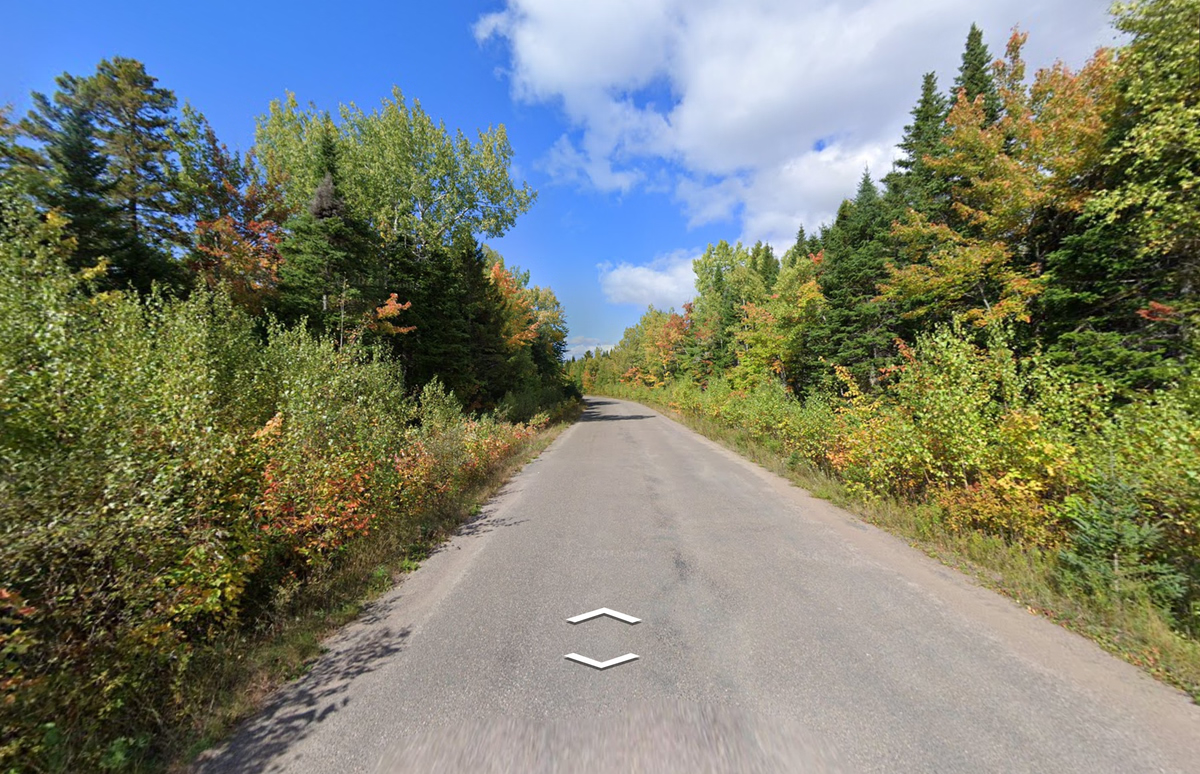
New Brunswick has a lot of coverage on rural asphalt roads without any roadlines.
Canada (CA)
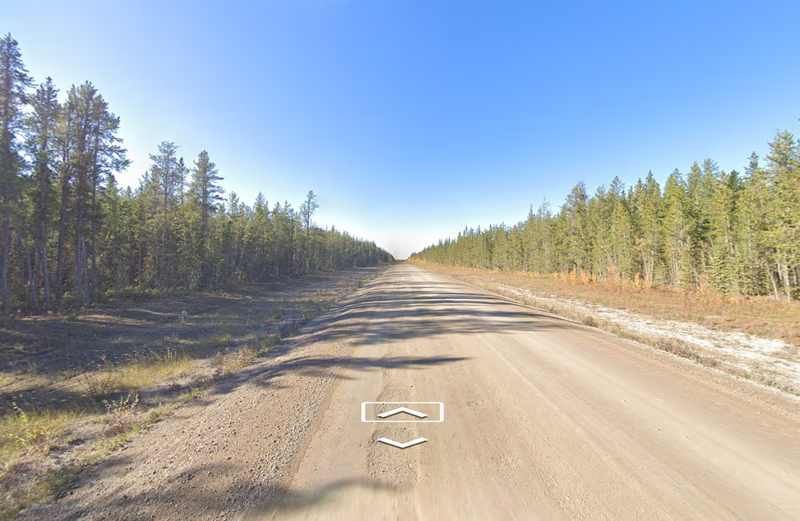
The are only 3 unpaved roads in the Northwest Territories with official coverage:
Canada (CA)
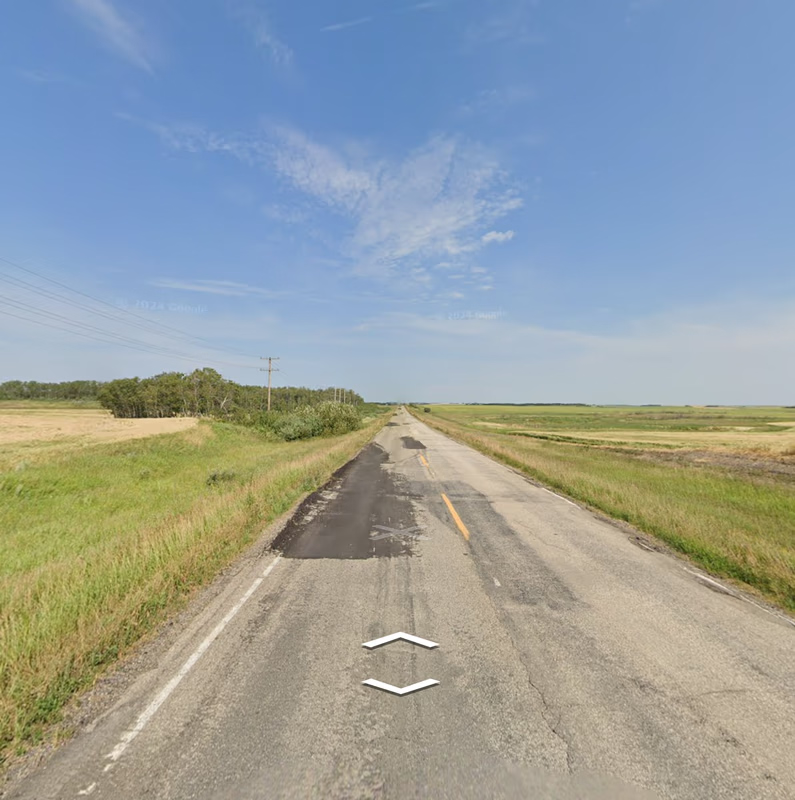
Rural roads in Saskatchewan tend to be thinner and in a worse condition than in Alberta (or Manitoba). Roads that have been patched up a few times are a common sight here.
Canada (CA)
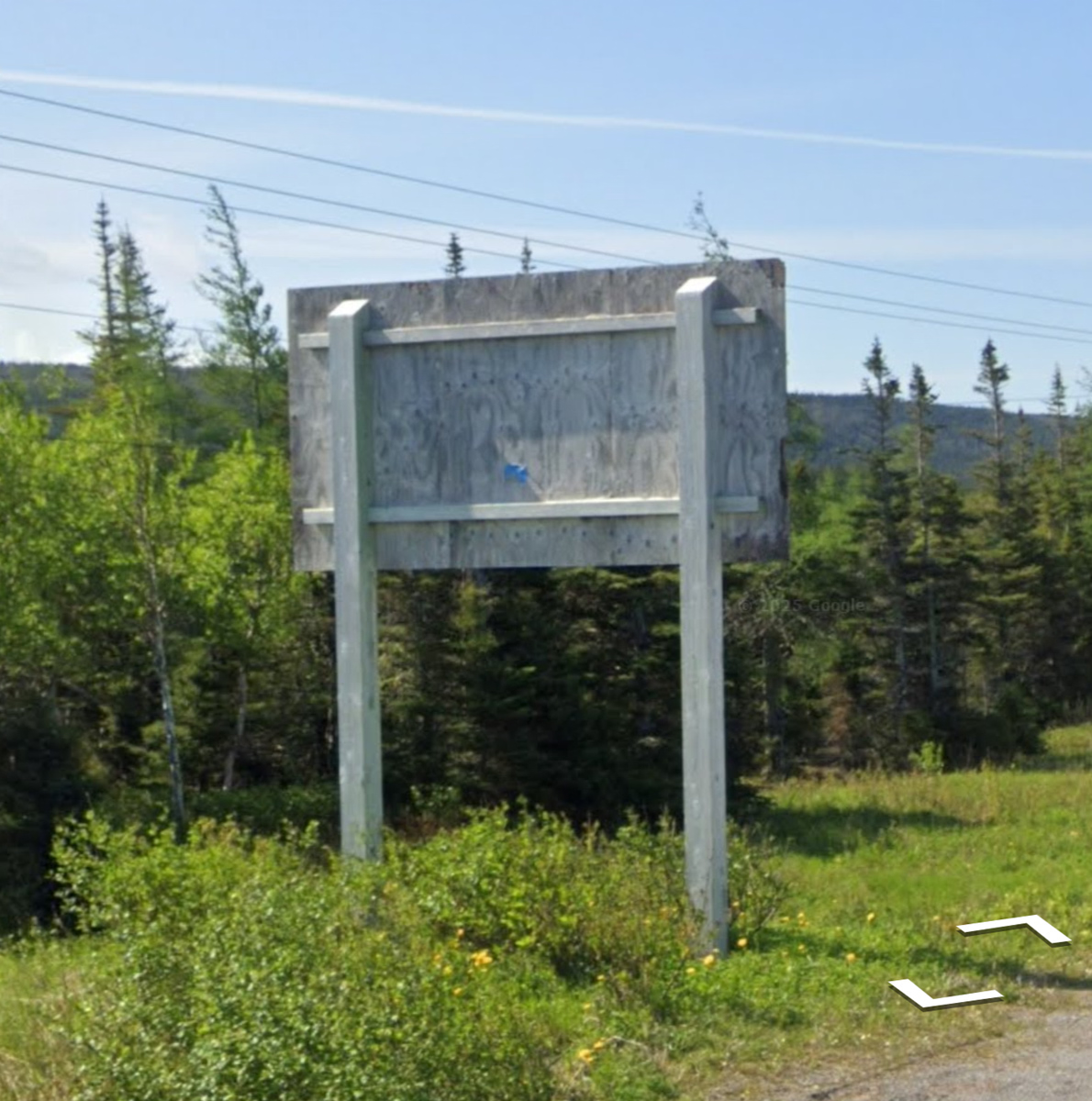
Within Atlantic Canada only Newfoundland and Labrador uses thick wooden signposts consistently.
Note: Nova Scotia has a mix of wooden and metal posts, while the rest of the Maritimes mostly uses square metal posts with small holes.
Canada (CA)
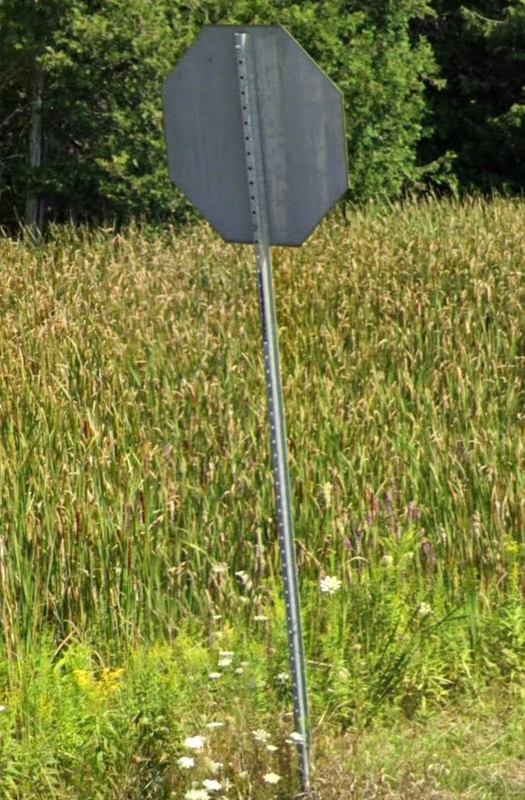
The most common signpost in (semi) urban Ontario is a rectangular metal pole with small holes on it. Other provinces use solid or round signposts more often.
Note: In rural areas thick wooden signposts are even more common.
Canada (CA)
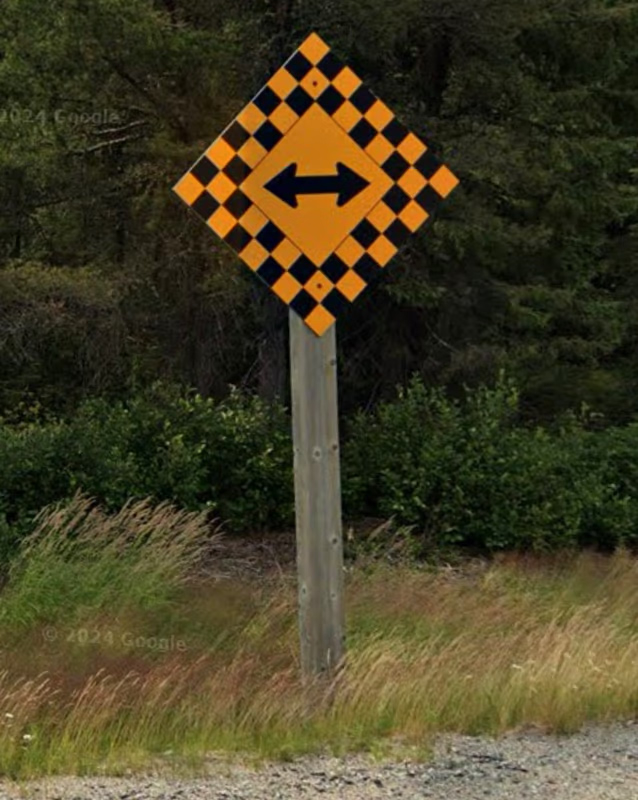
In rural areas, Ontario likes to use thick, unpainted wooden signposts for information signs and traffic signs. Québec prefers metal.
Canada (CA)
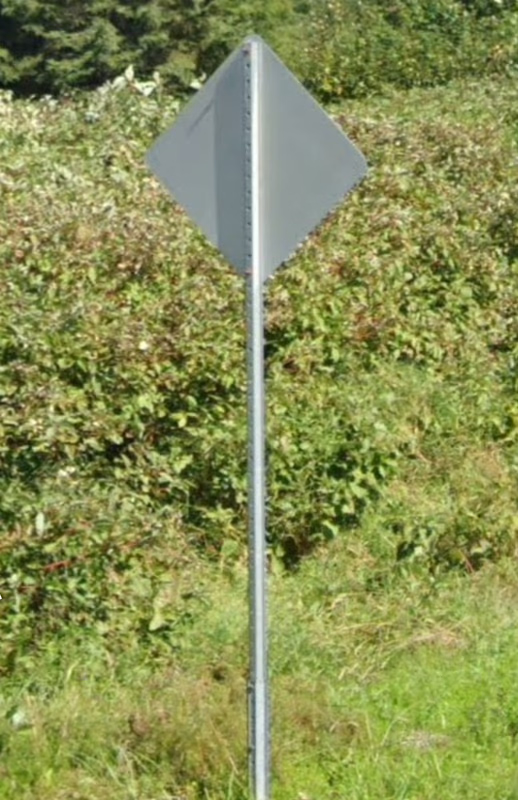
In Québec signs are often held up by 2 metal signposts.
Canada (CA)
In comparison to other provinces, Québec uses a lot of metal signposts. They usually have little holes on them.
Note: This comes in handy for Ontario - Québec 50/50s as Ontario prefers thick wooden posts in rural areas.
Canada (CA)
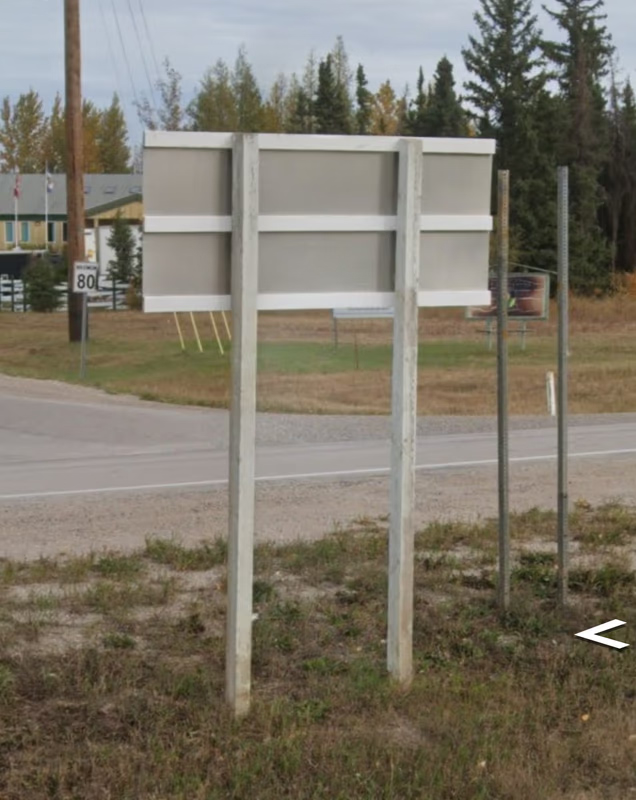
Just like Yukon, the Northwest Territories also use thick white wooden highway signposts.
Canada (CA)
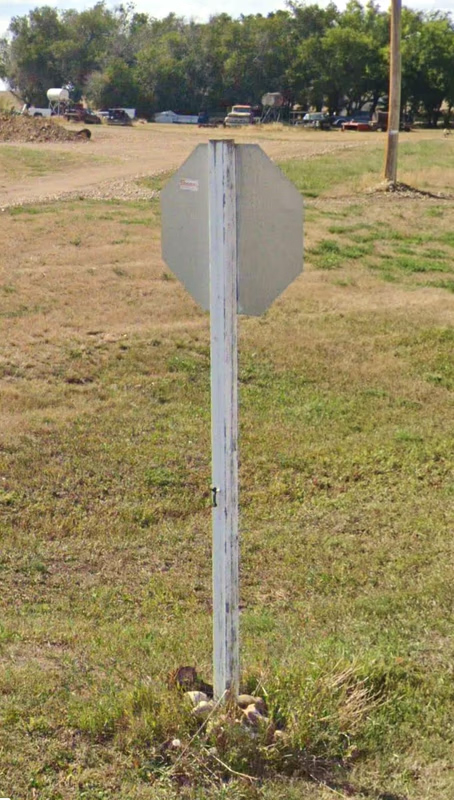
White-painted wooden signposts are commonly found in Saskatchewan.
Note: Yukon and NWT often use white wooden signposts for their highway signs, but not for their small traffic signs.
Canada (CA)
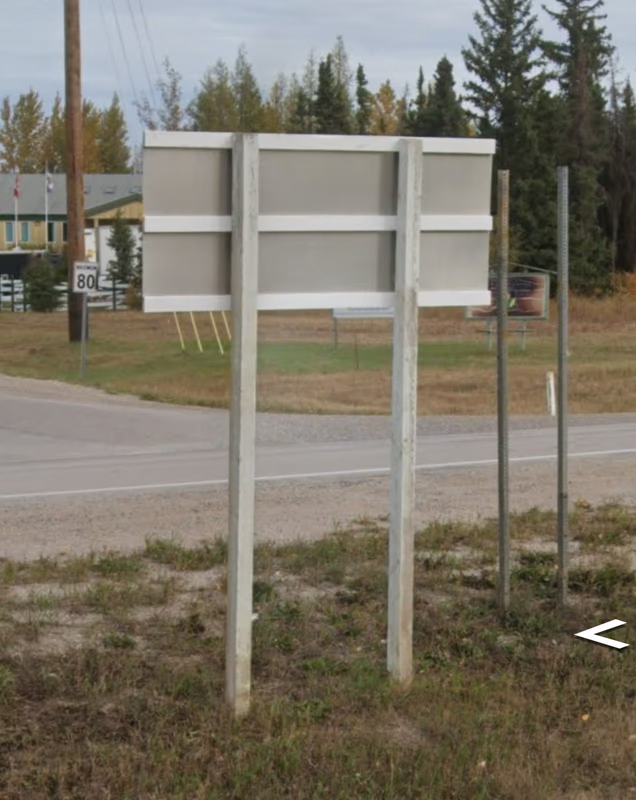
Highway signposts in Yukon are usually made of thick white-painted wood.
Note:NWT also uses white signposts.BC prefers them unpainted.
Canada (CA)
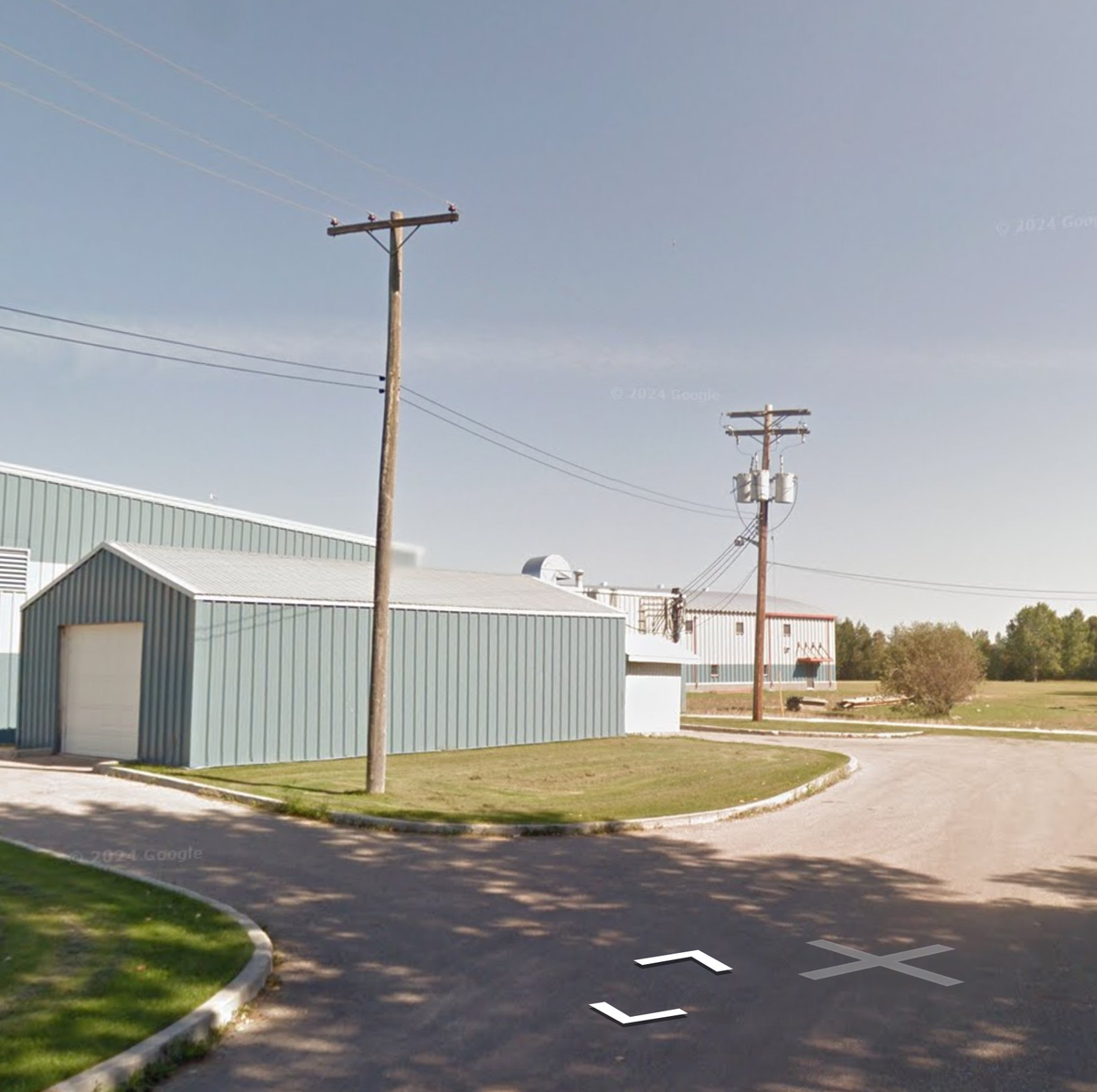
Wires attached to the side of the pole are more common in Manitoba than in the other Prairies provinces.
Canada (CA)
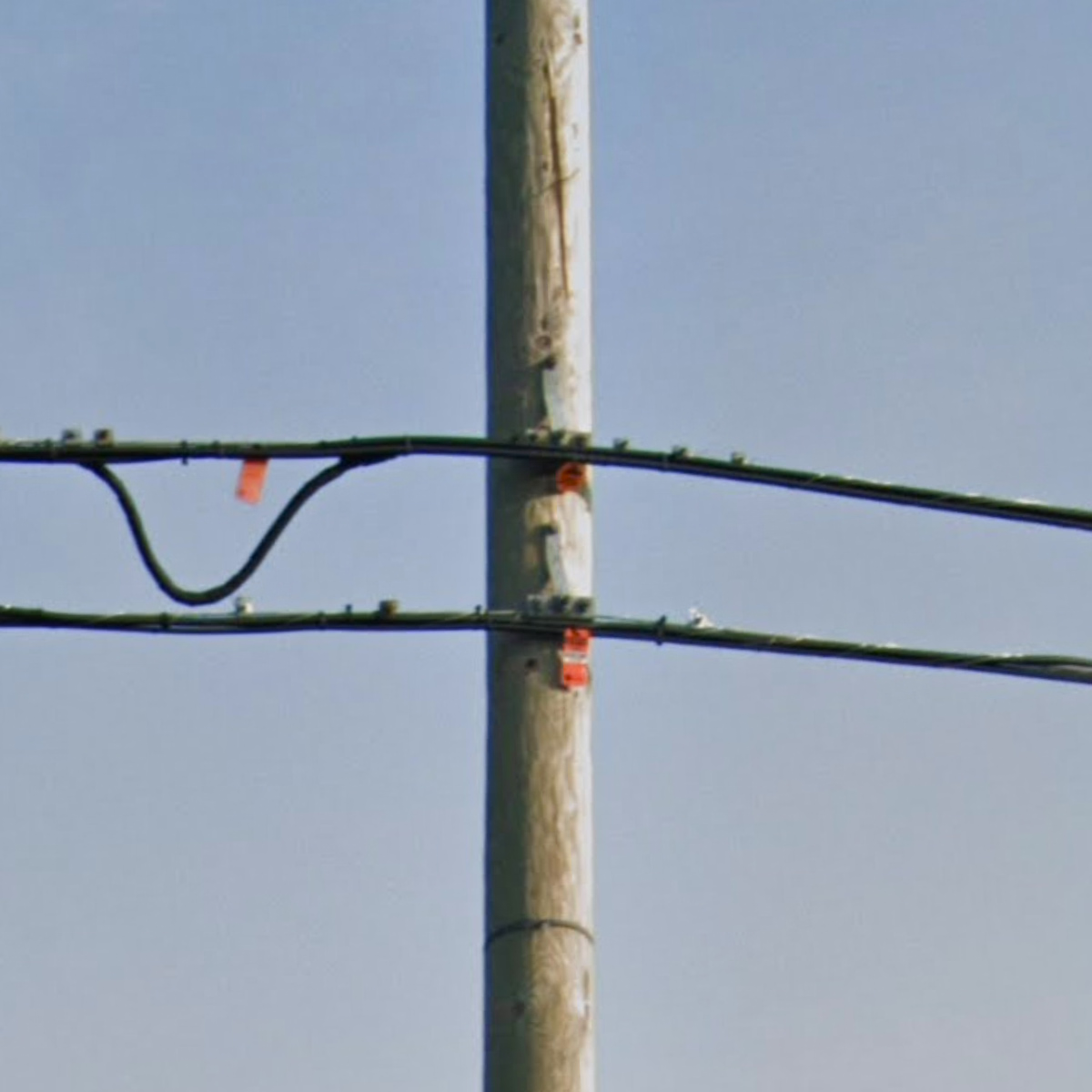
Orange flags and circles are quite common to find on wires near the pole in Ontario and Québec. The circles can be yellow too.
Canada (CA)
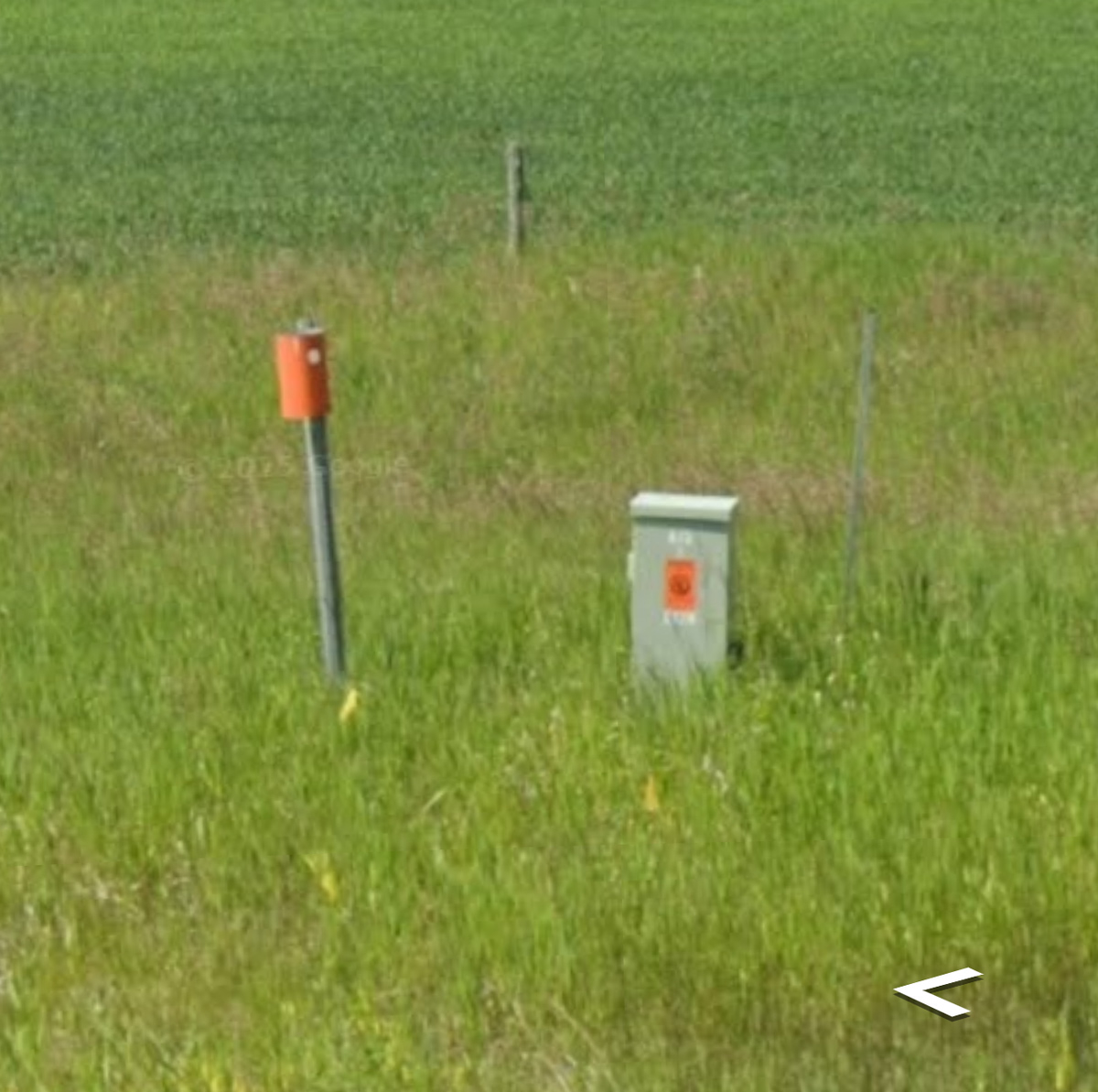
Orange-red underground wire markers can be found in all three Prairie Provinces. They are the most consistent in Alberta.
Note: In Saskatchewan, yellow markers are also common.
Canada (CA)
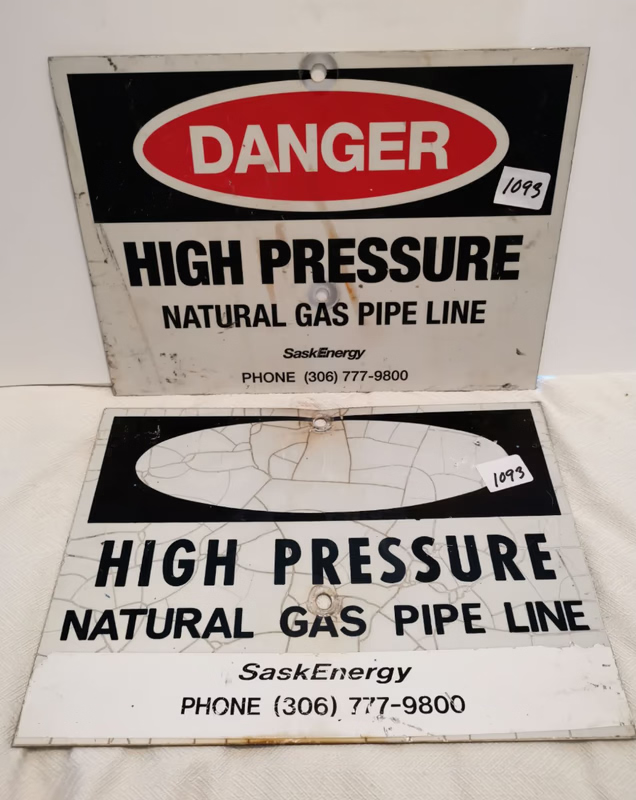
Upon leaving rural towns in Sask it is very common to see high pressure natural gas pipelines marked by a warning sign unique to the province. The sign can be white or red, with an oval shape on top saying "DANGER".
Note: It can be found in rolled up form too, like the underground wire markers.
Canada (CA)
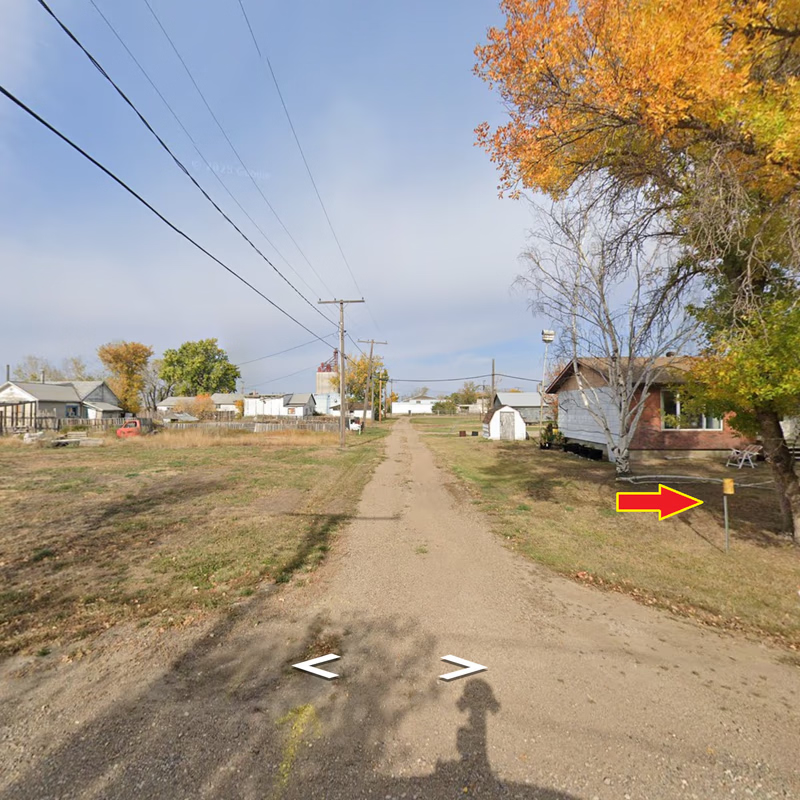
While orange/red underground wire markers are the standard within the Prairies, Saskatchewan also uses yellow markers. These are unique within the Prairies.
Note: Yellow markers are also typical in Ontario, Québec and BC.
Canada (CA)
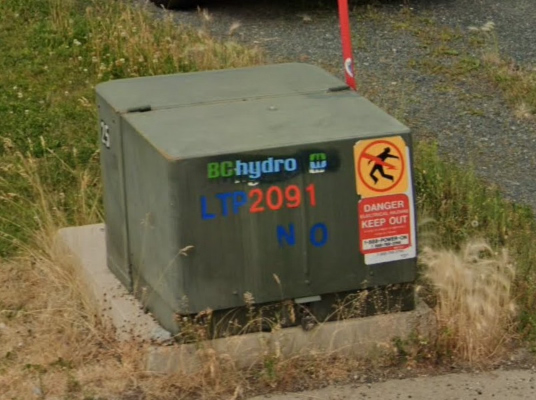
In British Columbia, large green electric boxes often feature the name of the local electricity distributor, "BC Hydro",or simply "Hydro".
Note: Unfortunately, large green boxes are quite rare in BC. (You might find 1 or 2 per town.)
Canada (CA)
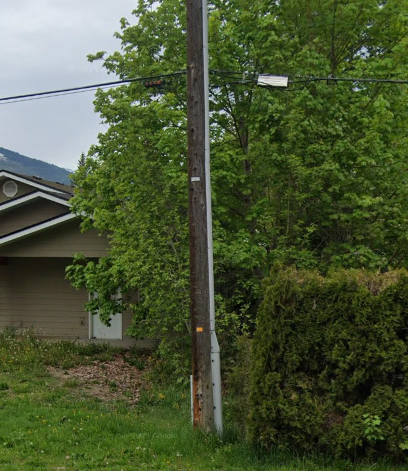
Metal flares at the bottom of the utility pole are typical for British Columbia.
Canada (CA)
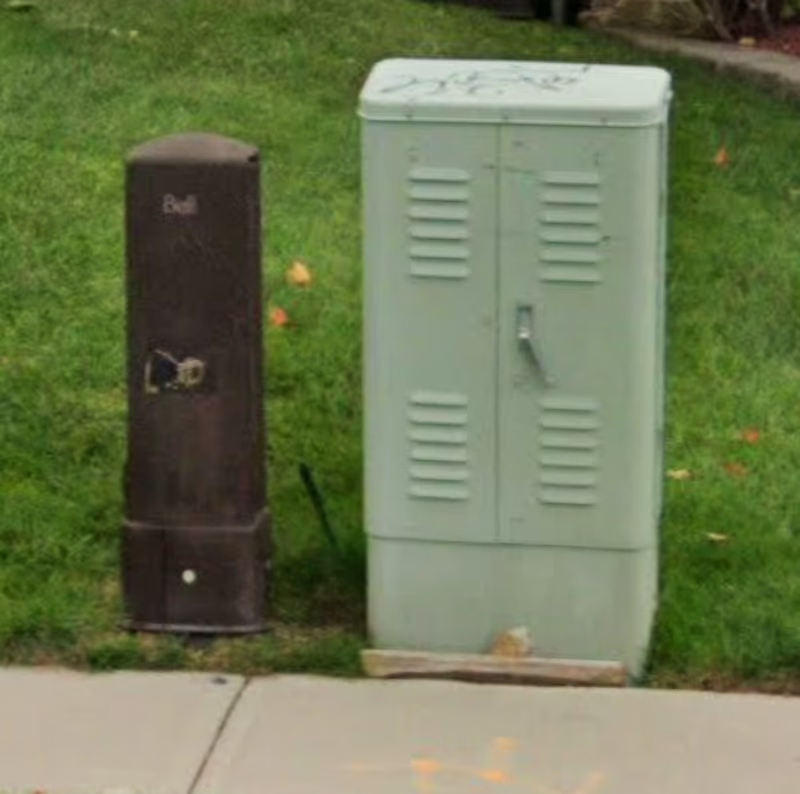
A green electrical box paired up with a small brown one is a common sight in the suburbs of far Southern Ontario.
Canada (CA)
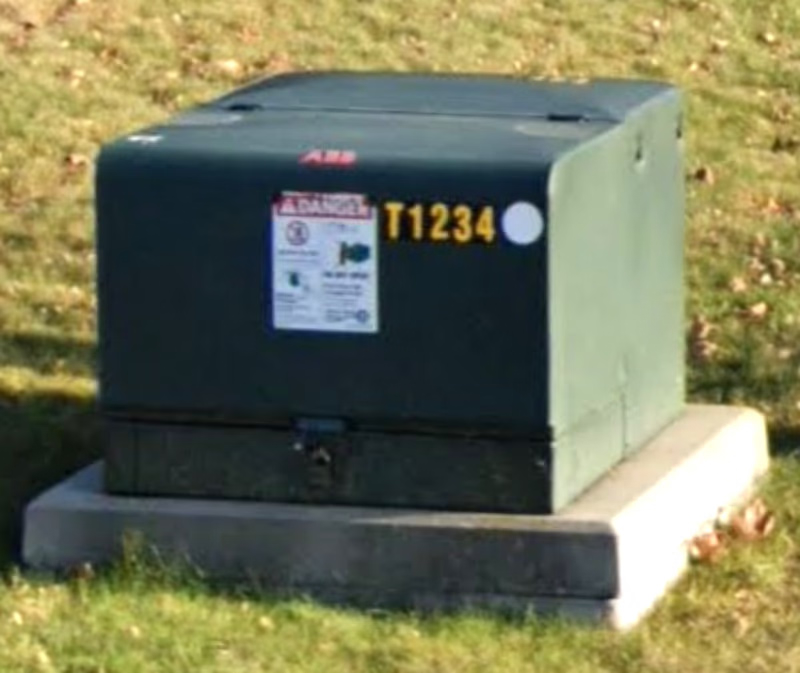
This specific design of the green electrical box with the yellow numbers is common in residential areas throughout Ontario. Many of them also have a danger sticker or a circle sticker on it, although the numbers are enough to identify the design.
Canada (CA)
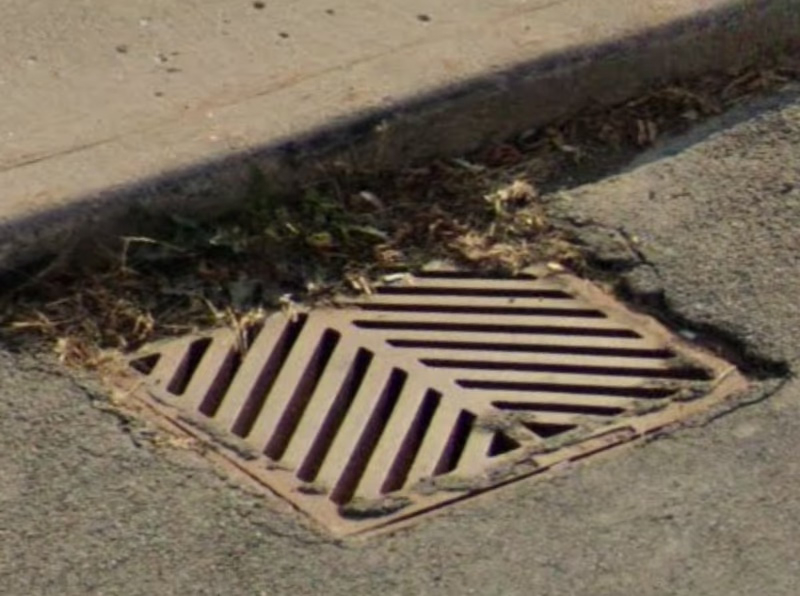
The most prevalent sewer cover type in Ontario has a V-shape design. This is almost completely unique to Ontario.
Canada (CA)
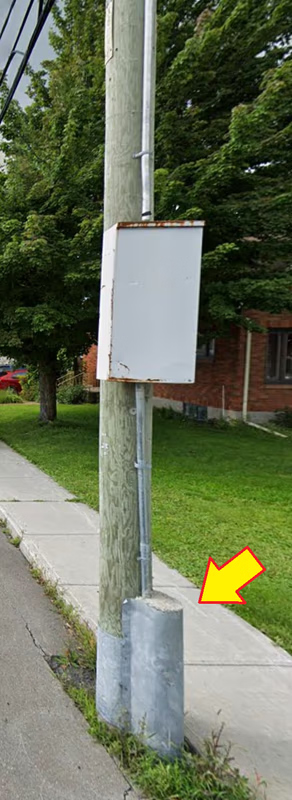
In Québec, wires leading to the ground often feed into a covered cement block at the base of the pole.
Canada (CA)
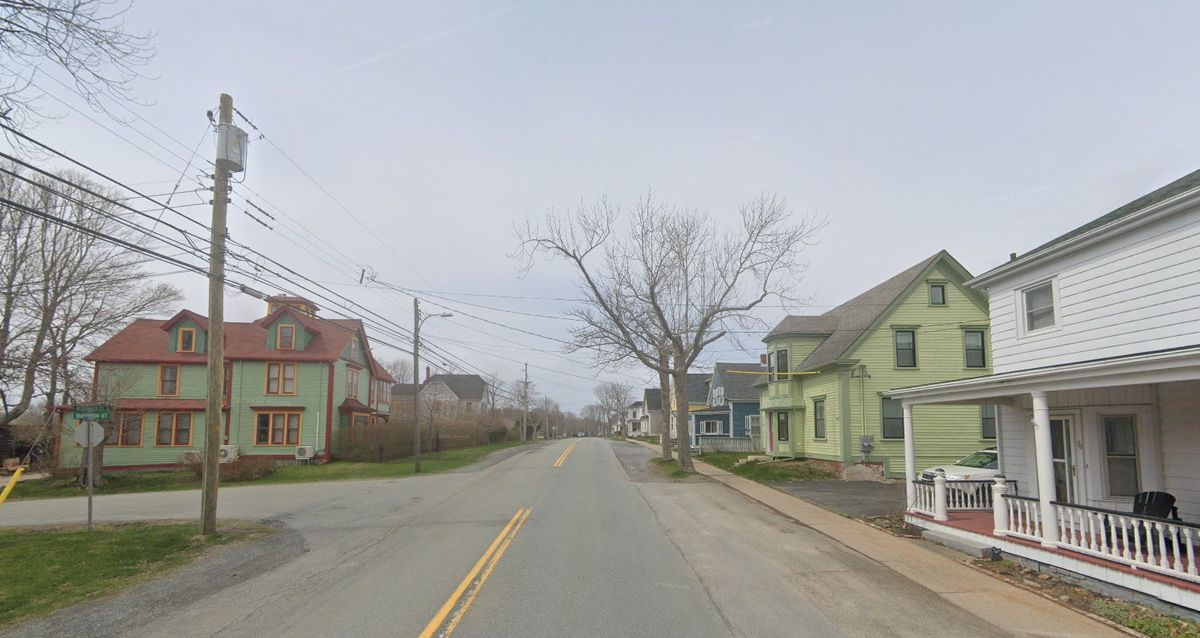
Aside from the white wooden houses, Eastern Canada also has a lot of colourful houses. They are especially common in fishing villages in the Maritimes, in coastal Québec as well as some bigger towns such as downtown St John's (NL) and Lunenburg (NS).
Canada (CA)
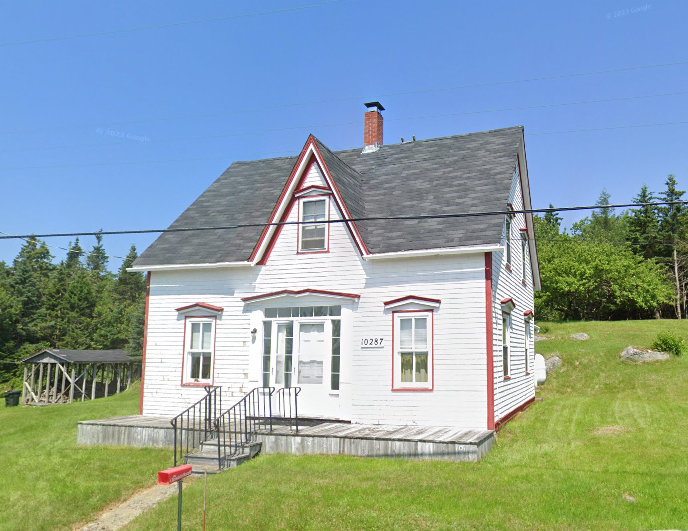
While houses made of white siding wood are generally common throughout rural Canada, with some practice the iconic Atlantic Coast clapboard houses can be recognised. Influenced by British and New England architecture, these houses feature steep dark grey roofs, multiple stories and simple symmetrical facades.
Note: This style gets more common the closer you get to the Atlantic coastline. Look for the coastal village setting!
Canada (CA)
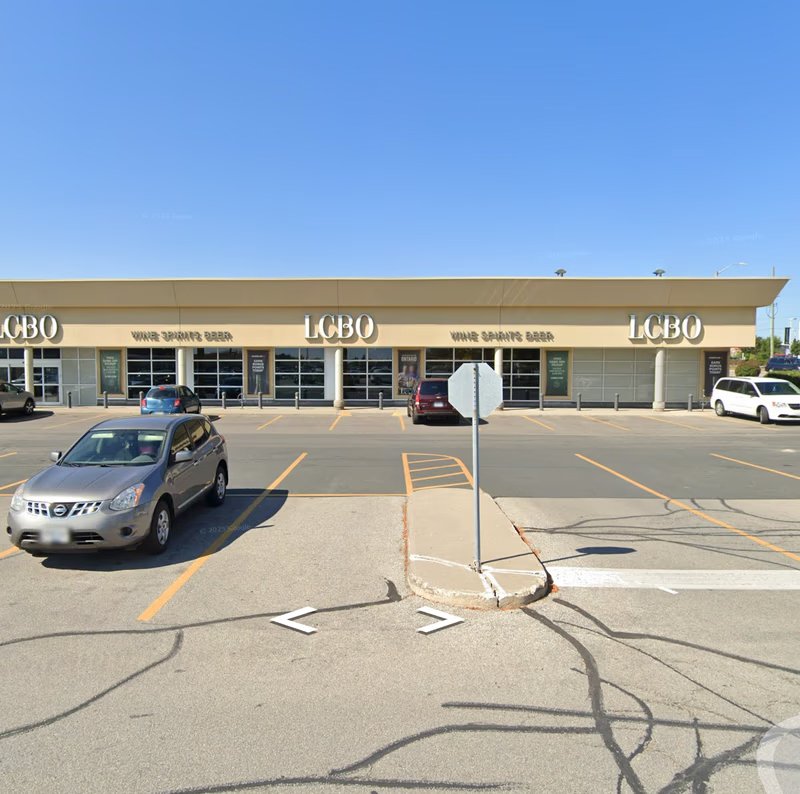
The LCBO (Liquor Control Board of Ontario) is a chain of government-owned liquor stores that only operates in Ontario. Around the big Southern cities you can find large LCBO stores with spacious parking lots, while in the rural Northern towns small convenience store locations are more common.
Canada (CA)
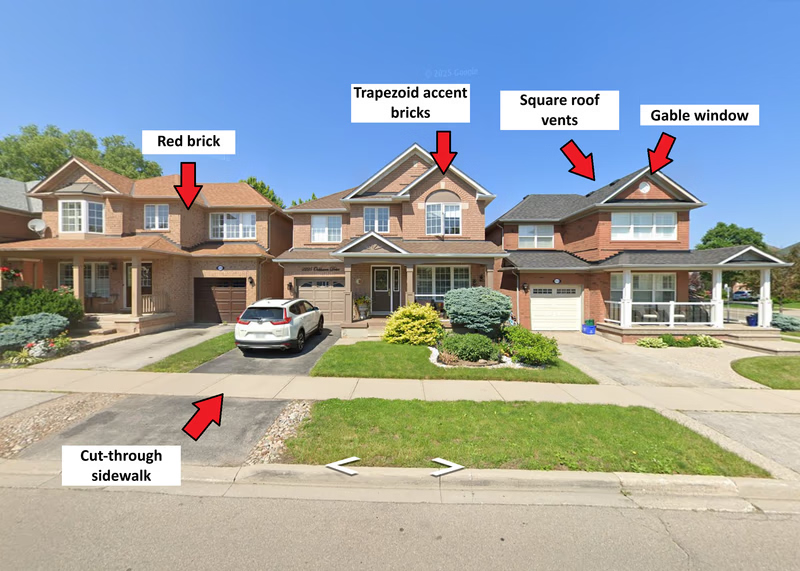
Suburbs in Southern Ontario have a very distinct architectural style.
A few common features to look for:
Canada (CA)
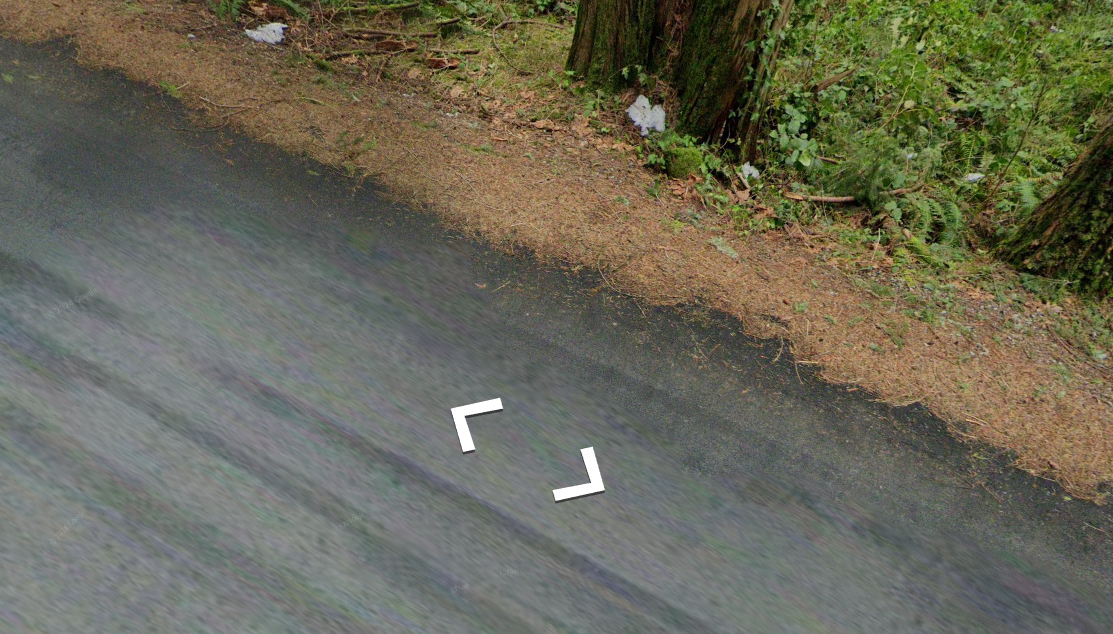
Vancouver Island and the nearby humid coastal areas of Southwestern British Columbia, you can often see a reddish carpet of fallen pine needlescovering the sides of the road. This is caused by the Western redcedar shedding its needles, with some contribution from Douglas firs.On Vancouver Island and the nearby humid coastal areas of Southwestern British Columbia, you can often see a reddish carpet of fallen pine needles covering the sides of the road. This is caused by the Western redcedar shedding its needles, with some contribution from Douglas firs.
Note: Redcedar needles can also be found in the temperate rainforest areas of Oregon and Washington in the US. Small, isolated pockets might also occur further inland in BC, but they are less obvious.
Canada (CA)
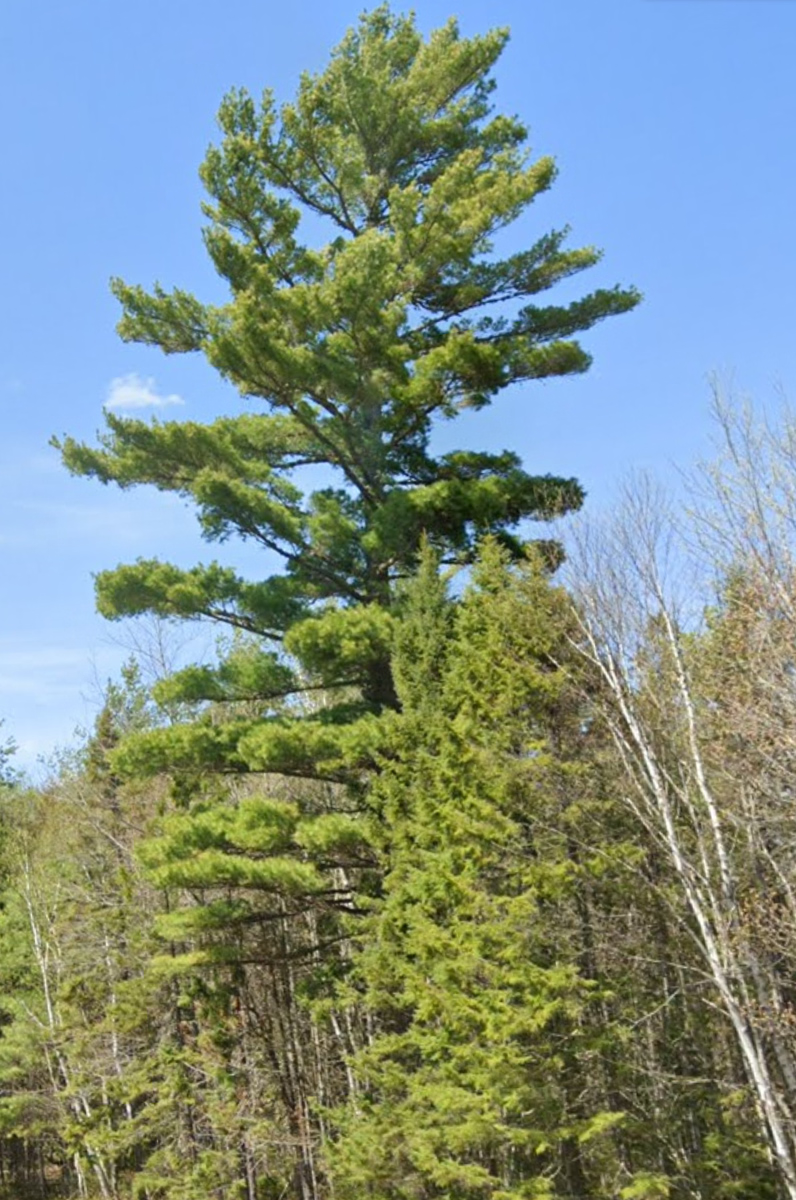
The Eastern white pine (Pinus strobus) can be recognised by its oval crown, long needles and horizontal, tiered branches. It is useful for getting the Eastern half of the country in ultra-rural rounds.
Tip: If you see it in very large quantities, you are probably further South within its range. (Eg: somewhere close to the Great Lakes, the New England border or Southern Nova Scotia).
Canada (CA)
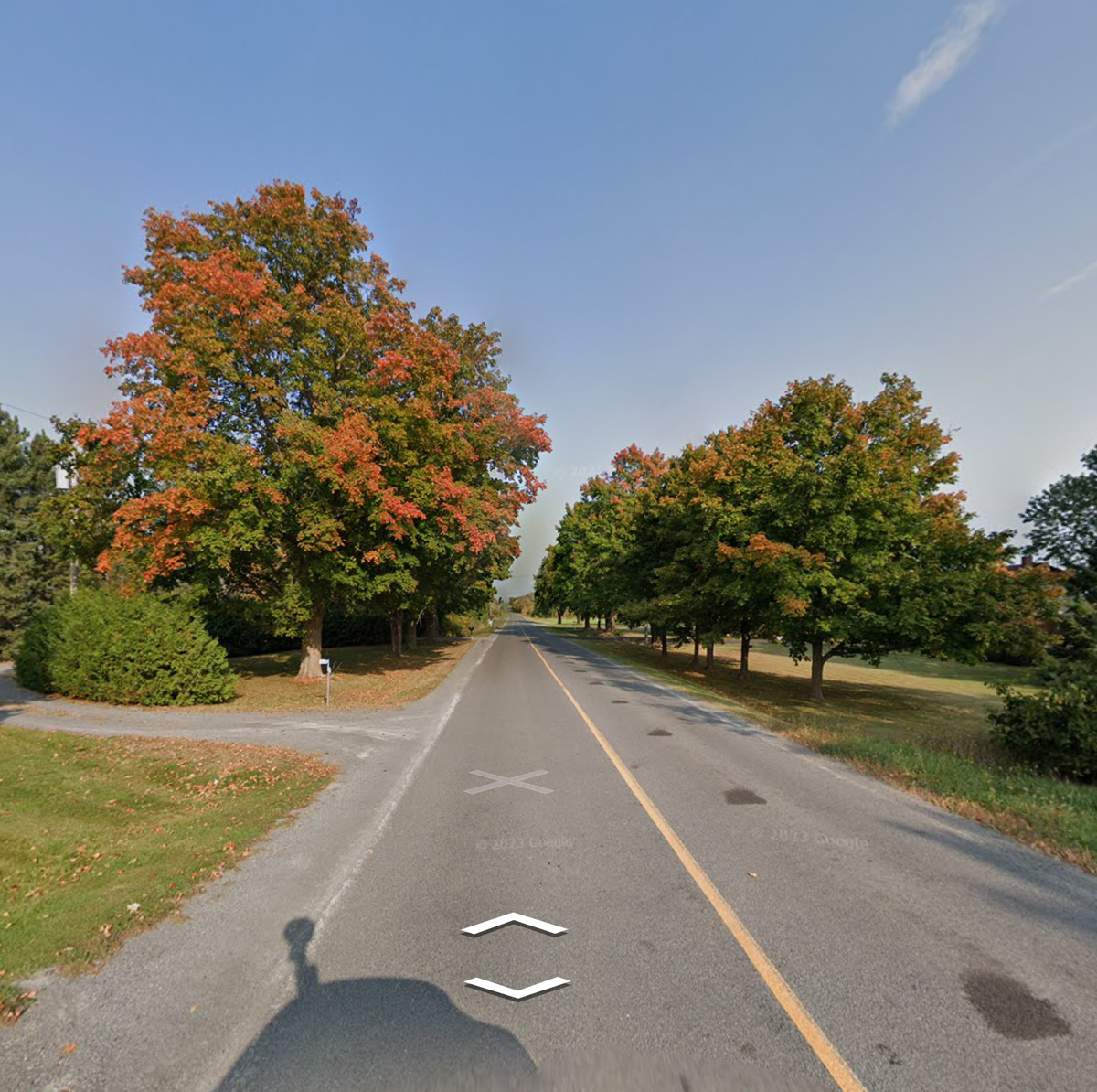
Canada is home to 10 native maple species, including the iconic Sugar Maple (Acer saccharum) and the Red Maple (Acer rubrum). These trees can be recognised by their large round crowns and lobed leaves - just like the one on the Canadian flag. On fall coverage, their brilliant orange-red foliage can be seen from far away. You can find a lot of these trees in the St. Lawrence Lowlands and the Maritimes.
Note: Maples are useful for excluding the Northern parts of Ontario and Québec, as well as NL.
Canada (CA)
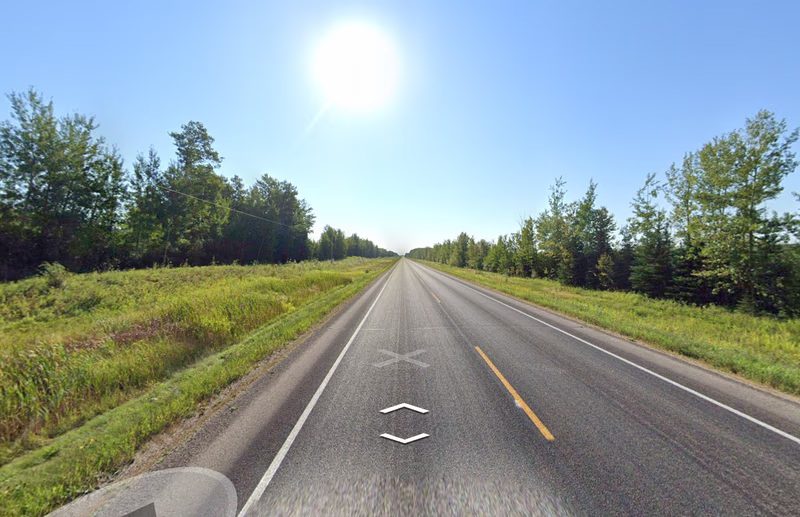
The further North you go in Saskatchewan, the more vegetation you will see. The absolute flatness of the Prairies gradually gives way to boreal forests on slightly hillier terrain.
Canada (CA)
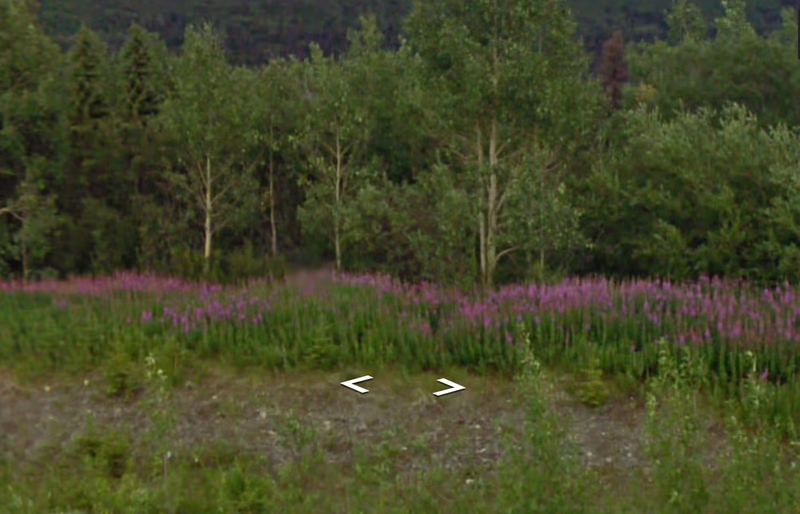
Fireweed (Chamerion angustifolium) is Yukon's floral emblem. While it can be found all over the province, you can only see the bright pink flowers bloom on the Gen 2 July coverage. This means 2 main areas in the far South:
Note: On Gen 4 you will see the leaves and stems of the plant changing into dark reddish Autumn colours. Autumn fireweed has a larger range.
Canada (CA)
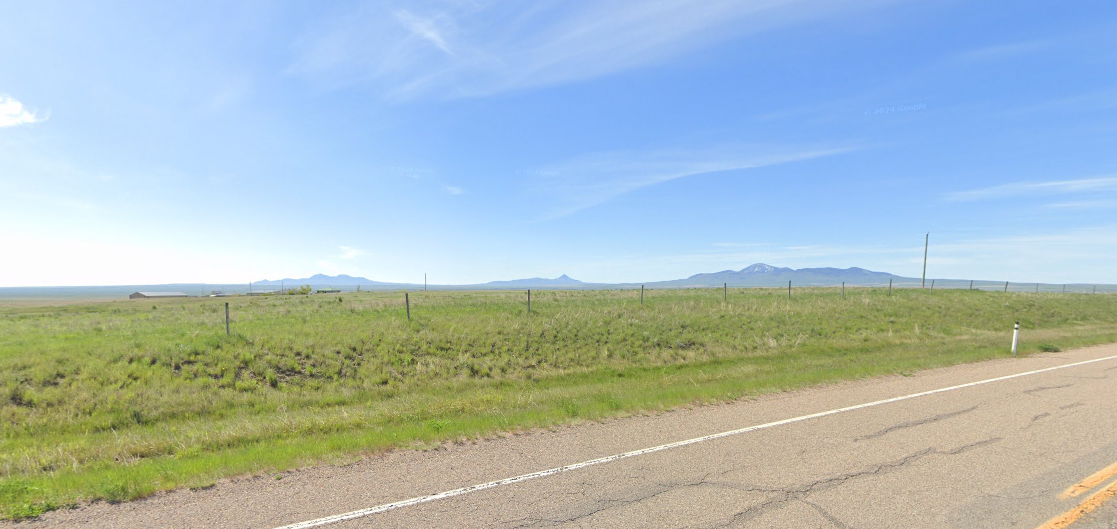
From certain roads in Far Southern Alberta isolated hills can be seen over the border in Montana.
Note: They are best visible from Provincial Highways 501 (Gen 4), 500 (Gen 2) and 880 (Gen 2).
Canada (CA)
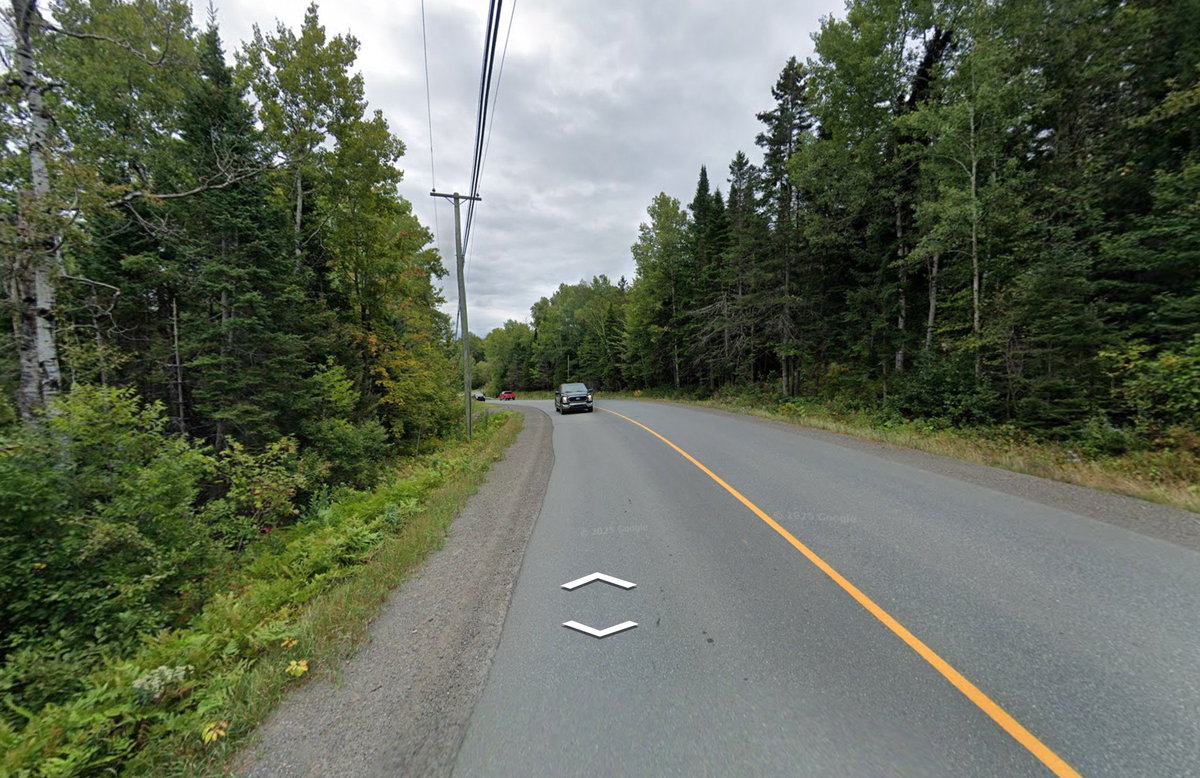
The typical New Brunswick landscape consists of lush rolling hills covered in evergreens, such as pines and spruces.
Canada (CA)
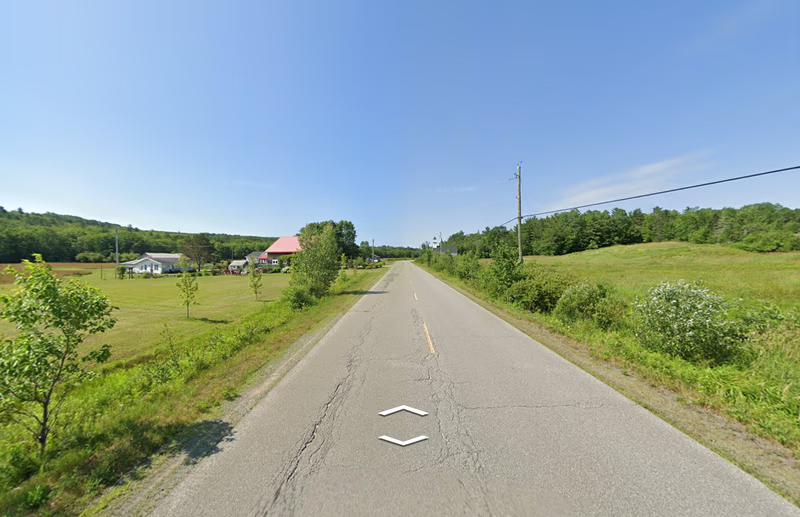
Nova Scotia is generally hilly and has the thick vegetation typical of Eastern Canada. The highest elevation areas can be found on the Cape Breton Island, followed by the Cobequid Mountains on the mainland part.
Canada (CA)
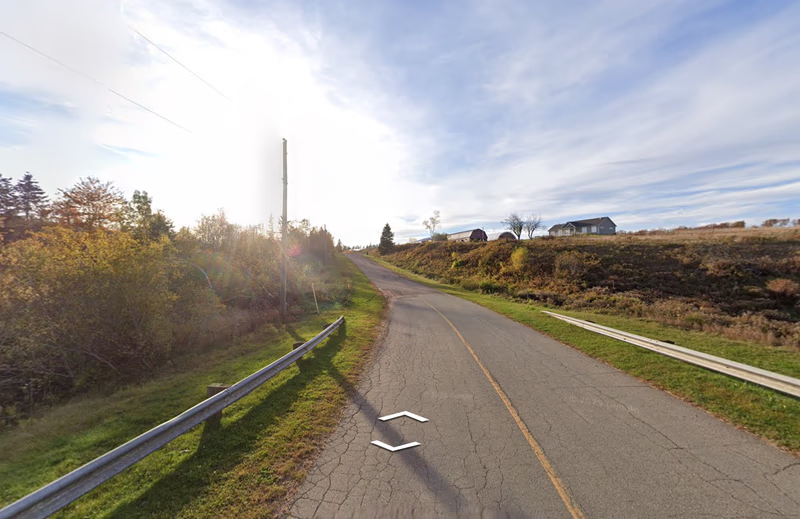
While most of Prince Edward Island is quite flat, you can find rolling hills in a few notable areas:
Canada (CA)
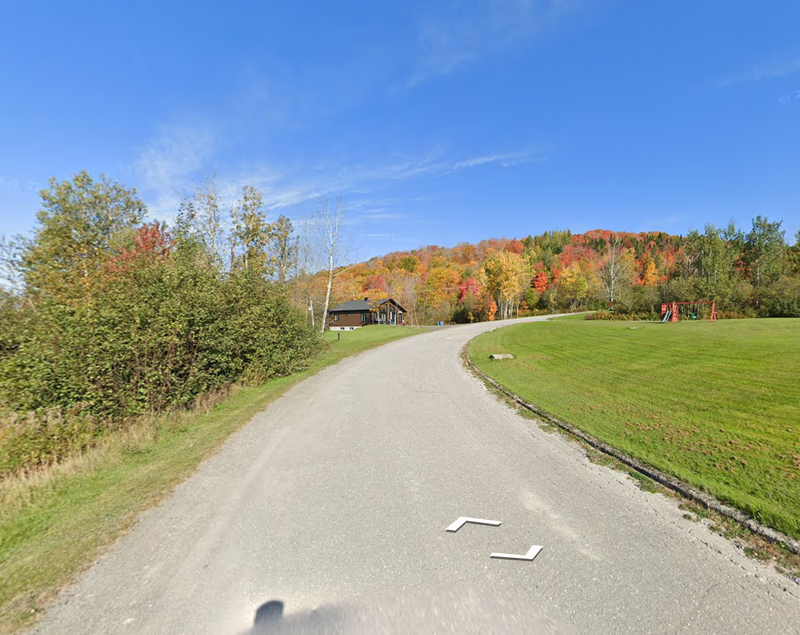
South of the St. Lawrence River in Québec a rolling landscape can be seen with a mix of pines (mostly Eastern White pine) and broadleaf trees. This area is part of the Appalachian Mountains so it can look a lot like the neighbouring states of the US (Maine, Vermont or New Hampshire).
Note: The elevation gets much higher as you get to the Gaspé peninsula in the East.
Canada (CA)
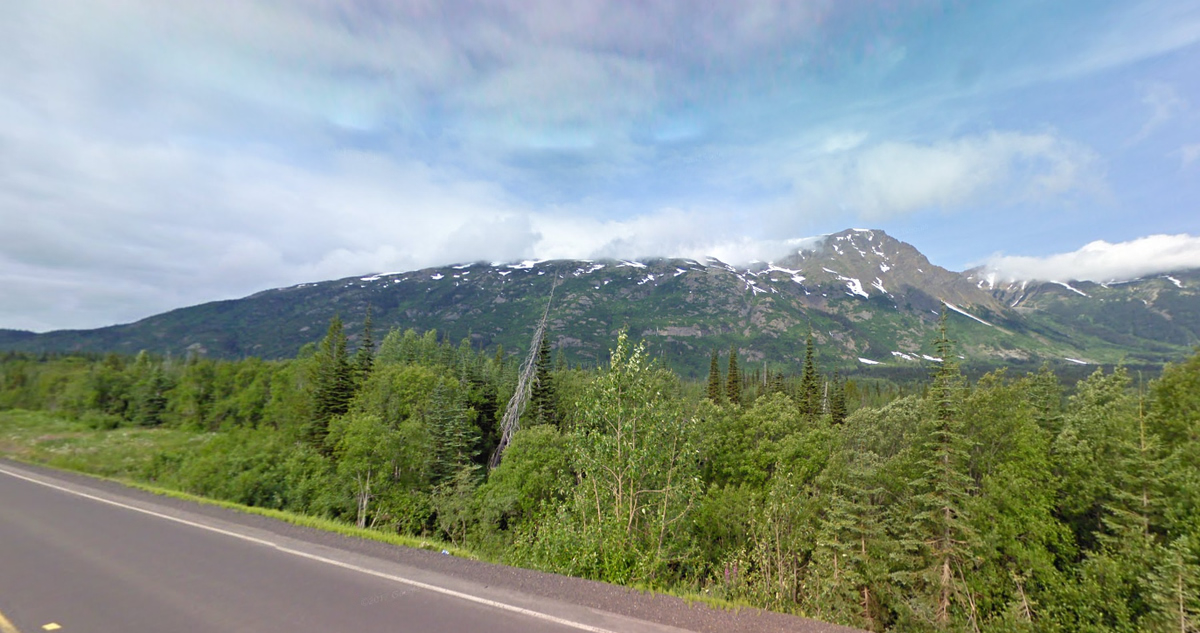
Northwestern British Columbia can be recongised by its large, often snow-capped mountains, tall but thin evergreens, low green bushes, boreal mosses and flowers. The roads north of 37A still have Gen 2 coverage, adding to the remote, Alpine vibes.
Note: The extreme Northwest near the Yukon border has ominously gray, cloudy weather.
Canada (CA)
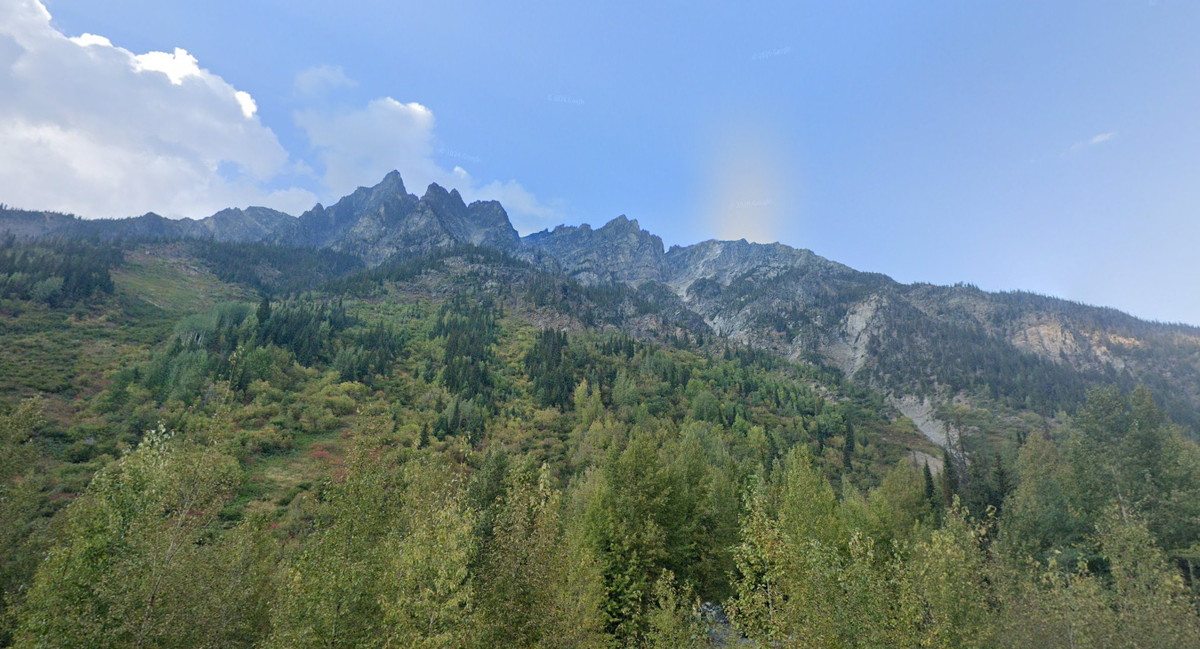
To distinguish the Canadian Rockies from the Coast Mountains and other ranges in Western Canada, you can look for sharp, treeless mountaintops and exposed rocks of a lighter colour.
Canada (CA)
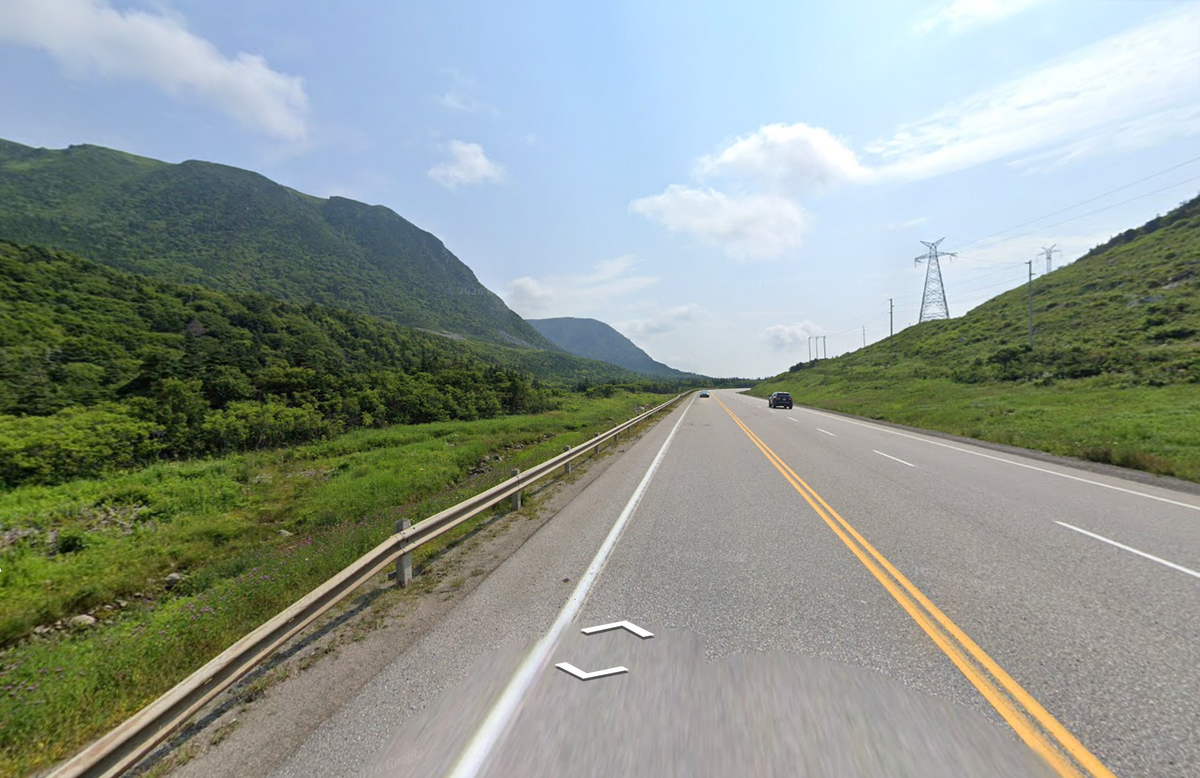
The Southwestern edge of Newfoundland has a very distinct looking green mountain range visible from the Trans-Canada Highway.
Canada (CA)
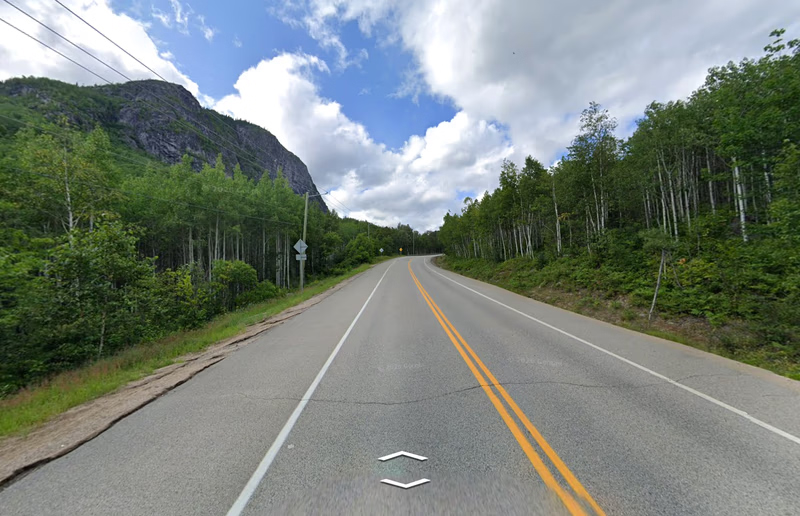
North of the St. Lawrence River you can see the Laurentian Mountain Range. The densely forested mountains get taller the further East you go with some impressive heights just North of Québec City.
Note: The Laurentides are part of the Canadian Shield, so exposed rocks lining the road in a green montainous environment is a good clue for the area. You won't get mountains of this size in Ontario.
Canada (CA)
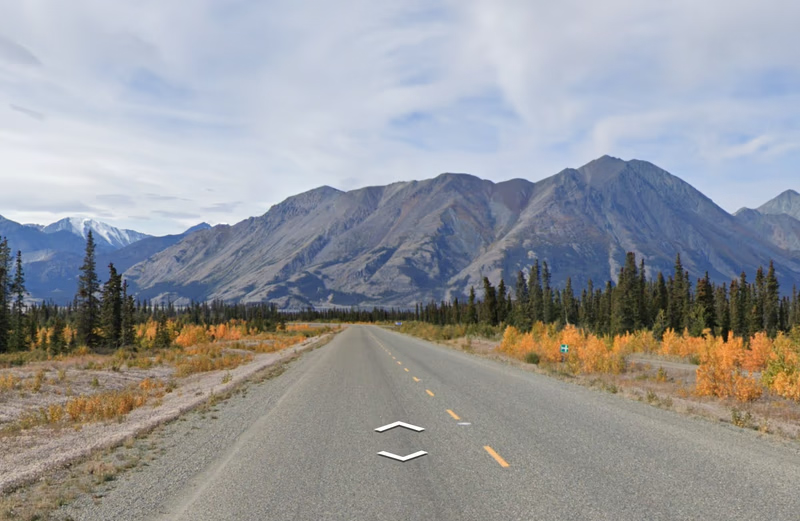
Mountains in Yukon are mostly treeless and brownish of colour. They are usually seen in the distance
Canada (CA)
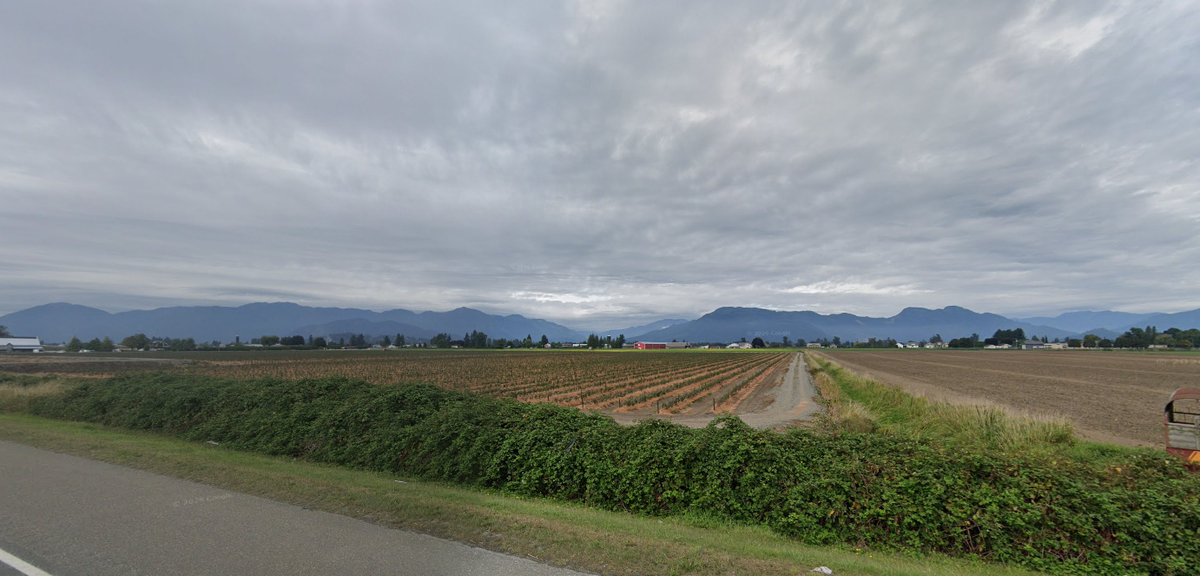
British Columbia has 3 main areas with flat land:
Canada (CA)

The Northeastern region of British Columbia is known for its rolling hills and vast boreal forests with white aspen trees. Aside for a short section of the BC-97 going through the Northern Rockies, there is no coverage with tall mountains here.
Canada (CA)
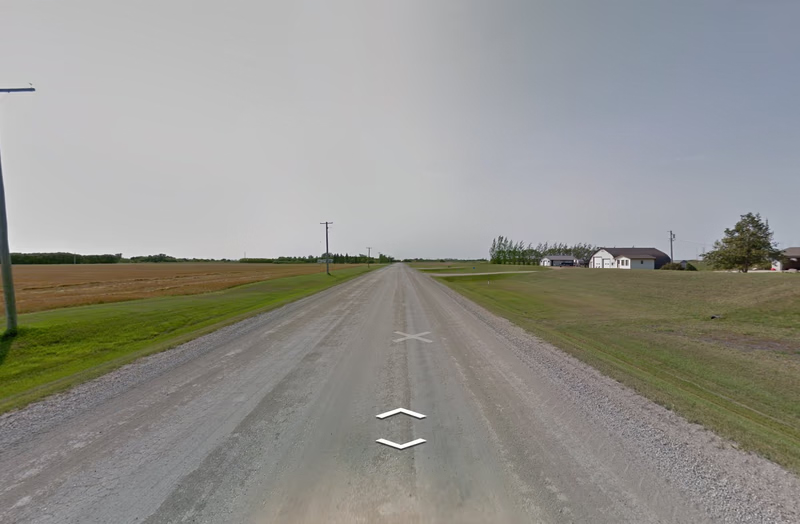
The typical Manitoban landscape features a mix of gently rolling hills and flat agricultural fields with patches of aspen parks in between. The open Prairie-like parts are in the South / Southwest, then you see a gradual transition into the boreal pine forest as you move Northeast.
Canada (CA)
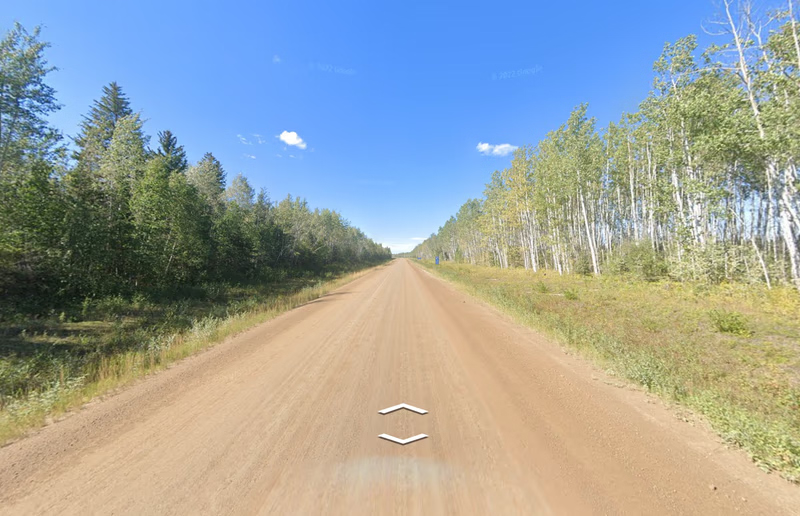
Southern Northwest Territories has a distinct vibe to it, featuring similar tall and skinny looking pines to Yukon but on a way flatter landscape.
Note: The whole Southern coverage is extremely sunny, except for some roads North and South of the Great Slave Lake.
Canada (CA)
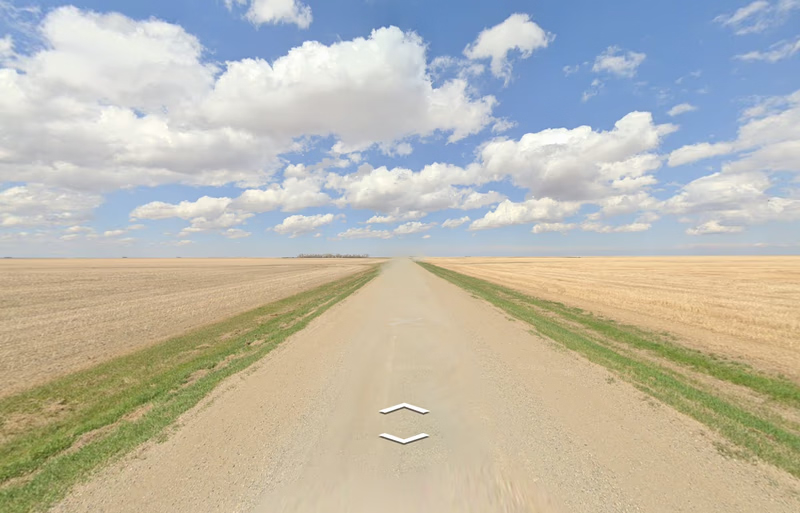
Saskatchewan is a very flat province - even by Prairies standards.
Note: Do no forget about the barren Cypress Hills of the Far Southwest!
Canada (CA)

In the extreme Southwest of Alberta you will find slightly rolling, grassy fields with the Southern Rockies visible to the West.
Canada (CA)
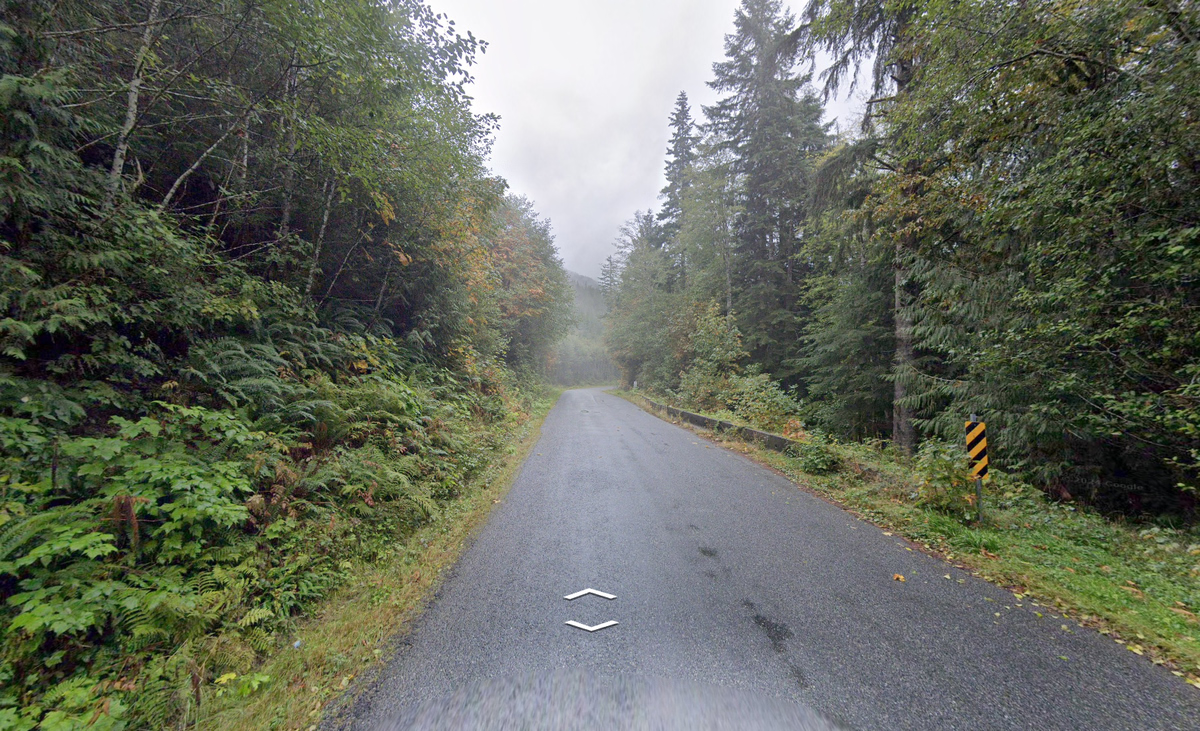
Parts of Vancouver Island is covered by a temperate rainforest. Trees are even taller and denser here than in most other parts of the province.
Note: Gen 3 is still quite common on Vancouver Island.
Canada (CA)
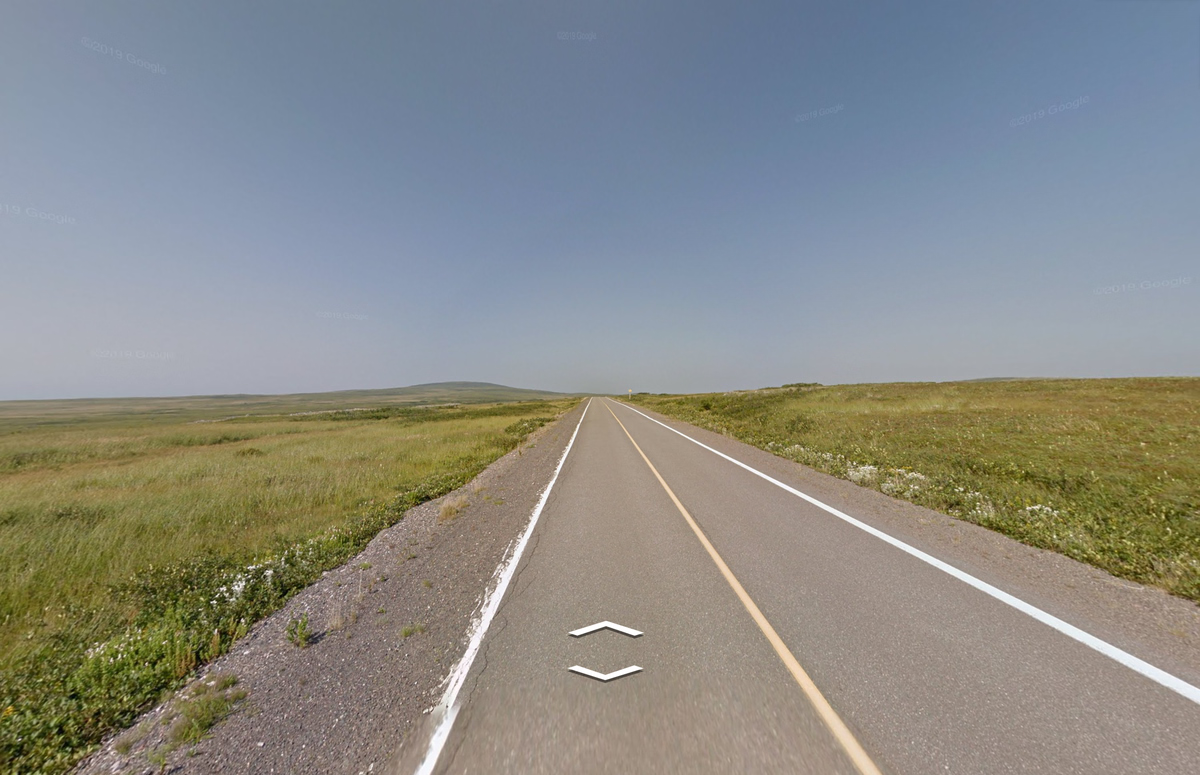
The Burin Peninsula in the far South of Newfoundland has a distinctly dry and barren landscape.
Note: The general South of Newfoundland tends to be dryer and have fewer trees than the rest of it.
Canada (CA)
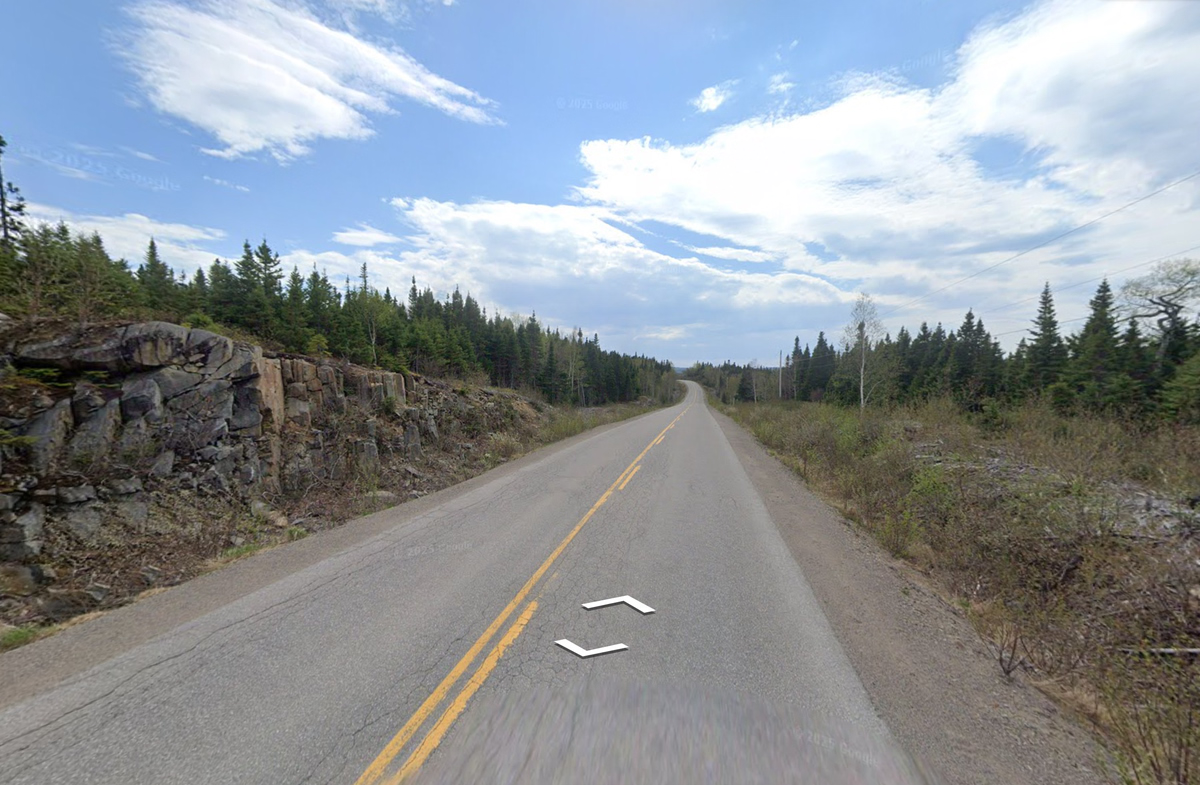
Just like in Ontario, it is common to find exposed rock lining the road in Newfoundland.
Canada (CA)
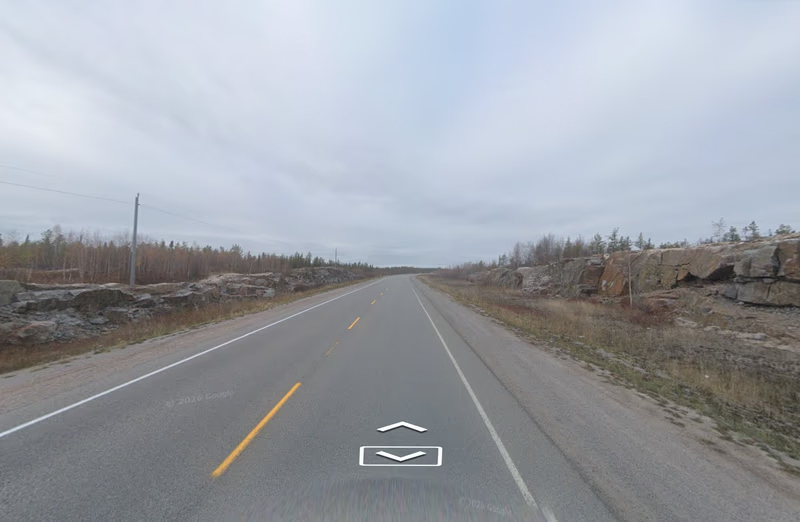
If you see exposed rocks by the road in the far Northwest, you are just North of the Great Slave Lake around Yellowknife (Roads NT-3 and 4).
Note: This is the Westernmost edge of the Canadian Shield.
Canada (CA)
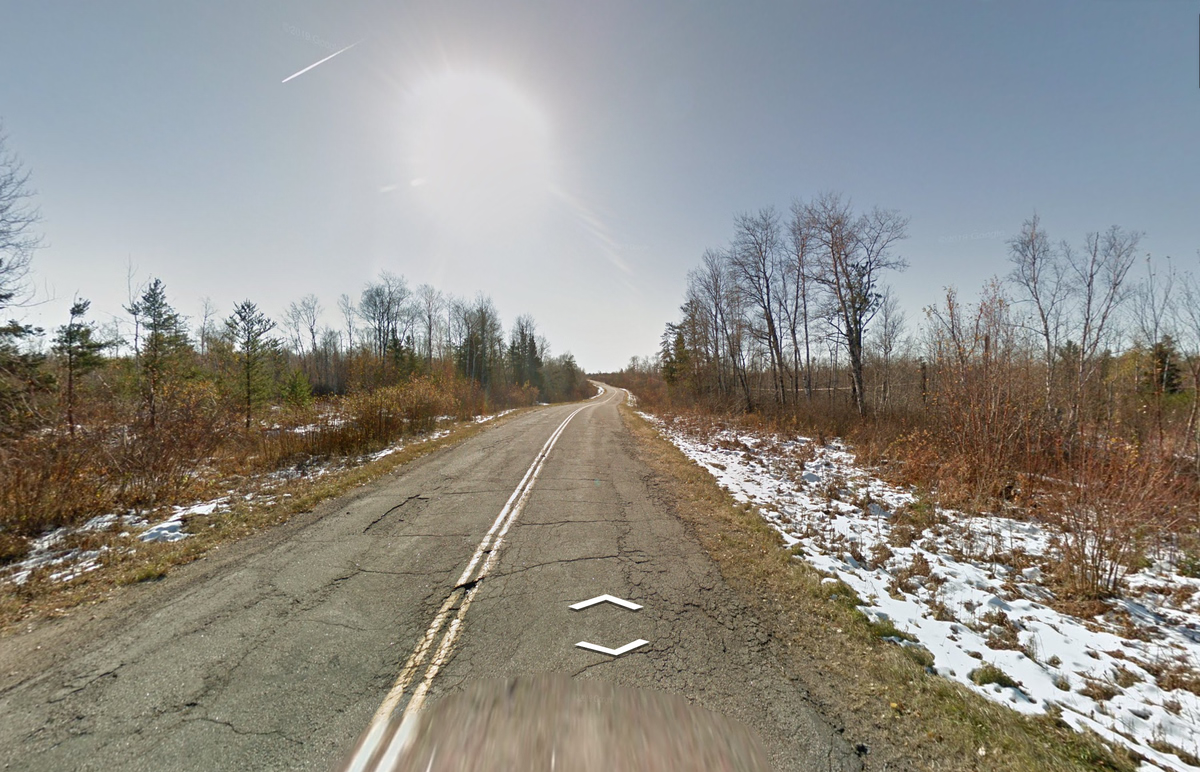
East of Winnipeg, nearby the border with Ontario 2 roads with patchy snow coverage can be found (MB 307 and the Eastern part of Hwy 44). The images were taken in October (copyright is 2019) with a Gen 3 camera, so there is a distinct Autumnal feel to them. The landscape is hilly and forested.
Canada (CA)
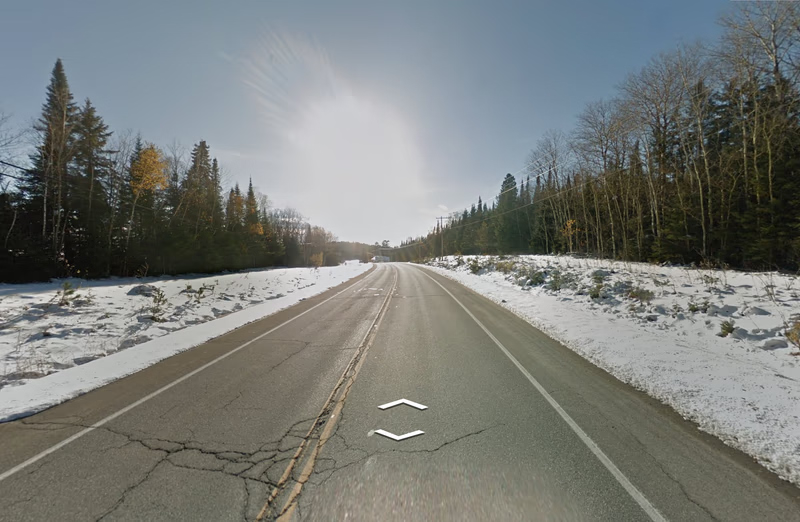
While most of the sunny Gen 3 snow coverage in Northwestern Ontario has been overwritten, there are still a few roads left where you can see it.
Full snow coverage:
Patchy, melting snow:
Canada (CA)
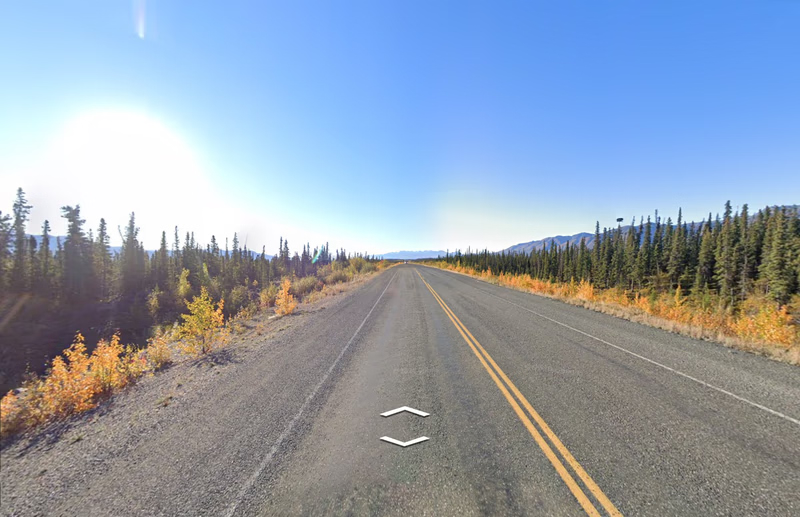
The newer Gen 4 coverage in Yukon was captured in September (©2022). It is easy to recognise from the extremely vibrant yellow-orange Autumn colours.
Note: Yukon has only Gen 2 and Gen 4.
Canada (CA)
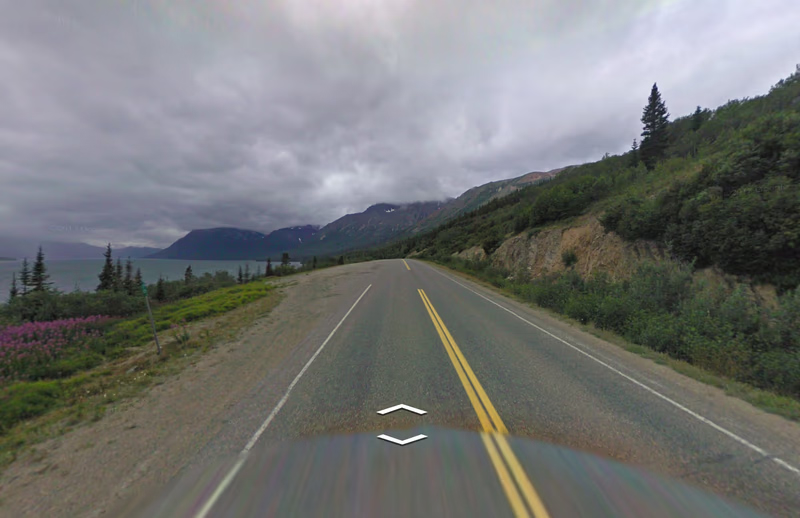
Gen 2 coverage with very gloomy, cloudy weather can be found on both sides of the BC - Yukon border.
Note: The pictures were taken in July so you can sometimes see pink fireweed around. (©2019)
Canada (CA)
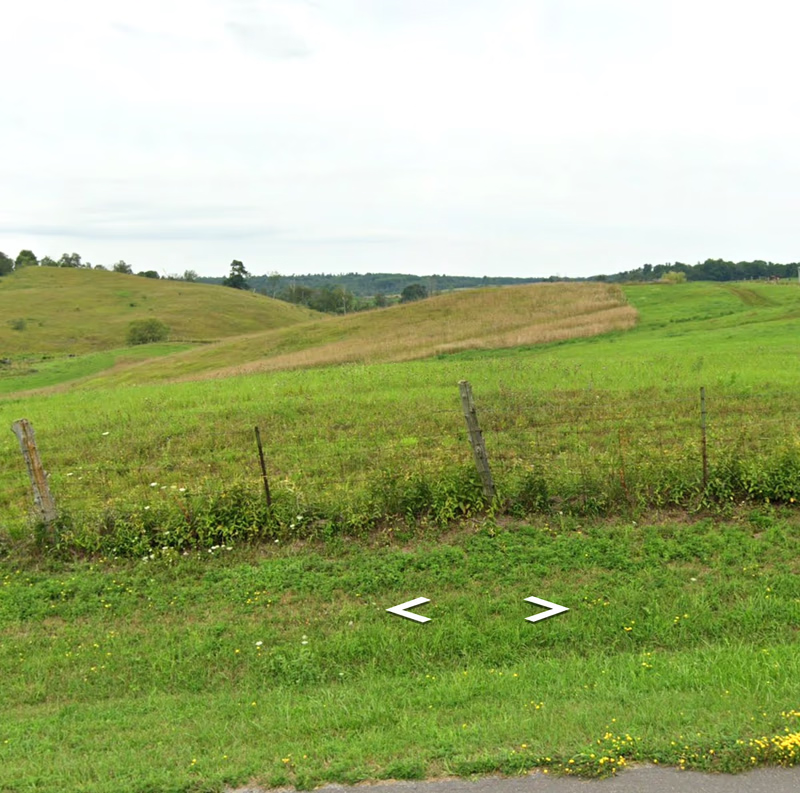
Wooden fences in Ontario are usually quite knotty and uneven. Prairie fences are smoother with a flat top.
Note: These fences are typically found in agricultural areas (St. Lawrence Lowlands and the Clay Belt).
Canada (CA)
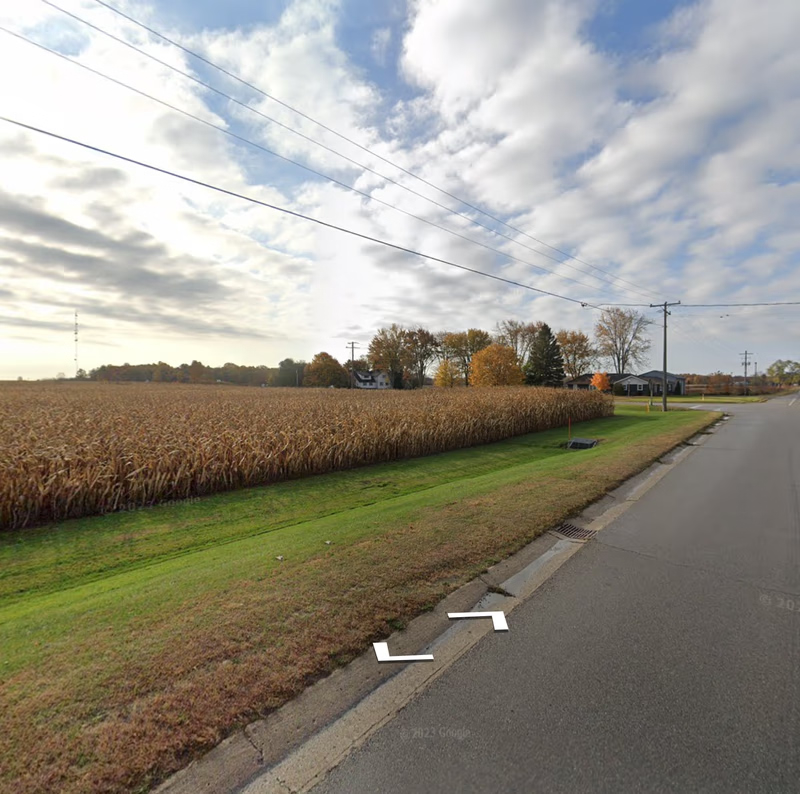
Most of Canada's corn production happens in Southern Ontario and Québec, in the St. Lawrence Lowlands.
Note: Wheat and canola are more common in the Clay Belt and the Prairies.
Canada (CA)
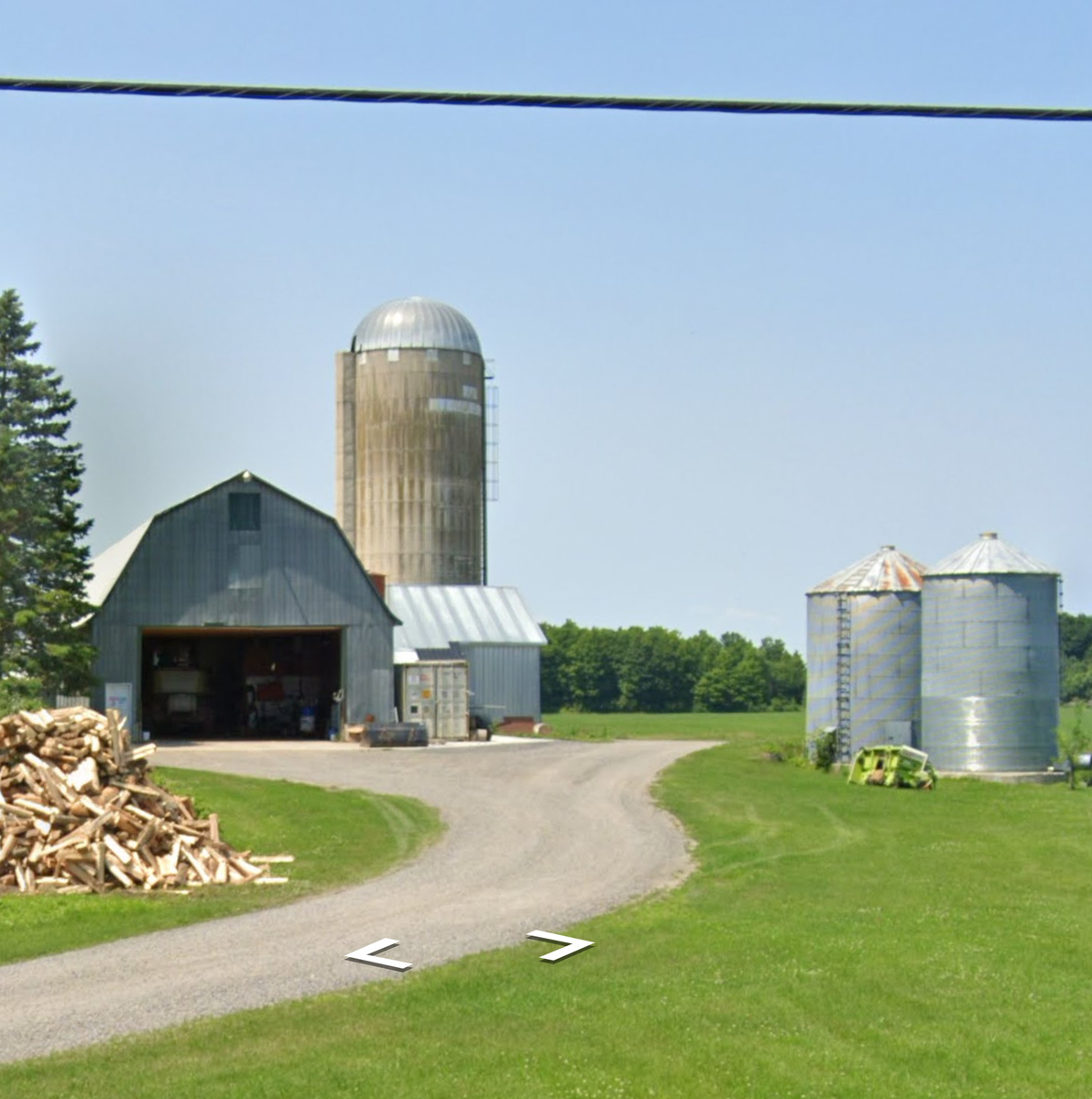
The farms on the St. Lawrence Lowlands have a very unique architectural style. The most distinct are the white top circular grain silos and the roof shape of the stables.
The following elements are more typical for Ontario (and extreme SW Québec) than Québec:
Canada (CA)

Wooden fences on the Prairies tend to be smooth, with a flat top. (Fences in Ontario usually have knots and are of worse quality).
Canada (CA)
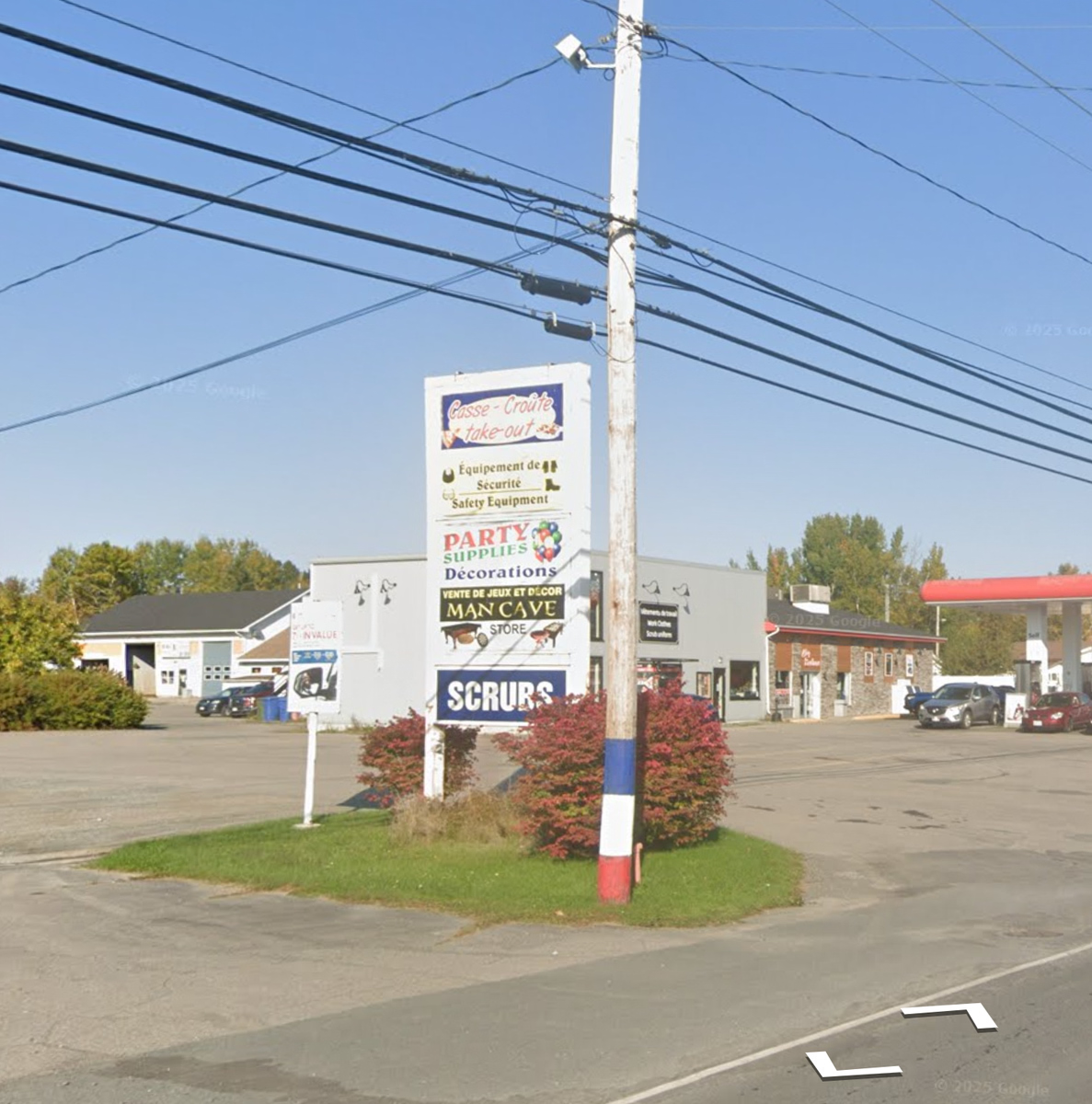
You can subdivide New Brunswick by how much French language you can see around. The Northern counties and the East coast are Acadian territory where most text will be bilingual (or French only). In the Central and Southern counties the usage of French will be limited to street signs and official buildings.
Canada (CA)
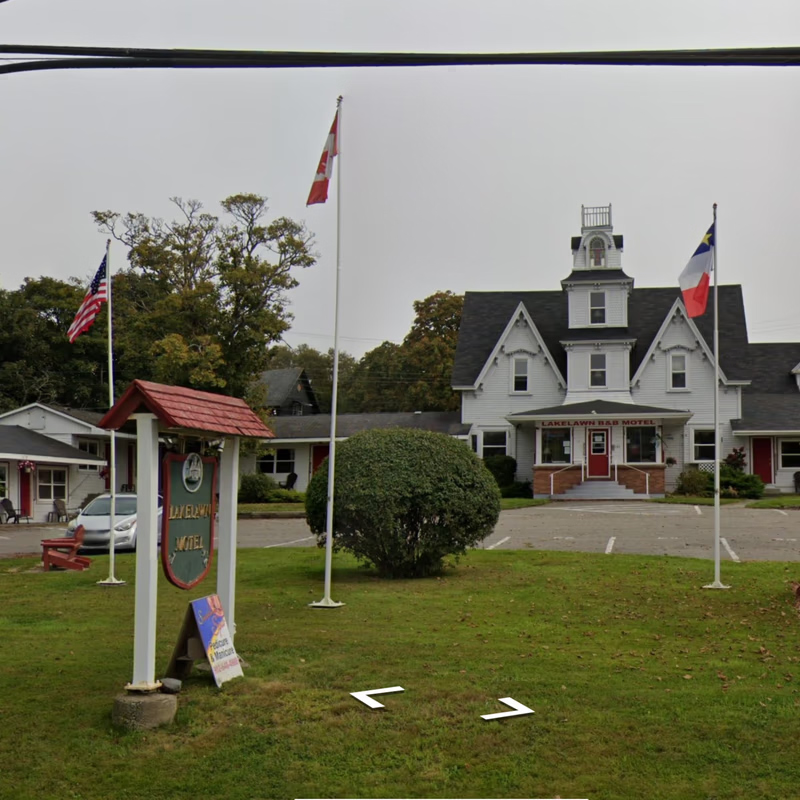
A little more than 10% of the inhabitants of Nova Scotia are bilingual. The most prominent Francophone areas are found on the Southern coast (centered around Yarmouth), the West coast of Cape Breton Island (Chéticamp, Margaree Harbour) and Southern Cape Breton Island (Isle Madame and surroundings). In these areas bilingual signs and the colours of the Acadian flag are a common sight.
Canada (CA)
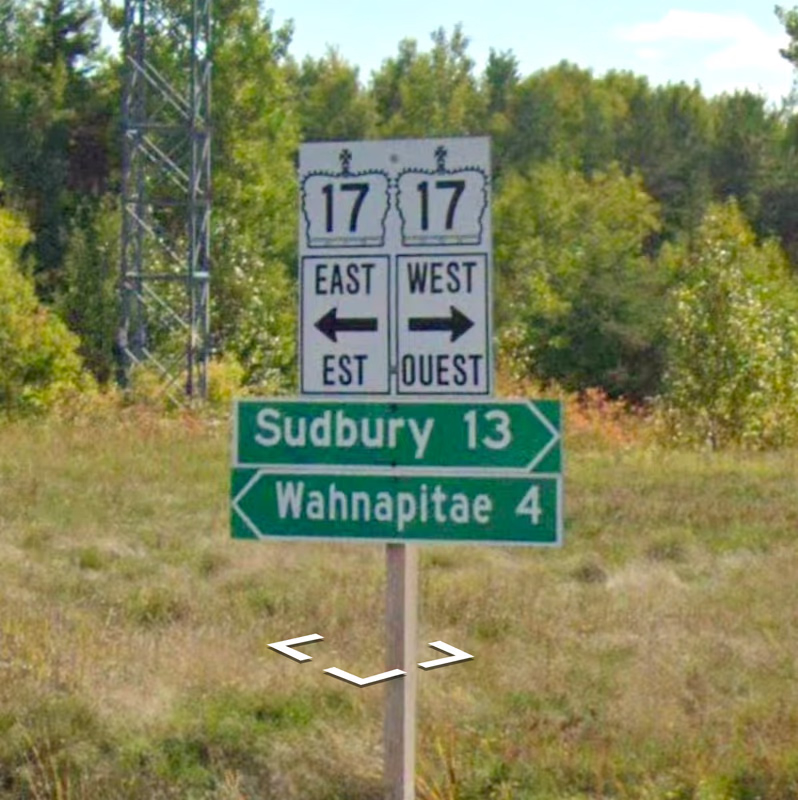
English-French bilingualism within Ontario is typically found in the East. Main areas include Greater Sudbury, the Ottawa area close to the Québec border and around Kapuskasing in the Northeast.
Note: The region East of Sudbury has an excessive amount of bilingual signage.
Canada (CA)
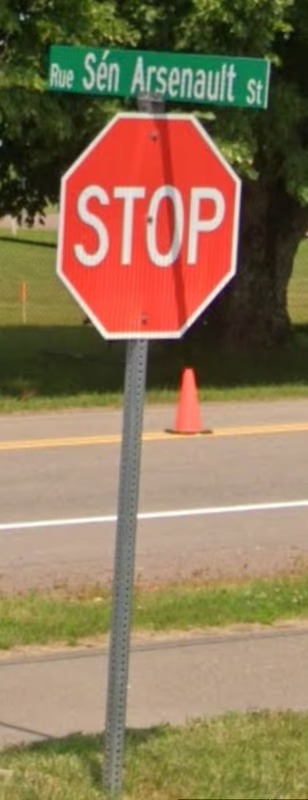
Bilingualism on Prince Edward Island is regional: it is more present in the West, especially in the Evangeline region (West of Summerside). Despite this, most street signs will be bilingual in the province, while the STOP signs will be in English only.
A Comprehensive Canada - Regionguessing covers 172 metas in Canada. Every one of them shows up in practice until you can place it from memory.


%20--%3e%3csvg%20version='1.1'%20id='Layer_1'%20xmlns='http://www.w3.org/2000/svg'%20xmlns:xlink='http://www.w3.org/1999/xlink'%20x='0px'%20y='0px'%20width='16px'%20height='16px'%20viewBox='0%200%2016%2016'%20style='enable-background:new%200%200%2016%2016;'%20xml:space='preserve'%3e%3cstyle%20type='text/css'%3e%20.st0{fill:%2357AEFF;}%20.st1{fill:%237A6BFF;}%20.st2{fill:%23AB5CFF;}%20.st3{fill:%23FF7DC0;}%20.st4{fill:%23FFBE57;}%20.st5{fill:%2373E61C;}%20.st6{fill:%23FF6242;}%20.st7{fill:%23F2F2F2;}%20.st8{fill:%23696969;}%20.st9{fill:%23FF3029;}%20.st10{fill:%23131F24;}%20.st11{fill:%23F1F7FB;}%20.st12{fill:%23EE5555;}%20.st13{fill:%2349C0F8;}%20.st14{fill:%233F85A7;}%20.st15{fill:%231CB0F6;}%20.st16{fill:%2393D333;}%20.st17{fill:%2379B933;}%20.st18{fill:%23FFAB33;}%20.st19{fill:%23FFC700;}%20.st20{fill:%23D84848;}%20.st21{fill:%23FB7185;}%20.st22{fill:%23DCE6EC;}%20.st23{fill:%2352656D;}%20.st24{fill:%2337464F;}%20.st25{opacity:0.5216;fill:%23FF3029;}%20.st26{opacity:0.5216;fill:%23F2F2F2;}%20.st27{clip-path:url(%23SVGID_2_);fill:%23F2F2F2;}%20.st28{clip-path:url(%23SVGID_4_);fill:%23F2F2F2;}%20.st29{clip-path:url(%23SVGID_6_);fill:%23F2F2F2;}%20.st30{clip-path:url(%23SVGID_8_);fill:%23F2F2F2;}%20.st31{clip-path:url(%23SVGID_10_);fill:%23F1F7FB;}%20.st32{clip-path:url(%23SVGID_12_);fill:%23F1F7FB;}%20.st33{fill:none;stroke:%2393D333;stroke-width:0.3;stroke-miterlimit:10;}%20%3c/style%3e%3cpath%20class='st13'%20d='M16,0.55v14.9c0,0.31-0.41,0.56-0.91,0.56H0.92C0.41,16,0,15.75,0,15.44V0.55C0,0.25,0.41,0,0.92,0h14.16%20C15.59,0,16,0.25,16,0.55z'/%3e%3cpath%20class='st11'%20d='M5.83,15.25V1.17c0-0.37,0.3-0.67,0.67-0.67h3.66c0.37,0,0.67,0.3,0.67,0.67v14.08c0,0.37-0.3,0.67-0.67,0.67%20H6.5C6.13,15.92,5.83,15.62,5.83,15.25z'/%3e%3cpath%20class='st12'%20d='M6.89,5.32V2.35c0-0.43,0.35-0.78,0.78-0.78h1.13c0.43,0,0.78,0.35,0.78,0.78v2.97c0,0.43-0.35,0.78-0.78,0.78%20H7.68C7.24,6.1,6.89,5.75,6.89,5.32z'/%3e%3cpath%20class='st17'%20d='M16,14.49v0.96c0,0.31-0.41,0.56-0.91,0.56H0.92C0.41,16,0,15.75,0,15.44v-0.96H16z'/%3e%3c/svg%3e)


 19
19
 Browse all theory →