Back

Metas in Russia - Basic Module

16 metas (location clues) in Russia - Basic Module: tag names, country, example imagery, and a short explanation for each.

Russia - Basic Module

@njacked40 plays16 metas

Exam Score

— / 100
— / 100
Legendary medal
16
Russia flagA type short antenna
Russia flagAltai Republic main road
Russia flagB type short antenna
Russia flagB-type short (pronounced) antenna
Russia flagBuryatia
Russia flagKaliningrad
Russia flagKamchatka
Russia flagMurmansk
Russia flagOmsk adjacent
Russia flagRed car gen 4 (summer)
Russia flagSakha/Magadan
Russia flagSakhalin
Russia flagShort blurred antenna
Russia flagSochi adjacent
Russia flagTilted short antenna
Russia flagWinter gen 4

How it looks

A type short antenna

Russian Federation

Explanation

A Type has the uppermost ridge located on the right side of the antenna. Common areas include:

  • Southwest of Moscow: will have a Moscow look to it. Kaluga works as a great hedge for this coverage.

  • Orenburg adjacent: A dry, autumn look to it. Often has hills.

  • Krasnodar: Very lush looking, lack of birch trees. Can have a variety of landscape from Flat in the north to mountainous on the south coast.

All 16 metas in Russia - Basic Module — full text

A type short antenna

Russian Federation (RU)
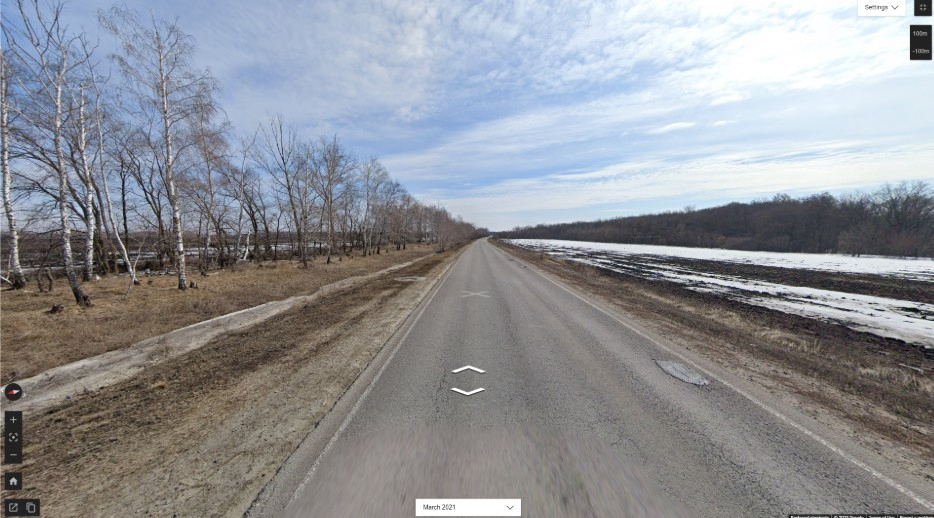
A type short antenna — how it looks in GeoGuessr

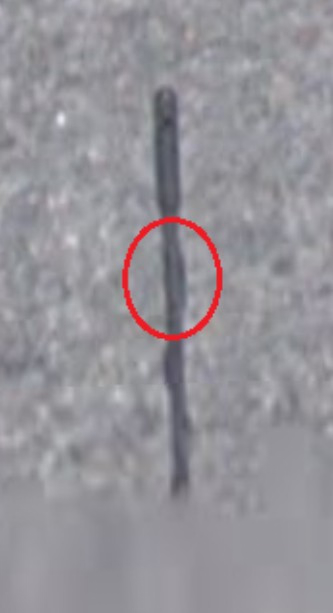
A Type has the uppermost ridge located on the right side of the antenna. Common areas include:

  • Southwest of Moscow: will have a Moscow look to it. Kaluga works as a great hedge for this coverage.

  • Orenburg adjacent: A dry, autumn look to it. Often has hills.

  • Krasnodar: Very lush looking, lack of birch trees. Can have a variety of landscape from Flat in the north to mountainous on the south coast.
Altai Republic main road

Russian Federation (RU)

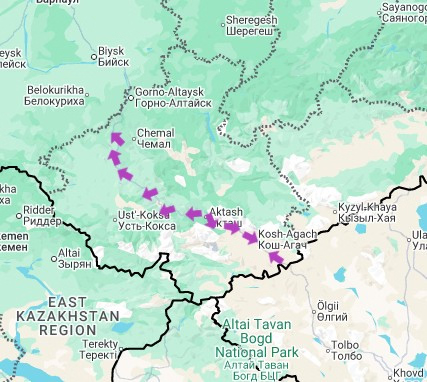
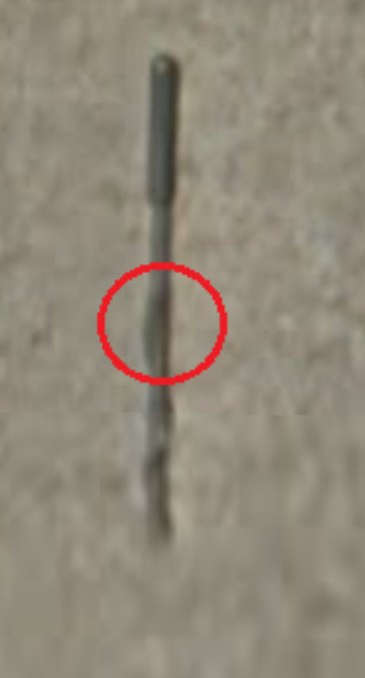
Altai Republic main road — how it looks in GeoGuessr

Altai Republic has a black car long antenna driving north through the Altai Mountains, often with foggy or rainy coverage. While it has a generic antenna, the landscape is sufficient for the 400+ kilometer stretch of coverage.
The southernmost extent of the coverage will be much dryer looking, often resembling Tuva or Mongolia.

B type short antenna

Russian Federation (RU)

B type short antenna — how it looks in GeoGuessr

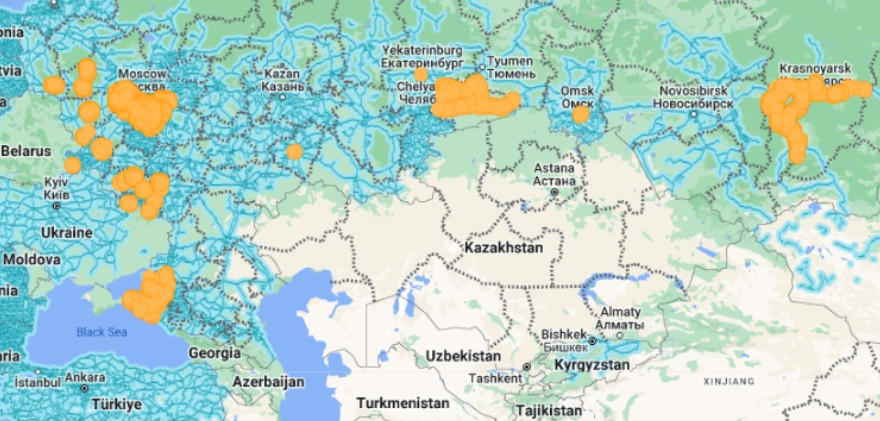
B Type has the uppermost ridge located on the left side of the antenna. This is the most important antenna to learn as it spreads across the most clusters out of any short antenna. Common areas include:

  • East of Moscow: this coverage is characterized as having sandier roadsides, often called "Nizhny sand". It's also quite flat.

  • Northern & eastern Ukraine border: this coverage really just resembles Ukraine a lot. Rolling hills, Agricultural fields, lush looking.

  • Roads surrounding Elista: AKA Kalmykia; extremely dry and desert looking coverage, very flat too.

  • Orenburg: mostly downtown city coverage, but also quite dry looking. The road directly south of Orenburg features distinct fog.

  • Yekaterinburg adjacent: sometimes very hard to tell apart with the east of Moscow cluster, but I like to think that this cluster commonly has darker roadsides. It's more common to have hilliness here than it is east of Moscow.

  • Novosibirsk adjacent: can look similar to Yekaterinburg adjacent and east of Moscow, but there are much more Asian looking vehicles here. This coverage has "back smudges" to the back left and right of driving direction. These smudges can be used to rule out Yekaterinburg adjacent and east of Moscow clusters, as those clusters have "Front smudges" (most of the time).

B-type short (pronounced) antenna

Russian Federation (RU)

B-type short (pronounced) antenna — how it looks in GeoGuessr

B type short pronounced differs from regular b type short by the shape of the uppermost ridge which is more rectangular in the B pronounced version. Common areas include:

  • Moscow: Will look more like a standard western Russia, or otherwise Moscow look to it. There are more smaller roads covered around Moscow with this antenna compared to Kurgan.

  • Kurgan: This antenna coverage in Kurgan consists of mostly bigger roads, so urban coverage is less common. The landscape will mostly look Omsk-like, with birch clusters and flat open fields.

  • Krasnodar: Krasnodar is the only main cluster of this antenna in the south. This coverage should have a typical Krasnodar feel to it; it can be either flat and dry looking with a lack of birches, or tropical and very hilly along the coast of the Black Sea.

  • Krasnoyarsk adjacent: This coverage is almost always hilly; many northern looking trees will surely put you near Krasnoyarsk city, but if it's more dry looking and not forested at all, then you will be closer to Abakan. Also, much of this coverage features a strong haze.

Buryatia

Russian Federation (RU)

Buryatia — how it looks in GeoGuessr

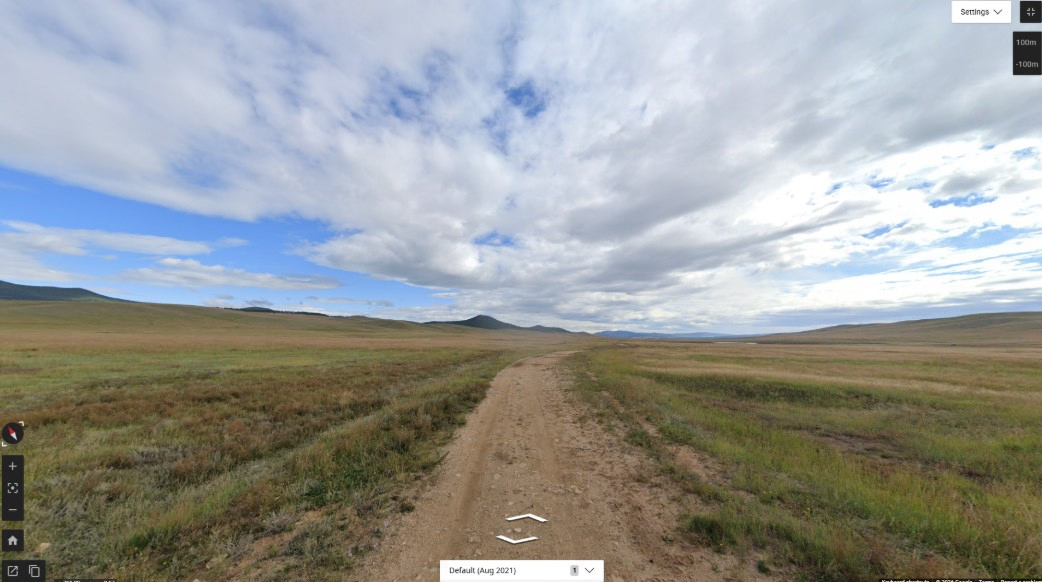
Buryatia is characterized by its vast mountainous landscapes, with often no trees or sparse trees.
Most of it is gen 4 with no car.
The city of Ulan-Ude has red car.
In the eastern parts of Buryatia, you’ll often find yourself on a relatively flat surface with either no mountains or huge mountains in the distance. Siberian larches will often fully surround you.

Kaliningrad

Russian Federation (RU)

Kaliningrad — how it looks in GeoGuessr

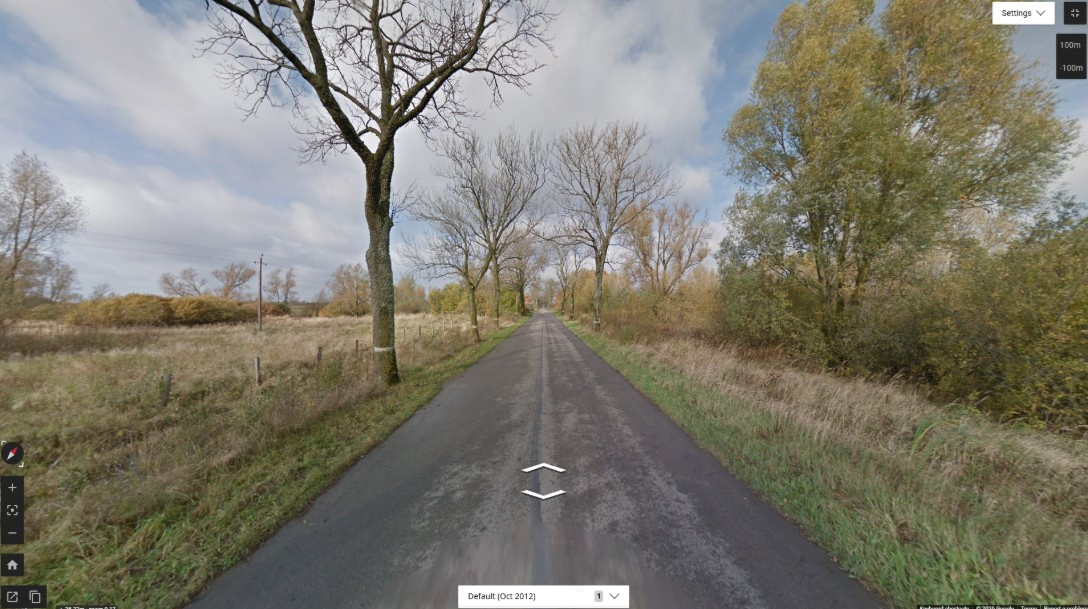
Gen 3 Autumn coverage, long black antenna
Often has these trees sparsely placed along the road with white marks on them.
The Kaliningrad Google car is known for having a bigger brake light than usual. Note that some white/silver car coverage may have this same brakelight, but they aren’t black car unlike Kaliningrad.

Kamchatka

Russian Federation (RU)

Kamchatka — how it looks in GeoGuessr

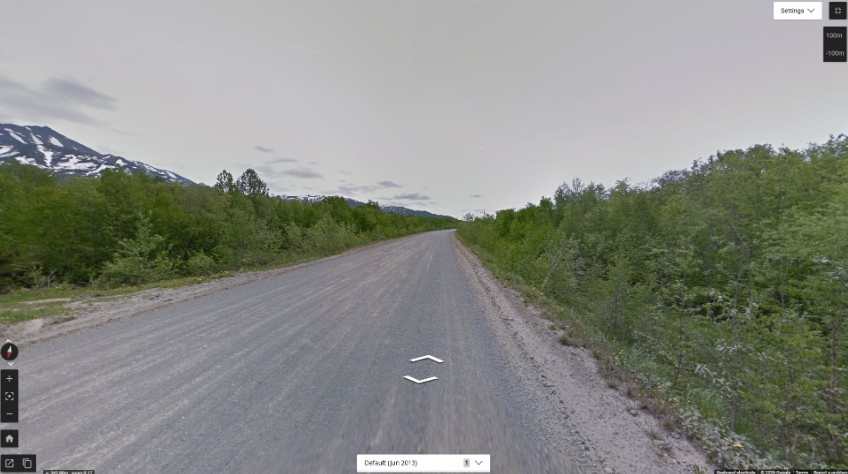
Kamchatka is characterized by its unique snow capped mountains and otherworldly feel. Its volcanic soil spreads all throughout the region, so even if you don’t have mountains in sight, the soil color can give it away.
Kamchatka will always have a silver car with a long antenna, which means it’s B-type. It being B-type will separate it from other eastern areas that have a white car instead, because white car has A-type.

Murmansk

Russian Federation (RU)

Murmansk — how it looks in GeoGuessr

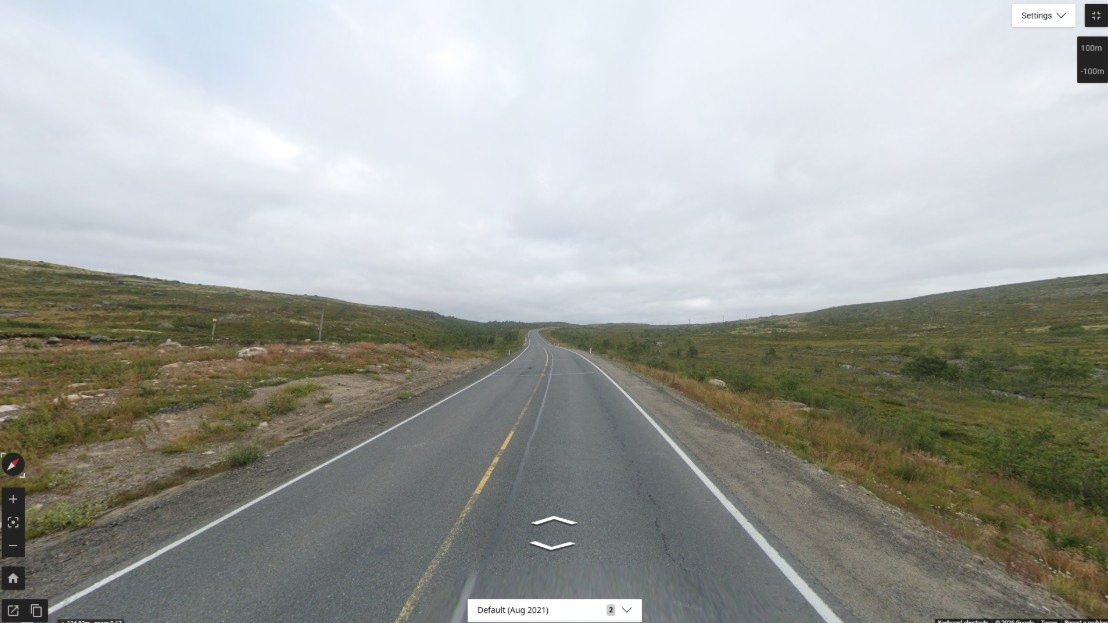
Much of Murmansk closely resembles far north nordic countries. The road seen in is very rocky, with a rolling landscape but no mountains. Barely any trees as well.
All of gen 4 Murmansk was covered in August and September, so nearly every tree should resemble autumn in some way.
Black car gen 4 can rarely be seen, but for the most part it should be gen 4 no car.

Omsk adjacent

Russian Federation (RU)

Omsk adjacent — how it looks in GeoGuessr

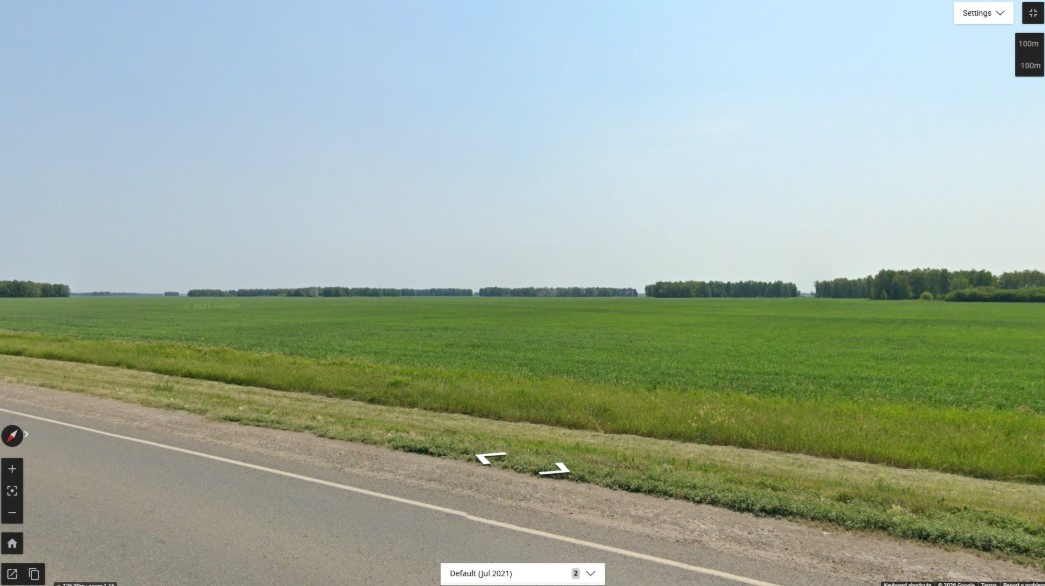
Super flat landscape, very common to see birch clusters.
This landscape is common in the oblasts surrounding Omsk and further east.
This landscape + no car gen 4 is mostly going to be Omsk.

Red car gen 4 (summer)

Russian Federation (RU)

Red car gen 4 (summer) — how it looks in GeoGuessr

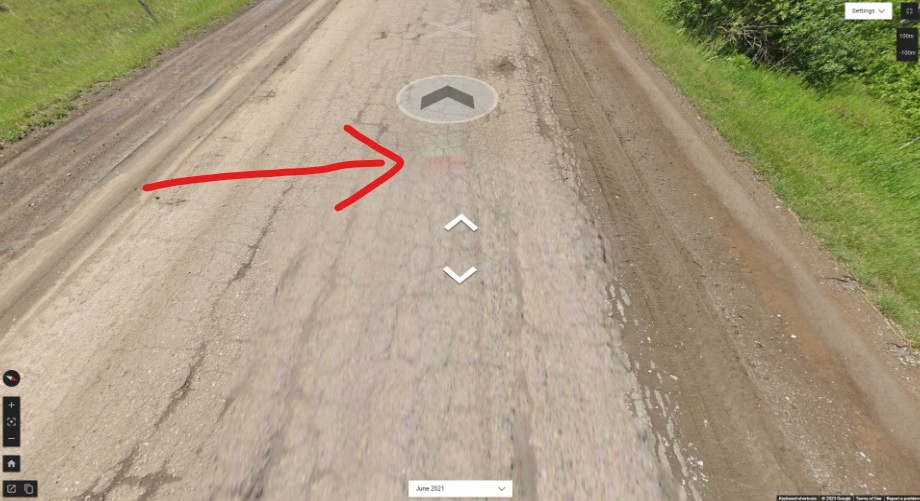
Red car gen 4 is a type of Google car with a noticeable red blur at the front of the car. While appearing in both winter and summer, the summer coverage is the focus at a basic learning level because it's only located east. Common areas include Surgut adjacent, as well as the main yellow road that goes from Omsk to nearly Irkutsk

Sakha/Magadan

Russian Federation (RU)

Sakha/Magadan — how it looks in GeoGuessr

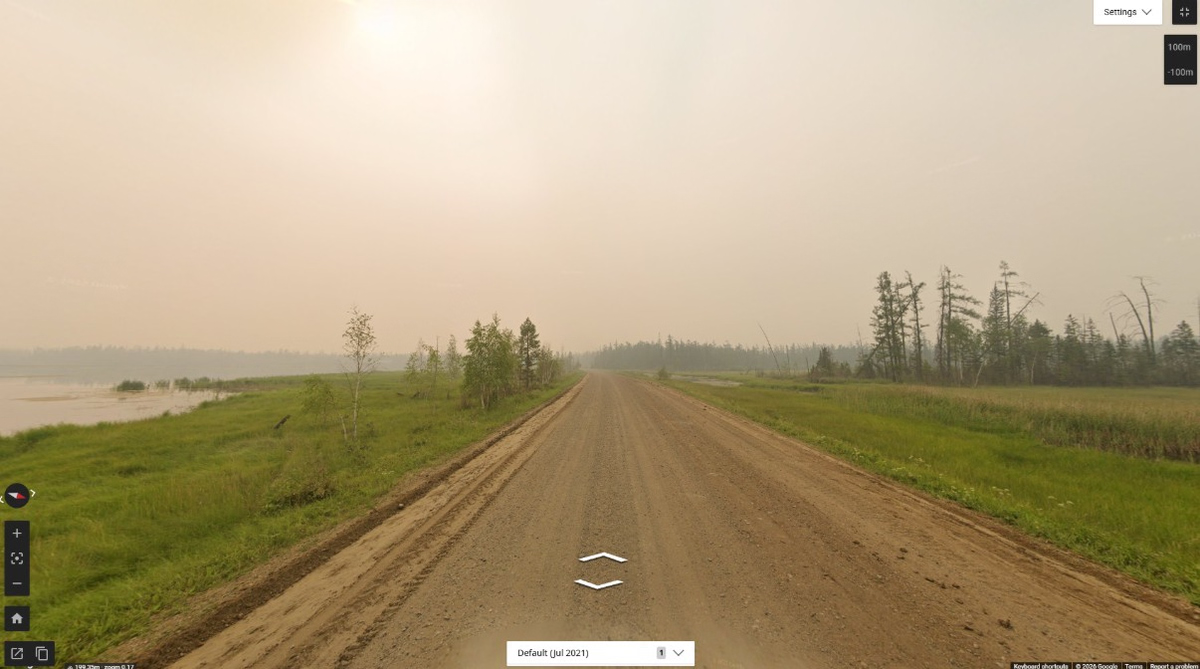
The best way to tell apart these two is the landscape. Sakha haze coverage west of Yakutsk will almost always be flat. Magadan on the other hand will almost always be mountainous
Both areas may feature white car gen 4, but it’s harder to see in Magadan on some occasions.
Both areas have siberian larches all over.

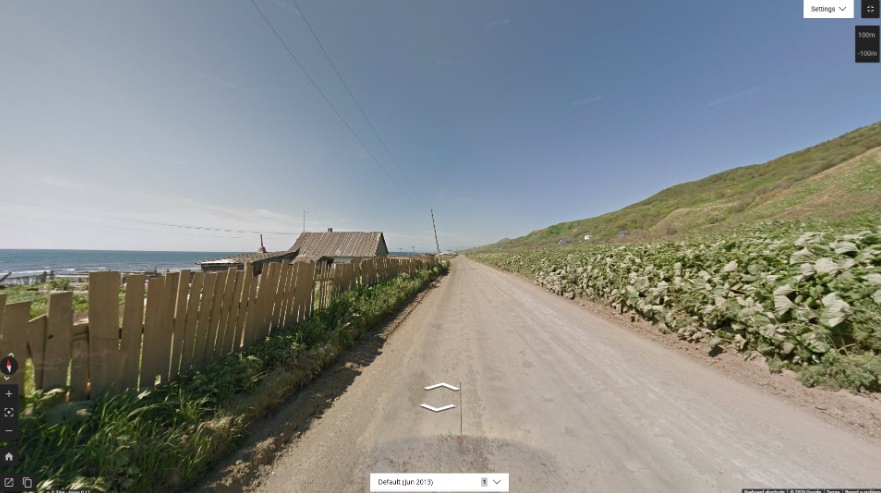
Sakhalin

Russian Federation (RU)

Sakhalin — how it looks in GeoGuessr

Sakhalin is one of the most distinct regions of Russia, due to it’s mountains, coastline, and cabbage. All of those may appear individually, but when you have all 3 at the same time, it makes for easy region identification.
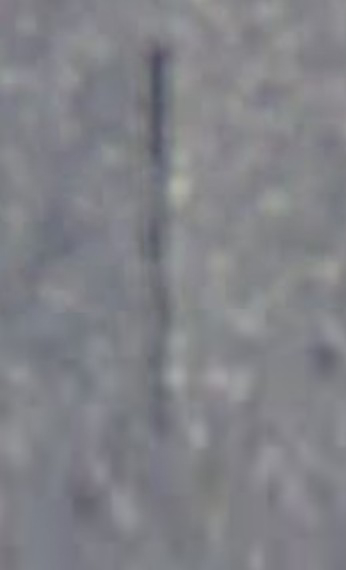
All of Sakhalin has a blurred long antenna, which separates it from regions such as Kamchatka or Primorsky Krai.
The more north you go in the oblast, the sandier it can appear. The area near Okha is a good example of that.
Almost every tree is a siberian larch.

Short blurred antenna

Russian Federation (RU)

Short blurred antenna — how it looks in GeoGuessr

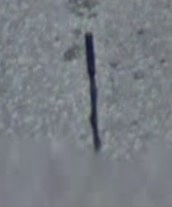
Short blurred antenna is simply just a much more blurred version than the normal short antenna. The two main clusters take place in the north and south. The north being near Kazan and Ufa, and the south being roughly the Caucasus region.

  • The south cluster of coverage will have a more dry and desolate feel, and you can often come across mountains, which don't appear in the north cluster.

  • The north cluster will often be much

Sochi adjacent

Russian Federation (RU)

Sochi adjacent — how it looks in GeoGuessr

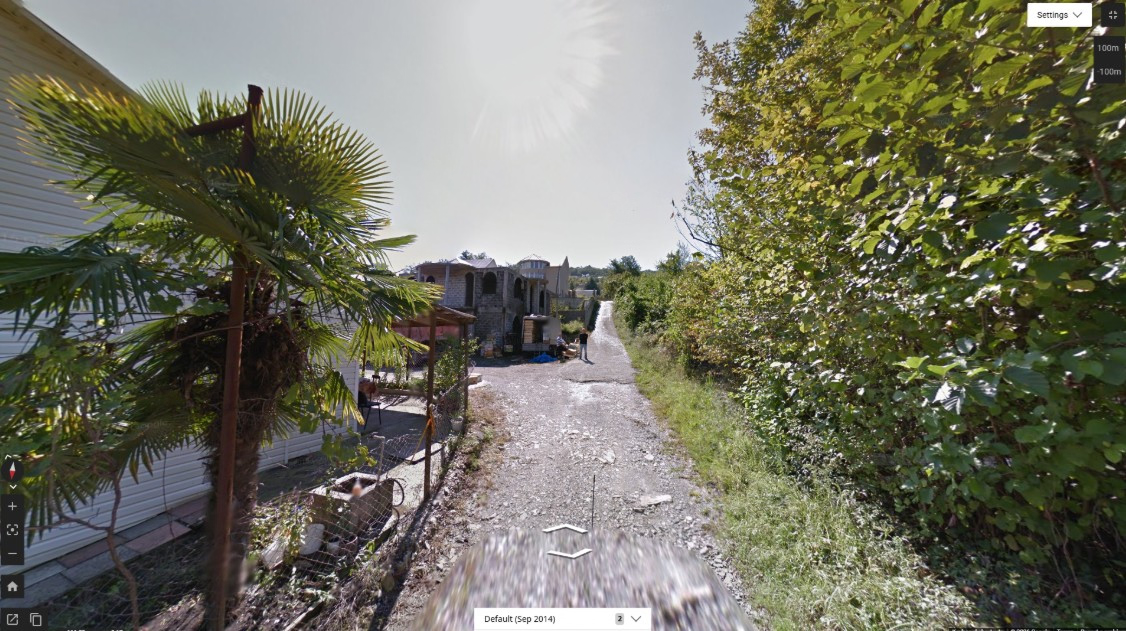
Sochi, otherwise coastal Krasnodar Krai, is the warmest region of Russia. It has lush vegetation, and commonly tropical plants as seen in the image above. It’s the only region of Russia to commonly feature tropical plants.
It’s often quite hilly, and sometimes mountainous.

Tilted short antenna

Russian Federation (RU)

Tilted short antenna — how it looks in GeoGuessr

Tilted antenna appears similar to the normal A type antenna, but it is slightly tilted left. The distribution is pretty distinct with this antenna, as I like to remember it as being a (roughly) diagonal line from St. Petersburg to Volgograd. One thing to note is the regions marked in pink are blurred tilted antenna. These are quite useful to know.

Winter gen 4

Russian Federation (RU)

Winter gen 4 — how it looks in GeoGuessr

Contains 3 months: February, March, April.
A good way to remember the coverage boundaries of Winter gen 4 is that it’s never north of Moscow, and never east of Ufa.
You will commonly see the most snowfall in Saratov, Voronezh, and Volgograd.
You will commonly see the greenest looking grass at the far northern and far southern extents of winter coverage.

What you'll learn on this map

Russia - Basic Module covers 16 metas in Russian Federation. Every one of them shows up in practice until you can place it from memory.

See all →