Metal panel roofs


Bangladesh
Roofs made from large sheet metal panels are usually found in the west. Chittagong city has many of them.
Chittagong is the region near the border with Myanmar and India
GeoGuessr theory · Region
Clues that help you narrow down south asia in GeoGuessr — from signage and road surfaces to regional plant life and architecture.
Last updated ·


Roofs made from large sheet metal panels are usually found in the west. Chittagong city has many of them.
Chittagong is the region near the border with Myanmar and India


In eastern Bangladesh, roofs often have a triangular shape. In Chittagong, this style is mixed with others.
They are most commonly seen in Sylhet


Tilted roofs are only found on the Indian border
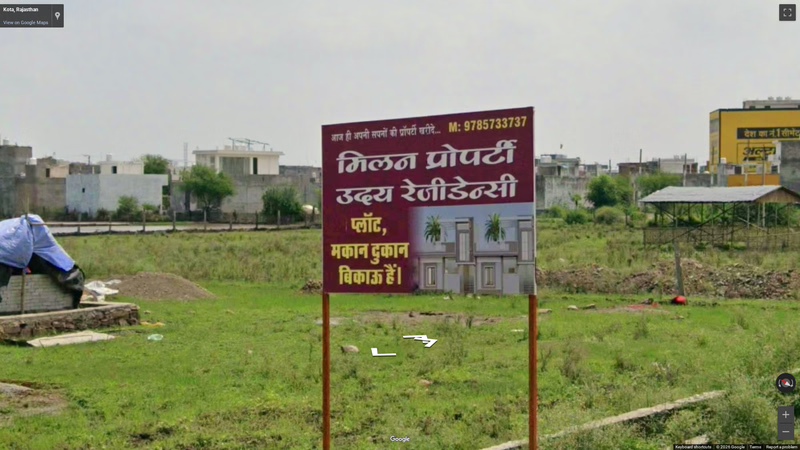

Name: Hindi
Script: Devanagari
Description: Clean, geometric script with a distinctive horizontal line (shirorekha) running along the top of letters. Characters hang from this top line. Letters are relatively uniform in height and often have rounded curves. Official language of India (alongside English)
Unique symbols:
क,
ध,
ष,
ज्ञ
vs Marathi: they're nearly identical visually. Only context and specific vocabulary differences can help you. Some Marathi words use ळ which Hindi doesn't have.

Type: Commercial, taxis and buses
Shape: Short
Background: Green
Text: Black

Stone blocks instead of metal guardrails or bollards
It looks like more guardrail but also works as bollard
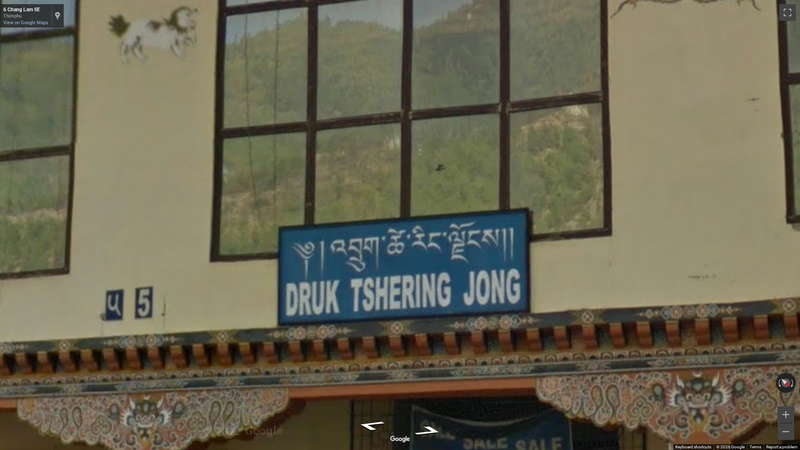
Name: Dzongkha (Bhutanese)
Script: Tibetan script (Uchen style)
Dzongkha is the sole official language. English is also widely used in schools and government
Description: Angular and structured with clear horizontal headline across the top of letters (similar to Devanagari but straighter and more rigid). The printed Uchen style formal and geometric, while handwritten forms can be more flowing.
Unique symbols:
ཀ,
ཁ,
ག,
ང,
ར,
ཨ
Similar scripts & distinctions:
vs Devanagari: both have a top line, but Tibetan letters are more square and often stacked vertically
vs Bengali / Assamese: Bengali has a headline but letters are softer and more curved; Tibetan is sharper and more block-like
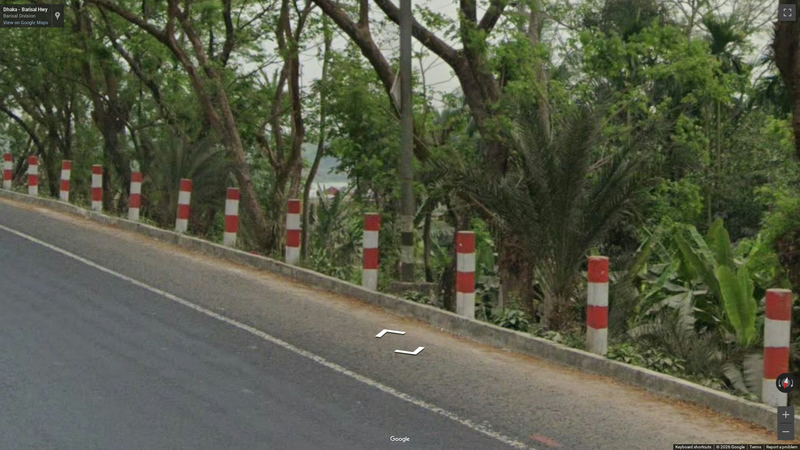
Concrete red-and-white cube or cylinder
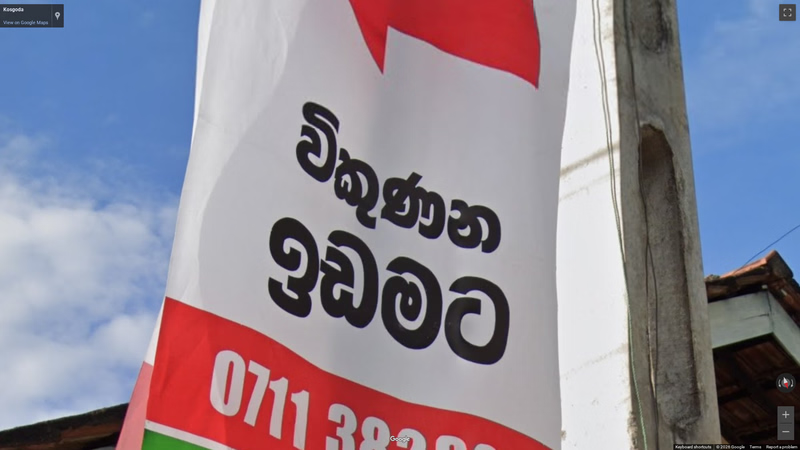
Name: Sinhala
Script: Sinhala script
Description: Very rounded and circular with soft flowing curves. Many letters look like spirals or loops, giving the script a “bubble-like” appearance. Sinhala has distinct inner curls and decorative loops, making it visually more ornamental than Tamil or Kannada
Unique symbols:
අ,
ආ,
ක,
ඟ,
ණ,
ළ
Similar scripts & distinctions:
Tamil → also rounded, but Sinhala is more decorative with inner curls and spiral shapes
Telugu → both very circular. Sinhala letters are denser and more spiral-like
Kannada → similar round base shapes; Sinhala has more ornamental loops and unique curl endings
Devanagari → Sinhala has no horizontal top line and is far more circular overall

Rectangle with a flat top. Painted in black-and-white stripes
White rectangle reflector on the front and red on the back side
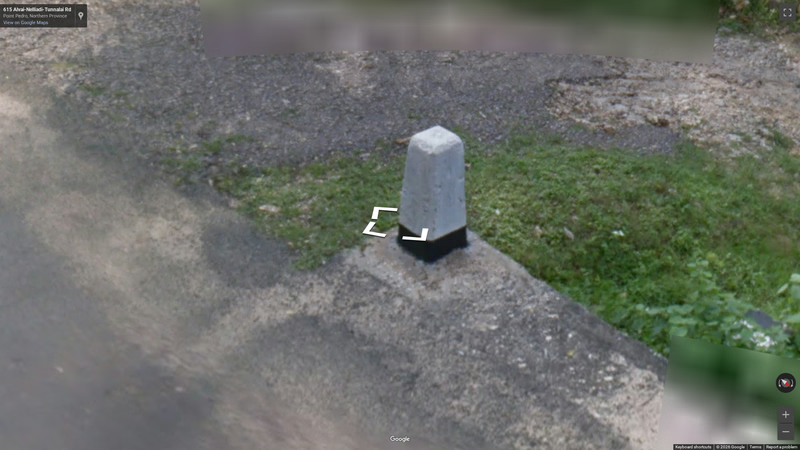
White stone with painted black bottom. The form is a truncated square pyramid

Standard kilometre milestones in Bhutan have a yellow upper half and a white lower half, with the top face displaying the highway number

It is a short concrete post, painted white with a rounded top. The numbers are written in bold black paint

The flag of Bangladesh has a dark green background with a red circle in the center

Bollards are octagon-shaped with a flat or rounded top and a base that is wider than the top. They are usually painted with black-and-white stripes
A yellow rectangle is painted in the center (sometimes with red on the front). Without reflectors is also possible
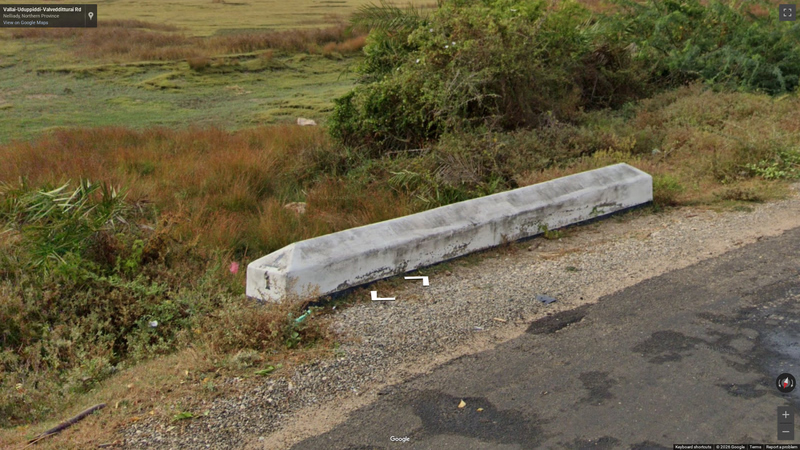
White stone with painted black bottom
The form is a long truncated pyramid with pointed or flat top
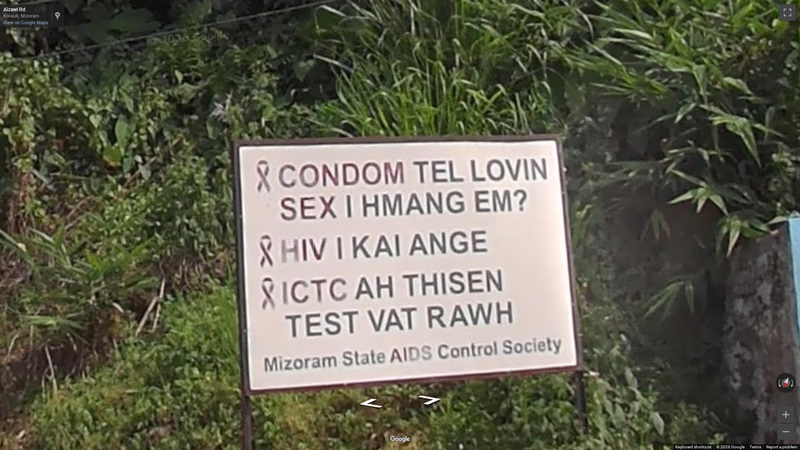

Name: Mizo
Script: Latin
Description:
Mizo uses the standard Latin alphabet introduced by Christian missionaries in the late 19th century.
Unique features:
Similar scripts & distinctions:
Visually identical to English because it uses the Latin alphabet. It is distinguishable only by vocabulary and specific endings like tl and frequent ng at the beginning of words.
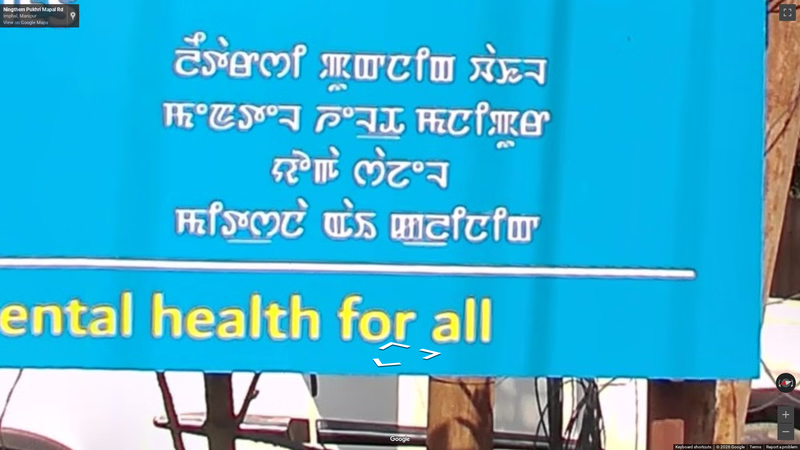

Name: Manipuri (Meitei)
Script: Meitei Mayek script
Description: An ancient script native to Manipur, with distinctive rounded characters and a unique structural system. The letters have a compact and balanced appearance, often featuring curves, loops, and hooks. The script was revived in the 20th century.
Unique symbols:
ꯀ,
ꯃ,
ꯄ
Similar scripts & distinctions:
Unique
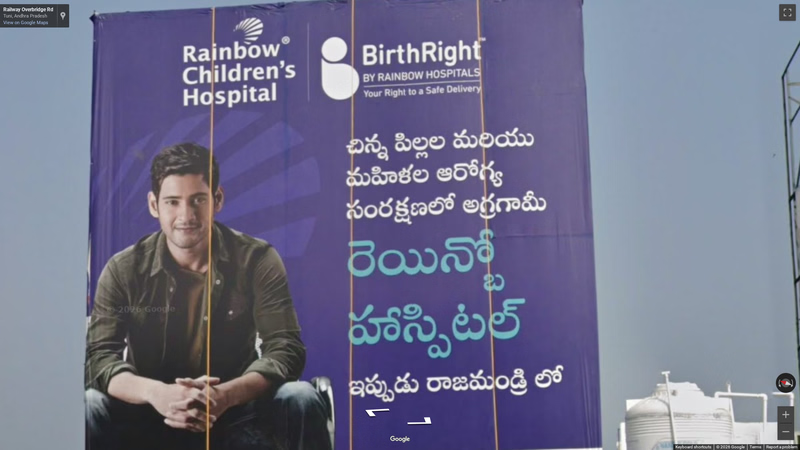

Telugu: Telugu
Script: Telugu script
Description: Very rounded, bubbly appearance with circular and curved elements. Letters look like a collection of circles, loops, and curves. Vowel signs create small tick or checkmark like strokes above the letter.
Unique symbols:
క, త, ఠ,ఱ
Similar scripts & distinctions:
Similar to Kannada but rounder. Telugu is more consistently circular and curvy, while Kannada has more angular elements and straight lines mixed with curves. Telugu vowel signs create small tick- or checkmark-like strokes above the letter
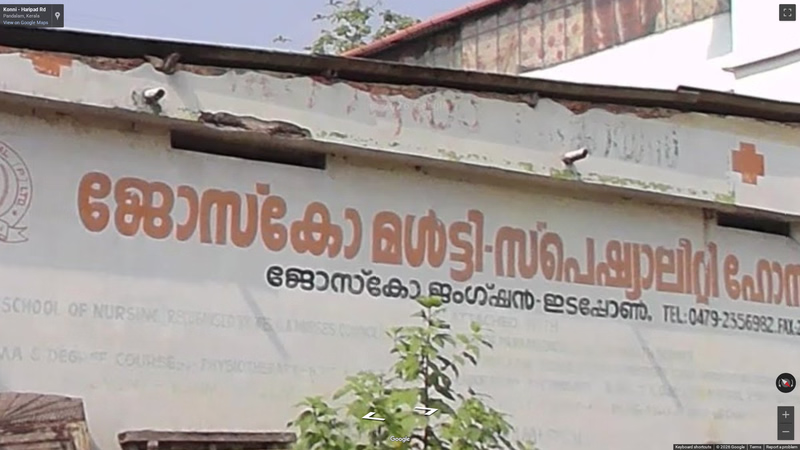

Name: Malayalam
Script: Malayalam script
Description: Curvy and flowing with many loops and circular elements. Letters often have distinctive "tails" and connecting elements.
Unique symbols:
ക,
ള,
ഴ.
ം
Similar scripts & distinctions:
Can resemble Telugu/Kannada but has more "tails" and connecting strokes. Malayalam letters often extend below the baseline more than Telugu. More compressed appearance overall. Pay attention on unique letters!
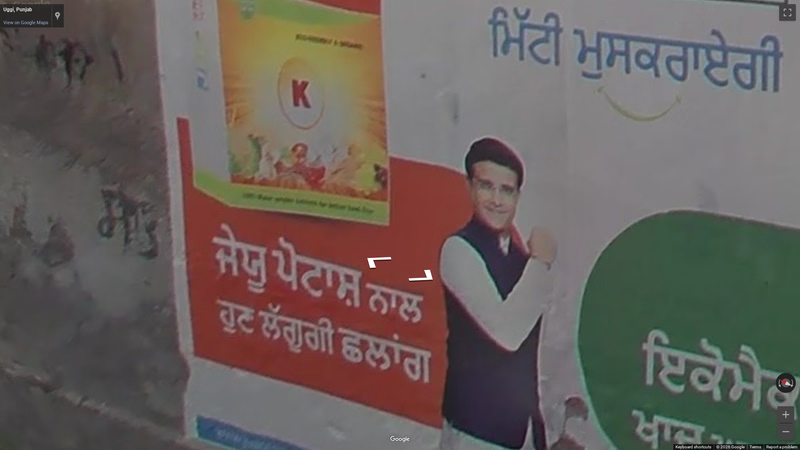

Script: Gurmukhi script
Description: Angular and geometric with horizontal and vertical lines. Letters are relatively simple and blocky. Headline and letters are connected along the top
Common:
ਨ, ਲ, and ਅ
Unique symbols:ਕ,
ਗ,
ੜ
Extensive use of diacritical marks: tippi (ਂ), bindi (ੰ), addak (ੱ)
Similar scripts & distinctions:
If you see:
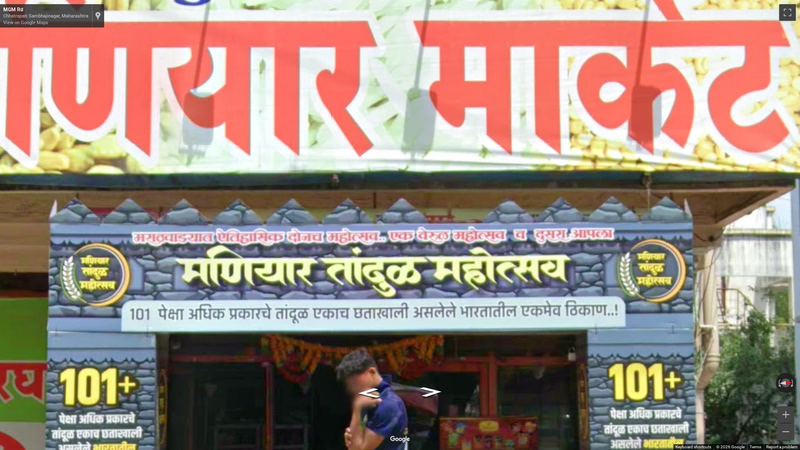

Name: Marathi
Script: Devanagari script
Description: Identical to Hindi's Devanagari script with the continuous horizontal line on top. Visually indistinguishable from Hindi in appearance.
Unique symbols:
Uses all Hindi symbols, plus:
ळ distinctive to Marathi,
ऱ — used in Marathi to represent a distinct “r” sound.
ऱ्ह and this conjunct form, not a separate letter
Otherwise identical to Hindi
Similar scripts & distinctions:
Identical to Hindi visually. Only distinguishable by vocabulary and the presence of ळ in some Marathi words. You need to read the actual words to tell them apart.
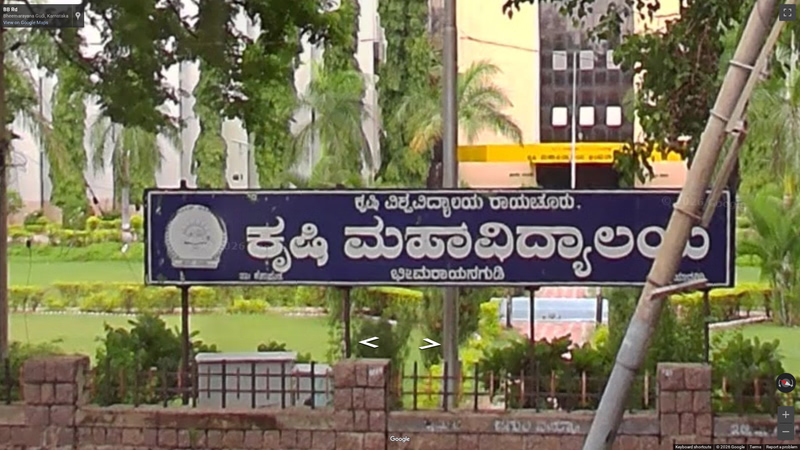

Name: Kannada
Script: Kannada script
Description: Circular and curvy like Telugu, but includes more straight lines and angular elements mixed in. More "balanced" between curves and angles than Telugu's pure roundness.
Unique symbols:
ಕ, ಠ, ಳ, ಜ್ಞ
Similar scripts & distinctions:
Similar to Telugu but less uniformly round. Kannada mixes angular and curved elements, while Telugu is consistently circular. Look for more "corners" and straight segments in Kannada.
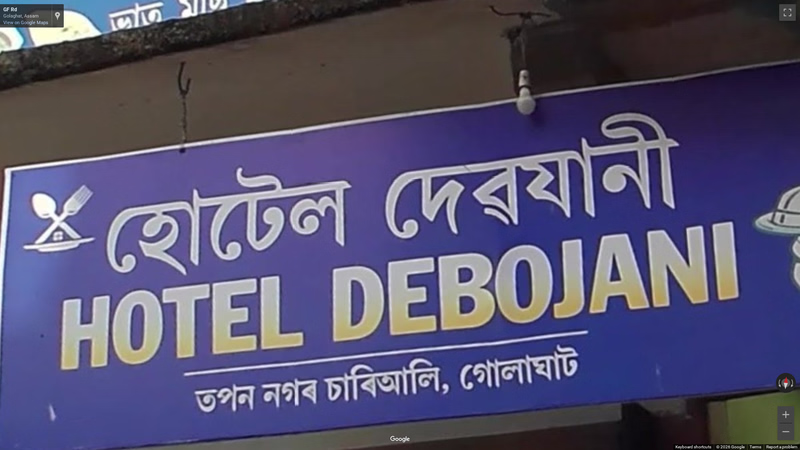

Name: Assamese
Script: Assamese script (variant of Bengali-Assamese/Eastern Nagari)
Description: Nearly identical to Bengali script. Rounded, flowing appearance with curved letters. Visually indistinguishable to non-speakers.
Unique symbols:
Same as Bengali, with two additions:
ৰ, ৱ
Similar scripts & distinctions:
Virtually identical to Bengali. Only the presence of ৰ or ৱ distinguishes Assamese text
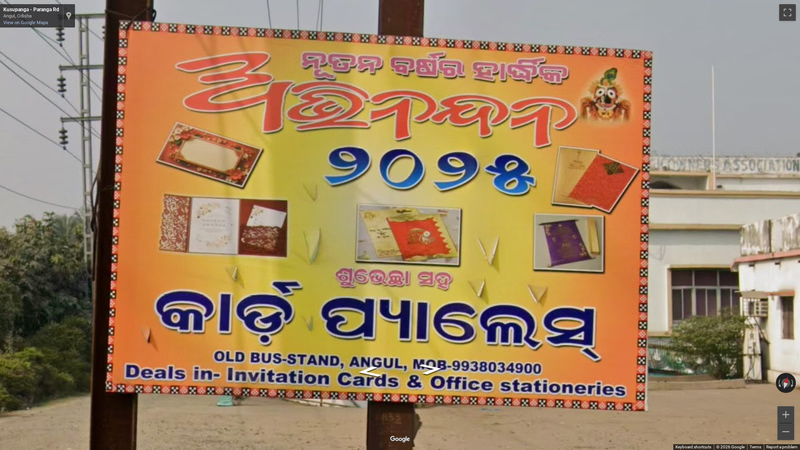

Name: Odia (Oriya)
Script: Odia script
Description: Very rounded and curved, similar to Telugu. Letters have a circular "head" with many characters featuring loops. Softer appearance than Bengali.
Unique symbols:
କ (ka) - rounded with distinctive shape
ଡ(da) - circular with curl
ଳ (retroflex la) - unique loop
Extensive use of circular diacritics
Similar scripts & distinctions:
vs Bengali: More uniformly rounded than Bengali (which has more varied shapes) - Bengali letters look flatter on top. Bengali has a horizontal headline across words.
vs Telugu: Telugu → more flowing and open.
Odia → tighter, more circular tops, slightly denser feel
Fun fact:
Why Odia is so round? And other South Indian scripts
Historically written on palm leaves. Straight lines could tear the leaf so letters evolved to be round
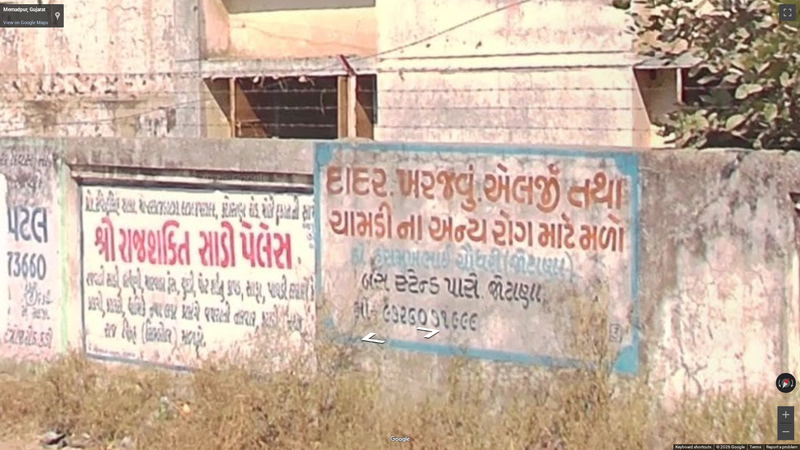

Name: Gujarati
Script: Gujarati script
Description: Looks very similar to Devanagari but without the horizontal headline (shirorekha). It is slightly more angular than Hindi in some characters.
Unique symbols:
ૐ,
ઋ,
ક,
જ,
ળ,
અં
Similar scripts & distinctions:
Most similar to Devanagari/Hindi but immediately recognizable because the continuous top line is absent

All coverage was captured using a grey Generation-3 Google car without a roof antenna;
Bhutan is the only left-hand-driving country where this specific grey car is used (though a similar white version is seen in other regions)

Driving direction: Left side

Name: Bengali
Script: Bengali-Assamese script (Eastern Nagari)
Description: Flowing, curved script with a horizontal top line (matra). Words are usually connected across the top, but the line may appear lighter or less rigid than in Devanagari
Unique symbols: ক (vs ৰ Assamese), ড, ঙ, র (vs ৱ Assamese)
Similar scripts & distinctions:
Nearly identical to Assamese script.
Main difference: Assamese uses ৰ and ৱ which Bengali doesn't. The overall appearance is almost the same, distinguished mainly by language vocabulary.
Tap a highlighted country to preview it.

They are usually not fully green and have multiple different colors compare to Bangladesh

Left side driving direction

In low-lying, flood-prone Bangladesh, it’s very common to see ditches, ponds, rivers, and bright green farmland right beside the road

Two main types of concrete poles are common. One is the square post, which has small pin-holes only on its upper half. The other is the distinctive “holey pole,” with large circular openings cut right through its lower half

In Gen-3 coverage, the blurred car bonnet often shows three colored patches—blue, white, and red—like the French flag. This pattern is unique to Sri Lanka, while Ghana’s similar car can be told apart by its roof rack

All Gen-4 footage is recorded from a lower camera position: car blurs appear much larger than usual, roads look wider, and objects are viewed from a noticeably lower angle (while Gen-3 footage is still captured at normal height)

Type: Private
Shape: Short
Background: White
Text: Black

Type: Private
Shape: Long
Background: White
Text: Black

Sri Lankan tuk-tuks have a chunky build with a black canvas roof and are most often seen in green, yellow, or red
They stand out from the sleeker designs common in Southeast Asia

In Sri Lanka, roadside concrete drains are common for carrying away rainwater during heavy monsoons.
They are usually open, narrow, and deep, making them easy to clean but prone to collecting debris

Type: Private
Shape: Long
Background: Red
Text: White
Additional details: Red background used in Asia only in Bhutan

The first type is a square concrete pole. It has flat sides with small holes running vertically. These poles usually look more industrial and heavy, and the equipment and wires are often bolted directly onto the flat surfaces.
The second type is a round concrete pole. It has a smooth, cylindrical shape without the flat edges or holes of the square type. These poles look simpler and more uniform, and the insulators and wires are fixed around the rounded surface.
So, in short: square poles look blocky with holes, while round poles are smooth and cylindrical.

Camera: Generation 4
Car: Sedan/regular
Color: Black
Additional details (unique): Since 2022 year - pay attention to google copyright

Strings of multicolored Buddhist prayer flags often line mountain roads and bridges, creating one of the most iconic sights in Bhutanese landscapes.

Bhutanese houses are characterized by corrugated tin roofs and brightly painted wooden window frames, giving towns and villages a distinctive appearance unlike that of neighbouring Himalayan regions

Shape: Cylinder or rectangular. Long or short
Material: Concrete or metall
Color: Black-and-white or black-and-yellow stripes
Tap a highlighted country to preview it.

Shape: Cylinder or rectangular. Long or short
Material: Concrete or metall
Color: Black-and-white stripes
Tap a highlighted country to preview it.

In Sri Lanka, tall palm trees line many roads and fields, growing even more densely than in most other Asian countries, with the Philippines being the main exception.

Shape: Thin cylinder
Material: Metal
Color: Black, white or brown painted at the bottom

Many roads in Bangladesh are lined with tall trees, and the lower parts of their trunks are painted white, giving the roadside a neat striped look

A tropical climate produces dense green foliage and a mosaic of small agricultural plots that blanket much of the countryside.

Roadcuts and dirt tracks in Sri Lanka often reveal deep red soil, while in some coastal areas the earth becomes pale and almost white

The designs are usually made from cast iron or steel, painted in bright gold to stand out against a darker background (often black or blue metal sheets). The patterns often include:
This style of gate ornamentation is widespread across Sri Lanka. It reflects both practical use (sturdy metal gates) and aesthetic tradition, where homes and businesses decorate entrances with elaborate golden patterns for prestige and beauty.

Orange-tiled roofs are prevalent in Sri Lanka because locally produced clay tiles—like Calicut and Roman tiles—have been a traditional roofing choice for centuries.
Made from abundant red clay and hand-fired, they offer natural cooling, durability, and a distinctive aesthetic warmth suited to the tropical climate.

The pole is concrete square in shape with flat sides, and you can see a series of small pin-holes running vertically along it.
These holes are typical of Sri Lankan poles and are mainly for reducing weight and allowing attachments.
The top is flat, and sometimes these poles also carry streetlights fixed directly onto the side

In Bhutan freestanding red or blue signs are common, usually displaying business names or the name of the town in large letters

Camera: Generation 4
Car: Sedan/regular
Color: White
Additional details (unique): Since 2022 year - pay attention to google copyright

Material: Metall
Shape: Trident-style head with horizontal T-bar with three insulators

Bangladeshi roofs can help you region-guess the country

Type: Commercial, taxi and buses
Shape: Long or short
Background: Yellow
Text: Black

Sri Lankan road sign that uses a “P” (for parking) above an icon of a tuk-tuk, indicating a special parking area reserved for tuk-tuks

In Sri Lanka, it’s very common to see blue fences made of metal sheets or concrete

Due to the humid monsoon climate, houses and sheds across Bangladesh often have corrugated tin roofs

Since about 70% of Sri Lanka’s population is Buddhist, the landscape is filled with temples, Buddha statues, white stupas, and the multicolored Buddhist flag.

In India, roadside kerbs are very common and are usually painted in black and white or yellow and black stripes

Mosques are easy to recognize by the megaphones (!) mounted on buildings

The first lamp post is a tall white-painted pole with two curved arms that rise upward in a V-shape, each holding a lamp. It usually has many overhead wires attached and looks more modern compared to older designs.

Name: Tamil
Script: Tamil script
Description: Rounded and flowing with many curves. Letters look smooth and circular. It does not have the horizontal top line like Devanagari. It is generally less complex than Telugu or Kannada and has fewer loops. The pulli dot is very visually noticeable and frequent: (்), க் and so on.
Unique symbols: க, ங, ழ, ஃ, ற, ன
Similar scripts & distinctions:
Telugu → more loops and circles. Small tick or checkmark instead of pulli
Kannada → visually similar in roundness. No pulli dot
Devanagari → Tamil has no horizontal top line
Tap a highlighted country to preview it.

Bhutanese taxis are easily recognized by their yellow license plates and matching yellow roof panels

On many rural roads in Sri Lanka, you’ll see solid white lines marking the edges but no center line at all—a helpful clue when trying to tell Sri Lanka apart from Thailand

In Sri Lanka, blue signs are used on expressways and interchanges, while green signs show directions and distances on main roads. All direction signs are written in Sinhala, Tamil, and English, reflecting the country’s trilingual policy.

In Sri Lanka, broken white lines on roads are lane dividers.
They show that vehicles may cross them for overtaking or changing lanes when it’s safe.
Unlike solid lines, they do not prohibit crossing.

Sri Lankan mobile numbers consist of 10 digits, starting with a leading 0, followed by a three-digit prefix (like 077), and then a 7-digit subscriber number
The prefix (the 07X part) is assigned to specific operators—so you often can tell which network the number belongs to

Background: Yellow
Arrows: Bold black

You can find Hindu temples in Sri Lanka because a significant Tamil population—especially in the north and east—practices Hinduism, with nearly 13% of the country’s population adhering to it.
Hindu traditions on the island go back over two thousand years, supported by ancient temple architecture like the Pancha Ishwarams, reflecting a longstanding religious and cultural presence

In Bangladesh, motorcycles usually have small, long license plates

Red on white background chevron panels used as hazard markers, especially on sharp curves or dangerous road sections in Sri Lanka

Camera type: Shitcam
Car: Black or white, and sometimes a big round blur covers it completely
Details: Shitcam is only in and around Dhaka city

Octagonal stop signs with a white border are rare in Bhutan and only occasionally appear along the roads

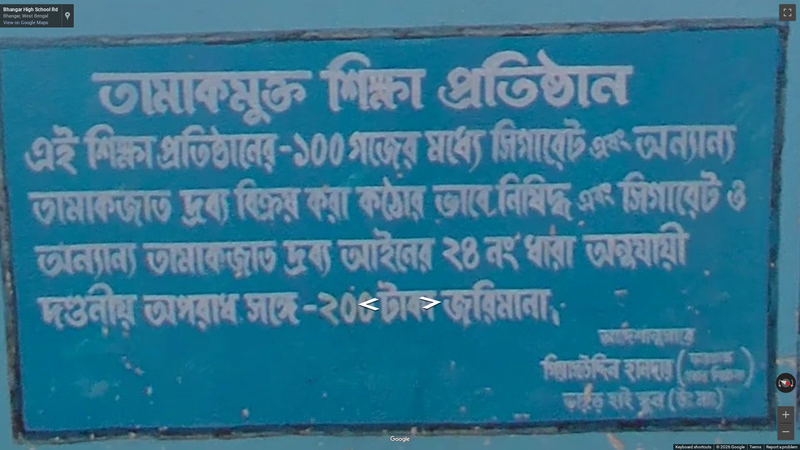

Name: Bengali
Script: Bengali-Assamese script (Eastern Nagari)
Description: Flowing, curved script with a horizontal top line (matra). Words are usually connected across the top, but the line may appear lighter or less rigid than in Devanagari
Unique symbols: ক (vs ৰ Assamese), ড, ঙ, র (vs ৱ Assamese)
Similar scripts & distinctions:
Nearly identical to Assamese script.
Main difference: Assamese uses ৰ and ৱ which Bengali doesn't. The overall appearance is almost the same, distinguished mainly by language vocabulary.
Tap a highlighted country to preview it.

In Bangladesh, three Gen-3 Street View cars appear:
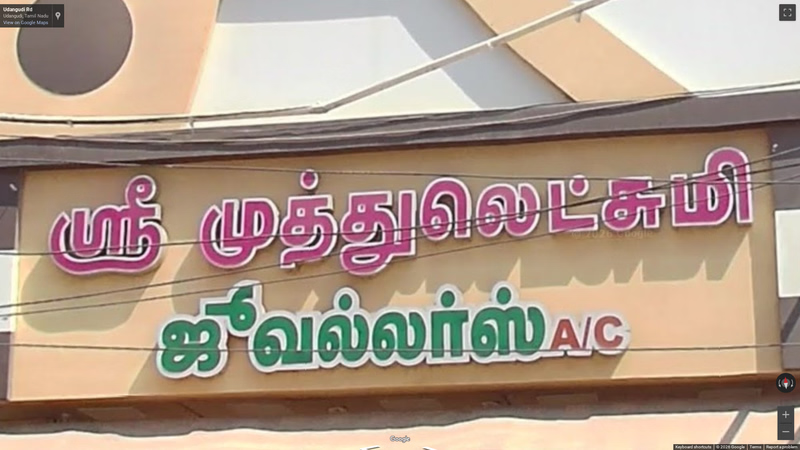

Name: Tamil
Script: Tamil script
Description: Rounded and flowing with many curves. Letters look smooth and circular. It does not have the horizontal top line like Devanagari. It is generally less complex than Telugu or Kannada and has fewer loops. The pulli dot is very visually noticeable and frequent: (்), க்
Unique symbols:
க,
ங,
ழ,
ஃ, ற, ன
Similar scripts & distinctions:
Telugu → more loops and circles. Small tick or checkmark instead of pulli
Kannada → visually similar in roundness. No pulli dot
Devanagari → Tamil has no horizontal top line
Tap a highlighted country to preview it.
Drill this on a map quiz that covers this country.