White signposts


Colombia
Unique
Shape: Rectangle
Material: Metal
Color: White
GeoGuessr theory · Meta
Different traffic signs
Last updated ·
%20--%3e%3csvg%20version='1.1'%20id='Layer_1'%20xmlns='http://www.w3.org/2000/svg'%20xmlns:xlink='http://www.w3.org/1999/xlink'%20x='0px'%20y='0px'%20width='24px'%20height='24px'%20viewBox='0%200%2024%2024'%20style='enable-background:new%200%200%2024%2024;'%20xml:space='preserve'%3e%3cstyle%20type='text/css'%3e%20.st0{fill:%2357AEFF;}%20.st1{fill:%237A6BFF;}%20.st2{fill:%23AB5CFF;}%20.st3{fill:%23FF7DC0;}%20.st4{fill:%23FFBE57;}%20.st5{fill:%2373E61C;}%20.st6{fill:%23FF6242;}%20.st7{fill:%23F2F2F2;}%20.st8{fill:%23696969;}%20.st9{fill:%23FF3029;}%20.st10{fill:%23131F24;}%20.st11{fill:%23F1F7FB;}%20.st12{fill:%23EE5555;}%20.st13{fill:%2349C0F8;}%20.st14{fill:%233F85A7;}%20.st15{fill:%231CB0F6;}%20.st16{fill:%2393D333;}%20.st17{fill:%2379B933;}%20.st18{fill:%23FFAB33;}%20.st19{fill:%23FFC700;}%20.st20{fill:%23D84848;}%20.st21{fill:%23FB7185;}%20.st22{fill:%23DCE6EC;}%20.st23{fill:%2352656D;}%20.st24{fill:%2337464F;}%20.st25{opacity:0.5216;fill:%23FF3029;}%20.st26{opacity:0.5216;fill:%23F2F2F2;}%20.st27{clip-path:url(%23SVGID_2_);fill:%23F2F2F2;}%20.st28{clip-path:url(%23SVGID_4_);fill:%23F2F2F2;}%20.st29{clip-path:url(%23SVGID_6_);fill:%23F2F2F2;}%20.st30{clip-path:url(%23SVGID_8_);fill:%23F2F2F2;}%20.st31{clip-path:url(%23SVGID_10_);fill:%23F1F7FB;}%20.st32{clip-path:url(%23SVGID_12_);fill:%23F1F7FB;}%20%3c/style%3e%3cg%3e%3cpath%20class='st11'%20d='M21.1,8.39v7.21c0,0,0,0.01,0,0.02c0,0.02,0,0.03,0,0.05c0,0.03-0.01,0.06-0.02,0.09%20c-0.02,0.05-0.05,0.09-0.08,0.12l-5.1,5.1c-0.01,0.02-0.03,0.03-0.06,0.05c-0.02,0.01-0.04,0.03-0.06,0.04c0,0,0,0-0.01,0%20c-0.04,0.02-0.09,0.03-0.14,0.03H8.41c-0.04,0-0.07,0-0.11-0.02c-0.02,0-0.05-0.01-0.06-0.02c0,0-0.01,0-0.01,0%20c-0.04-0.02-0.08-0.04-0.12-0.08l-5.09-5.09l0,0c-0.02-0.02-0.03-0.03-0.04-0.05c-0.01-0.01-0.02-0.03-0.03-0.05%20c-0.02-0.03-0.03-0.06-0.03-0.09c0-0.03-0.01-0.06-0.01-0.08V8.4c0-0.01,0-0.01,0-0.02c0-0.05,0.01-0.1,0.03-0.14%20C2.95,8.2,2.97,8.17,2.99,8.14c0-0.01,0.01-0.02,0.02-0.04l5.09-5.09l0,0c0.02-0.02,0.03-0.03,0.05-0.04%20C8.18,2.96,8.2,2.95,8.21,2.94C8.24,2.92,8.27,2.91,8.3,2.91c0.03,0,0.05-0.01,0.08-0.01h7.21c0.06,0,0.12,0.01,0.17,0.04%20c0,0,0.01,0,0.01,0c0.04,0.02,0.08,0.04,0.12,0.08l5.09,5.09l0,0c0.02,0.02,0.03,0.03,0.04,0.05c0.01,0.01,0.02,0.03,0.03,0.05%20c0.02,0.03,0.03,0.06,0.03,0.09C21.1,8.34,21.1,8.36,21.1,8.39z'/%3e%3cpath%20class='st11'%20d='M15.89,20.98L15.89,20.98c-0.02,0.02-0.04,0.03-0.06,0.05C15.86,21.02,15.87,21,15.89,20.98z'/%3e%3c/g%3e%3cg%3e%3cpath%20class='st12'%20d='M19.59,8.99v6.02c0,0,0,0.01,0,0.02c0,0.02,0,0.03,0,0.04c0,0.03-0.01,0.05-0.02,0.08%20c-0.02,0.04-0.04,0.07-0.07,0.1l-4.26,4.26c-0.01,0.02-0.03,0.03-0.05,0.04c-0.02,0.01-0.03,0.02-0.05,0.03c0,0,0,0-0.01,0%20c-0.03,0.02-0.08,0.02-0.12,0.02H9c-0.03,0-0.06,0-0.09-0.02c-0.02,0-0.04-0.01-0.05-0.02c0,0-0.01,0-0.01,0%20c-0.03-0.02-0.07-0.03-0.1-0.07l-4.25-4.25l0,0c-0.02-0.02-0.03-0.03-0.03-0.04c-0.01-0.01-0.02-0.03-0.02-0.04%20c-0.02-0.02-0.02-0.05-0.03-0.08c0-0.02-0.01-0.05-0.01-0.07V9c0-0.01,0-0.01,0-0.02c0-0.04,0.01-0.08,0.02-0.12%20c0.02-0.03,0.03-0.05,0.05-0.08c0-0.01,0.01-0.02,0.02-0.03L8.74,4.5l0,0c0.02-0.02,0.03-0.03,0.04-0.03%20C8.8,4.46,8.82,4.45,8.83,4.44c0.02-0.02,0.05-0.02,0.08-0.03c0.02,0,0.04-0.01,0.07-0.01h6.02c0.05,0,0.1,0.01,0.14,0.03%20c0,0,0.01,0,0.01,0c0.03,0.02,0.07,0.03,0.1,0.07l4.25,4.25l0,0c0.02,0.02,0.03,0.03,0.03,0.04c0.01,0.01,0.02,0.03,0.02,0.04%20c0.02,0.02,0.02,0.05,0.03,0.08C19.59,8.95,19.59,8.97,19.59,8.99z'/%3e%3cpath%20class='st12'%20d='M15.24,19.51L15.24,19.51c-0.02,0.02-0.03,0.03-0.05,0.04C15.21,19.53,15.23,19.52,15.24,19.51z'/%3e%3c/g%3e%3cpath%20class='st11'%20d='M5.27,12.64v-1.28c0-0.46,0.37-0.83,0.83-0.83h11.8c0.46,0,0.83,0.37,0.83,0.83v1.28%20c0,0.46-0.37,0.83-0.83,0.83H6.1C5.64,13.47,5.27,13.1,5.27,12.64z'/%3e%3c/svg%3e)
Shape: Rectangle
Material: Metal
Color: White


Background: Yellow.
Vietnamese warning signs are easily recognized by their yellow background. This distinct color helps players identify the country. Look for black symbols and borders on this bright yellow base.

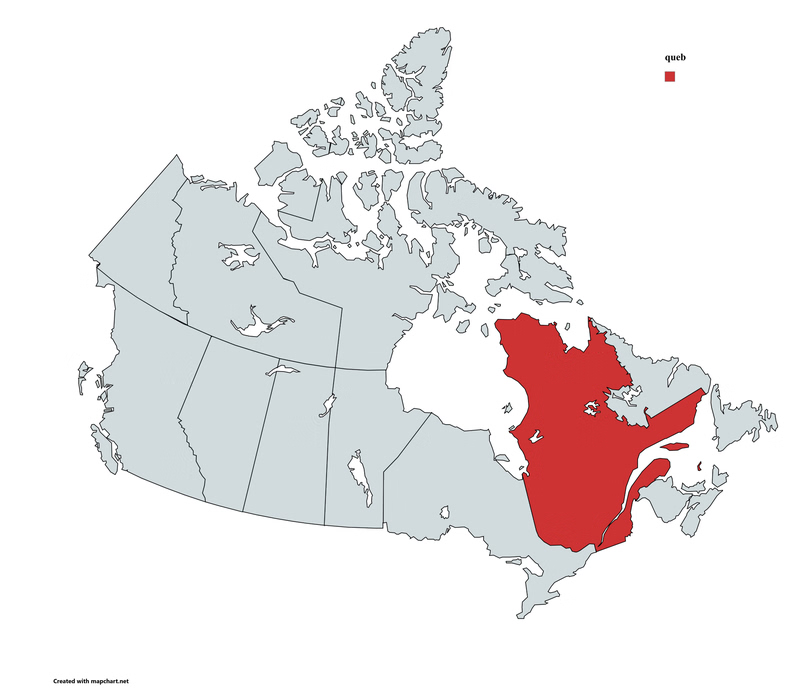

Stop signs in Quebec will say "Arrêt".


Street ending: Look for the suffix -tie at the end of street names. This ending is very common in Finland.
Sign appearance: Finnish street name signs are white with black text.


Shape: Rectangle
Material: Wood
Color: White
Additional details: Four rectangular holes on the rear side


Shape: Cylinder or rectangle
Material: Concrete or metal or wood
Color: White-and-black stripes or sometimes black-and-yellow
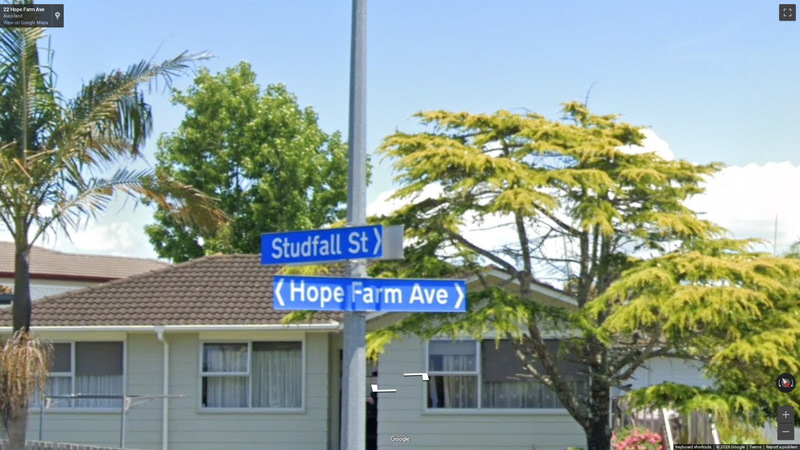

New Zealand street signs have a blue background and white letters.
This color combination is a common feature across the country.
Contrast: This specific color combination is not found on street signs in Australia.


The word utca is the Hungarian term for 'street'.
Placement: You will see this word on all street signs throughout Hungary.
Distinction: This specific word is unique to Hungary, helping to distinguish it from surrounding nations.


Color: Blue background with white triangle
Zebra: Dashed dark line without zebra crossing
Person: Black figure wearing a traditional thobe


Small rectangle slots on top of sign posts before traffic sign


Shape: Rectangle thin poles, sometimes U shape (with hole inside)
Material: Metal
Color: No paint


Using 2 Lao characters ຢຸດ.
Often bilingual, featuring "STOP" in English below the Lao text


Background: White
Arrows: Bold red
Additional details: Arrow head never touches the sign edge


Signposts have these stripes:


Shape: Circle
Color: White background with red border
Text: Extremely bold black digits, sometimes with km/h under them


Ireland is the only one of the three to use diamond-shaped yellow warning signs
The UK uses standard European red-bordered triangles
Tap a highlighted country to preview it.

Sometimes you can find a black-and-white circle with this highway shield on the back of road signs. It can also be a white sticker. With current Street View cameras, it is impossible to read the information on them, but their presence is helpful.
This print/sticker is unique to Chile.


TLDR;
A, B, C/U - are unique for the UK vs Ireland
M - Motorway High-speed, multi-lane roads with blue signs (e.g., M1, M25).
A(M) - Upgraded A-Road An A-road improved to motorway standards, following motorway rules (e.g., A1(M)).
A - Major Road Primary routes (green signs) or non-primary routes (white signs) linking large towns.
B - Minor Road Local routes with lower traffic, often linking smaller settlements (white signs).
C / U - Unnumbered Smaller local or unclassified roads. These letters are used for administration but rarely appear on signs


Spanish pedestrian crossing signs have a Background: blue square with a large white triangle. A small white rounded border is common.
Figure: A black square figure with two separate parts for the head and body.
Stripes: There are 8 long black stripes.


US yield signs pair a red border with a white interior and the word ‘YIELD’
Canada’s identical shape lacks the text


Detail: Czech direction signs for cities or towns feature a small arrow. This arrow is placed separately, either above or at the end of the main sign.
Distinction: This separate arrow helps distinguish Czech signs from those in Slovakia, where arrows are typically painted directly onto the sign.
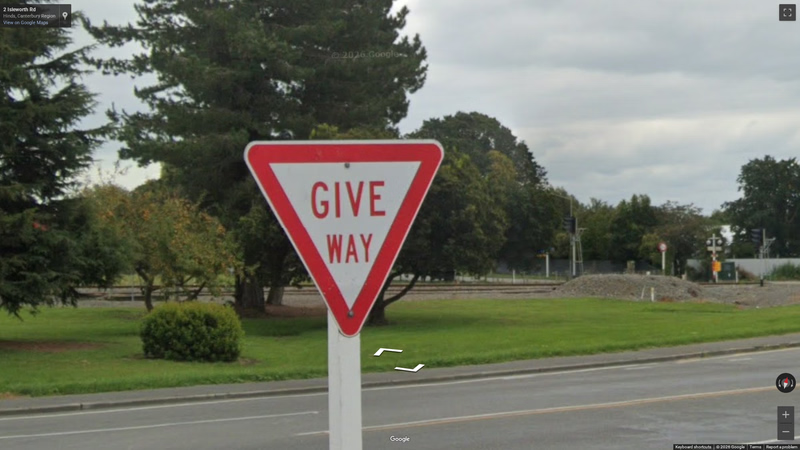
Sign Type: New Zealand give way signs are a red triangle.
Lettering: The letters are red. This is different from Australian give way signs, which have black letters.
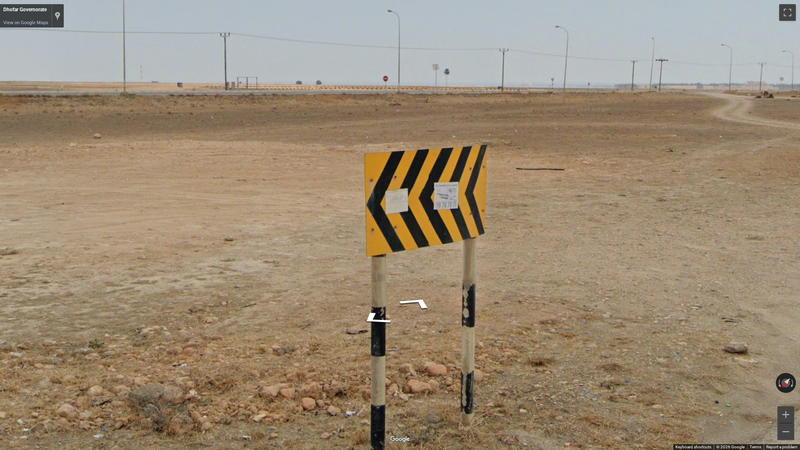

Background: Yellow
Arrows: Thin black
Additional details: Lots of arrows
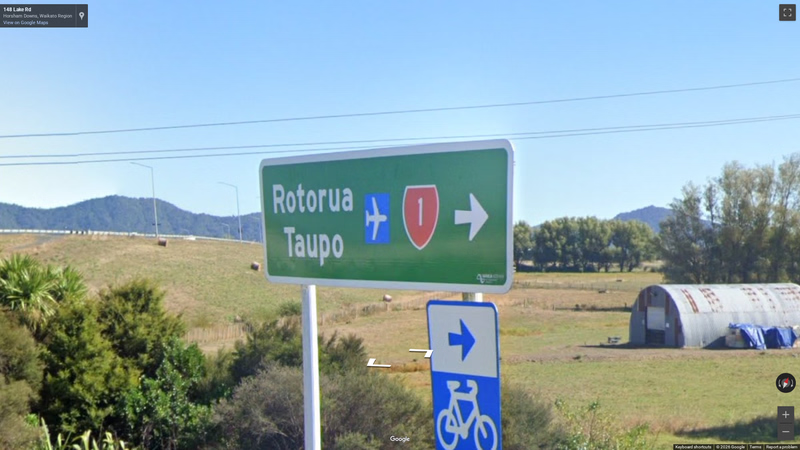
New Zealand highway shields have a Background: red. They display Digits: white numbers.
This helps distinguish them from Australian highway shields. Australian signs use letters, yellow text, and no red background.
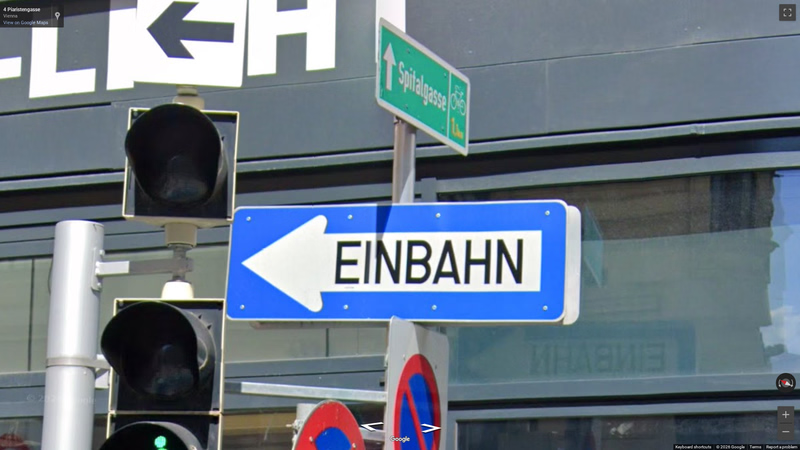

In Austria, you can find these signs that say "EINBAHN". Their equivalent in Germany says "Einbahnstraße"

In Qatar orange highway shield shaped like the country map, with white route number inside.
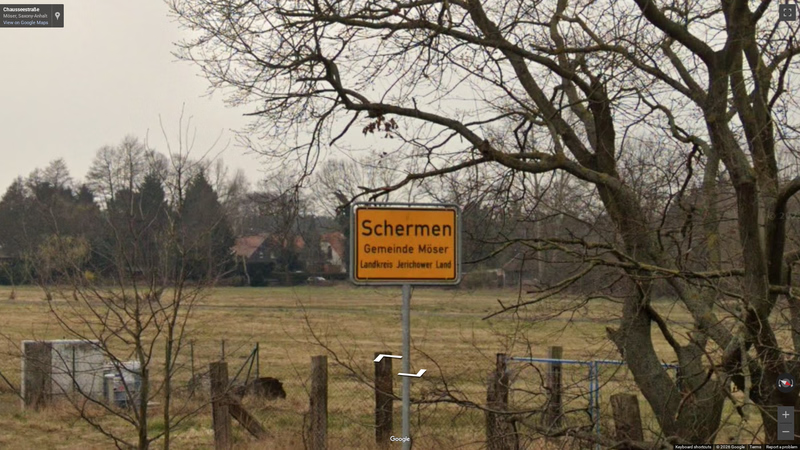

These yellow signs mark city entrances in Germany.
Information: They show the city name and the Landkreis, which is a local administrative area.


Rue is the standard French word for "street" (-e enging)
Vs nearby countries:

Shape: Cylinder
Material: Metal
Additional details: Yellow sticker near traffic sign


Rua is the standard Portuguese word for "street". In address formats, it is frequently abbreviated as R
Vs nearby countries:

Turkish octagonal signs display the native word “DUR” instead of using "STOP"
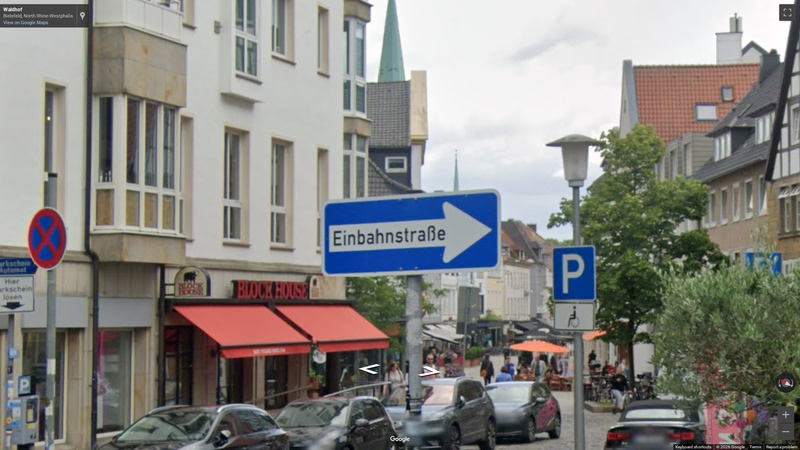
In Germany, look for one-way street signs that display the word Einbahnstraße.
Distinction: This sign helps differentiate Germany from Austria, where the equivalent sign shows EINBAHN.
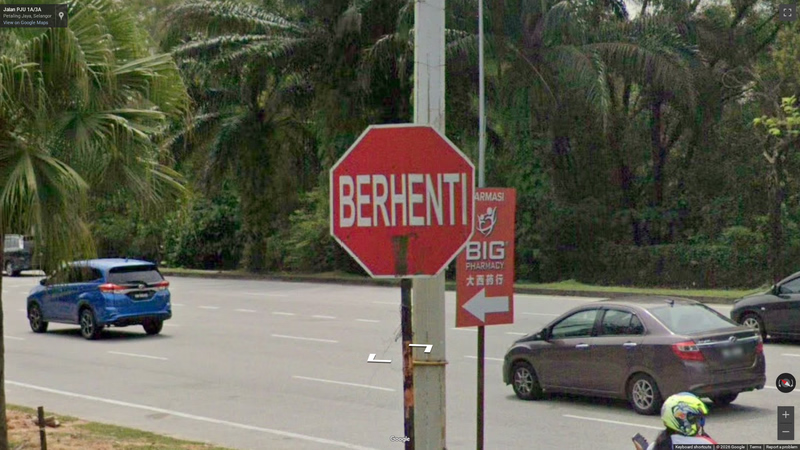

Stop signs say ‘BERHENTI’
These wordings are unique to the country


Street signs in Belgium usually heavily vary between cities, however they will very often say the name of the city somewhere on the sign.
Also you can tell which language is spoken in your city by looking at the road name. Something like "rue" is french (south and the capital) but if it ends with "straat" it's dutch (North)


Background: Black
Arrows: Bold yellow
Other Variants: Extremely rare yellow background with bold black arrows


You will find the 3 character word "หยุด" (Yùt) in Thai script.
Sometimes includes "STOP" in English below the Thai text.

British roads do not use traditional pedestrian street signs. Instead, they feature unique poles to mark crossings.
Pole design: These are black-and-white striped metallic poles. They usually have a yellow ball on top.

Shape and color: Square blue background with the white triangle. Always with white thick border
Figure: Black rounded stick figure with 2 separate parts - head and the rest of the body
Zebra stripes: 5 black short stripes


Shape and color: Square light-blue background with white triangle
Figure: Black with thick torso. 4 separate parts - head, one leg, one arm and the rest of the body
Zebra stripes: 3 black stripes
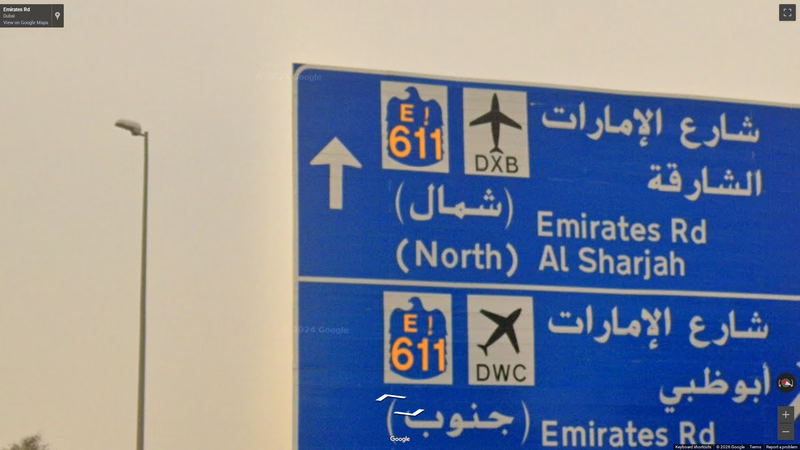

The falcon emblem, officially the Hawk of Quraish, appears on UAE highway signs because it represents the national symbol.
Using this emblem on highways flags these routes as inter-emirate or national, helping drivers quickly identify major strategic roads.


A blue pentagon showing two children crossing is used to mark school zones and pedestrian crossings

This yellow diamond sign with a 'checkboard' patern border indicates a T-intersection.
These signs are diamond-shaped, while similar signs in the US are rectangular.


Local stop signs display a stylised red hand inside the octagon
Regular stop signs without spelling the word ‘STOP’ are also common

This Swedish sign has a light-blue square background. A large white triangle covers most of the sign, touching the top and sides but not the bottom.
Figure: A realistic black pedestrian is shown. The figure has no separate parts, with one leg on each of two zebra stripes.
Zebra Stripes: There are four thick black stripes below the pedestrian.

Japan’s stop sign is a red upside-down triangle with the kanji ‘止まれ’ (tomare)

Shape: shield-shape with five edges


Background: The sign has a square blue background. It features a large yellow triangle.
Figure: A rounded black figure is shown. It is realistic and has no separate parts.
Stripes: The Icelandic pedestrian crossing sign has four black stripes.


Shape: Octagonal
Color: Red sign with eye and white text
This sign installed by local community groups in partnership with the Police. The "eye" symbolizes that residents are watching for crimes.

Shape: Thin rectangles
Color: Red-and-white diagonal stripes
Tap a highlighted country to preview it.
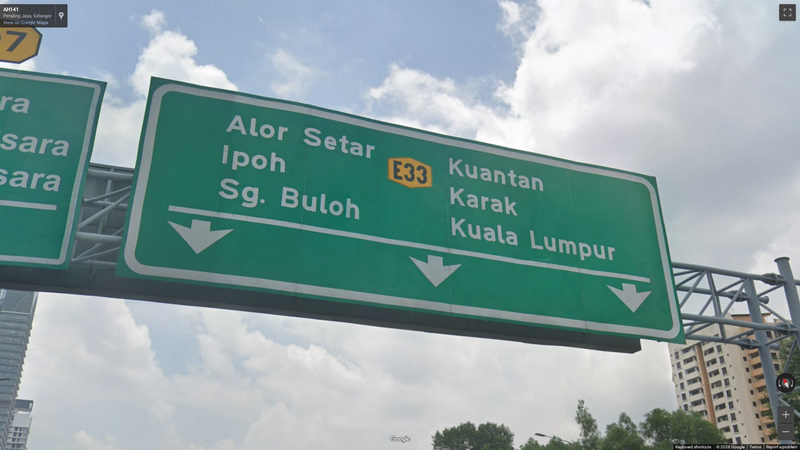
In Malaysia, green direction signs show a bright yellow hexagonal highway shield, a shape unique to the country


You will find the three components word ឈប់ (Khmer)
Sometimes includes "STOP" in English below the Khmer text

Green or blue (sometimes) community signs can be found in rural areas

Usually on small roads in Thailand, direction signs usually have a plate with an arrow and in both languages

Shape: Rectangular long or short
Material: Concrete
Color: White with black painted bot
Unique in Southeast Asia

Shape: Rectangle (rectangular prism)
Material: Metal
Color: No color

Red-and-white striped signposts

Traffic signs here feature a thin white border.
In contrast, Spanish traffic signs have no white border
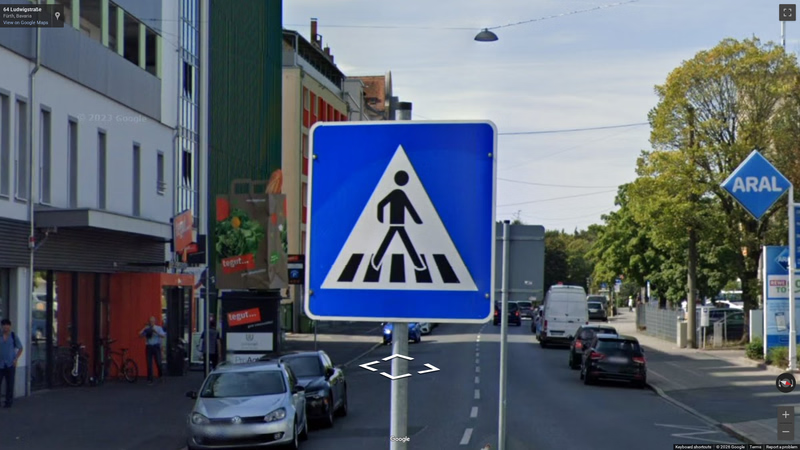
Sign: It has a square blue background with a white triangle.
Figure: The black figure is rounded with a white belt. One arm is flat, the other is diagonal. It has three distinct parts.
Crossing: The German pedestrian crossing has 5 zebra stripes.
Tap a highlighted country to preview it.


Shape: Cylinder or rectangular long or short
Material: Metall
Color: Black-and-white or black-and-yellow stripes
Tap a highlighted country to preview it.


Shape: Cylinder or rectangular. Long or short
Material: Concrete or metall
Color: Black-and-white stripes
Tap a highlighted country to preview it.


Shape: Cylinder or rectangular. Long or short
Material: Concrete or metall
Color: Black-and-white or black-and-yellow stripes
Tap a highlighted country to preview it.

Shape: Square
Color: White background

Shape: Cylinder (round)
Material: Metal
Color: No color


Shape: Cylinder. Long or short
Material: Metall
Color: Bright red, orange or yellow

Traffic signs have a huge font
Compare to Spain and Italy:

Base: British signposts and lampposts often have a wide, thick base.
Shape: The post tapers significantly, becoming thinner towards the top. This distinct wide base is a key identifier.
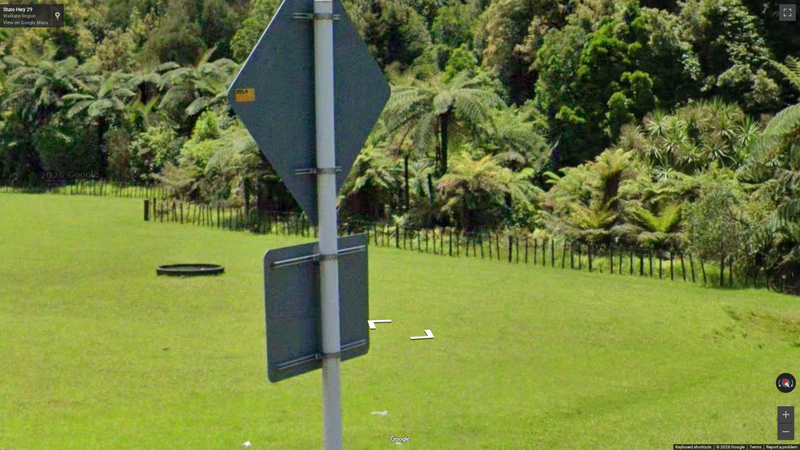
White painted signposts are very common in New Zealand.
Appearance: They can be of any shape or material.
Contrast: You will not find these white signposts in Australia.


Shape: Rectangle
Material: Wood or concrete
Color: White, black-and-white, yellow, no color and etc.

Words ‘ONE WAY’ on the arrow
Canadian signs don't use text


Background: Black
Arrows: Bold white
Tap a highlighted country to preview it.

Background: Yellow
Arrows: Bold black
Additional details: Almost always on unpainted metal poles

Regulatory plates read “MAXIMUM 90” (km/h), not “SPEED LIMIT 55” (mph) as in the US

Colombian road signs often have a distinctive cross-shaped reinforcement on their back.
Construction: This cross is formed by a horizontal bar and a vertical pole, strengthening the sign.
Tap a highlighted country to preview it.

Traffic signs with thick border
In Portugal:
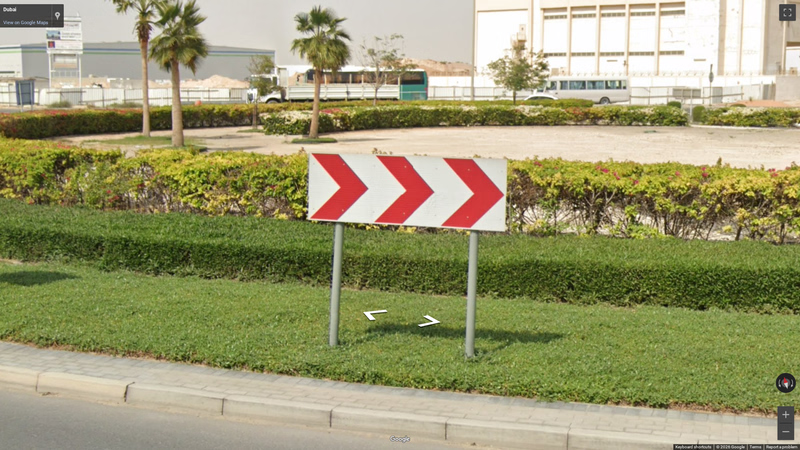
Background: White
Arrows: Bold red


Shape and color: Tall blue rectangle background with the white triangle
Figure: Black realistic with a hat
Zebra stripes: 7 black long stripes


Background: White
Arrows: Bold red

Background: Blue
Arrows: Bold yellow


In Bhutan freestanding red or blue signs are common, usually displaying business names or the name of the town in large letters

Background: Black
Arrows: Bold white
Tap a highlighted country to preview it.

Yield signs (red inverted triangles) with 'GIVE WAY' text
vs Ireland:

Background: Yellow
Arrows: Bold black
Additional details: Almost always on white metal poles. Sometimes with black numbers

US crossroads often mark side-roads with a white rectangle containing one or two black arrows

The UK is the only major country in Europe (+ Jersey, Isle of Man and Guernsey) that still uses the Imperial system for road travel (US uses it too), measuring speed in MPH (Miles per Hour).
However, the Republic of Ireland + the rest of the Europe uses the Metric system, measuring speed in km/h(Kilometers per Hour).
Tap a highlighted country to preview it.

TLDR;
N, R, L - are unique for Ireland vs the UK
M - Motorway The highest standard of road; the 'M' prefix replaces the 'N' on motorway sections of national routes (e.g., M50, M7)
N - National Road Main arterial routes. N1–N50 are National Primary; N51–N99 are National Secondary
R - Regional Road Strategic local roads linking small towns, numbered from R101 upwards
L - Local Road Minor roads and country lanes, often numbered with four or five digits (e.g., L4202).

Every numeric speed-limit plate includes the words “SPEED LIMIT”; numbers frequently end in 5 because they refer to mph (mile per hour) rather than km/h.

Shape: Yellow diamond signs are used for warnings and directions.
Presence: These signs are common in New Zealand, Australia, and Ireland. They are not found in countries such as South Africa or the UK.
Tap a highlighted country to preview it.

Shape and color: Square blue background with the white triangle. Small white rounded bored is common
Figure: Black square stick with a square head
Zebra stripes: No. Two horizontal dotted lines beneath a figure

Shape: Rectangle (rectangular prism)
Material: Metal
Color: No color

Shape: Cylinder
Material: Metal
Color: Black-and-white stripes
Tap a highlighted country to preview it.
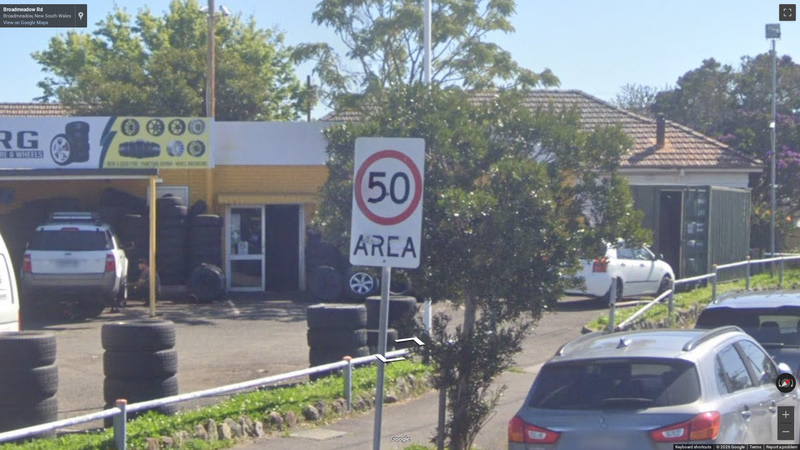

Design: Australian speed limit signs have black numbers within a red circle. This circle is placed on a large white rectangular background.
Contrast: New Zealand speed limit signs usually do not have this white rectangular background.

Background: Black
Arrows: Bold white
Additional details: Red border


Background: White
Arrows: Bold red
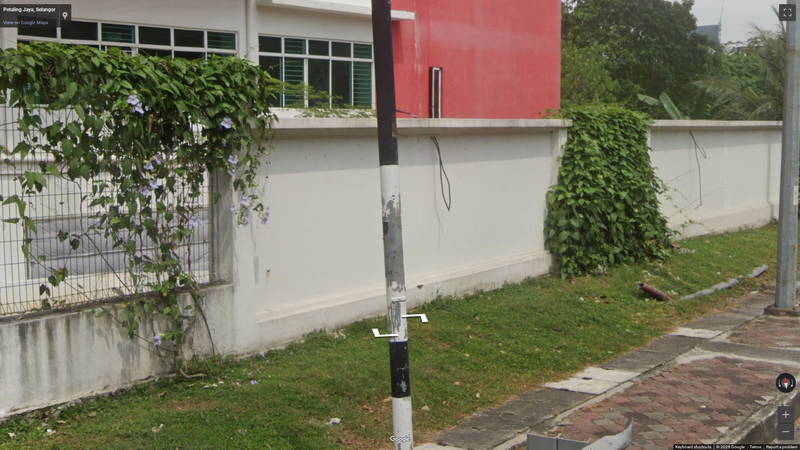
Shape: Cylinder or rectangular. Long or short
Material: Concrete or metall
Color: Black-and-white stripes
Tap a highlighted country to preview it.


Shape: Shield-shaped
Text: “MEXICO” at the top and large numbers in the center
Color: White background and black text

Extremely thick arrows on traffic signs


Sri Lankan road sign that uses a “P” (for parking) above an icon of a tuk-tuk, indicating a special parking area reserved for tuk-tuks

Color: Dark blue with white text
Text: In Arabic and English information about the street name, a street number, and a zone number (Z. No.) in the right corner

Sign Shape: This Czech sign is a blue square with a white triangle inside. It often has an additional white border.
Pedestrian Figure: The black figure is realistic and wears a hat.
Zebra Stripes: The crossing has four long black stripes.


Shape and color: Square blue background with white triangle. Large triangle but doesn't touch the top and the border of the sign
Figure: Black thick. 2 separate parts - head and the rest of the body. Legs and arms are square shape (not rounded)
Zebra stripes: 4 black thick stripes

Background: Red
Arrows: Bold or thin white
Additional details: Usually with white border


Shape: Rectangle or block arrow
Color: Blue
Text: White arabic. Sometimes with english

Cross-shaped rear reinforcement on the back of the sign (horizontal bar + vertical pole)
Tap a highlighted country to preview it.


Background: White
Arrows: Bold black
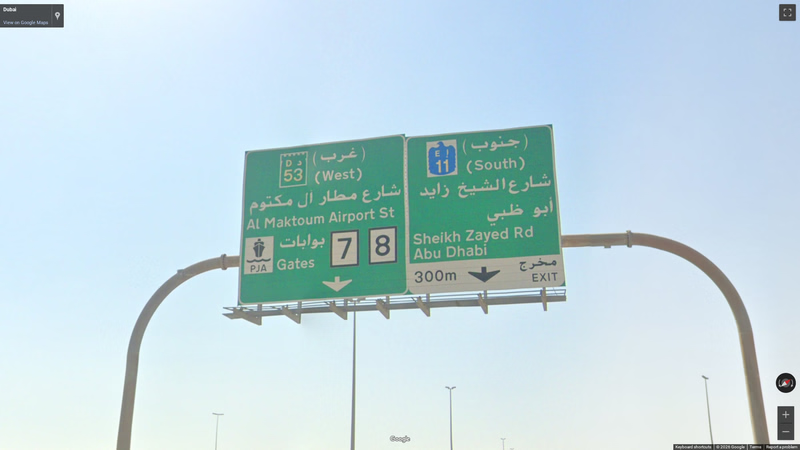
Green signs often carry the Dubai castle emblem, and blue signs display the falcon symbol

Shape: Octagonal
Text: ALTO (instead of STOP)
Color: Red background with white border
Tap a highlighted country to preview it.

Shape: Cylinder. Long or short
Material: Metal
Color: Black-and-white, no color possible
Tap a highlighted country to preview it.


Shape: Octagonal
Text: ALTO (instead of STOP)
Color: Red background with white border
Tap a highlighted country to preview it.

Cylinder (rounded) metal signposts without pain

Shape and color: Square blue background with the white triangle. Usually with the white rounded border inside blue square
Figure: Black rounded. 2 separate parts - head and the full body
Zebra stripes: 5 long stripes


Background: Red
Arrows: Bold white

Shape and color: Square blue background with white small triangle. Small white rounded border is common
Figure: Black rounded with a white high belt. This belt cuts the body on two parts
Zebra stripes: 5 black narrowly placed stripes

Background: White
Arrows: Bold red

Yield signs (red inverted triangles) with 'YIELD' text
vs Ireland:

Road direction signs use a consistent color system:
Text is always bilingual—Arabic and English

Types:
Additional details:

Color: Swedish direction signs are blue with white text and a white border.
Arrow: They feature a thin white arrow pointing the direction.
Contrast: Finnish signs have a filled-in white arrow, not thin.


Background: White
Arrows: Bold red

Road signs often show numbers in two scripts:
Both appear together on speed limits, distances, and other traffic signs, making the signage bilingual in numbering.

Shape and color: Square blue background with the white big triangle
Figure: Black with square parts
Zebra stripes: No zebra. Continuous line behind figure

Shape: Octagonal
Color: Red background, with or without white border
Text: White 'PARE' text
Tap a highlighted country to preview it.

Background: Yellow
Arrows: Bold black
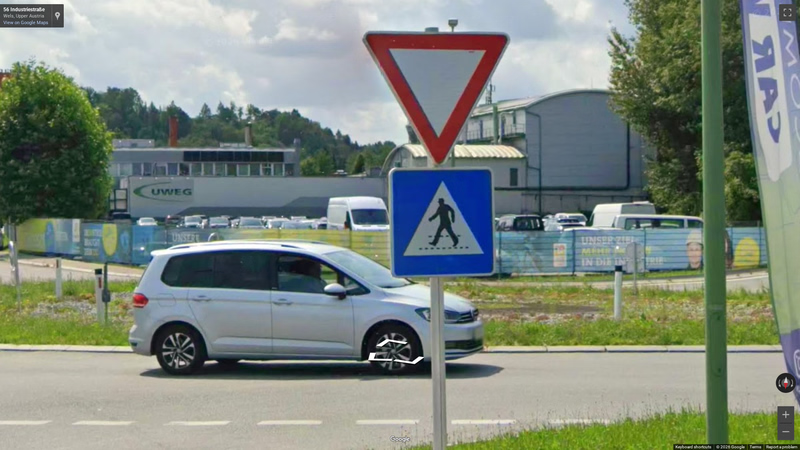
Shape and color: Square blue background with the white triangle
Figure: Black thick realistic with a hat
Zebra stripes: No zebra. Two dotted lines. Front dotted line is longer

Shape and color: Square blue background with the white triangle. Usually with white border
Figure: Black rounded with the white belt and pointed shoes. One arm is flat and another is diagonal. 3 separate parts - head, upper body and lower body
Zebra stripes: 5 zebra thick stripes
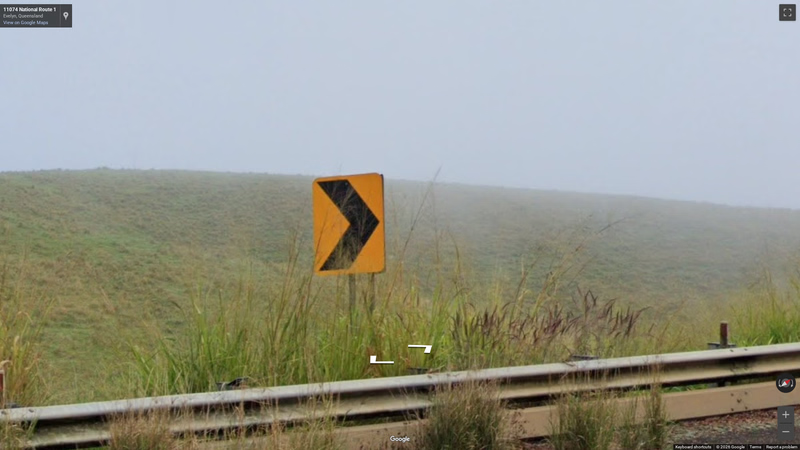
Australian roads use black-and-yellow chevrons
They guide drivers around obstacles or sharp turns
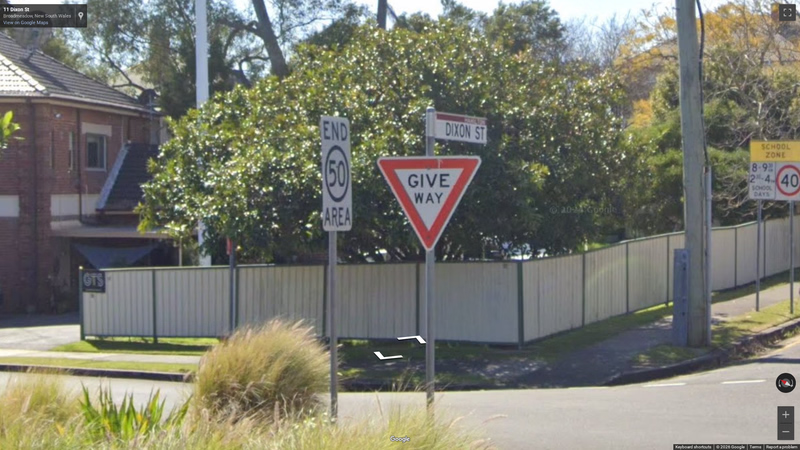
Australian give way signs have a white border and black text.
Contrast: New Zealand signs use red text.
Similar: South African signs look the same, but you will rarely see them.

Background: Blue
Arrows: Bold or thin white


Background: White
Arrows: Bold red


Background: White
Arrows: Bold red


Shape: Octagonal
Text: ALTO (instead of STOP)
Color: Red background with white border
Tap a highlighted country to preview it.

Square blue background with the big white triangle. Small white rounded bored is common
The figure is black starfish-shaped black stick figure with unusual limbs that shrink at the ends
Number of zebra stripes: 5 black short stripes

In Sri Lanka, blue signs are used on expressways and interchanges, while green signs show directions and distances on main roads. All direction signs are written in Sinhala, Tamil, and English, reflecting the country’s trilingual policy.

Shape: Octagonal
Color: Red background sometimes with white border
Text: Bold white 'PARE'
Tap a highlighted country to preview it.

Shape: Octagonal
Color: Red background with inner white thin border
Text: White 'ALTO' text
Tap a highlighted country to preview it.

Background: Yellow
Arrows: Bold black

Low-Level Mounting: Placed low-level
Color: Black lettering on a non-reflective white background with a black border

Shape: Rectangle
Color: Green background with white rectangle/rounded thin border
Text: White text with big white arrow
Additional details: In rural areas

Shape: Square with rounded corners
Color: White background with thin black rounded border and red circle
Text: Black speed limit digits inside red circle on white background. Sometimes you can find municipality info in the bottom section
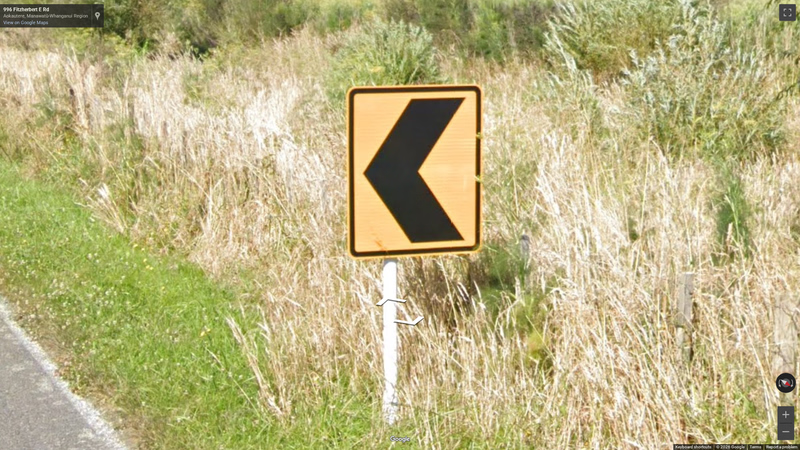
A black and yellow chevron sign.
Key Detail: This New Zealand sign has a thin black border.
Distinction: Similar signs in Australia do not have this thin black border.

A special green sign—commonly posted at village entrances


Shape: Octagonal
Color: Red background
Text: White 'PARE'
Tap a highlighted country to preview it.


Quebec region
Background: Red
Arrows: Bold white
Additional details: Invert Canada’s usual yellow-and-blackchevron style

Red on white background chevron panels used as hazard markers, especially on sharp curves or dangerous road sections in Sri Lanka

White background with bold red arrows

Background: Yellow
Arrows: Bold black

Czech road chevrons are easy to identify.
Background: White. Arrow: Red.

Yellow background with bold black numbers

Background:Blue
Arrows: Bold white

Background: Yellow
Arrows: Bold red

Color: Blue rectangle with white triangle
Num of zebra stripes: 5
Figure: Stick black figure above zebra
Text: Sometimes with white Arabic text below

Background: Yellow
Arrows: Bold black

Shape and color: Square blue background with white triangle
Figure: Black realistic person. 2 arms and one hand is not visible. No separate parts
Zebra stripes: 3 black thick stripes

Shape and color: Square blue background with white triangle
Figure: Black with very long legs. 3 separate parts - head, one leg and the rest of the body
Zebra stripes: 5 black stripes

Shape and color: Square blue background with the white big triangle
Figure: Rounded black. 2 separate parts - hard and the rest of the body. Doesn't touch the zebra
Zebra stripes: 5 black short stripes. Started directly from the blue background


Sign Background: This Greek sign has a blue square background with a white triangle inside.
Pedestrian Figure: The pedestrian is a black, realistic figure, shown with hair.
Road Marking: Instead of zebra stripes, there are two dashed horizontal lines.

Unlike Canada US warning boards often spell the hazard out—‘RAILROAD CROSSING’, or a paragraph beneath a yellow diamond.

Shape and color: Square blue background with the white triangle which placed closer to the bottom of the sign. Usually with white border
Figure: Black rounded with the white belt and straight legs. 3 separate parts - head, upper body and lower body
Zebra stripes: 5 zebra thick stripes


Shape: Octagonal
Color: Red background, with or without white border
Text: White 'PARE' text
Tap a highlighted country to preview it.

Background: Black
Arrows: Bold white


Mongolia’s stop signs often use the word “ЗОГС” (ZOGS) in Cyrillic instead of “STOP”; apart from the text, the red octagon follows the standard international style.
Standard English “STOP” signs are also widespread across the country.


Shape and color: Square blue background with the white triangle
Figure: Black rounded with the white belt. One arm is flat and another is diagonal. 3 separate parts - head, upper body and lower body
Zebra stripes: 5 zebra stripes
Tap a highlighted country to preview it.

The UIT sign in the Netherlands means "Exit" and is commonly found on motorways to indicate the off-ramp

Shape: Inverted triangle
Color: White background with red border
Text: Black text 'CEDA EL PASO'


Background: Yellow
Arrows: Bold black

Stop signs often feature the Arabic word ‘قف’ on a red octagon with a white border.
The standard stop sign version also appears
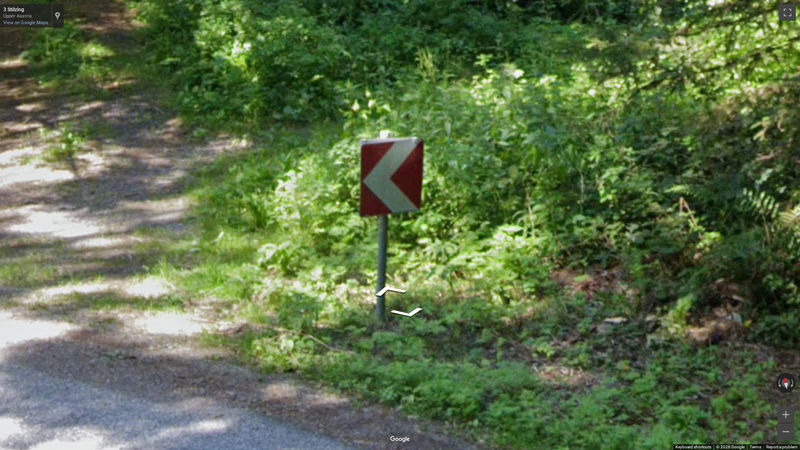
Background: Red
Arrows: Bold white

At junctions you often meet a tall black panel densely packed with multiple yellow arrows pointing up or diagonal lines

Shape: Inverted triangle
Color: Thick red border, white background

Background: Yellow
Arrows: Bold black

Shape: Octagonal
Color: Red background, with or without white border
Text: White 'PARE' text
Tap a highlighted country to preview it.

Shape: Circle
Color: White background with thick red border
Text: Thick or thin black numbers

Interstates use large, curved-corner green panels with white text
Canadian motorway signs keep sharper/rounded 90-degree edges.

The Republic of Ireland + the rest of the Europe uses the Metric system, measuring speed in **km/h **(Kilometers per Hour).
However the UK is the only major country in Europe (+ Jersey, Isle of Man and Guernsey) that still uses the Imperial system for road travel (US uses it too), measuring speed in MPH (Miles per Hour).

Background: Blue
Arrows: Bold white

Hazard signs are thin rectangles with black-and-white diagonal stripes

White background with blue bold arrows

Background: Black
Arrows: Bold yellow


Shape: Octagonal
Color: Red background. Sometimes with white or double white border
Text: White 'PARE' text
Tap a highlighted country to preview it.

Shape: Octagonal
Color: Red with white border sometimes
Text: Bold white 'PARE'
Tap a highlighted country to preview it.

Australian roads use black-and-white chevrons
They guide drivers around obstacles or sharp turns
Tap a highlighted country to preview it.

Shape: Thin rectangle on a metal pole
Color: Black-and-yellow diagonal stripes

Background: Red
Arrows: White path arrows

Color: Blue
Text: White in Arabic and English
Additional details: Highway variant has green rectangle with yellow numbers usually placed on top of the direction sign

Background: White
Arrows: Thin red (Bold variants are possible but rare)

Shape: Inverted triangle
Color: Thick red border and white background

Shape: Vertical rectangle. Usually with rounded border and thick
Color: Red-and-white diagonal stripes
Tap a highlighted country to preview it.

Shape: Octagonal
Color: Red background, with or without white border
Text: White 'PARE' text
Tap a highlighted country to preview it.

Background: White
Arrows: Bold red

Shape: Octagonal
Color: Red background, with or without white border
Text: White 'PARE' text
Tap a highlighted country to preview it.

Shape and color: Square blue background with the white triangle which placed closer to the bottom of the sign. Usually with the white border
Figure: Black rounded. 2 separate parts - head and the rest of the body
Zebra stripes: 5 thick zebra stripes
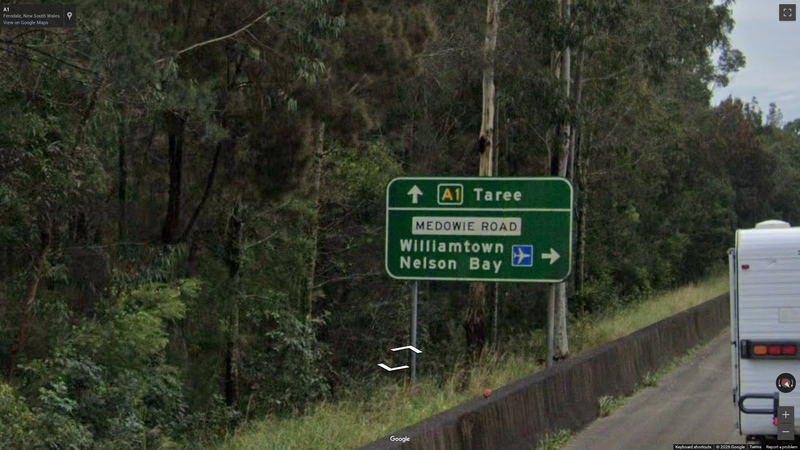
Green signs with white arrows appear at intersections to indicate nearby towns or cities.
They sometimes include the distance to the destination in kilometres.

These British distance marker signs are found on motorways and high-speed roads. They show the distance to upcoming exits.
Background: Blue with white stripes and border
Note: Irish signs have a green background.

Background: Black
Arrows: Bold yellow

Chevron signs have a black background with white arrows. They indicate a sharp curve or turn in the road
Tap a highlighted country to preview it.

Shape: Octagonal
Color: Red background, with or without white border
Text: White 'PARE' text
Tap a highlighted country to preview it.

Shape: Octagonal
Color: Red background, with or without white border
Text: White 'PARE' text
Tap a highlighted country to preview it.

Background: Bright yellow
Arrows: Bold red
Additional details: Arrow head never touches the sign edge

Color: Black-and-white diagonal stripes

A distance marker sign used on motorways or high-speed roads to indicate the distance to the next exit
Green background, white stripes and border
vs UK

Background: Yellow
Arrows: Bold black
Additional details: Only in cities

Octagonal stop signs with a white border are rare in Bhutan and only occasionally appear along the roads


Québec road shields are distinctive. Two types are common:
Vertical rectangle with a pointed top, resembling a medieval shield, with three "fleur-de-lys" French lily symbols.
Blue rectangle with a rounded arch bottom (resembling U.S. Interstate signs).
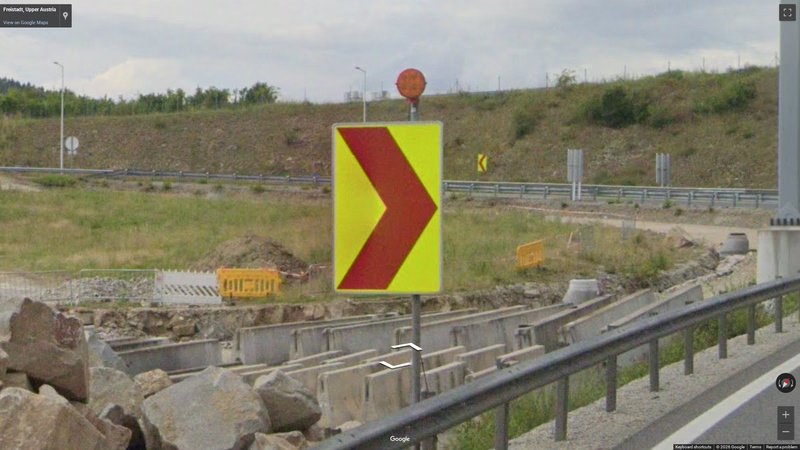
Austrian road signs often feature red and yellow chevrons.
These distinctive signs are used to warn drivers of upcoming turns or curves in the road.

Background: Blue
Arrows: Bold yellow

A semi-rigid barrier installed at "V" intersections or exits. Black background with orange arrows

Faded (because of the sun) version of black-and-yellow chevron


Background: Red
Arrows: Bold white

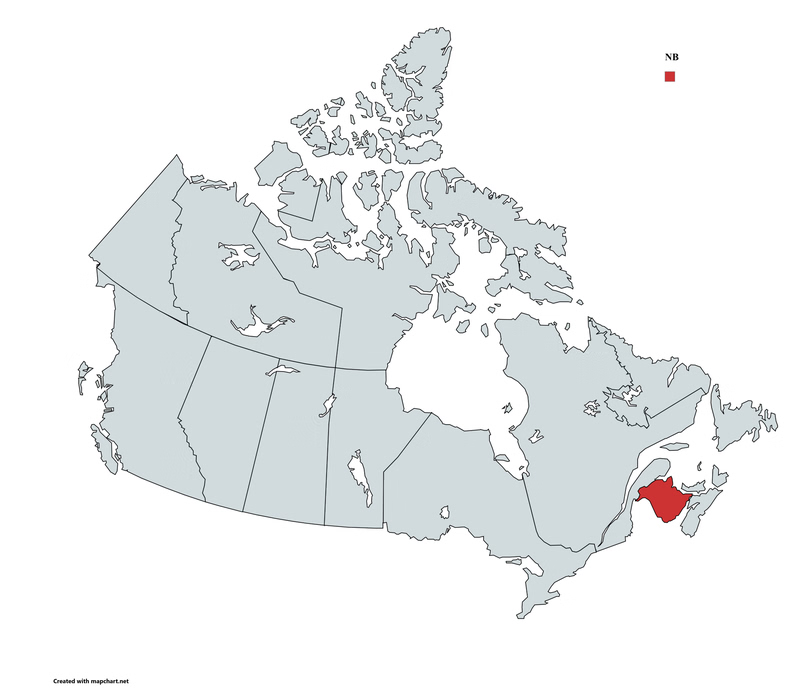
A lot of stop signs in New Brunswick will say both Stop and Arrêt on the same sign.


Austrian street signs in Vienna help identify your location.
Color: Signs are typically dark blue.
Detail: They display a district number before the street name. This number helps narrow down your position within the city.

Background: Black
Arrows: Bold yellow

Background: Yellow
Arrows: Bold black
Tap a highlighted country to preview it.

Pedestrian signs in
with this design and form are very common
Drill this on a map quiz that covers this country.
%20--%3e%3csvg%20version='1.1'%20id='Layer_1'%20xmlns='http://www.w3.org/2000/svg'%20xmlns:xlink='http://www.w3.org/1999/xlink'%20x='0px'%20y='0px'%20width='24px'%20height='24px'%20viewBox='0%200%2024%2024'%20style='enable-background:new%200%200%2024%2024;'%20xml:space='preserve'%3e%3cstyle%20type='text/css'%3e%20.st0{fill:%2357AEFF;}%20.st1{fill:%237A6BFF;}%20.st2{fill:%23AB5CFF;}%20.st3{fill:%23FF7DC0;}%20.st4{fill:%23FFBE57;}%20.st5{fill:%2373E61C;}%20.st6{fill:%23FF6242;}%20.st7{fill:%23F2F2F2;}%20.st8{fill:%23696969;}%20.st9{fill:%23FF3029;}%20.st10{fill:%23131F24;}%20.st11{fill:%23F1F7FB;}%20.st12{fill:%23EE5555;}%20.st13{fill:%2349C0F8;}%20.st14{fill:%233F85A7;}%20.st15{fill:%231CB0F6;}%20.st16{fill:%2393D333;}%20.st17{fill:%2379B933;}%20.st18{fill:%23FFAB33;}%20.st19{fill:%23FFC700;}%20.st20{fill:%23D84848;}%20.st21{fill:%23FB7185;}%20.st22{fill:%23DCE6EC;}%20.st23{fill:%2352656D;}%20.st24{fill:%2337464F;}%20.st25{opacity:0.5216;fill:%23FF3029;}%20.st26{opacity:0.5216;fill:%23F2F2F2;}%20.st27{clip-path:url(%23SVGID_2_);fill:%23F2F2F2;}%20.st28{clip-path:url(%23SVGID_4_);fill:%23F2F2F2;}%20.st29{clip-path:url(%23SVGID_6_);fill:%23F2F2F2;}%20.st30{clip-path:url(%23SVGID_8_);fill:%23F2F2F2;}%20.st31{clip-path:url(%23SVGID_10_);fill:%23F1F7FB;}%20.st32{clip-path:url(%23SVGID_12_);fill:%23F1F7FB;}%20%3c/style%3e%3cpath%20class='st21'%20d='M20.75,2.33v19.32c0,0.4-0.45,0.72-1,0.72H4.26c-0.56,0-1.01-0.32-1.01-0.72V2.33c0-0.39,0.45-0.71,1.01-0.71%20h15.49C20.3,1.62,20.75,1.95,20.75,2.33z'/%3e%3cpath%20class='st11'%20d='M8.89,21.6V2.94c0-0.37,0.3-0.67,0.67-0.67h5.41c0.37,0,0.67,0.3,0.67,0.67V21.6c0,0.37-0.3,0.67-0.67,0.67%20H9.56C9.19,22.27,8.89,21.97,8.89,21.6z'/%3e%3cpath%20class='st12'%20d='M10.79,8.76V4.44c0-0.43,0.35-0.78,0.78-0.78h1.39c0.43,0,0.78,0.35,0.78,0.78v4.31%20c0,0.43-0.35,0.78-0.78,0.78h-1.39C11.14,9.54,10.79,9.19,10.79,8.76z'/%3e%3cpath%20class='st17'%20d='M20.75,20.41v1.24c0,0.4-0.45,0.72-1,0.72H4.26c-0.56,0-1.01-0.32-1.01-0.72v-1.24H20.75z'/%3e%3c/svg%3e) Bollards
Bollards%20--%3e%3csvg%20version='1.1'%20id='Layer_1'%20xmlns='http://www.w3.org/2000/svg'%20xmlns:xlink='http://www.w3.org/1999/xlink'%20x='0px'%20y='0px'%20width='24px'%20height='24px'%20viewBox='0%200%2024%2024'%20style='enable-background:new%200%200%2024%2024;'%20xml:space='preserve'%3e%3cstyle%20type='text/css'%3e%20.st0{fill:%2357AEFF;}%20.st1{fill:%237A6BFF;}%20.st2{fill:%23AB5CFF;}%20.st3{fill:%23FF7DC0;}%20.st4{fill:%23FFBE57;}%20.st5{fill:%2373E61C;}%20.st6{fill:%23FF6242;}%20.st7{fill:%23F2F2F2;}%20.st8{fill:%23696969;}%20.st9{fill:%23FF3029;}%20.st10{fill:%23131F24;}%20.st11{fill:%23F1F7FB;}%20.st12{fill:%23EE5555;}%20.st13{fill:%2349C0F8;}%20.st14{fill:%233F85A7;}%20.st15{fill:%231CB0F6;}%20.st16{fill:%2393D333;}%20.st17{fill:%2379B933;}%20.st18{fill:%23FFAB33;}%20.st19{fill:%23FFC700;}%20.st20{fill:%23D84848;}%20.st21{fill:%23FB7185;}%20.st22{fill:%23DCE6EC;}%20.st23{fill:%2352656D;}%20.st24{fill:%2337464F;}%20.st25{opacity:0.5216;fill:%23FF3029;}%20.st26{opacity:0.5216;fill:%23F2F2F2;}%20.st27{clip-path:url(%23SVGID_2_);fill:%23F2F2F2;}%20.st28{clip-path:url(%23SVGID_4_);fill:%23F2F2F2;}%20.st29{clip-path:url(%23SVGID_6_);fill:%23F2F2F2;}%20.st30{clip-path:url(%23SVGID_8_);fill:%23F2F2F2;}%20.st31{clip-path:url(%23SVGID_10_);fill:%23F1F7FB;}%20.st32{clip-path:url(%23SVGID_12_);fill:%23F1F7FB;}%20%3c/style%3e%3cpath%20class='st13'%20d='M23.98,5.97v12.06c0,0.44-0.37,0.79-0.83,0.79H0.81c-0.45,0-0.83-0.35-0.83-0.79V5.97%20c0-0.43,0.38-0.78,0.83-0.78h22.34C23.61,5.18,23.98,5.54,23.98,5.97z'/%3e%3cpath%20class='st11'%20d='M24.02,5.97v12.06c0,0.44-0.37,0.79-0.83,0.79h-12.4l2.42-13.63h9.98C23.65,5.18,24.02,5.54,24.02,5.97z'/%3e%3cg%3e%3cpath%20class='st11'%20d='M2.18,15.63l2.29-7.7c0.11-0.38,0.52-0.6,0.9-0.49l0.1,0.03c0.38,0.11,0.6,0.52,0.49,0.9l-2.29,7.7%20c-0.11,0.38-0.52,0.6-0.9,0.49l-0.1-0.03C2.28,16.41,2.06,16.01,2.18,15.63z'/%3e%3cpath%20class='st11'%20d='M3.6,13.52h2.96c0.4,0,0.72,0.32,0.72,0.72v0.11c0,0.4-0.32,0.72-0.72,0.72H3.6c-0.4,0-0.72-0.32-0.72-0.72%20l0-0.11C2.88,13.85,3.2,13.52,3.6,13.52z'/%3e%3cpath%20class='st11'%20d='M8.25,15.63l-2.29-7.7c-0.11-0.38-0.52-0.6-0.9-0.49l-0.1,0.03c-0.38,0.11-0.6,0.52-0.49,0.9l2.29,7.7%20c0.11,0.38,0.52,0.6,0.9,0.49l0.1-0.03C8.14,16.41,8.36,16.01,8.25,15.63z'/%3e%3c/g%3e%3cg%3e%3cpath%20class='st8'%20d='M17.55,15.56l0-7.05c0-0.4,0.32-0.72,0.72-0.72h0.09c0.4,0,0.72,0.32,0.72,0.72l0,7.05%20c0,0.4-0.32,0.72-0.72,0.72h-0.09C17.87,16.28,17.55,15.96,17.55,15.56z'/%3e%3cpath%20class='st8'%20d='M20.68,16.31l-5.82-7.27c-0.23-0.28-0.23-0.74,0-1.02l0.27-0.34c0.23-0.28,0.59-0.28,0.82,0l5.82,7.27%20c0.23,0.28,0.23,0.74,0,1.02l-0.27,0.34C21.28,16.6,20.91,16.6,20.68,16.31z'/%3e%3cpath%20class='st8'%20d='M15.95,16.31l5.82-7.27c0.23-0.28,0.23-0.74,0-1.02L21.5,7.69c-0.23-0.28-0.59-0.28-0.82,0l-5.82,7.27%20c-0.23,0.28-0.23,0.74,0,1.02l0.27,0.34C15.36,16.6,15.73,16.6,15.95,16.31z'/%3e%3c/g%3e%3c/svg%3e) Languages
Languages%20--%3e%3csvg%20version='1.1'%20id='Layer_1'%20xmlns='http://www.w3.org/2000/svg'%20xmlns:xlink='http://www.w3.org/1999/xlink'%20x='0px'%20y='0px'%20width='24px'%20height='24px'%20viewBox='0%200%2024%2024'%20style='enable-background:new%200%200%2024%2024;'%20xml:space='preserve'%3e%3cstyle%20type='text/css'%3e%20.st0{fill:%2357AEFF;}%20.st1{fill:%237A6BFF;}%20.st2{fill:%23AB5CFF;}%20.st3{fill:%23FF7DC0;}%20.st4{fill:%23FFBE57;}%20.st5{fill:%2373E61C;}%20.st6{fill:%23FF6242;}%20.st7{fill:%23F2F2F2;}%20.st8{fill:%23696969;}%20.st9{fill:%23FF3029;}%20.st10{fill:%23131F24;}%20.st11{fill:%23F1F7FB;}%20.st12{fill:%23EE5555;}%20.st13{fill:%2349C0F8;}%20.st14{fill:%233F85A7;}%20.st15{fill:%231CB0F6;}%20.st16{fill:%2393D333;}%20.st17{fill:%2379B933;}%20.st18{fill:%23FFAB33;}%20.st19{fill:%23FFC700;}%20.st20{fill:%23D84848;}%20.st21{fill:%23FB7185;}%20.st22{fill:%23DCE6EC;}%20.st23{fill:%2352656D;}%20.st24{fill:%2337464F;}%20.st25{opacity:0.5216;fill:%23FF3029;}%20.st26{opacity:0.5216;fill:%23F2F2F2;}%20.st27{clip-path:url(%23SVGID_2_);fill:%23F2F2F2;}%20.st28{clip-path:url(%23SVGID_4_);fill:%23F2F2F2;}%20.st29{clip-path:url(%23SVGID_6_);fill:%23F2F2F2;}%20.st30{clip-path:url(%23SVGID_8_);fill:%23F2F2F2;}%20.st31{clip-path:url(%23SVGID_10_);fill:%23F1F7FB;}%20.st32{clip-path:url(%23SVGID_12_);fill:%23F1F7FB;}%20%3c/style%3e%3cpath%20class='st13'%20d='M20.75,2.33v19.32c0,0.4-0.45,0.72-1,0.72H4.26c-0.56,0-1.01-0.32-1.01-0.72V2.33c0-0.39,0.45-0.71,1.01-0.71%20h15.49C20.3,1.62,20.75,1.95,20.75,2.33z'/%3e%3cpath%20class='st11'%20d='M11.18,20.64l0-16.4c0-0.4,0.32-0.72,0.72-0.72H12c0.4,0,0.72,0.32,0.72,0.72l0,16.4%20c0,0.4-0.32,0.72-0.72,0.72h-0.09C11.51,21.36,11.18,21.04,11.18,20.64z'/%3e%3cg%3e%3cg%3e%3cdefs%3e%3crect%20id='SVGID_9_'%20x='7.06'%20y='5.19'%20width='4.93'%20height='5.63'/%3e%3c/defs%3e%3cclipPath%20id='SVGID_2_'%3e%3cuse%20xlink:href='%23SVGID_9_'%20style='overflow:visible;'/%3e%3c/clipPath%3e%3cpath%20style='clip-path:url(%23SVGID_2_);fill:%23F1F7FB;'%20d='M7.91,5.34l4.63,4.63c0.2,0.2,0.2,0.51,0,0.71l0,0%20c-0.2,0.2-0.51,0.2-0.71,0L7.2,6.04c-0.2-0.2-0.2-0.51,0-0.71l0,0C7.4,5.14,7.72,5.14,7.91,5.34z'/%3e%3c/g%3e%3cg%3e%3cdefs%3e%3crect%20id='SVGID_11_'%20x='11.99'%20y='5.19'%20width='4.93'%20height='5.63'/%3e%3c/defs%3e%3cclipPath%20id='SVGID_4_'%3e%3cuse%20xlink:href='%23SVGID_11_'%20style='overflow:visible;'/%3e%3c/clipPath%3e%3cpath%20style='clip-path:url(%23SVGID_4_);fill:%23F1F7FB;'%20d='M16.07,5.34l-4.63,4.63c-0.2,0.2-0.2,0.51,0,0.71l0,0%20c0.2,0.2,0.51,0.2,0.71,0l4.63-4.63c0.2-0.2,0.2-0.51,0-0.71l0,0C16.58,5.14,16.26,5.14,16.07,5.34z'/%3e%3c/g%3e%3c/g%3e%3cpath%20class='st11'%20d='M18.9,6.48H5.1c-0.4,0-0.72-0.32-0.72-0.72V5.67c0-0.4,0.32-0.72,0.72-0.72h13.8c0.4,0,0.72,0.32,0.72,0.72%20v0.09C19.62,6.16,19.3,6.48,18.9,6.48z'/%3e%3cpath%20class='st11'%20d='M16.1,13.41l-8.3,0c-0.4,0-0.72-0.32-0.72-0.72l0-0.09c0-0.4,0.32-0.72,0.72-0.72h8.3%20c0.4,0,0.72,0.32,0.72,0.72v0.09C16.83,13.08,16.5,13.41,16.1,13.41z'/%3e%3ccircle%20class='st8'%20cx='16.83'%20cy='3.79'%20r='1.15'/%3e%3ccircle%20class='st8'%20cx='6.56'%20cy='3.79'%20r='1.15'/%3e%3cpath%20class='st4'%20d='M20.75,20.41v1.24c0,0.4-0.45,0.72-1,0.72H4.26c-0.56,0-1.01-0.32-1.01-0.72v-1.24H20.75z'/%3e%3c/svg%3e) Utility Poles
Utility Poles License Plates
%20--%3e%3csvg%20version='1.1'%20id='Layer_1'%20xmlns='http://www.w3.org/2000/svg'%20xmlns:xlink='http://www.w3.org/1999/xlink'%20x='0px'%20y='0px'%20width='24px'%20height='24px'%20viewBox='0%200%2024%2024'%20style='enable-background:new%200%200%2024%2024;'%20xml:space='preserve'%3e%3cstyle%20type='text/css'%3e%20.st0{fill:%2357AEFF;}%20.st1{fill:%237A6BFF;}%20.st2{fill:%23AB5CFF;}%20.st3{fill:%23FF7DC0;}%20.st4{fill:%23FFBE57;}%20.st5{fill:%2373E61C;}%20.st6{fill:%23FF6242;}%20.st7{fill:%23F2F2F2;}%20.st8{fill:%23696969;}%20.st9{fill:%23FF3029;}%20.st10{fill:%23131F24;}%20.st11{fill:%23F1F7FB;}%20.st12{fill:%23EE5555;}%20.st13{fill:%2349C0F8;}%20.st14{fill:%233F85A7;}%20.st15{fill:%231CB0F6;}%20.st16{fill:%2393D333;}%20.st17{fill:%2379B933;}%20.st18{fill:%23FFAB33;}%20.st19{fill:%23FFC700;}%20.st20{fill:%23D84848;}%20.st21{fill:%23FB7185;}%20.st22{fill:%23DCE6EC;}%20.st23{fill:%2352656D;}%20.st24{fill:%2337464F;}%20.st25{opacity:0.5216;fill:%23FF3029;}%20.st26{opacity:0.5216;fill:%23F2F2F2;}%20.st27{clip-path:url(%23SVGID_2_);fill:%23F2F2F2;}%20.st28{clip-path:url(%23SVGID_4_);fill:%23F2F2F2;}%20.st29{clip-path:url(%23SVGID_6_);fill:%23F2F2F2;}%20.st30{clip-path:url(%23SVGID_8_);fill:%23F2F2F2;}%20.st31{clip-path:url(%23SVGID_10_);fill:%23F1F7FB;}%20.st32{clip-path:url(%23SVGID_12_);fill:%23F1F7FB;}%20%3c/style%3e%3cpath%20class='st18'%20d='M20.1,3.72v16.55c0,0.46-0.33,0.83-0.74,0.83H4.64c-0.41,0-0.74-0.37-0.74-0.83V3.72%20c0-0.46,0.33-0.83,0.74-0.83h14.72C19.77,2.9,20.1,3.27,20.1,3.72z'/%3e%3cpath%20class='st8'%20d='M19.92,11.65L9.02,2.9H4.64C4.23,2.9,3.9,3.27,3.9,3.72v2.44l6.83,5.48c0.24,0.2,0.24,0.51,0,0.7L3.9,17.84%20v2.44c0,0.46,0.33,0.83,0.74,0.83h4.38l10.9-8.76c0.12-0.09,0.18-0.22,0.18-0.35C20.1,11.88,20.04,11.74,19.92,11.65z'/%3e%3c/svg%3e) Chevrons
Chevrons