Overview
Languages of India

GeoGuessr theory · Region guessing
Narrow down the correct region inside India: architecture, flora, signage, terrain, and subdivision-specific clues.
Last updated ·

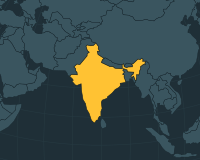
 Left
Left
%20--%3e%3csvg%20version='1.1'%20id='Layer_1'%20xmlns='http://www.w3.org/2000/svg'%20xmlns:xlink='http://www.w3.org/1999/xlink'%20x='0px'%20y='0px'%20width='24px'%20height='24px'%20viewBox='0%200%2024%2024'%20style='enable-background:new%200%200%2024%2024;'%20xml:space='preserve'%3e%3cstyle%20type='text/css'%3e%20.st0{fill:%2357AEFF;}%20.st1{fill:%237A6BFF;}%20.st2{fill:%23AB5CFF;}%20.st3{fill:%23FF7DC0;}%20.st4{fill:%23FFBE57;}%20.st5{fill:%2373E61C;}%20.st6{fill:%23FF6242;}%20.st7{fill:%23F2F2F2;}%20.st8{fill:%23696969;}%20.st9{fill:%23FF3029;}%20.st10{fill:%23131F24;}%20.st11{fill:%23F1F7FB;}%20.st12{fill:%23EE5555;}%20.st13{fill:%2349C0F8;}%20.st14{fill:%233F85A7;}%20.st15{fill:%231CB0F6;}%20.st16{fill:%2393D333;}%20.st17{fill:%2379B933;}%20.st18{fill:%23FFAB33;}%20.st19{fill:%23FFC700;}%20.st20{fill:%23D84848;}%20.st21{fill:%23FB7185;}%20.st22{fill:%23DCE6EC;}%20.st23{fill:%2352656D;}%20.st24{fill:%2337464F;}%20.st25{opacity:0.5216;fill:%23FF3029;}%20.st26{opacity:0.5216;fill:%23F2F2F2;}%20.st27{clip-path:url(%23SVGID_2_);fill:%23F2F2F2;}%20.st28{clip-path:url(%23SVGID_4_);fill:%23F2F2F2;}%20.st29{clip-path:url(%23SVGID_6_);fill:%23F2F2F2;}%20.st30{clip-path:url(%23SVGID_8_);fill:%23F2F2F2;}%20.st31{clip-path:url(%23SVGID_10_);fill:%23F1F7FB;}%20.st32{clip-path:url(%23SVGID_12_);fill:%23F1F7FB;}%20.st33{clip-path:url(%23SVGID_14_);fill:%23F1F7FB;}%20.st34{clip-path:url(%23SVGID_16_);fill:%23F1F7FB;}%20.st35{clip-path:url(%23SVGID_18_);fill:%23F1F7FB;}%20.st36{clip-path:url(%23SVGID_20_);fill:%23F1F7FB;}%20.st37{clip-path:url(%23SVGID_22_);fill:%23F1F7FB;}%20.st38{clip-path:url(%23SVGID_24_);fill:%23F1F7FB;}%20.st39{clip-path:url(%23SVGID_26_);fill:%23F1F7FB;}%20.st40{clip-path:url(%23SVGID_28_);fill:%23F1F7FB;}%20.st41{clip-path:url(%23SVGID_30_);fill:%23F1F7FB;}%20.st42{clip-path:url(%23SVGID_32_);fill:%23F1F7FB;}%20.st43{clip-path:url(%23SVGID_34_);fill:%23F1F7FB;}%20.st44{clip-path:url(%23SVGID_36_);fill:%23F1F7FB;}%20.st45{clip-path:url(%23SVGID_38_);fill:%23F1F7FB;}%20.st46{clip-path:url(%23SVGID_40_);fill:%23F1F7FB;}%20.st47{fill:none;stroke:%2393D333;stroke-width:0.3;stroke-miterlimit:10;}%20.st48{fill:%23486E20;}%20%3c/style%3e%3cg%3e%3cpath%20class='st18'%20d='M22.61,1.16v21.68c0,0.6-0.43,1.09-0.97,1.09H2.36c-0.54,0-0.97-0.48-0.97-1.09V1.16%20c0-0.6,0.43-1.09,0.97-1.09h19.29C22.18,0.07,22.61,0.56,22.61,1.16z'/%3e%3cpath%20class='st8'%20d='M22.38,11.53L8.1,0.07H2.36c-0.54,0-0.97,0.48-0.97,1.09v3.2l8.95,7.18c0.31,0.26,0.31,0.67,0,0.92l-8.95,7.19%20v3.2c0,0.6,0.43,1.09,0.97,1.09H8.1l14.28-11.48c0.16-0.12,0.24-0.29,0.24-0.46C22.61,11.84,22.53,11.67,22.38,11.53z'/%3e%3c/g%3e%3c/svg%3e)
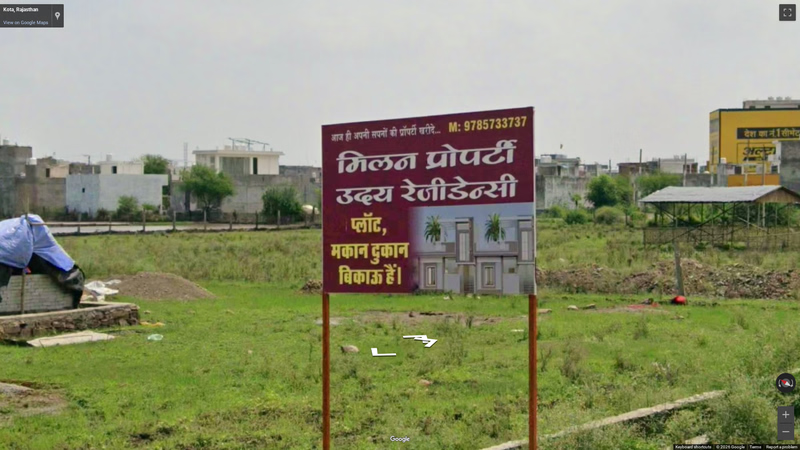

Name: Hindi
Script: Devanagari
Description: Clean, geometric script with a distinctive horizontal line (shirorekha) running along the top of letters. Characters hang from this top line. Letters are relatively uniform in height and often have rounded curves. Official language of India (alongside English)
Unique symbols:
क,
ध,
ष,
ज्ञ
vs Marathi: they're nearly identical visually. Only context and specific vocabulary differences can help you. Some Marathi words use ळ which Hindi doesn't have.
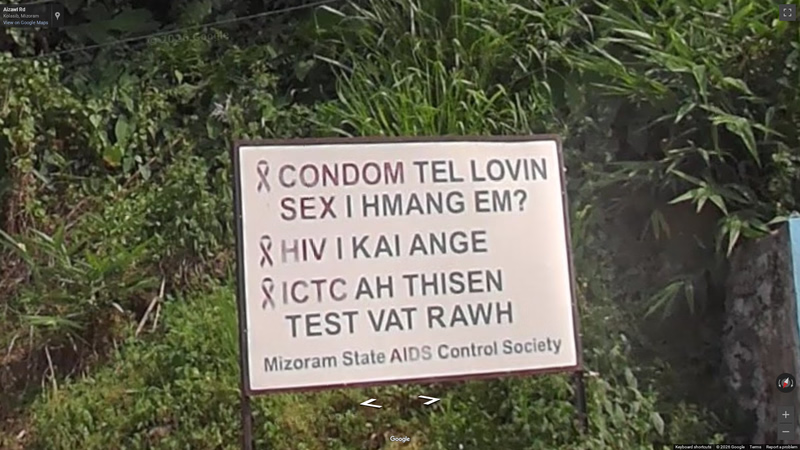

Name: Mizo
Script: Latin
Description:
Mizo uses the standard Latin alphabet introduced by Christian missionaries in the late 19th century.
Unique features:
Similar scripts & distinctions:
Visually identical to English because it uses the Latin alphabet. It is distinguishable only by vocabulary and specific endings like tl and frequent ng at the beginning of words.
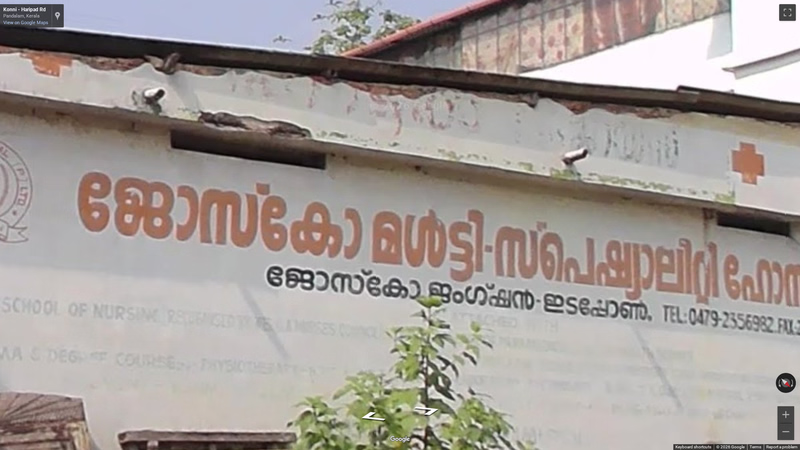

Name: Malayalam
Script: Malayalam script
Description: Curvy and flowing with many loops and circular elements. Letters often have distinctive "tails" and connecting elements.
Unique symbols:
ക,
ള,
ഴ.
ം
Similar scripts & distinctions:
Can resemble Telugu/Kannada but has more "tails" and connecting strokes. Malayalam letters often extend below the baseline more than Telugu. More compressed appearance overall. Pay attention on unique letters!
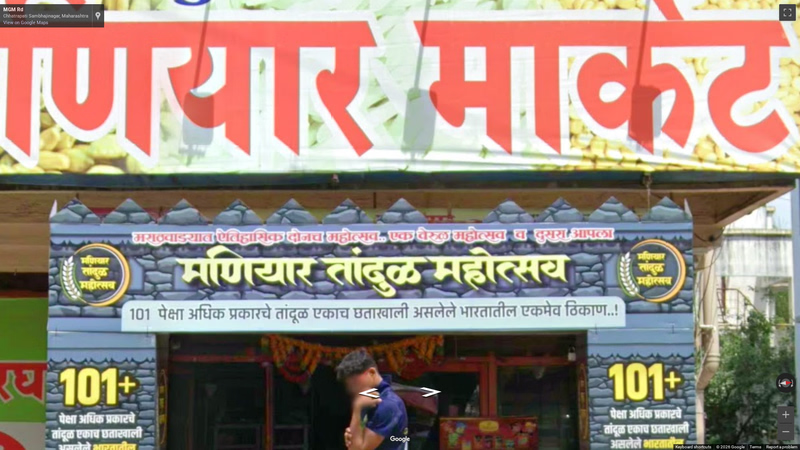

Name: Marathi
Script: Devanagari script
Description: Identical to Hindi's Devanagari script with the continuous horizontal line on top. Visually indistinguishable from Hindi in appearance.
Unique symbols:
Uses all Hindi symbols, plus:
ळ distinctive to Marathi,
ऱ — used in Marathi to represent a distinct “r” sound.
ऱ्ह and this conjunct form, not a separate letter
Otherwise identical to Hindi
Similar scripts & distinctions:
Identical to Hindi visually. Only distinguishable by vocabulary and the presence of ळ in some Marathi words. You need to read the actual words to tell them apart.
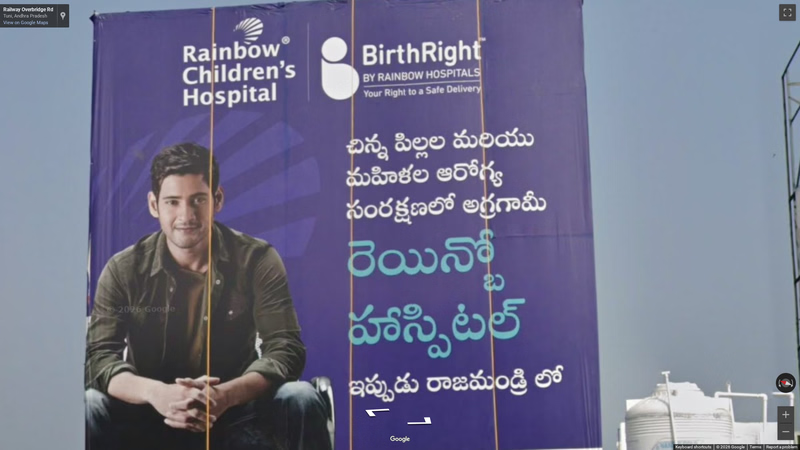

Telugu: Telugu
Script: Telugu script
Description: Very rounded, bubbly appearance with circular and curved elements. Letters look like a collection of circles, loops, and curves. Vowel signs create small tick or checkmark like strokes above the letter.
Unique symbols:
క, త, ఠ,ఱ
Similar scripts & distinctions:
Similar to Kannada but rounder. Telugu is more consistently circular and curvy, while Kannada has more angular elements and straight lines mixed with curves. Telugu vowel signs create small tick- or checkmark-like strokes above the letter
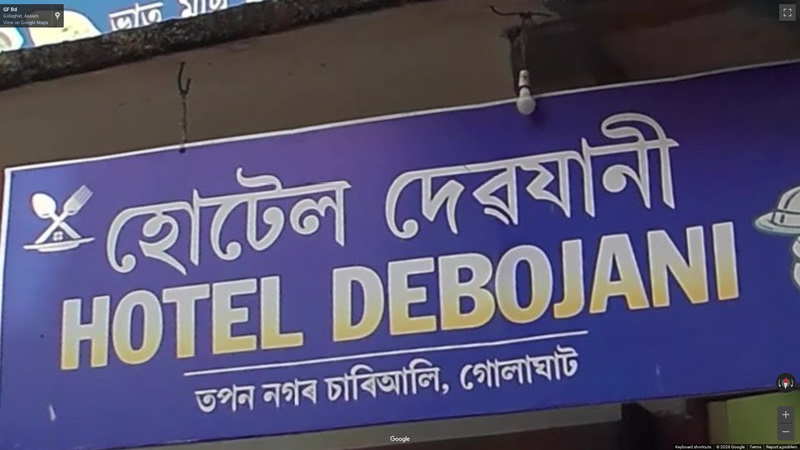

Name: Assamese
Script: Assamese script (variant of Bengali-Assamese/Eastern Nagari)
Description: Nearly identical to Bengali script. Rounded, flowing appearance with curved letters. Visually indistinguishable to non-speakers.
Unique symbols:
Same as Bengali, with two additions:
ৰ, ৱ
Similar scripts & distinctions:
Virtually identical to Bengali. Only the presence of ৰ or ৱ distinguishes Assamese text
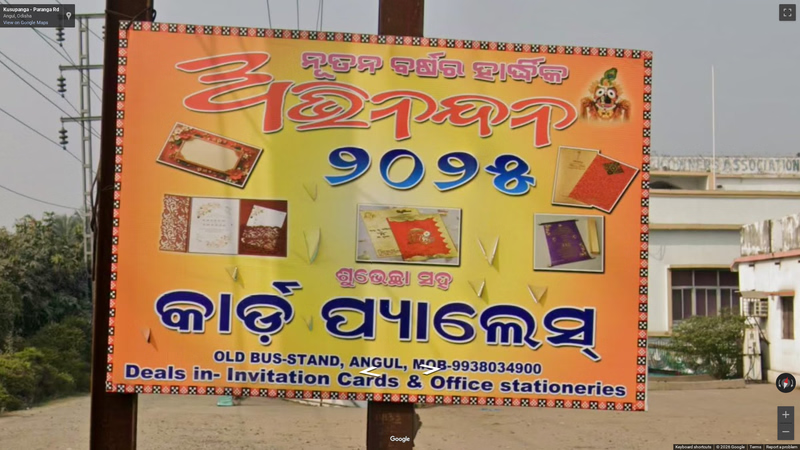

Name: Odia (Oriya)
Script: Odia script
Description: Very rounded and curved, similar to Telugu. Letters have a circular "head" with many characters featuring loops. Softer appearance than Bengali.
Unique symbols:
କ (ka) - rounded with distinctive shape
ଡ(da) - circular with curl
ଳ (retroflex la) - unique loop
Extensive use of circular diacritics
Similar scripts & distinctions:
vs Bengali: More uniformly rounded than Bengali (which has more varied shapes) - Bengali letters look flatter on top. Bengali has a horizontal headline across words.
vs Telugu: Telugu → more flowing and open.
Odia → tighter, more circular tops, slightly denser feel
Fun fact:
Why Odia is so round? And other South Indian scripts
Historically written on palm leaves. Straight lines could tear the leaf so letters evolved to be round
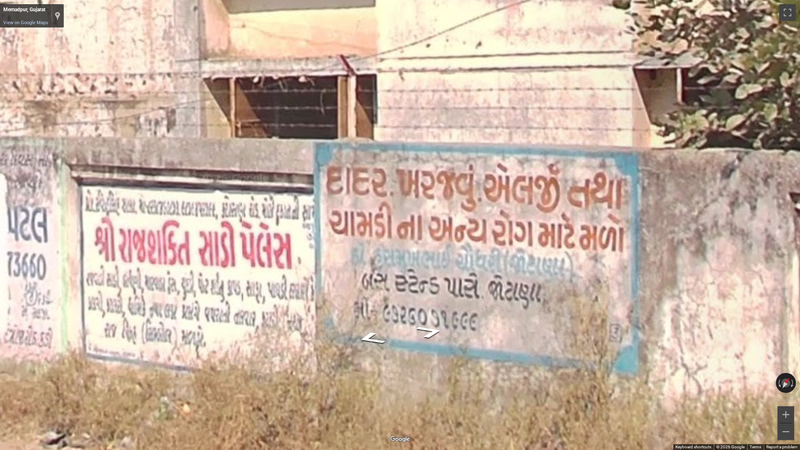

Name: Gujarati
Script: Gujarati script
Description: Looks very similar to Devanagari but without the horizontal headline (shirorekha). It is slightly more angular than Hindi in some characters.
Unique symbols:
ૐ,
ઋ,
ક,
જ,
ળ,
અં
Similar scripts & distinctions:
Most similar to Devanagari/Hindi but immediately recognizable because the continuous top line is absent
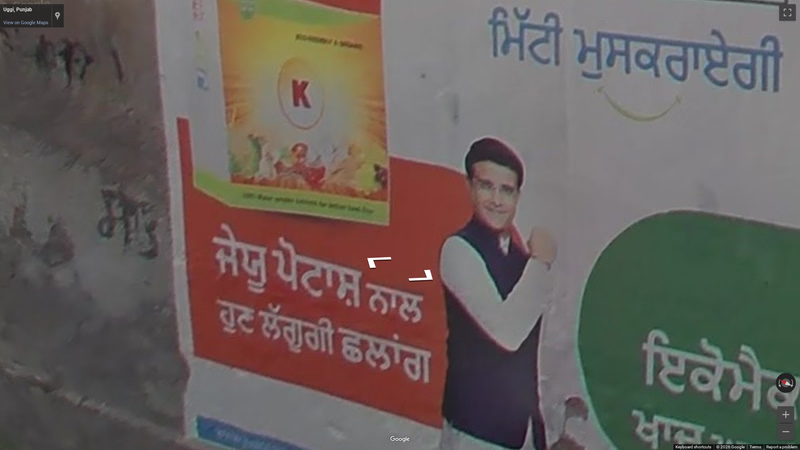

Script: Gurmukhi script
Description: Angular and geometric with horizontal and vertical lines. Letters are relatively simple and blocky. Headline and letters are connected along the top
Common:
ਨ, ਲ, and ਅ
Unique symbols:ਕ,
ਗ,
ੜ
Extensive use of diacritical marks: tippi (ਂ), bindi (ੰ), addak (ੱ)
Similar scripts & distinctions:
If you see:
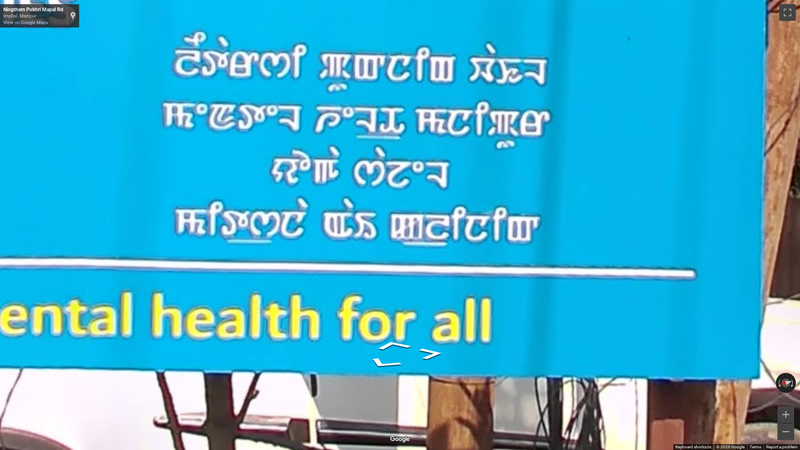

Name: Manipuri (Meitei)
Script: Meitei Mayek script
Description: An ancient script native to Manipur, with distinctive rounded characters and a unique structural system. The letters have a compact and balanced appearance, often featuring curves, loops, and hooks. The script was revived in the 20th century.
Unique symbols:
ꯀ,
ꯃ,
ꯄ
Similar scripts & distinctions:
Unique
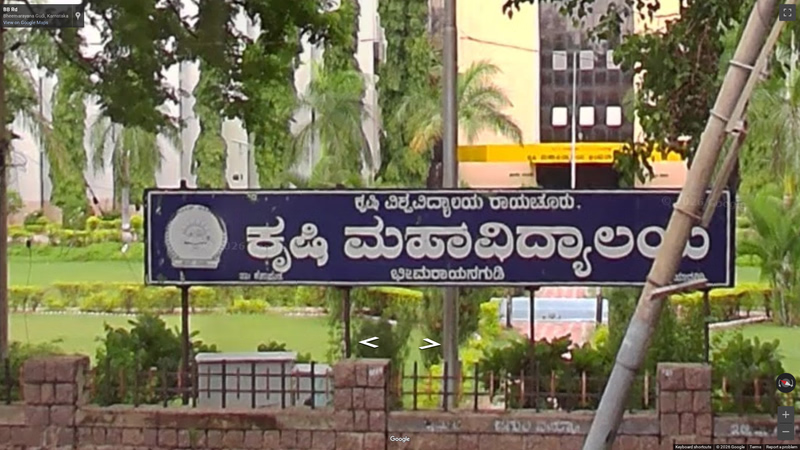

Name: Kannada
Script: Kannada script
Description: Circular and curvy like Telugu, but includes more straight lines and angular elements mixed in. More "balanced" between curves and angles than Telugu's pure roundness.
Unique symbols:
ಕ, ಠ, ಳ, ಜ್ಞ
Similar scripts & distinctions:
Similar to Telugu but less uniformly round. Kannada mixes angular and curved elements, while Telugu is consistently circular. Look for more "corners" and straight segments in Kannada.
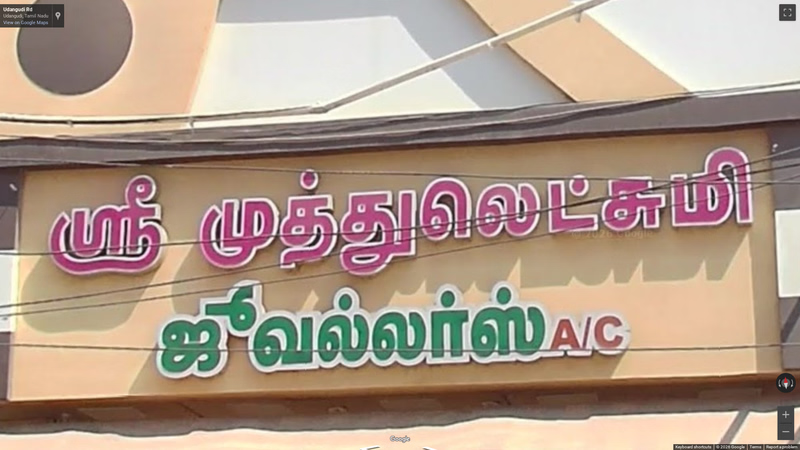

Name: Tamil
Script: Tamil script
Description: Rounded and flowing with many curves. Letters look smooth and circular. It does not have the horizontal top line like Devanagari. It is generally less complex than Telugu or Kannada and has fewer loops. The pulli dot is very visually noticeable and frequent: (்), க்
Unique symbols:
க,
ங,
ழ,
ஃ, ற, ன
Similar scripts & distinctions:
Telugu → more loops and circles. Small tick or checkmark instead of pulli
Kannada → visually similar in roundness. No pulli dot
Devanagari → Tamil has no horizontal top line
Tap a highlighted country to preview it.
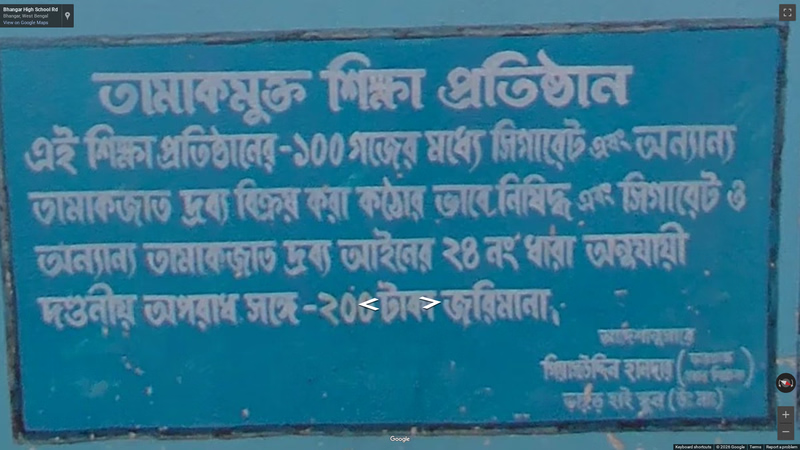

Name: Bengali
Script: Bengali-Assamese script (Eastern Nagari)
Description: Flowing, curved script with a horizontal top line (matra). Words are usually connected across the top, but the line may appear lighter or less rigid than in Devanagari
Unique symbols: ক (vs ৰ Assamese), ড, ঙ, র (vs ৱ Assamese)
Similar scripts & distinctions:
Nearly identical to Assamese script.
Main difference: Assamese uses ৰ and ৱ which Bengali doesn't. The overall appearance is almost the same, distinguished mainly by language vocabulary.
Tap a highlighted country to preview it.
Cheatsheets and visual references uploaded by the community.
Drill this on a map quiz that covers this country.
 Bangladesh
 Sri Lanka
 Bhutan
%20--%3e%3csvg%20version='1.1'%20id='Layer_1'%20xmlns='http://www.w3.org/2000/svg'%20xmlns:xlink='http://www.w3.org/1999/xlink'%20x='0px'%20y='0px'%20width='24px'%20height='24px'%20viewBox='0%200%2024%2024'%20style='enable-background:new%200%200%2024%2024;'%20xml:space='preserve'%3e%3cstyle%20type='text/css'%3e%20.st0{fill:%2357AEFF;}%20.st1{fill:%237A6BFF;}%20.st2{fill:%23AB5CFF;}%20.st3{fill:%23FF7DC0;}%20.st4{fill:%23FFBE57;}%20.st5{fill:%2373E61C;}%20.st6{fill:%23FF6242;}%20.st7{fill:%23F2F2F2;}%20.st8{fill:%23696969;}%20.st9{fill:%23FF3029;}%20.st10{fill:%23131F24;}%20.st11{fill:%23F1F7FB;}%20.st12{fill:%23EE5555;}%20.st13{fill:%2349C0F8;}%20.st14{fill:%233F85A7;}%20.st15{fill:%231CB0F6;}%20.st16{fill:%2393D333;}%20.st17{fill:%2379B933;}%20.st18{fill:%23FFAB33;}%20.st19{fill:%23FFC700;}%20.st20{fill:%23D84848;}%20.st21{fill:%23FB7185;}%20.st22{fill:%23DCE6EC;}%20.st23{fill:%2352656D;}%20.st24{fill:%2337464F;}%20.st25{opacity:0.5216;fill:%23FF3029;}%20.st26{opacity:0.5216;fill:%23F2F2F2;}%20.st27{clip-path:url(%23SVGID_2_);fill:%23F2F2F2;}%20.st28{clip-path:url(%23SVGID_4_);fill:%23F2F2F2;}%20.st29{clip-path:url(%23SVGID_6_);fill:%23F2F2F2;}%20.st30{clip-path:url(%23SVGID_8_);fill:%23F2F2F2;}%20.st31{clip-path:url(%23SVGID_10_);fill:%23F1F7FB;}%20.st32{clip-path:url(%23SVGID_12_);fill:%23F1F7FB;}%20.st33{clip-path:url(%23SVGID_14_);fill:%23F1F7FB;}%20.st34{clip-path:url(%23SVGID_16_);fill:%23F1F7FB;}%20.st35{clip-path:url(%23SVGID_18_);fill:%23F1F7FB;}%20.st36{clip-path:url(%23SVGID_20_);fill:%23F1F7FB;}%20.st37{clip-path:url(%23SVGID_22_);fill:%23F1F7FB;}%20.st38{clip-path:url(%23SVGID_24_);fill:%23F1F7FB;}%20.st39{clip-path:url(%23SVGID_26_);fill:%23F1F7FB;}%20.st40{clip-path:url(%23SVGID_28_);fill:%23F1F7FB;}%20.st41{clip-path:url(%23SVGID_30_);fill:%23F1F7FB;}%20.st42{clip-path:url(%23SVGID_32_);fill:%23F1F7FB;}%20.st43{clip-path:url(%23SVGID_34_);fill:%23F1F7FB;}%20.st44{clip-path:url(%23SVGID_36_);fill:%23F1F7FB;}%20.st45{clip-path:url(%23SVGID_38_);fill:%23F1F7FB;}%20.st46{clip-path:url(%23SVGID_40_);fill:%23F1F7FB;}%20.st47{fill:none;stroke:%2393D333;stroke-width:0.3;stroke-miterlimit:10;}%20.st48{fill:%23486E20;}%20%3c/style%3e%3cpath%20class='st13'%20d='M23.98,5.97v12.06c0,0.44-0.37,0.79-0.83,0.79H0.81c-0.45,0-0.83-0.35-0.83-0.79V5.97%20c0-0.43,0.38-0.78,0.83-0.78h22.34C23.61,5.18,23.98,5.54,23.98,5.97z'/%3e%3cpath%20class='st11'%20d='M24.02,5.97v12.06c0,0.44-0.37,0.79-0.83,0.79h-12.4l2.42-13.63h9.98C23.65,5.18,24.02,5.54,24.02,5.97z'/%3e%3cg%3e%3cpath%20class='st11'%20d='M2.18,15.63l2.29-7.7c0.11-0.38,0.52-0.6,0.9-0.49l0.1,0.03c0.38,0.11,0.6,0.52,0.49,0.9l-2.29,7.7%20c-0.11,0.38-0.52,0.6-0.9,0.49l-0.1-0.03C2.28,16.41,2.06,16.01,2.18,15.63z'/%3e%3cpath%20class='st11'%20d='M3.6,13.52h2.96c0.4,0,0.72,0.32,0.72,0.72v0.11c0,0.4-0.32,0.72-0.72,0.72H3.6c-0.4,0-0.72-0.32-0.72-0.72%20l0-0.11C2.88,13.85,3.2,13.52,3.6,13.52z'/%3e%3cpath%20class='st11'%20d='M8.25,15.63l-2.29-7.7c-0.11-0.38-0.52-0.6-0.9-0.49l-0.1,0.03c-0.38,0.11-0.6,0.52-0.49,0.9l2.29,7.7%20c0.11,0.38,0.52,0.6,0.9,0.49l0.1-0.03C8.14,16.41,8.36,16.01,8.25,15.63z'/%3e%3c/g%3e%3cg%3e%3cpath%20class='st8'%20d='M17.55,15.56l0-7.05c0-0.4,0.32-0.72,0.72-0.72h0.09c0.4,0,0.72,0.32,0.72,0.72l0,7.05%20c0,0.4-0.32,0.72-0.72,0.72h-0.09C17.87,16.28,17.55,15.96,17.55,15.56z'/%3e%3cpath%20class='st8'%20d='M20.68,16.31l-5.82-7.27c-0.23-0.28-0.23-0.74,0-1.02l0.27-0.34c0.23-0.28,0.59-0.28,0.82,0l5.82,7.27%20c0.23,0.28,0.23,0.74,0,1.02l-0.27,0.34C21.28,16.6,20.91,16.6,20.68,16.31z'/%3e%3cpath%20class='st8'%20d='M15.95,16.31l5.82-7.27c0.23-0.28,0.23-0.74,0-1.02L21.5,7.69c-0.23-0.28-0.59-0.28-0.82,0l-5.82,7.27%20c-0.23,0.28-0.23,0.74,0,1.02l0.27,0.34C15.36,16.6,15.73,16.6,15.95,16.31z'/%3e%3c/g%3e%3c/svg%3e)